


A team of MIT researchers developed a new algorithm that could eventually allow drones to constantly learn to adapt to adverse weather.
MIT researchers have developed a new machine-learning-based adaptive control algorithm for autonomous drones. The new algorithm was designed to help it mitigate the unpredictable effects of sudden wind gusts.
Society is increasingly dependent on drones for things such as emergency first response and critical deliveries. However, drones are more susceptible to going off course in windy conditions compared to traditional aircraft due to their smaller size.The new control system’s artificial intelligence model “learns all it needs to know from a small amount of observational data collected from 15 minutes of flight time,” a post from MIT News explains.MIT’s new drone algorithmThe MIT team behind the new system used a technique called meta-learning, which enables it to adapt to different types of weather on the fly. The team’s new system automatically figures out which optimization algorithm it should deploy, based on surrounding weather conditions and disturbances.“Taken together, these ingredients enable their adaptive control system to achieve 50 percent less trajectory tracking error than baseline methods in simulations and perform better with new wind speeds it didn’t see during training,” the MIT News report explained.The new system could help autonomous drones deliver heavy goods more efficiently and monitor environments even when facing strong winds.“The concurrent learning of these components gives our method its strength. By leveraging meta-learning, our controller can automatically make choices that will be best for quick adaptation,” Navid Azizan, senior author of a paper on the control system, said.The road to continual learningMany drone control systems use an optimization algorithm known as gradient descent. This estimates unknown data to keep the drone on its trajectory as much as possible. Gradient descent is part of a larger family of algorithms, known as mirror descent.“Mirror descent is a general family of algorithms, and for any given problem, one can be more suitable than others. The game’s name is How to choose the algorithm for your problem. In our method, we automate this choice,” Azizan explained in the MIT News piece.Ultimately, the algorithm allows the drone to constantly recalculate how much thrust it should use to counter the effects of strong winds.The researchers showed that their method resulted in significantly less trajectory tracking error in simulations and real-world experiments.The team is continuing to work on its system. They aim to improve its capabilities, allowing it to handle disturbances from multiple sources. For example, sudden movements could cause the parcel to shift in flight, especially if it contains liquids. The team also wants to explore continual learning, which would allow the system to adapt to new disturbances without retraining.
United States Latest News, United States Headlines
Similar News:You can also read news stories similar to this one that we have collected from other news sources.
 Lupe Fiasco's latest hip-hop collaborator? MITThe Grammy winning musician has composed songs inspired by MIT’s collection of public art.
Read more »
 MIT Backs Away From Paper Claiming Scientists Make More Discoveries with AIThe retracted paper had impressed a Nobel Prize winner in economics.
Read more »
 MIT Disavowed a Viral Paper Claiming That AI Leads to More Scientific DiscoveriesScience and Technology News and Videos
Read more »
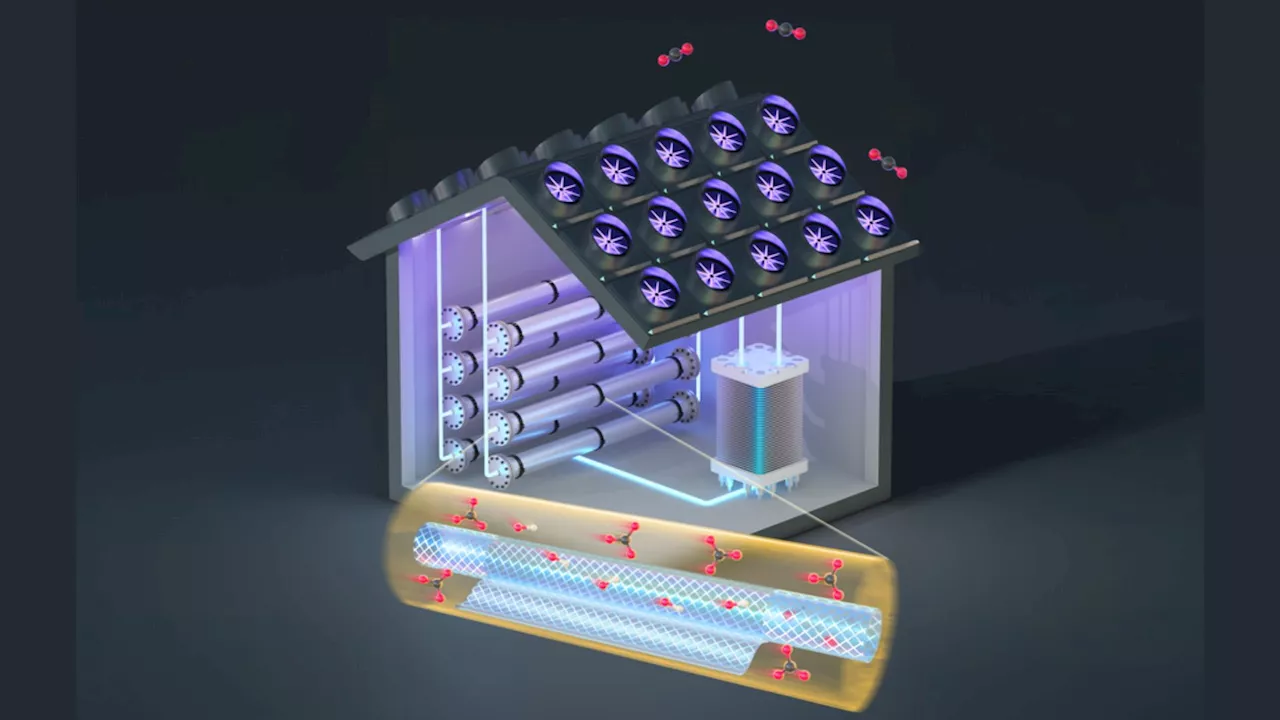 MIT’s super carbon sucking tech is 6 times faster, 20% cheaper than rivalsMIT researchers improved carbon capture efficiency sixfold by using nanofiltration to separate hydroxide and carbonate ions.
Read more »
 MIT’s wild fuel cell could fly electric planes while sucking CO2 from the skiesA sodium-air fuel cell could power heavy transport of the future while also cleaning up carbon emissions say MIT scientists.
Read more »
 MIT scraps DEI office, ends programs amid Trump's fight with HarvardToday's Video Headlines: 05/28/25
Read more »