


Louisa Thomas on the American tennis star’s small technical adjustments to her serve and forehand ahead of the Australian Open.
Gauff could hit some of the hardest first serves on tour, but her iffy second serve and wonky forehand had never been a secret. When she hits a forehand, she uses what’s known as an extreme Western grip, holding her palm under the racquet handle, which gives her the capacity to generate tremendous topspin but is hard to time and drive, particularly on low shots.
Gauff also had a big, loopy backswing, and, when under pressure from an accurate opponent, she too often found herself retreating off the baseline and hitting shots off her back foot. Her forehand became even harder to trust when her second serve missed the box, and that serve missed a lot. Nevertheless, she relied on her competitiveness, intelligence, and athleticism to find early success. She had announced herself with a victory against Venus Williams, at Wimbledon, when she was only fifteen, and had gone on to become one of the top players in the world while still a teen-ager. Gilbert, who was hired after Gauff’s lacklustre first-round loss at Wimbledon in 2023, had helped propel her to her first Grand Slam win by coaching her on how to mask her deficiencies and to focus on her incredible strengths: her speed and balance; her resilience; her ability to hit aggressive shots from defensive positions; her precise, powerful backhand; and her underrated creativity and strategic vision. Gilbert’s approach was mental and tactical; he co-authored a book called “Winning Ugly.” But Gauff’s weaknesses were becoming harder to hide, and the losses were getting ugly. “I don’t want to lose matches like this anymore,” she said after the U.S. Open loss. A few weeks later, Gilbert announced that he was no longer her coach, which was not a surprise. Then Gauff announced that she had hired Matt Daly, which was one. Gilbert had a big public profile: he was a colorful, voluble commentator for ESPN and a former coach of Andre Agassi. Daly had played tennis for the University of Notre Dame and had reached a career high of 941st on the A.T.P. Tour in 2003. His most notable coaching experience was with Denis Shapovalov, a Canadian whose game was like a finicky Ferrari. But Daly was a technique and grip specialist, the co-creator of Grip MD, a device that can be pulled over a racquet’s handle to help players improve the way they hold their racquets on certain shots. That caught attention. But, for all the emphasis on the serve and forehand, there’s no one right way to hit them. Different grips and shapes of shot suit different technologies, surfaces, heights, attitudes, situations, playing styles. Despite all the players in the world who have tried to model themselves on Roger Federer, his fluid straight-armed forehand is distinctive. And there’s a reason Novak Djokovic gets so many laughs when he imitates the service motions of Andy Roddick or Nick Kyrgios: their serves are recognizable. Techniques are often established early, starting when a player first learns to swing, and they are refined by thousands and thousands of hours of practice, until the motions become automatic. Players do sometimes tweak the way they hold and swing a racquet, particularly after injuries, or when they are going through a rough patch. Slam champions have reëngineered their service motions, and Gauff has tried altering her serve before. Sabalenka used to suffer from horrible yips, and was at times reduced to serving underhand on court. She resolved the issues on her toss with technical adjustments, and has reached at least the semifinals of nine of her past twelve Grand Slams, winning three of them. But, for a player who has seen a lot of success from a very young age by hitting the same shots in the same way, it can be particularly difficult to change things up, particularly in the middle of the season, without an extended training block. Technique becomes a matter of the brain’s automatic processes, and the act of thinking during these processes—especially in a quickly moving, high-stakes situation, like a tennis tournament with a winning purse of up to five million dollars—is risky. At twenty years old, Gauff is already a Grand Slam champion, and one of the richest and most famous female athletes in the United States. After bringing Daly on, she said, “I think it was just time to do a reset, a refresh, and add some things in my game that I felt like I need to do to have a better season next year.” She won her first tournament after he came on board, the China Open, in October, and hinted at some technical adjustments. Then she went to Wuhan and lost to Sabalenka, the best player in the world, after hitting twenty-one double faults. It was the most of any player in any match on tour last year. No reason to panic: the focus was on next season. In theory, at least. At the W.T.A. Finals, in Riyadh, Saudi Arabia, in November, she faced the No. 2 player, Iga Świątek, who’d beaten Gauff in eleven of twelve tries. Świątek, who had just relinquished the No. 1 spot, is one of the few players who can rival Gauff as a mover, and her disciplined, suffocating ground strokes can seem engineered to break down Gauff’s forehand. Gauff still struggled with her serve, hitting eleven double faults, and had three times as many errors as winners. But Świątek was coming out of a long layoff, which would later turn out to be a short silent ban for a positive doping test, owing to contaminated melatonin. Świątek was even more error-prone than Gauff was, and Gauff won in straight sets. Then she beat Sabalenka in the semifinals and China’s Qinwen Zheng in a tight, three-hour final to take home the title. As with her U.S. Open victory, the tournament introduced a tantalizing possibility. If Gauff could beat anyone despite her weaknesses, what might she look like if those weaknesses were gone? I might have chalked up her late-season surge to confidence, the swell of excitement and possibility that often accompanies a coaching change. The tennis calendar can be odd, and, however short the off-season, success doesn’t always carry into the new year. But then Gauff played the United Cup, where she easily overcame two former Grand Slam finalists, Leylah Fernandez and Karolína Muchová, and the Olympic silver medallist Donna Vekić, before facing Świątek again, in the final. It was a high-quality match for both players, and the subtle changes in Gauff’s technique were apparent. Her forehand had a slightly more compact backswing, which allowed her to deflect and control the pace of Świątek’s heavy shots, before sending back heavier forehands of her own. Eagle-eyed Reddit users and commentators noticed a small “V” marked on the white grip of her racquet, to help her line up her hand for serves. She finished the match with more winners on her forehand than errors, and kept her double faults under control on her way to a 6–4, 6–4 victory. Will it last? Tennis, like second serves, can be capricious. Gauff faces Sofia Kenin, an American who is herself a former Grand Slam winner, in the first round of the Australian Open, which begins today. Kenin won the Australian Open when she was twenty-one years old but has struggled since. Gauff could face Muchová, in the fourth round, and Naomi Osaka and Jelena Ostapenko, both former Slam champions, are also in her quarter. And tennis is particularly punishing: one bad day, a few bad games, even in a slew of good ones, and a player is knocked out. But Gauff is at the Australian Open as perhaps one of the favorites, along with the defending champion, Sabalenka. A slight grip change is a small thing not only in the fractured world of professional tennis but also in the larger turmoil of the world. No one knows that better than Gauff, who has never shied from speaking thoughtfully about social issues. But small changes can beget big things. Gauff seems to understand that, too. ♦
Tennis Australian Open Technique
United States Latest News, United States Headlines
Similar News:You can also read news stories similar to this one that we have collected from other news sources.
 Coco Gauff Earns Top Spot on Forbes' Highest-Paid Female Athletes ListCoco Gauff takes the top spot on Forbes' list of highest-paid female athletes, earning $34.4 million in 2024.
Read more »
 Coco Gauff Showcases Patriotic New Balance Tennis Shoes for United CupAmerican tennis star Coco Gauff will be sporting patriotic colorways of her new New Balance tennis shoes during the 2025 United Cup.
Read more »
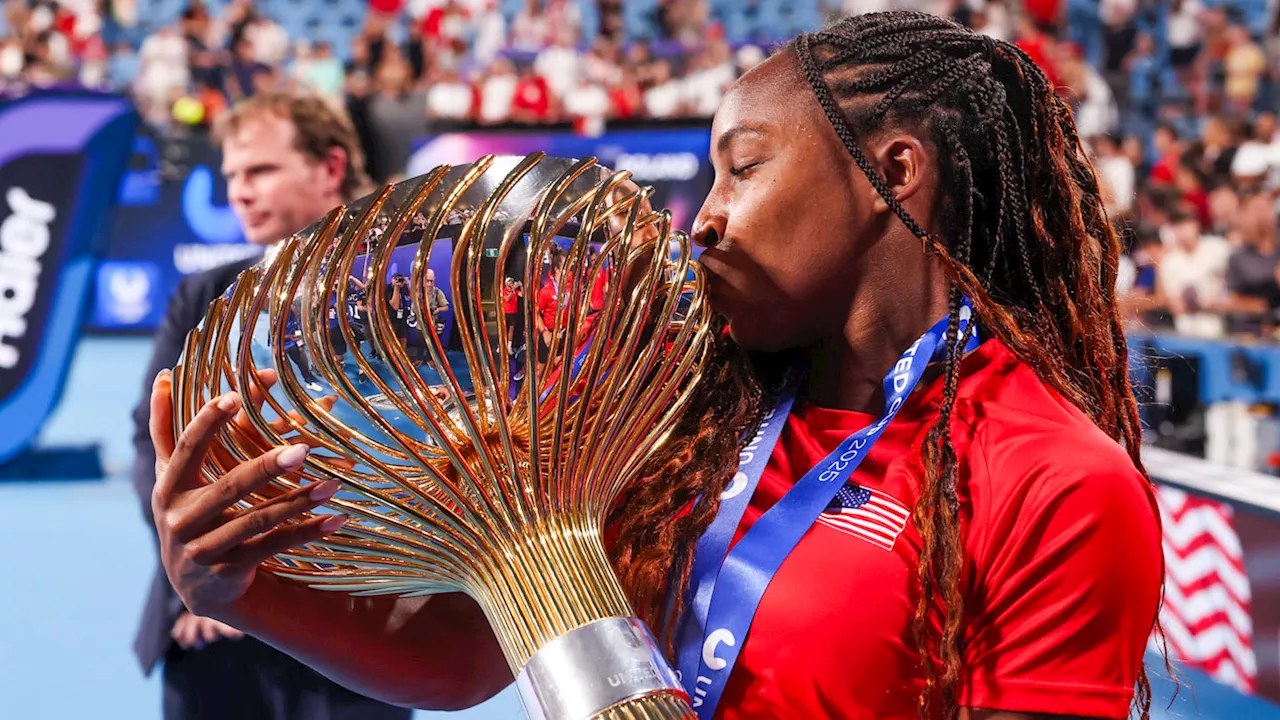 Coco Gauff Leads Team USA to United Cup VictoryCoco Gauff and Team USA won the United Cup, defeating Poland in the final. Gauff defeated Iga Swiatek to secure the victory for Team USA.
Read more »
 Coco Gauff Joins Unrivaled Women's Basketball League as InvestorTennis star Coco Gauff invests in Unrivaled, a new women's basketball league, sharing her excitement for women's sports and her father's desire for her to play basketball.
Read more »
 Why Coco Gauff Will Be Watching 'The Bachelor' for the 1st TimeTennis superstar Coco Gauff revealed her plans to ‘The Bachelor’ for the very first time -- and why she'll be tuning in
Read more »
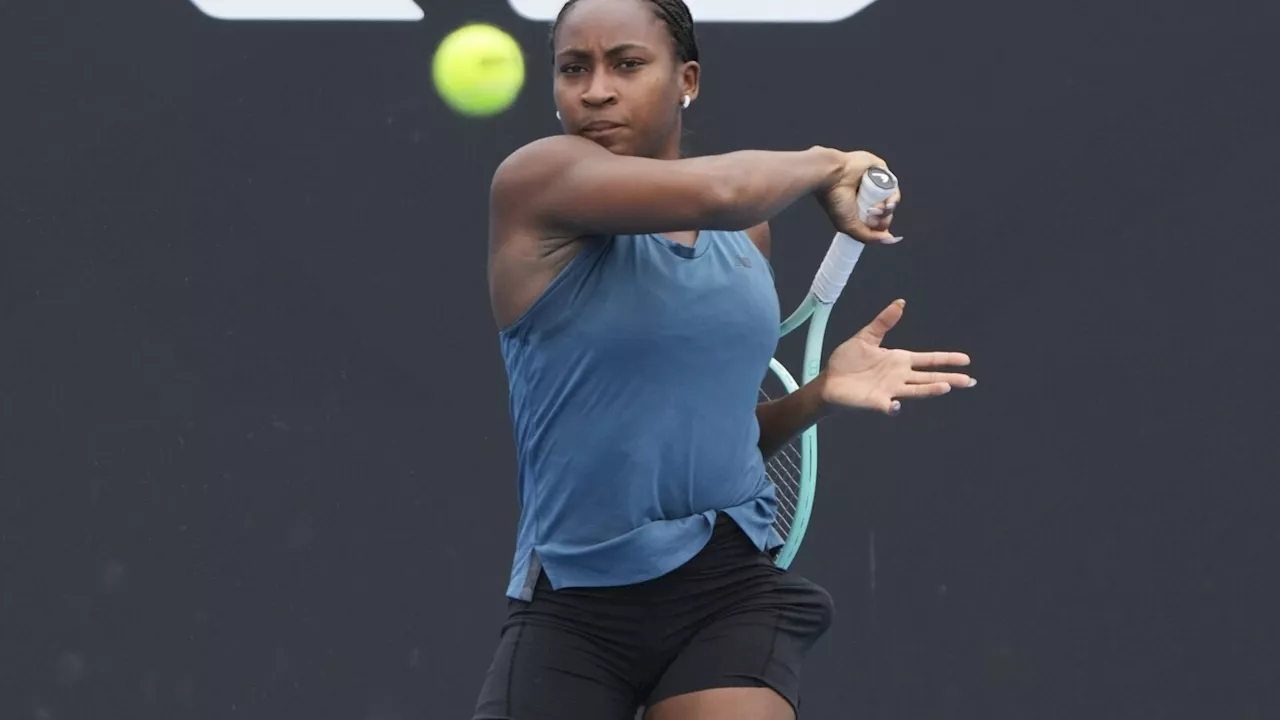 Coco Gauff: Ready to Challenge at the Australian OpenCoco Gauff is looking strong heading into the Australian Open, having made significant improvements to her serve and forehand. After victories over Iga Swiatek and Aryna Sabalenka in recent tournaments, Gauff is confident she can go all the way.
Read more »