


Francis is a well-known and established technology industry expert and thought leader. He has a proven track record of helping clients develop impactful, pragmatic and effective business and product strategies and messaging based on in depth analysis of the current technology, business, economic and geopolitical environment and trends.
In the technology industry, there is a concept called “lateral innovation.” It posits that a technology, adopted for one purpose, can be leveraged for other purposes to provide further value. This concept has been instrumental in creating additional use cases that, on their own, could not have driven adoption given the uncertainty around their business case.
However, once the technology is in place, it opens the door for new use cases to take advantage of it and sometimes deliver more value than the original reason for adoption. Location-based services derived from satellite-based positioning technology are perfect examples of lateral innovation. It is a cornerstone technology for lucrative services like rideshare, food delivery, and location-based advertising. However, even if these types of services had been envisioned before GPS/GNSS was introduced into cell phones , their unproven value proposition at that time would not have been enough to make the business case compelling enough for smartphone manufacturers to pay for the added cost of GPS/GNSS capability. It wasn’t until GPS/GNSS was required to deliver digital cellular communications, starting with 3G data communications, that the technology became ubiquitous in smartphones. Once the technology was in place, it paved the way for new, innovative business models, like the business model employed by Uber, to innovate on the built-in capability. One such technology, ultra-wideband , has the potential to similarly take advantage of lateral innovation and could enable the smartphone ecosystem to once again access untapped value. UWB is a personal area networking wireless communications technology. With a typical range of approximately 50m, it can operate in the 3 to 10 GHZ frequency bands and offers high precision, high bandwidth, low-energy communications. Given these capabilities, UWB is gaining traction in the smartphone market for device tracking solutions, such as with Apple’s AirTags and Samsung’s Galaxy SmartTags. Additionally, while the technology has been used in low-volume secure keyless entry systems for a number of years, it is just recently that the auto industry is adopting it to enable secure automotive keyless entry, such as with vehicles made by BMW, Dodge and Tesla, to name a few. With several use cases driving adoption, UWB is achieving enough critical mass as a location technology rather than its intended application as a communication technology to potentially take advantage of lateral innovation. With recent adoption in smartphones, application developers are poised to take advantage of new use cases and value-added services. A critical characteristic of UWB for enabling these new use cases is its ability to provide proximity location with centimeter-level precision. This is enabled by the shape of its signal, which delivers a narrow peak in time, and the receiver’s ability to measure the time in which that peak arrives.Here’s How Much Every Living Former President Earned After Leaving The White House One mobile use case that can benefit from this type of secure and highly precise location capability is finding friends, family, or colleagues. While this capability is already supported using satellite-based navigation solutions, it can be enhanced far beyond what is currently provided for more precise distance and direction measurements. This is of particular benefit when satellites are not visible, such as indoors or in urban environments. By utilizing UWB, smartphone OEMs, and 3rd party application developers can take proven location-based services business models and extend them to GPS/GNSS-challenged environments like shared scooter/bike services in urban environments. Another area of untapped value is in the case of outdoor activities or athletic training. UWB is precise enough to provide services where timing and velocity measurements are required, such as between two athletes or between an athlete and a fixed location, such as start and finish lines or measuring athletic progress. UWB can also be used by IT service platforms to offer value-added services in the enterprise to enable secure access control or enterprise resource access straight from the employee’s smartphone. This helps eliminate enablement and productivity costs in contrast with badge-based systems, which are often lost or misplaced. This type of system can help employers gather location-based statistics and insights for use in office space planning, building energy optimization, emergency/contact tracking and maintenance. Additionally, for meetings and teleconference applications, UWB can enable services that identify attendees who are not yet present and automatically send them notifications, as well as help attendees use indoor navigation to find meeting rooms on large campuses or when an employee or visitor is in a new site. Finally, when used with other sensors in a smartphone, UWBs highly precise location capabilities can be leveraged as inputs to enable new on-device generative AI applications and services such as being used by first responders to find people in hazardous environments or to help track people with health concerns. These examples are only a small sample of new/enhanced use cases that can take advantage of UWB. Just as no one would have ever envisioned the advent of the rideshare business model and its value creation impact when assessing the business case for the additional cost of GPS capability, this technology can enable many other as-yet unidentified value-added services. On their own, they might not have been able to justify the cost of the added technology. But with UWB already getting widely adopted, it is ripe for the smartphone ecosystem to take advantage of lateral innovation and unlock unidentified and untapped revenue generation sources. The author and members of the Tirias Research staff do not hold equity positions in any of the companies mentioned. Tirias Research tracks and consults for companies throughout the electronics ecosystem from semiconductors to systems and sensors to the cloud. Members of the Tirias Research team have worked or consulted for Qualcomm, MediaTek, Nvidia and companies throughout the semiconductor and mobile ecosystems.Our community is about connecting people through open and thoughtful conversations. We want our readers to share their views and exchange ideas and facts in a safe space.Insults, profanity, incoherent, obscene or inflammatory language or threats of any kindContinuous attempts to re-post comments that have been previously moderated/rejectedAttempts or tactics that put the site security at riskProtect your community.
GNSS GPS Smartphone Ultra-Wideband AI Generative AI Location-Based Services
United States Latest News, United States Headlines
Similar News:You can also read news stories similar to this one that we have collected from other news sources.
 BHP’s return to Argentina marks new hope for untapped copper minesNo 1 source of global mining news and opinion
Read more »
 Reports reveal untapped potential for mobilizing voters of color in battleground statesWith swing states playing a pivotal role in the 2024 presidential election, new reports from the Center for Inclusive Democracy (CID) at the USC Sol Price School of Public Policy have found significant voter turnout disparities between white, non-Latino voters and voters of color in all nine battleground states.
Read more »
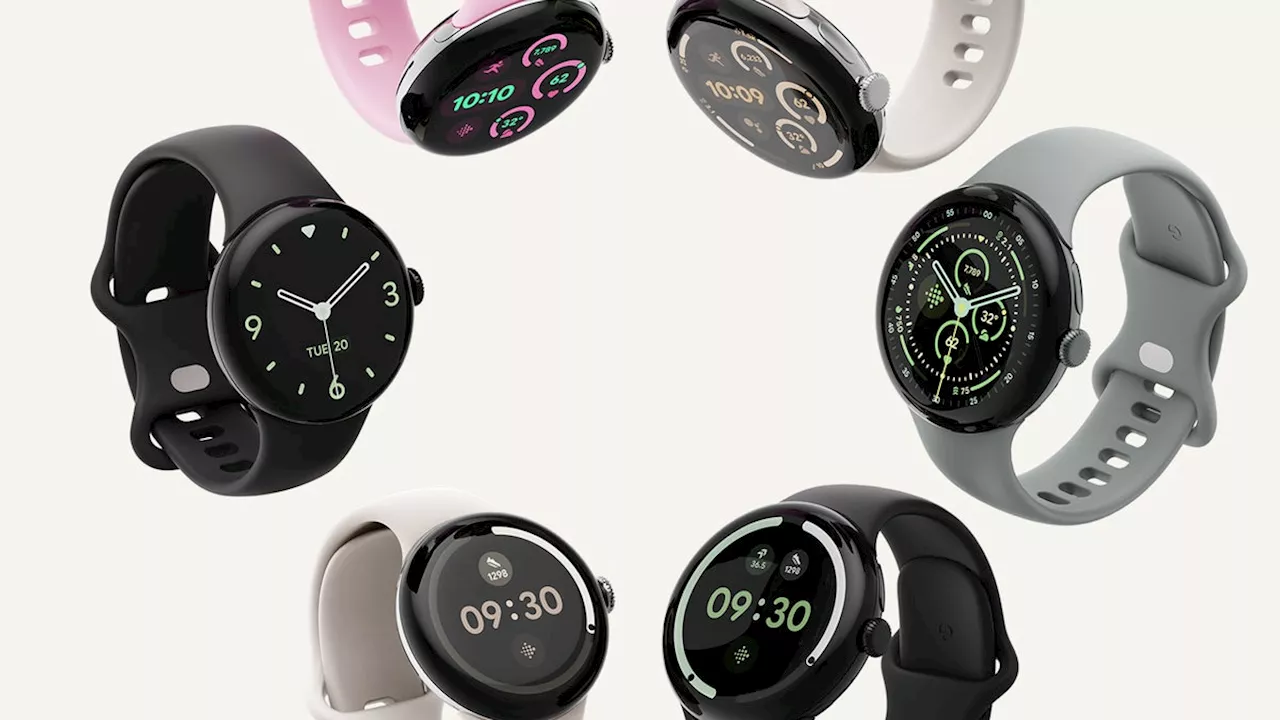 Pixel Watch 3's UWB chip offers new features, but there's a catchJohanna 'Jojo the Techie' is a skilled mobile technology expert with over 15 years of hands-on experience, specializing in the Google ecosystem and Pixel devices. Known for her user-friendly approach, she leverages her vast tech support background to provide accessible and insightful coverage on latest technology trends.
Read more »
 How Intel's AI platforms can help identify untapped athletic talentWhat if finding that talent was as easy as capturing video on a smartphone?
Read more »
 The Ultraloq Bolt Mission from U-tec is the first smart lock with UWBThis Bolt Mission UWB Plus NFC is the first smart lock with ultra wideband technology, enabling secure, hands-free unlocking of your front door.
Read more »
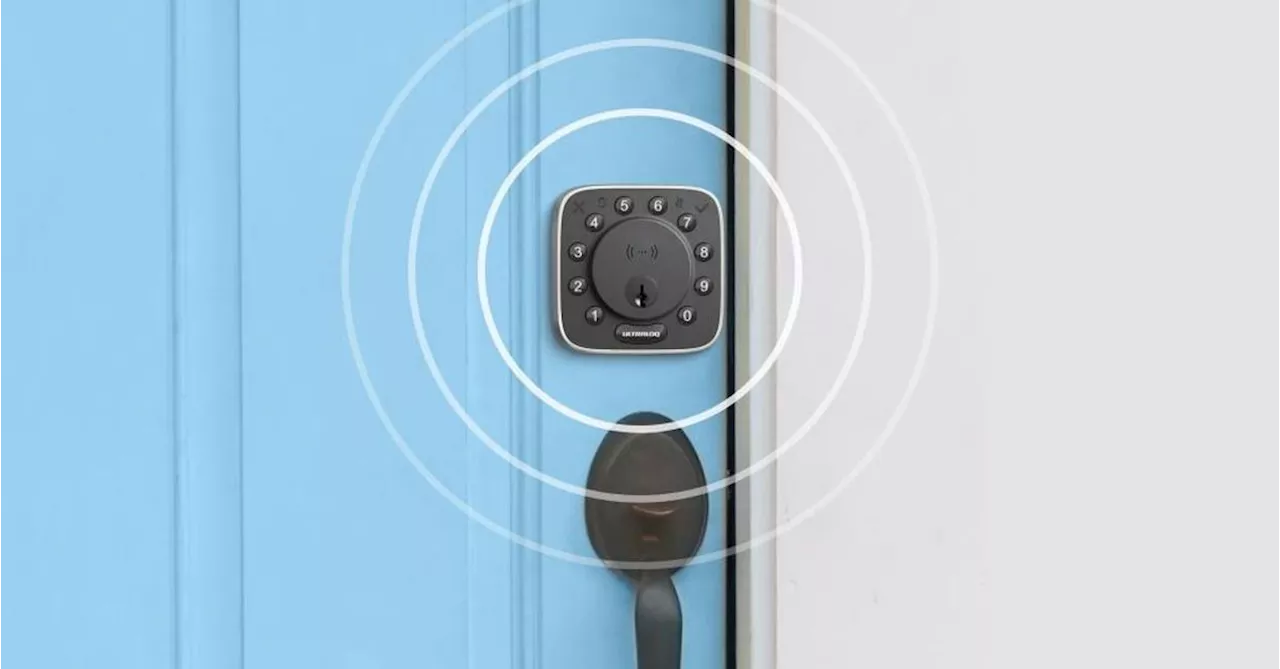 U-tec's New Smart Lock Uses Ultra Wideband For Precise Auto-UnlockingU-tec has introduced the Ultraloq Bolt Mission UWB Plus NFC, a smart lock that leverages ultra wideband (UWB) technology for more reliable and faster auto-unlocking compared to traditional methods.
Read more »