


NASA’s human spaceflight missions have steadily built on each other, leading us to a continuous human presence in low Earth orbit for 23 years. Now, as we st...
NASA is committed to maintaining a continuous human presence in low Earth orbit as the agency transitions from the International Space Station to commercial space stations. For nearly 25 years, NASA has supported a continuous presence in low Earth orbit aboard the space station and will continue to build on the agency’s extensive human spaceflight experience to advance future scientific and exploration goals.
The International Space Station, now in its third decade of operations, has been vital for microgravity research, providing insights and technology beneficial to life on Earth. As the space station nears the end of its operational life, NASA plans to transition to a new low Earth orbit operations model to continue leveraging microgravity benefits. As the space station nears the end of operational life in 2030, NASA plans to transition to new low Earth orbit commercial space stations to continue leveraging the unique environment and microgravity research benefits. Through commercial partnerships, NASA aims to maintain its leadership in microgravity research and ensure a sustained access to low Earth orbit for the benefit of humanity. NASA’s commercial strategy for low Earth orbit will provide the government with reliable and safe services at a lower cost, enabling the agency to focus on the next step in humanity’s exploration of the solar system while also continuing to use low Earth orbit as an ideal environment for training and proving ground for deep space and missions to the Moon and Mars. NASA is using a two-phase approach to support the design and development of commercially owned and operated space stations in low Earth orbit from which NASA, along with other customers can purchase services and stimulate the growth of commercial activities in a microgravity marketplace. In Phase 1, NASA is supporting the design and development of multiple commercial space stations and other commercial capabilities through funded and unfunded agreements. A digital rendering of the completed Axiom Station, which includes the Payload Power Thermal Module, Habitat 1, an airlock, Habitat 2, and the Research and Manufacturing Facility.Axiom Space a contract to provide at least one habitable commercial module to be attached to the International Space Station with the goal of becoming a free-flying commercial space station in low Earth orbit prior to retirement of the orbiting laboratory. A digital rendering of Blue Origin’s free-flying station named Orbital Reef, which continues to be developed as part of a Space Act Agreement with NASA.A digital rendering of the Starlab, which includes a large habitation and laboratory module with a smaller service module for power and propulsion.efforts to support Starlab Space. Blue Origin and Starlab Space are developing commercial space stations that go directly into low Earth orbit. Northrop Grumman’s Cygnus spacecraft is pictured in the grips of the Canadarm2 robotic arm shortly after being captured completing a two-and-half-day trip that began with a launch from NASA’s Wallops Flight Facility in Virginia.A digital rendering of Sierra Space’s expandable space station technology including its Large Integrated Flexible Environment habitat, which is also being developed for use on Orbital Reef.Space Act Agreements are designed to advance commercial space-related efforts through NASA contributions of technical expertise, assessments, lessons learned, technologies, and data. NASA provides technical and financial assistance to commercial entities as they develop and mature solutions in fulfilling missions under the expectation that these solutions allow NASA to purchase services in the future for agency missions. SpaceX’s Starship, a fully reusable transportation system, launches on a flight test from the company’s facility in Starbase, Texas.Blue Origin, Northrop Grumman, Sierra Space, SpaceX, Special Aerospace Services, ThinkOrbital, and Vast to partner with the agency through the second Collaborations for Commercial Space Capabilities initiative to advance commercial space-related efforts through NASA contributions of technical expertise, assessments, lessons learned, technologies, and data. Structured sharing of NASA expertise demands minimal government resources but fosters development of capabilities that can be crucial to development of a robust low Earth orbit economy. Digital rendering of ThinkOrbital’s ThinkPlatform, a self-assembling, single-launch, large-scale orbital platform that facilitates a wide array of applications in low Earth orbit.A digital rendering of Vast’s Haven-1 commercial space station, which will provide a microgravity environment for crew, research, and in-space manufacturing.In Phase 2, NASA intends to competitively procure to certify one or more commercial space stations and purchase services as one of many customers. NASA will issue a Request for Proposal in late 2025 and plans to award one or more Phase 2 contracts in 2026. Selected commercial providers will develop, own, and operate their space stations and then NASA will purchase services, as one of many customers, including accommodation and support for government crew and payloads. NASA will provide transportation to and from the commercial space stations in low Earth orbit for an initial set of missions by contracting directly with transportation providers. In addition, NASA will offer government furnished services and equipment potentially for use at the request of the commercial providers. NASA’s goal is to allow commercial low Earth orbit providers to focus solely on building their space station, with the ability to transition to a fully commercial end-to-end service model. Providers also will be able to propose an evolutionary approach with a minimum initial operating capability required by 2029 to support short-term missions with two NASA astronauts for one to three months, progressing to a full capability by 2031 to support continuous missions with two NASA astronauts for six months.about Commercial Low Earth Orbit Destinations Contract A red and green aurora shimmers brightly above Ontario, Canada, near James Bay in this photograph from the International Space Station as it orbited 260 miles above North America.Blue Origin, Northrop Grumman, Sierra Space, SpaceX, Special Aerospace Services, ThinkOrbital, and Vast to partner with the agency through the second Collaborations for Commercial Space Capabilities initiative. agreements with two commercial space station partners as a result of Northrop Grumman joining efforts to support the Starlab commercial space station. As part of the agency’s efforts to enable broader use of space, NASA released its final goals and objectives for low Earth orbit, defining the long-term approach toward advancing microgravity science, technology, and exploration for the benefit of all, known as the. The strategy will guide the agency toward the next generation of continuous human presence in orbit, enable greater economic growth, and maintain international partnerships.Planned Commercial Low Earth Orbit Destinations Contract award announcement for the purchase of services from one or more commercial space station provider.
United States Latest News, United States Headlines
Similar News:You can also read news stories similar to this one that we have collected from other news sources.
 NASA Sees Key Progress on Starlab Commercial Space StationAs NASA continues its transition toward a commercial low Earth orbit marketplace, an agency-supported commercial space station, Starlab, recently completed
Read more »
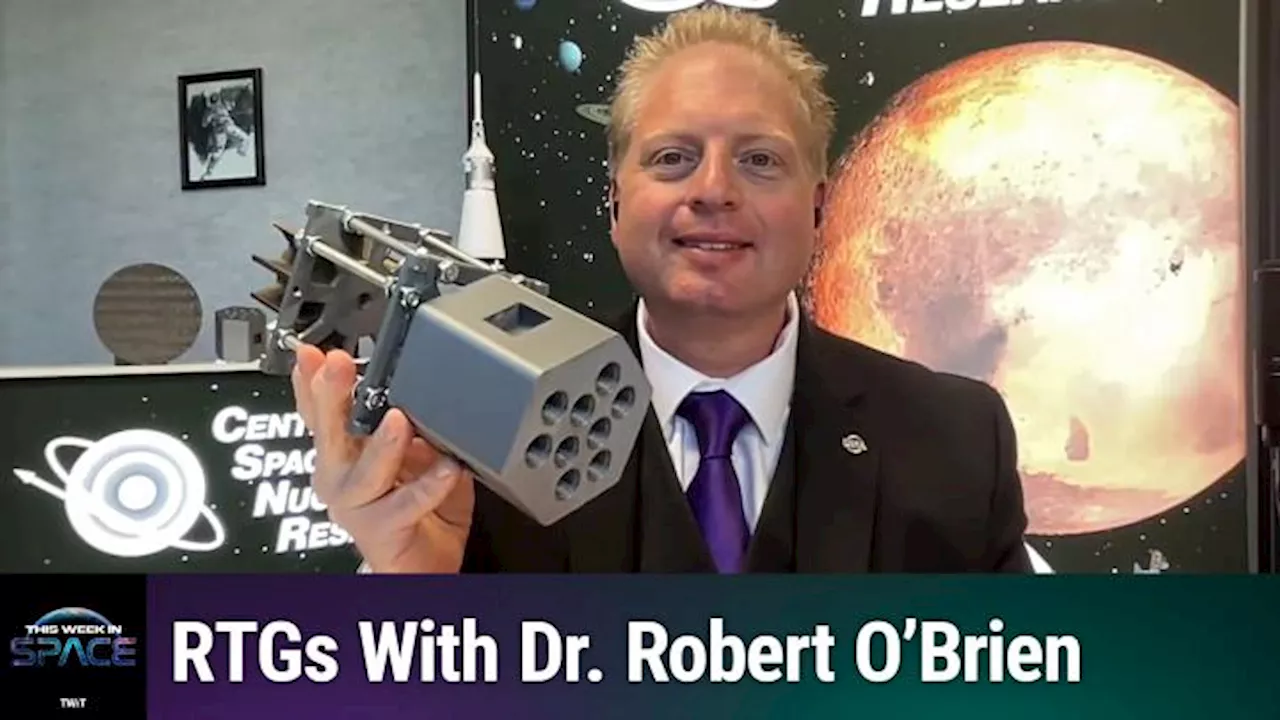 This Week In Space podcast: Episode 170 — Atomic Space Batteries!Space.com is the premier source of space exploration, innovation and astronomy news, chronicling (and celebrating) humanity's ongoing expansion across the final frontier. Originally founded in 1999, Space.com is, and always has been, the passion of writers and editors who are space fans and also trained journalists.
Read more »
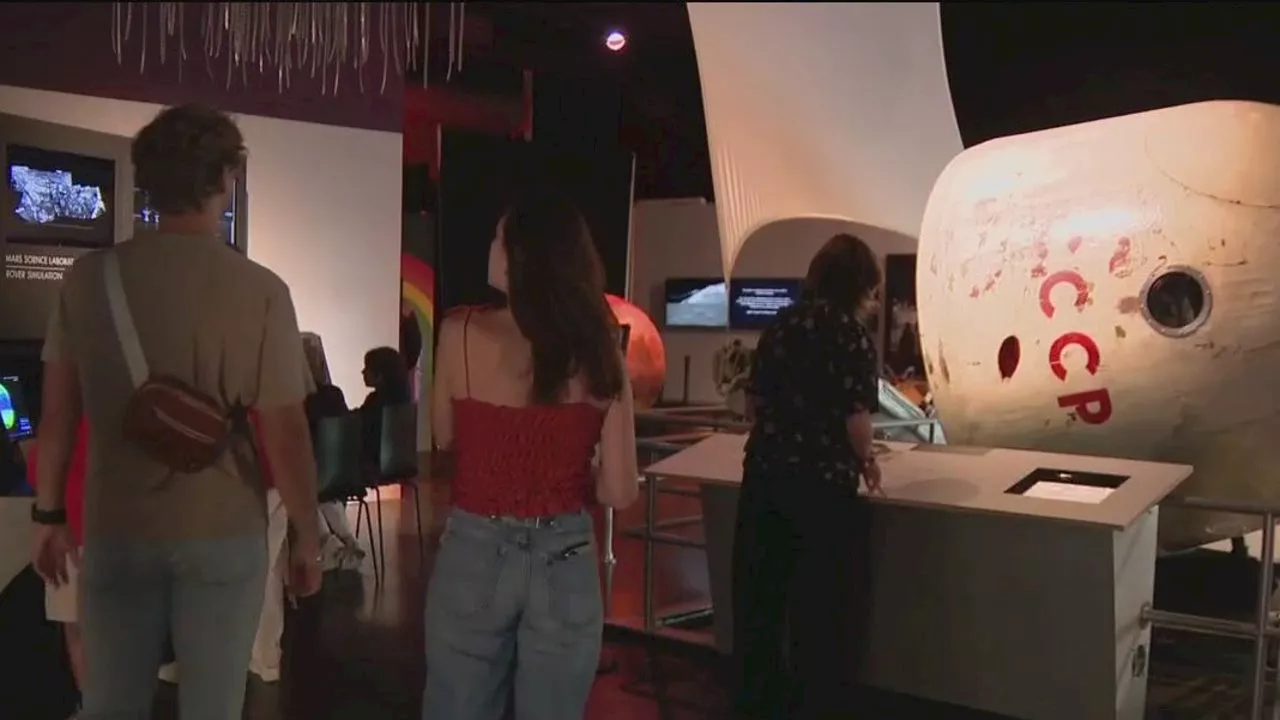 Chabot Space and Science Center launches 'Space Week' in OaklandThe Chabot Space and Science Center is set to launch a new series of interactive events for families this week with a special program called Space Week, running from Wednesday through Aug. 3.
Read more »
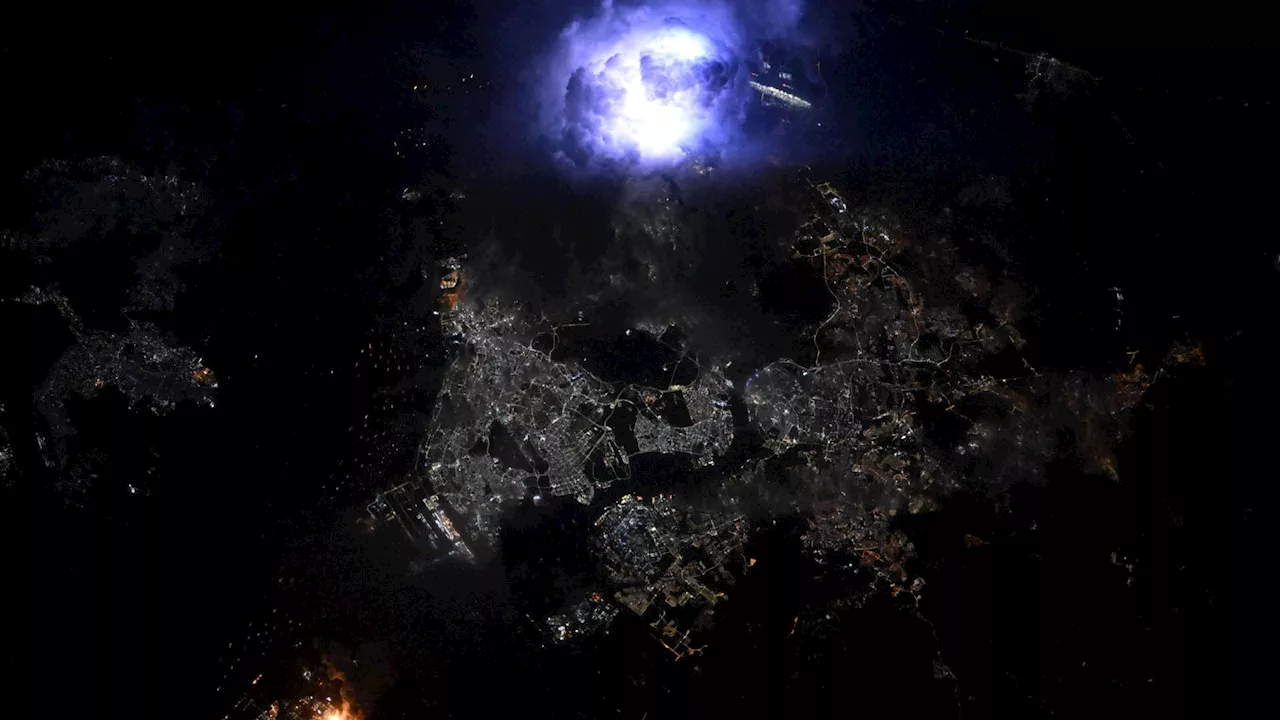 ISS astronauts spot lightning strike from space | Space photo of the day for July 29, 2025Kenna Hughes-Castleberry is the Content Manager at Space.com. Formerly, she was the Science Communicator at JILA, a physics research institute. Kenna is also a freelance science journalist. Her beats include quantum technology, AI, animal intelligence, corvids, and cephalopods.
Read more »
 Boost Commercial Space Tech DevelopmentNASA has released a new proposal opportunity for industry to tap into agency know-how, resources, and expertise. The Announcement of Collaboration Opportunity
Read more »
 NASA Rewrites the Rules for Developers of Private Space StationsIn the face of budget cuts, NASA has issued a new directive on how it will procure replacements for the International Space Station.
Read more »