


Space and astronomy news
A drone's view of the Rubin Observatory under construction in 2023. The 8.4-meter telescope is getting closer to completion and first light in 2025. The telescope will create a vast amount of data that will require special resources to manage, including AI.
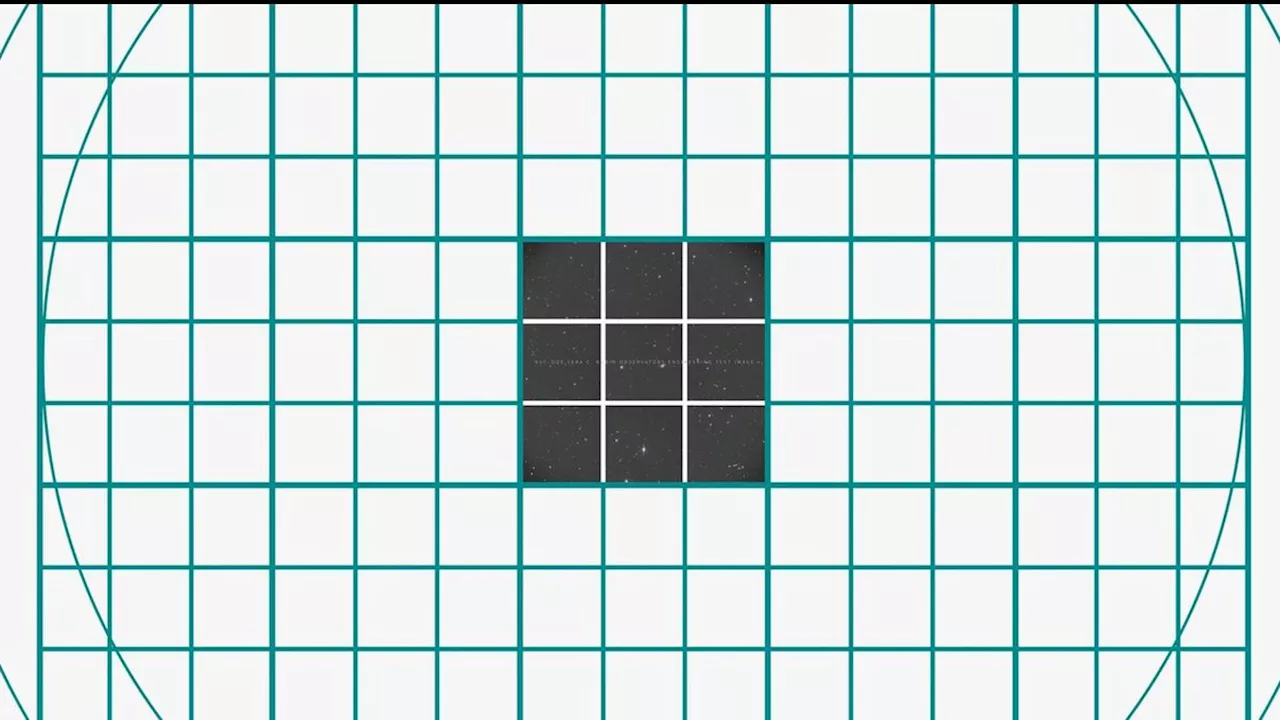
Image Credit: Rubin Observatory/NSF/AURA/A. Pizarro D, previously known as the Large Synoptic Survey Telescope , will be the first observatory of its kind. Jointly funded by the National Science Foundation and the Department of Energy , Rubin will conduct the – a 10-year survey of the southern hemisphere. The observatory is expected to collect 15 terabytes of data a night, which will be used to create an ultra-wide, ultra-high-definition, time-lapse record of the cosmos, containing tens of billions of stars, galaxies, and astronomical objects. After ten years of construction, the Vera C. Rubin Observatory is less than one year away from starting this revolutionary observation campaign. In preparation for this, the observatory recentlyusing an engineering test camera. With this milestone complete, the stage is now set for the installation of the 3200-megapixel, the world’s largest digital camera. Once mounted on the Simonyi Survey Telescope, the observatory will have finished construction and be ready to collect its first light. The engineering test camera, the Commissioning Camera , is a much smaller version of the LSSTCam. It relies on a mosaic of nine 3.2-megapixel Charge-Coupled Device sensors, providing a total area coverage of 144 megapixels – about twice the size of a full Moon. During the ComCam, which took place from October 24th to December 11th, 2024, the camera acquired approximately 16,000 exposures to test the Rubin Observatory’s hardware, software, and data pipeline. A single test engineering image from the very first night of the ComCam campaign in the context of the coverage provided by the LSSTCam. Credit: RubinObs/NOIRLab/SLAC/NSF/DOE/AURA. The tests were conducted by Rubin’s international commissioning team, composed of hundreds of engineers, scientists, and observing specialists. According to a, the test included verifying that the telescope’s complex systems were all working together, testing the early image quality in all six of the system’s filters, and running the data processing pipelines. They also verified that the system can transmit large amounts of data from the observatory to the Department of Energy’s, the camera, data systems, networks, and everyone involved in the engineering test were said to have performed exceptionally well. The test delivered high-quality images within the first hours, even though most of the detailed optical adjustments and environmental controls were not fully activated. Per the statement: “Thanks to the dedicated efforts and talents of thousands of people over many years, the telescope had been assembled with all its complex parts positioned correctly to better than about one millimeter. Equally satisfyingly, the high-speed network connecting Chile and the data center at SLAC, the data systems, and the algorithms for analyzing the data worked well, too.” The LSSTCam has 189 CCD sensors, giving it a field of view roughly 45 times the size of a full Moon – over 21 times that of the ComCam. For the final phase of construction, the LSSTCam will replace the ComCam on the Simonyi Survey Telescope. When coupled with this 8.4-meter telescope, the LSTTCam will capture images of very faint and variable objects at an unprecedented rate. The installation will take a few months, followed by the observatory capturing its “First Look” images of the cosmos. The complete focal plane of the future LSST Camera shows the 189 individual sensors that will produce 3,200-megapixel images. Credit: Jacqueline Orrell/SLAC National Accelerator Laboratory “The success of the engineering test phase has given a surge of excitement and anticipation to the team,” said Deputy Director for Rubin Construction Sandrine Thomas. “Reaching this milestone has offered a small taste of what is to come once Rubin Observatory begins its 10-year survey.” Once the final testing and verification phase is complete, the Rubin Observatory will begin the most comprehensive data-gathering mission ever performed in the history of astrophysics. The observatory is named in honor of American astronomer Dr. Vera C. Rubin, whose work was foundational to the theory of Dark Matter. By repeatedly scanning the southern sky with its cutting-edge instruments for a decade, Rubin will create an ultra-high-definition time-lapse record of the cosmos. This data will allow scientists to investigate Dark Matter, Dark Energy, and other mysteries facing astronomers, astrophysicists, and cosmologists today.
United States Latest News, United States Headlines
Similar News:You can also read news stories similar to this one that we have collected from other news sources.
 Will We Find Planet Nine with the Vera Rubin Observatory’s New Telescope?Pluto was unseated as the ninth planet in our solar system. Will we find a real Planet Nine?
Read more »
 Jennifer Rubin Resigns From The Washington Post, Slams Jeff BezosLongtime Washington Post columnist Jennifer Rubin has resigned from the newspaper, citing concerns about its direction under owner Jeff Bezos. Rubin, a vocal critic of former President Donald Trump, accused the Post of failing to provide a robust and aggressive free press.
Read more »
 Washington Post Columnist Jennifer Rubin Resigns, Blames Bezos and Zuckerberg for Enabling TrumpJennifer Rubin, a Washington Post columnist, resigned, accusing Amazon founder Jeff Bezos and Meta CEO Mark Zuckerberg of enabling President-elect Donald Trump. She launched a new media outlet, The Contrarian, on Substack, criticizing corporate media for catering to Trump and said billionaires who donate to Trump have betrayed the values of democracy.
Read more »
 Jeff Bezos enables Trump's threat to democracy, Washington Post columnist Rubin says as she quitsAmazon founder Jeff Bezos has faced criticism since killing a Washington Post endorsement of Kamala Harris in the election against Donald Trump.
Read more »
 Vera Rubin Observatory Captures First Images, Ushering in a New Era of AstronomyThe Vera Rubin Observatory in Chile has successfully completed its initial systems tests and captured its first engineering images, marking a significant milestone in astronomy.
Read more »
 Vera C. Rubin Observatory to Unleash Millions of Supernovae InsightsThe Vera C. Rubin Observatory, set to begin its groundbreaking Legacy Survey of Space and Time (LSST) in the coming months, will revolutionize our understanding of the universe's expansion. By capturing light from millions of Type Ia supernovae, these 'standard candles' will allow astronomers to create an unprecedentedly detailed map of cosmic distances.
Read more »