


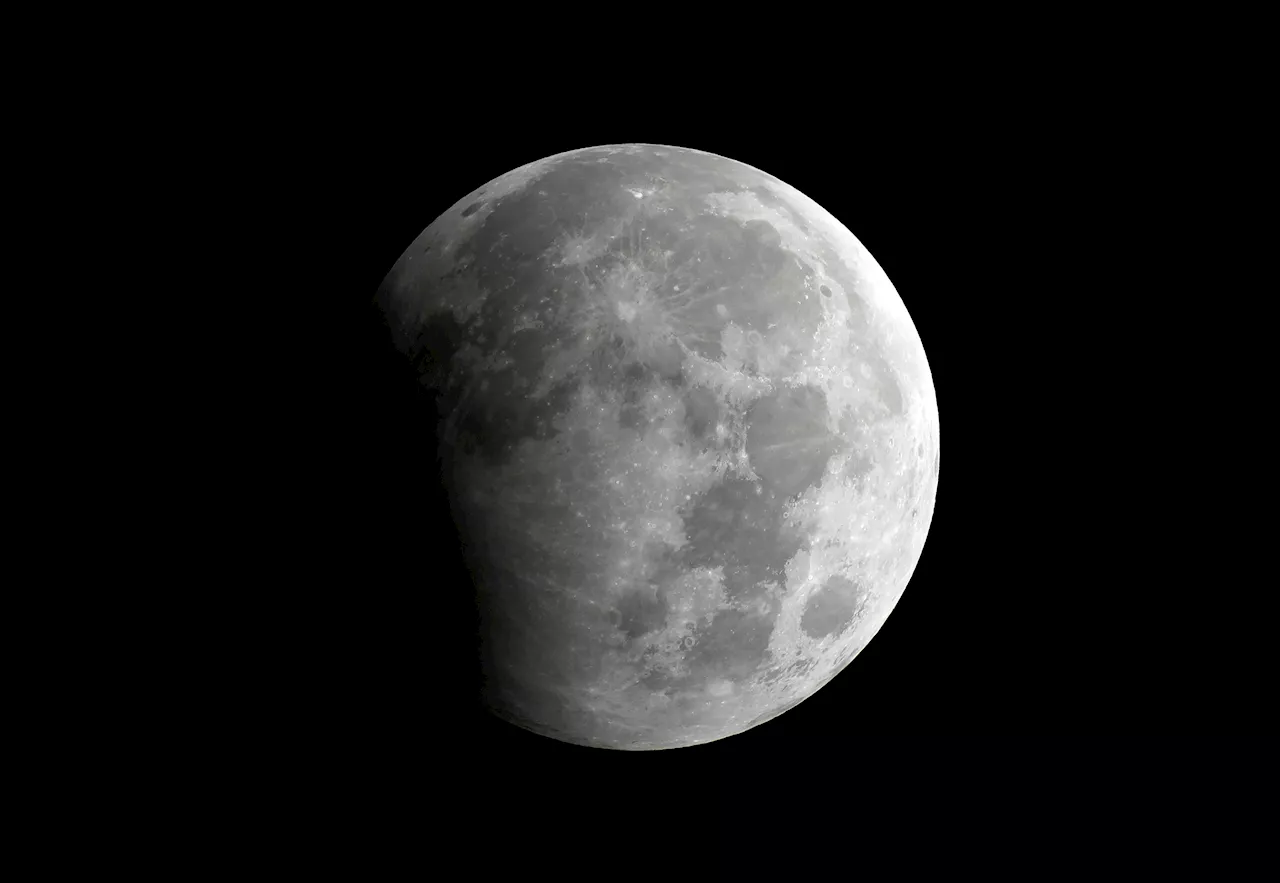
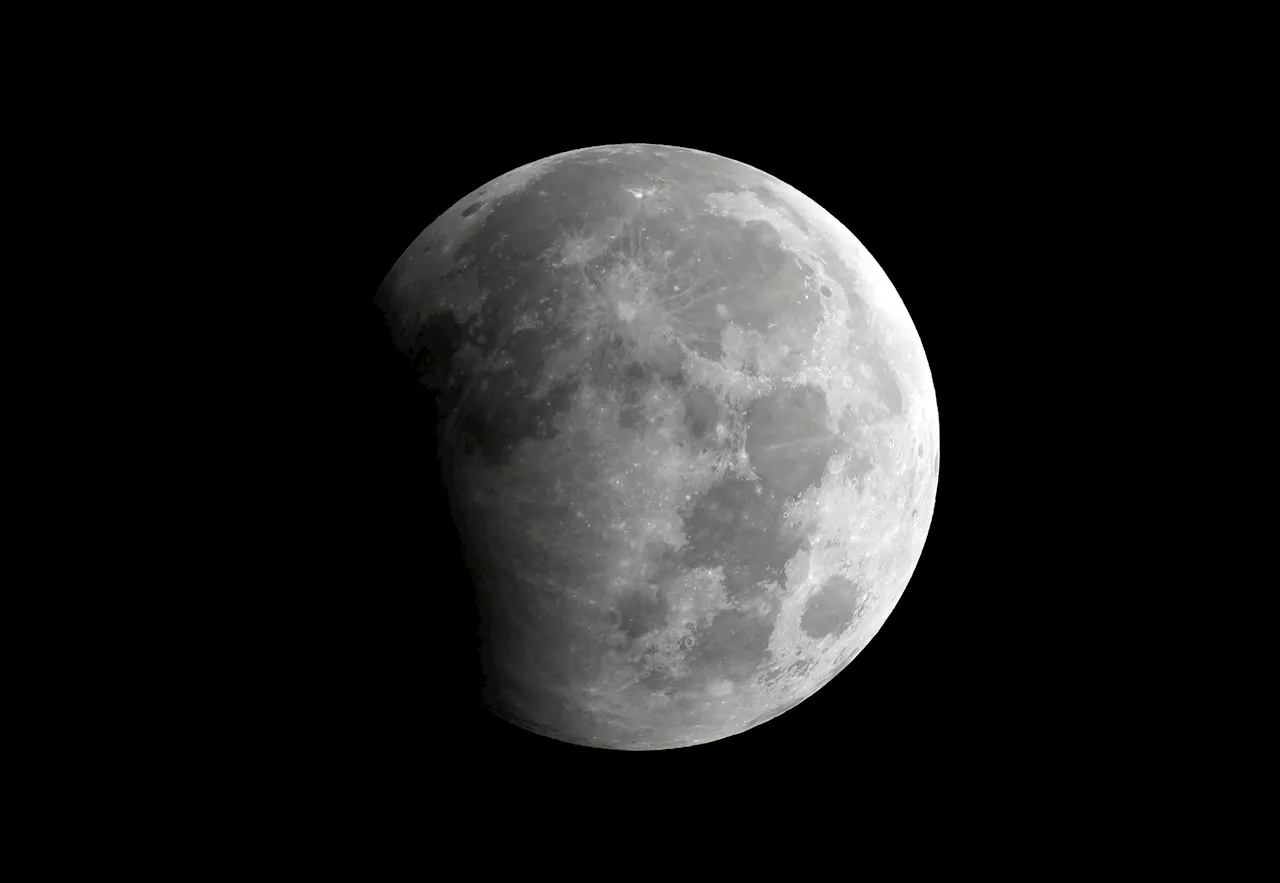
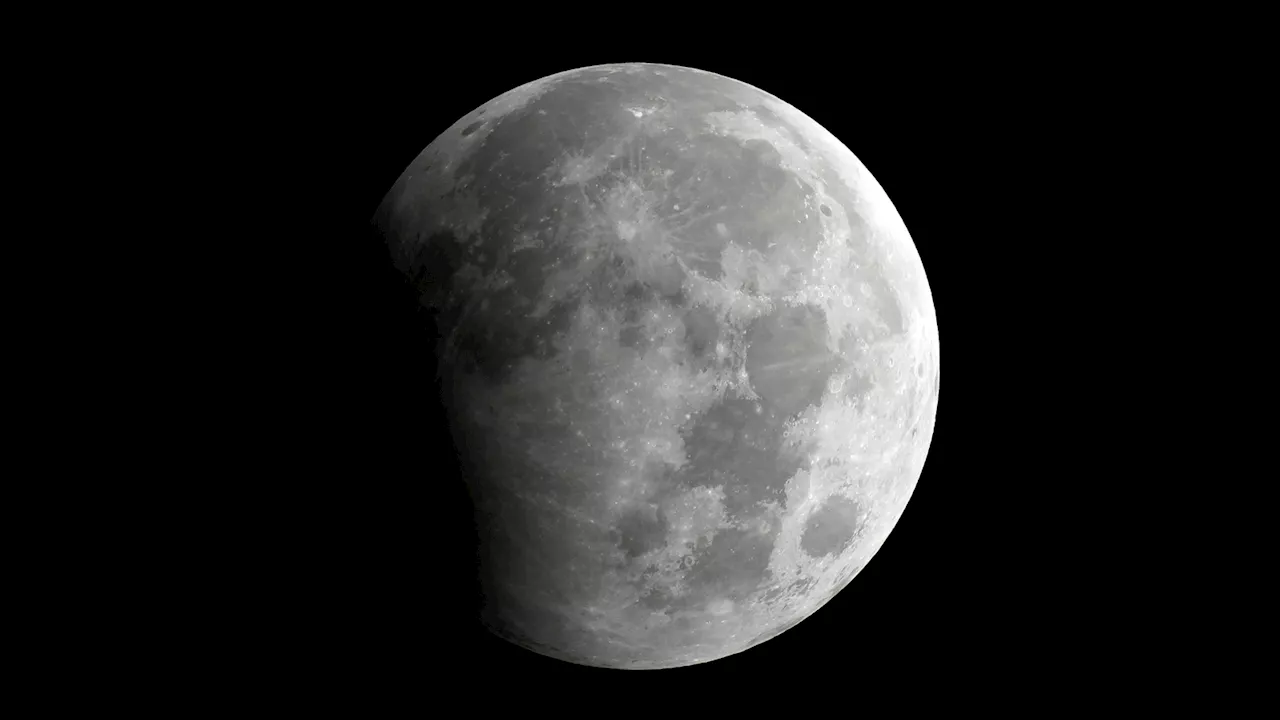
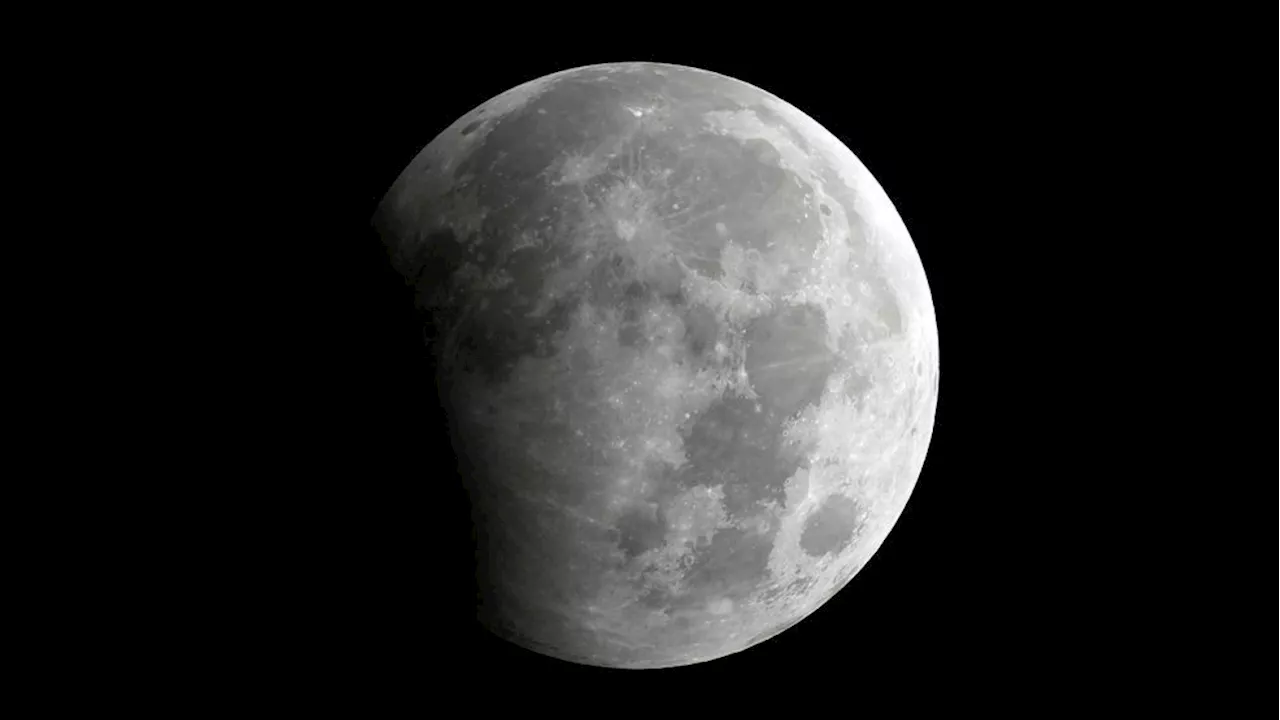
A slight partial lunar eclipse will be visible Tuesday night across the Atlantic Ocean region and portions of North and South America. The northwestern limb of the Moon will just brush past Earth's darkest shadow, making it appear slightly 'smushed' on one side.
A shallow partial lunar eclipse is on tap for the night of September 17th/18th. The eclipse is a slight one to be sure, but will be noticeable as the northwestern limb of the Moon just slips past the dark inner umbral shadow of the Earth .
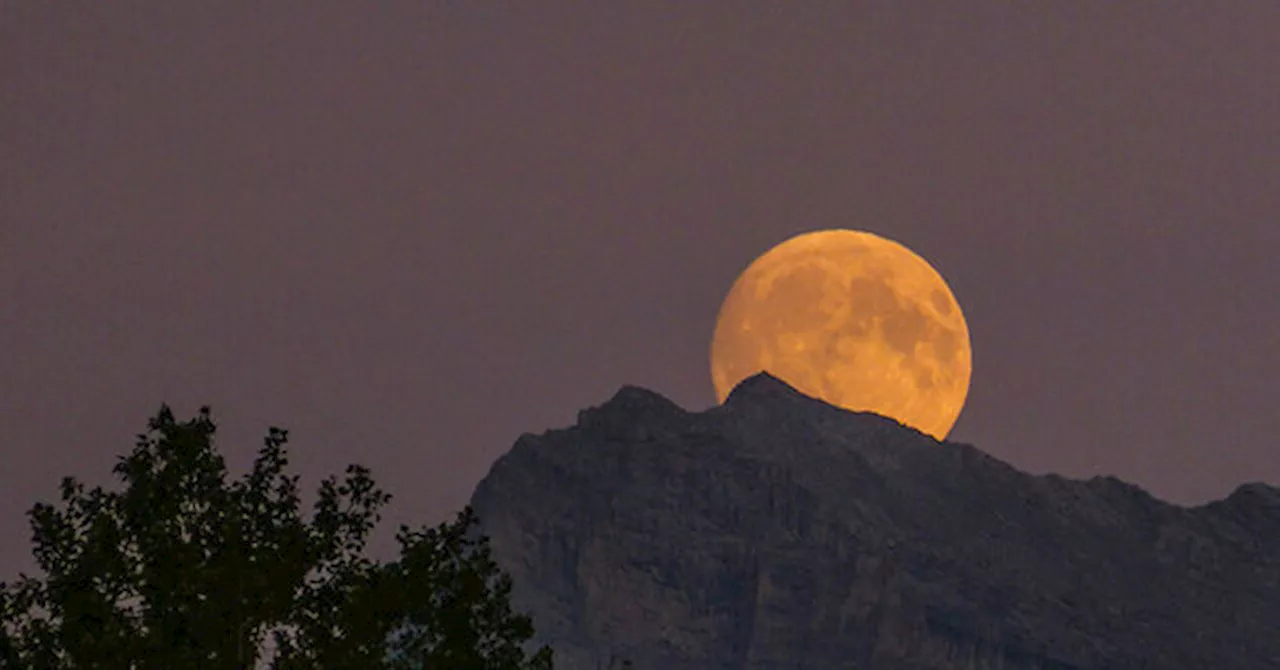
The eclipse is just over 8% partial at its maximum, meaning the Full Moon will look a little ‘smushed’ on one side at mid-eclipse.The eclipse will be visible in its entirety around the Atlantic Ocean region, including western Africa and Europe, eastern North America, and all of South America. Eastern Europe and Africa will see the eclipse in progress at moonset towards sunrise, while western North America will see the eclipse already underway at moonrise/sunset. The umbral phase of the eclipse lasts not quite 63 minutes in duration, and is centered on 2:45 Universal Time Sept 18th/10:45 PM U.S. East Coast Time on the evening of Tuesday, September 17. The entire penumbral phase of the eclipse starts at 00:41 UT/8:41PM EDT, and runs about 4 hours and six minutes in duration.This is also a complex event, before and after the eclipse. First up, the Moon occults just 10 hours after the eclipse. This will likely lead to cries of a ‘Supermoon eclipse’ across ye ‘ole web. Don’t buy into any purported ‘Blood Moon’ hype; the Moon won’t go far enough into the umbral shadow of the Earth to turn red. Finally, the Moonoccults Neptune for North America just over five hours after the eclipse, a challenging event indeed., for 2024) is also known as the Harvest Moon. Not only did the illumination from the Full Moon give farmers in the pre-industrial era a few extra hours to get the harvest in, but the angle of the ecliptic is shallow enough in September that the Moon seems to linger from one night to the next, rising only slightly later. I remember growing up picking potatoes in Northern Maine in September, working our way home on foot under the light of the Harvest Moon.Observing and imaging the eclipse is as simple as following the Full Moon Tuesday night at the appointed time. Modern phones zoomed in will produce a clear image, as will a phone camera aimed through the eyepiece of a telescope. You probably won’t notice anything is amiss with the eclipse until about 30 minutes into the penumbral phase. Then, the Moon may seem to have a bit of a tea-colored tint. Towards the partial phase, the ragged umbral shadow of the Earth will just brush the Moon. The curve of the shadow cast by the Earth will become apparent, visual proof that our fair planet is indeed round.The spectacle extends out into space as well. Most of the Earthward face of the Moon will experience a partial solar eclipse, except the very northwestern limb, which will see a total solar eclipse. Perhaps one day, human astronauts will stand on the Moon and witness this event., with members spaced 18.04 years apart. Several saroses are active at any given time. This is eclipse member 52 of 74 for lunar saros series 118, meaning this cycle is past its prime on its way out. Lunar saros 118 began waaaaay back on March 2, 2006 partial lunar eclipse centered over the Indian Ocean region, you caught the last member of this saros cycle. The final member of saros series occurs on… May 7The partial phase start of a lunar eclipse. Credit: Dave Dickinson
Lunar Eclipse Partial Eclipse Astronomy Earth Moon
United States Latest News, United States Headlines
Similar News:You can also read news stories similar to this one that we have collected from other news sources.
 Catch a partial lunar eclipse during September's supermoonThe spectacle will be visible in clear skies across North America Tuesday night
Read more »
 Catch a partial lunar eclipse during September's supermoonThe spectacle will be visible in clear skies across North America Tuesday night
Read more »
 Supermoon to Dim During Partial Lunar Eclipse Tuesday NightA partial lunar eclipse will be visible across North America, South America, Africa, and Europe this week, with the supermoon appearing slightly dimmer as Earth casts a shadow on it.
Read more »
 Full ‘Harvest’ Moon and Partial Lunar Eclipse Will Awe Viewers TuesdaySource of breaking news and analysis, insightful commentary and original reporting, curated and written specifically for the new generation of independent and conservative thinkers.
Read more »
 September's full Supermoon will be a partial lunar eclipse: What to knowThe full moon, also known as Harvest Moon, will arrive on Sept. 17.
Read more »
 Catch a partial lunar eclipse during September's supermoonThe Harvest Moon is the second of four straight supermoons.
Read more »