


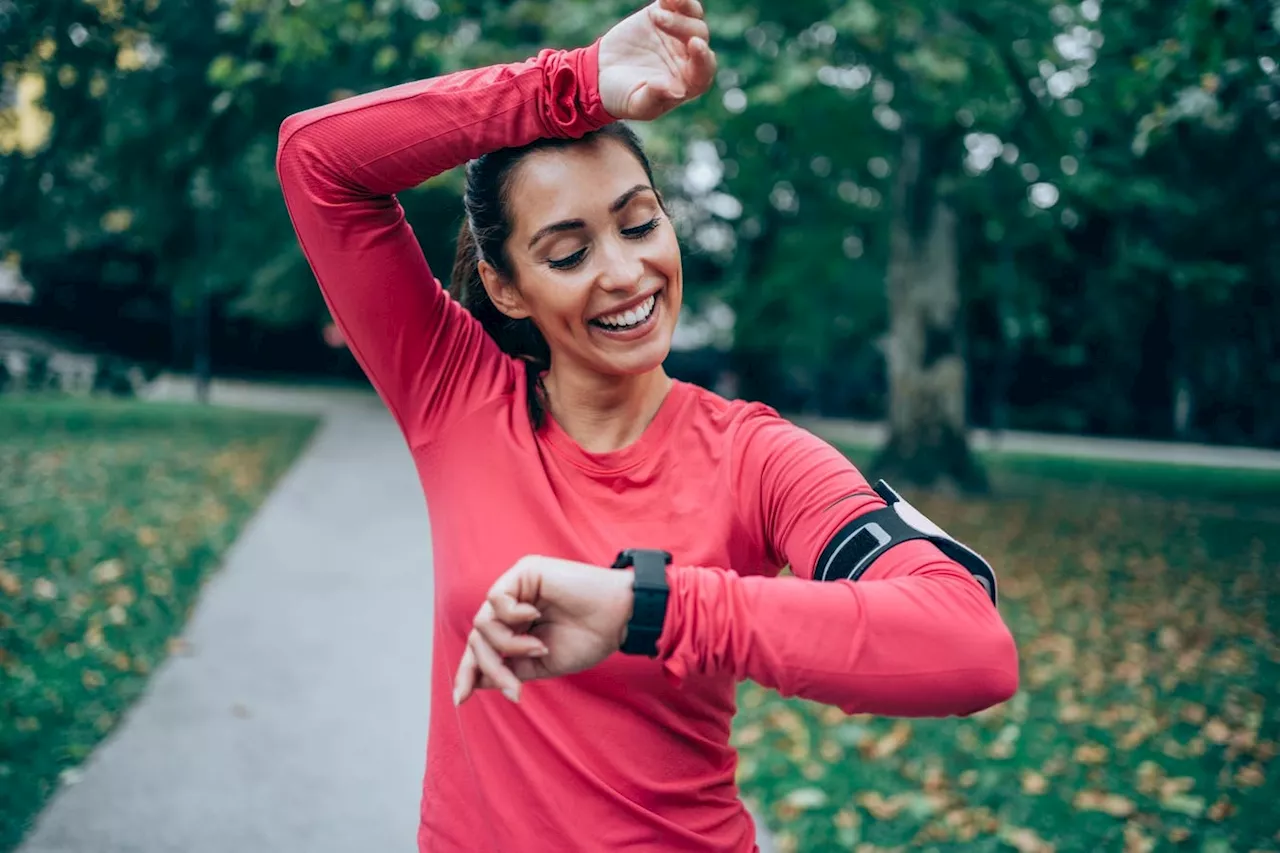
Health experts share how to mindfully use health tracking tools to optimize your health without obsessing.
While tracking things like your weight, your workouts, and what you eat may be something you’ve been familiar with for a long time now , but there are now so many other metrics you can keep tabs on to monitor your health, guide you with making changes, and note progress over time.
For women, using tracking tools can be especially helpful for optimizing fertility, addressing perimenopause, and supporting healthy lifestyle habits like being consistent with movement, managing stress, and getting quality sleep. So how to use tracking tools to your advantage without them taking over your life? Here’s what health experts want you to know., Board-Certified OB-GYN and hormonal health expert encourages women to keep track of the following metrics to keep tabs on their health:: “Tracking resting heart rate and heart rate variability can offer insights into cardiovascular health and autonomic nervous system balance to include stress levels.”A waist circumference greater than 35 inches in women is linked to higher risks of heart disease, metabolic syndrome, and type 2 diabetes.”: “Assessing duration and quality of sleep is essential for hormonal balance and mental health. Sleep plays a vital role in overall health, including mental clarity and physical recovery.”: “Tracking menstrual health can aid in understanding hormonal patterns and identifying any irregularities.” When used mindfully, health trackers can empower individuals to make informed decisions, says Dr. Verrico. They can be helpful in setting and achieving goals, identifying patterns, and enhancing motivation. To avoid getting sucked into unhealthy patterns with your tracker, she says, practice moderation. “Avoid obsessively checking metrics; instead, use the data as a general guide.” It’s also important to listen to your body and, if needed, “Consider device-free days to prevent over-reliance and promote a balanced relationship with technology.” If the use of a health tracker becomes compulsive or anxiety-inducing, she adds, take a break to reflect on your goals and seek support from a mental healthcare provider if you need help navigating obsessive thoughts.is a licensed naturopathic physician in Arizona and founder of the Brilliant Fertility Program, which serves women and couples worldwide to understand and optimize their fertility. She often recommends her clients use fertility tracking apps, at-home hormone monitors and basal body thermometers. “These can give deeper insight into menstrual cycle health, ovulation patterns and where someone may need support at the different phases of their cycle.” She also uses the Fertility Awareness Method in her practice, a tracking protocol that’s been around for decades and has a 91-99% accuracy when used correctly, she says. “Modern apps can complement FAM and potentially make it easier for women and couples to understand the menstrual cycle, ovulation patterns and when the fertile window is.”trying to get pregnant. “A woman is only fertile for up to six days a month— the five days before ovulation and one day after,” she says, so knowing when that occurs is key. “The first thing to be aware of is that tracking your cycle alone in an app—so only marking the dates of your period—will only accurately predict ovulation in about 13% of the population,” says Dr. Rose. “Without the additional information of basal body temperatures, changes in cervical fluid and additional signs of ovulation, period dates alone will not be enough information to know the fertile window.” Sometimes, however, this can become overwhelming for the consumer. “I commonly hear from patients and clients that tracking their cycles has become stressful. If they aren’t sure their cycles are normal, or they’ve observed something in the data they’re confused about or they’re using five different apps to track different parameters, it can perpetuate a cycle of stress, overthinking and even obsessive tendencies.” If this sounds like you, Dr. Rose encourages working with a provider who’s well-versed in the fertility awareness method as well as modern cycle tracking apps. “It’s a huge bonus if your provider is trauma informed and can give you tools and resources to reframe the mindset around looking at this type of information about your body.” Sometimes she recommends clients take a short break from tracking their cycles and instead focus on “creating a foundation for healthy hormones, and a solid mindset.”“I recommend women take a closer look at their nutrition and activity habits when it comes to optimizing their health and fitness,” she says. Having a place to log what you’re eating can help you make sure you’re eating enough fiber to support heart health or how much progress you’re making towards your steps goal. “If you’re currently not logging any physical activity, a fitness tracker, or downloading an app on your phone that tracks your steps, can be a simple, cost-effective tool to encourage you to set and achieve mini goals.” However, Shaw adds, “it’s also important to note there is not a one size fits all approach to monitoring trends in health and wellness as what each woman needs is highly individualized. Depending on your health goals, tracking can be a helpful tool to identify areas in your diet and lifestyle that you may need to focus on.” If you’re someone who easily takes things to extremes, she explains, “using your tracker as a tool for check-ins versus daily entries may be a better option for you. This may mean you evaluate your dietary habits 3-days every week, alternating between work and weekend days so you see your trends. Using a tracker shouldn’t feel like another “to-do” on your list, so if it’s becoming obsessive, it’s time to disconnect and consult with a trained dietitian or exercise professional to help set a plan tailored to your needs, no logging required.” She adds that if you recognize that tracking has become unhealthy for you, “seek help from a trained dietitian or exercise professional, depending on your habits. They can work with you alongside a tailored multi-disciplinary team to continue to help meet your goals in a healthy, sustainable way.” “Social media and headlines can be very loud when it comes to telling you what you should be doing when it comes to health and wellness,” Shaw says. “But, your needs and habits are individualized, and whether or not tracking trends is right for youDr. Logan Schneider, M.D., Clinical Lead for Sleep Health at Google Health, says, “Sleep tracking helps you understand your sleep patterns and how they connect to your overall health. By looking at your sleep data alongside checking in with yourself on how you feel, you can make more informed decisions about your sleep habits and environment.” “Some people might want to explore the impact of a specific habit on their sleep to see what behavior changes might give them the biggest bang for their buck. Alternatively, others might be interested in determining what about their sleep helps them feel or function better. By monitoring sleep data and pairing that with a journal or log, patterns might emerge that can help people identify what aspects of their sleep affect things they care about during their day.” There are several ways you can use the information your tracker or smartwatch provides to build healthier sleep habits, says Dr. Schneider. “Tracking your sleep allows you to test different changes—like adjusting your room temperature or bedtime routine—to see what actually helps you wake up feeling better.” Getting to know your unique sleep patterns can help you create a routine that works for you.shows the quality of your sleep so you can spot trends and make small tweaks to improve your rest.” Tracking changes over time helps you see what’s working. Instead of trying to change everything at once, though, says Dr. Schneider, focus on simple, sustainable changes. “Small adjustments add up over time.” And if you’re the parent of young kids where disrupted sleep feels like the norm, don’t despair, he adds.As a parent myself, I know having caregiving needs for little ones limits your control of your own sleep schedule, so you’re not alone! The good news is that your body can be more adaptable when it’s finally time to settle into a new routine. Pre-planning and consistency can go a long way in helping the whole family. Since babies haven’t developed their own sleep rhythms yet, the structure you create in the post-newborn phase helps them—and you—find better sleep habits and patterns over time.” As kids start to grow and their sleep needs change, he adds, “the best strategy to adapt to things not seeming to work any longer is to determine whether the family’s needs have changed and what a new structure of routines and schedules looks like. Again, having a clearer idea of what the sleep goals are helps set expectations for everyone and defines a clear goal that anchors decisions despite slight variations from day to day.”Just because you can track so many things doesn’t necessarily mean you need to. Think about what is most important for you to focus on, and start there. Know that you can start small and add more over time if it serves you. And if you do start to feel like you’re getting a little too fixated on those metrics, don’t be afraid to reach out for support.
United States Latest News, United States Headlines
Similar News:You can also read news stories similar to this one that we have collected from other news sources.
 Trump Administration Terminates Key Health Advisory Committees, Threatening Health EquityPresident Trump commanded the HHS to terminated key health advisory committees. Here's how that affects public health.
Read more »
 Improving Patient Outcomes by Optimizing Care With Insights From Retrospective StudiesDr Maurie Markman explores recent findings showing how retrospective studies can help optimize future care strategies.
Read more »
 Screening and treating maternal psychological health key to improving cardiovascular healthIdentifying and treating risk factors for depression, anxiety and other psychological health conditions during pregnancy and postpartum may improve short- and long-term health outcomes for both mother and child, according to a new scientific statement.
Read more »
 The science of optimizing sleep through temperature.Want better sleep? A cooler room might be the key. Discover the science that connects temperature and sleep for more restful nights.
Read more »
 Crohn’s Risk Stratification: Optimizing Patient CareDr Jordan Axelrad discusses the importance of assessing disease risk and severity as guidance for effective therapy in Crohn’s disease.
Read more »
 Self-optimizing catalysts facilitate water-splitting for the green production of hydrogenResearchers have developed cost-effective and efficient water-splitting catalysts to be used in the eco-friendly production of hydrogen. Catalyst performance surprisingly increases over time.
Read more »