


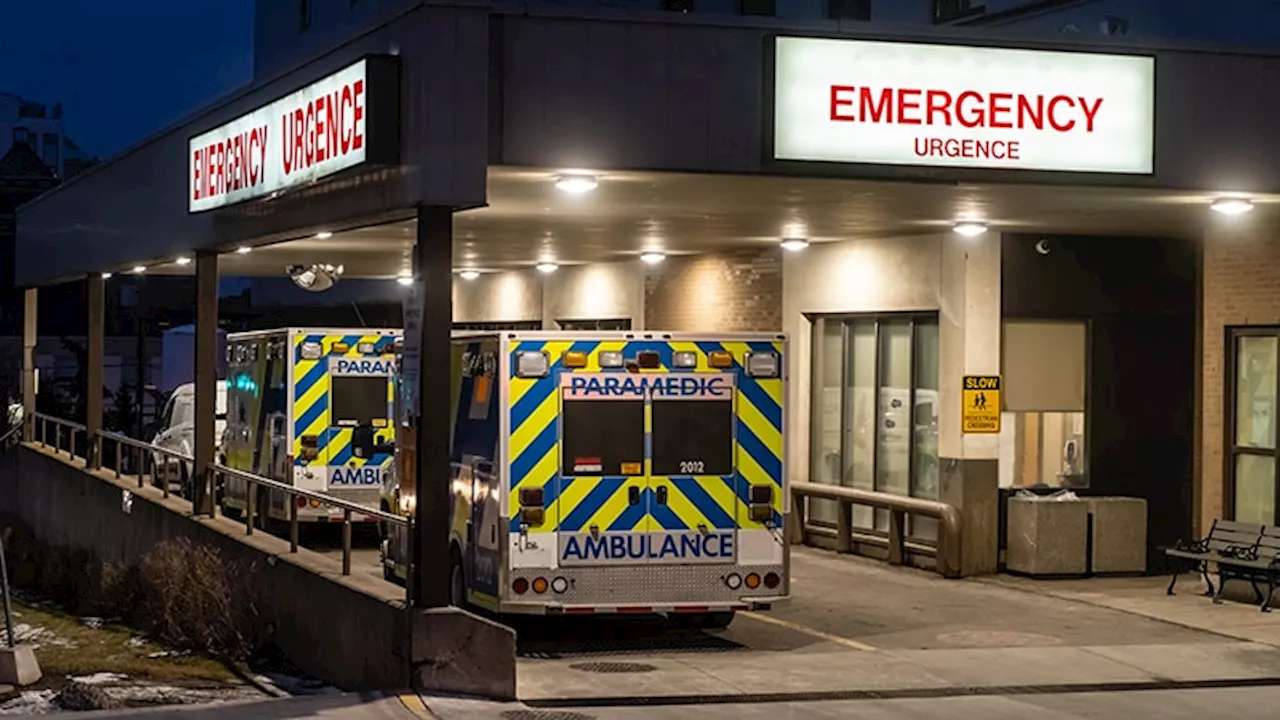
Researchers call for long-term, consistent funding for primary, emergency, hospital, and long-term care.
Higher rates of leaving the emergency department without being seen are linked to increased short-term mortality or hospitalization, according to a cohort study in Ontario, Canada .“We found that after 2020, there was a 14% higher risk for death or hospitalization within 7 days” among patients who left without being seen , Candace McNaughton, MD, PhD, associate professor of medicine at the University of Toronto and scientist at Sunnybrook Research Institute, both in Toronto, Ontario, Canada , told“When we looked at death by itself, there was a 46% higher risk after 2020,” she said.
“Even 30 days after a LWBS ED visit, there was still a 5% increased risk for death/hospitalization and a 24% increased risk for death.”LWBS Rates Increased Researchers used linked administrative data to analyze temporal trends in monthly rates of ED and LWBS visits for adults in Ontario from 2014 to 2023. They compared the composite outcome of 7-day all-cause mortality or hospitalization following an LWBS ED visit in April 2022‒March 2023 with that following an LWBS ED visit in April 2014‒March 2020 , after adjustment for age, sex, and Charlson Comorbidity Index . In the two periods, patient characteristics were similar across age, sex, neighborhood-level income quartile, history of being unhoused, rurality, CCI, day, time, and mode of arrival. The median age was 40 years for the baseline period and 42 years for the recent period. Temporal trends showed sustained increases in monthly LWBS rates after 2020, despite fewer monthly ED visits. The rate of LWBS ED visits after April 1, 2020, exceeded the baseline period’s single-month LWBS maximum of 4% in 15 of 36 months. The rate of 7-day all-cause mortality or hospitalization was 3.4% in the recent period vs 2.9% in the baseline period , despite similar rates of post-ED outpatient visits . Similar trends were seen at 30 days for all-cause mortality or hospitalization despite similar rates of post-ED outpatient visits .The proportion of LWBS visits categorized as emergent on the Canadian Triage and Acuity Scale was higher during the recent period , and fewer visits were categorized as semiurgent . This finding suggested a higher acuity of illness among patients who LWBS in the recent period.Results of a preplanned subgroup analysis examining the risk for all-cause mortality after an LWBS visit were “particularly notable,” the authors wrote, with a 46% higher adjusted risk for death at 7 days and 24% higher adjusted risk at 30 days. The observational study had several limitations, however. The authors could not draw conclusions regarding direct causes of the increased risk for severe short-term adverse health outcomes after an LWBS ED visit, and residual confounding is possible. Cause-of-death information was not available to generate hypotheses for future studies of potential causes. Furthermore, the findings may not be generalizable to systems without universal access to healthcare. Nevertheless, the findings are a “concerning signal should prompt interventions to address system- and population-level causes,” the authors wrote. “Unfortunately, because of politics, since 2020, ED closures in Ontario have become more and more common and seem to be affecting more and more Ontarians,” said McNaughton. “It would be surprising if ED closure didn’t play some role in our findings.” She added, “It is important to note that people in our study were relatively young, with a median age in their 40s; this makes our findings all the more concerning. Clinicians should be aware that LWBS ED visits are not necessarily benign, particularly when rates of LWBS ED visits are high.”The study raised the following questions that the authors are or will be investigating, according to McNaughton: Which patients are at greatest risk for bad outcomes if they leave the ED without being seen, and why? How much of the findings might be related to recent ED closures, longer ED wait times, or other factors? Are there geographic variations in risk? What can be done in the ED to prevent LWBS ED visits, and what can be changed outside the ED to prevent LWBS ED visits? For example, what can hospitals do to reduce boarding in the ED? If patients leave without being seen, should they be contacted to try to meet their health needs in other ways? What worked in terms of maintaining access to outpatient medical care, despite the considerable disruptions starting in 2020, and how can continued success be ensured? To address the current situation, McNaughton said, “We need consistent, predictable, and sustained investment in our public healthcare system. We need long-term, consistent funding for primary care, ED care, as well as hospital and long-term care.” “It takes years to recruit and train the teams of people necessary to provide the high-quality medical care that Canadians have a right to. There are no shortcuts,” she concluded.American College of Emergency Physicians spokesperson Jesse Pines, MD, chief of clinical innovation at US Acute Care Solutions; clinical professor of emergency medicine at George Washington University in Washington, DC; and professor of emergency medicine at Drexel University in Philadelphia, commented on the study for“Similar to what the authors found in their report, LWBS and other metrics — specifically boarding — have progressively increased in the United States, in particular, since the early part of 2021,” he said. “The primary factor in the US driving this, and one that ACEP is trying to address on aWhen the number of boarded patients increases, there is less space in the ED for new patients, and waits increase, Pines explained. Some patients leave without being seen, and a subset of those patients experience poor outcomes. “It’s a tragic situation that is worsening.” “Emergency physicians like me always worry when patients leave without being seen,” he said. While some of those patients have self-limited conditions that will improve on their own, “some have critical life-threatening conditions that require care and hospitalization. The worry is that these patients experience poorer outcomes,” Pines said. “The authors showed that this is increasingly the case in Canada. The same is likely true in the US.” The study was funded by the Canadian Institutes of Health Research. McNaughton and Pines declared no relevant financial relationshipsMarilynn Larkin, MA, is an award-winning medical writer and editor whose work has appeared in numerous publications, including Medscape Medical News and its sister publication MDedge, The Lancet , and Reuters Health.
Revenue Canada Canadian Hospitals Long-Term Care Long-Term Care (LTC) Washington DC Washington - District Of Columbia Washington Healthcare And Medical Technology Health And Medical Tech Health And Med Tech Health And Medical Technology Healthcare Technology Medical Technology Investment Medical Innovations Innovations In Medicine Innovation Politics Political
United States Latest News, United States Headlines
Similar News:You can also read news stories similar to this one that we have collected from other news sources.
 Italian Wood-furniture Supply Chain 2024 Revenues Seen Down 2.7 Percent; Slow Recovery Seen in 2025FederlegnoArredo predicts a 2.7% revenue decline in Italy's wood furniture sector for 2024, with a slow recovery expected in 2025.
Read more »
 Neil Cavuto Signs Off Fox News: ‘I’m Not Leaving Journalism, I’m Just Leaving Here’Source of breaking news and analysis, insightful commentary and original reporting, curated and written specifically for the new generation of independent and conservative thinkers.
Read more »
Carlos Santana Signs with Guardians, Leaving Twins Without First Base SolutionCarlos Santana has signed with the Cleveland Guardians, leaving the Minnesota Twins without a clear first base solution for the 2025 season. Despite previous interest in re-signing Santana, the Twins were not among the teams that ultimately pursued him.
Read more »
 Major Power Outage Hits Puerto Rico, Leaving Over 1 Million Without ElectricityA widespread blackout in Puerto Rico affects over 1.2 million residents. Luma Energy investigates the cause, pointing to potential underground power line issues. Restoration efforts are underway, but the timeline remains uncertain.
Read more »
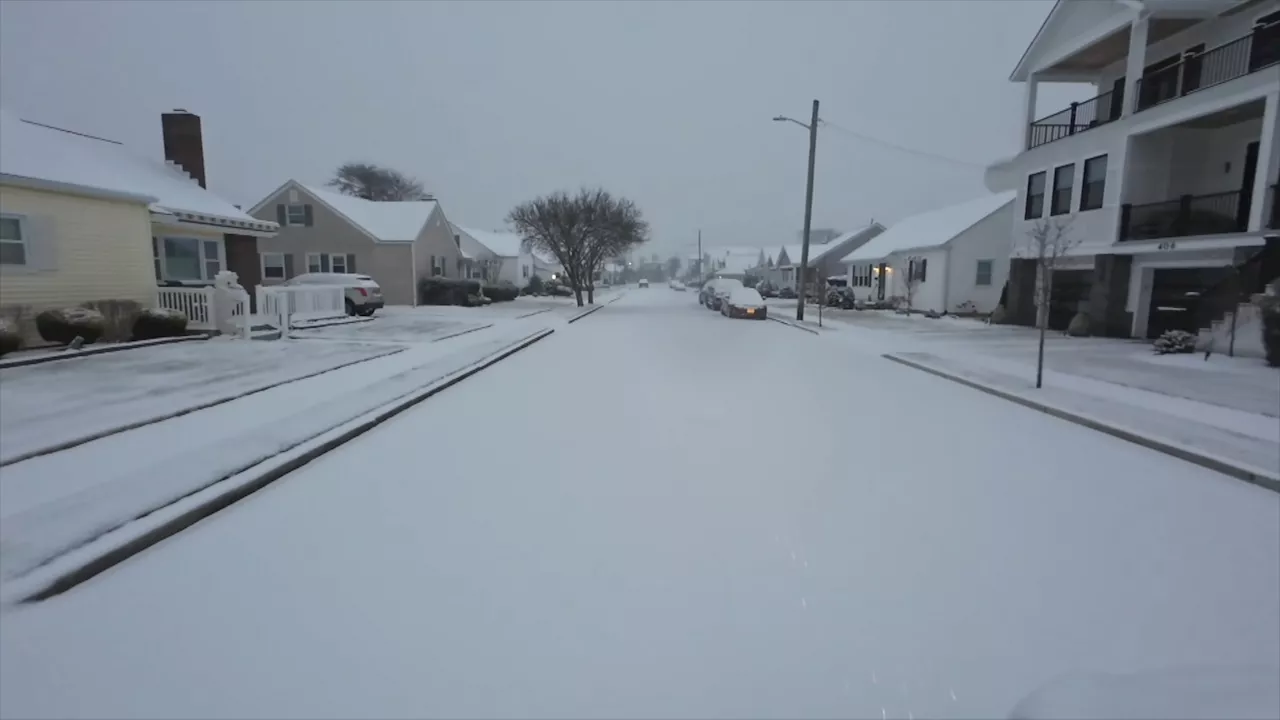 Winter Storm Blankets Midwest, Leaving Thousands Without Power and Prompting Shelter-in-Place OrdersA major winter storm has brought dangerous weather conditions to the Midwest, causing widespread power outages, school closures, and travel disruptions. Washington County in Illinois issued a shelter-in-place order due to the storm, while other states like Kansas, Nebraska, and Indiana also experienced significant impacts.
Read more »
 Thornton Township Meeting Fails Due to Supervisor Absence, Leaving Residents Without InsuranceA planned emergency meeting of the Thornton Township Board in Illinois failed to proceed due to the absence of Supervisor Tiffany Henyard. The meeting aimed to address the lapse in the township's insurance policy, which both Henyard and two dissenting trustees blame on each other. With no quorum present, residents are left without property, auto, liability, or workers' compensation insurance.
Read more »