
View the San Francisco for Wednesday, December 11, 2024
District 3 Supervisor-elect Danny Sauter: “I think everything related to downtown and tourism and hospitality has to be front and center,”in San Francisco’s northeast, grew up in a household where politics and public service were constantly in the background.
Sauter said his father was a labor attorney who represented multiple unions, and his mother was a teacher who ran the community-service program at the local high school and would take him to a soup kitchen with her to volunteer. That blend of experiences “always oriented me towards being interested in public service,” said Sauter, a nonprofit executive director, community organizer and political moderate by San Francisco standards. His campaign won the backing of moderate forces seeking an aligned majority of supervisors. Come January, Sauter will get to do the public’s business on a whole new level as a first-time elected official and District 3’s first new supervisor since 2015. His district includes the Financial District —— in addition to Chinatown, Jackson Square, North Beach, Fisherman’s Wharf, Polk Gulch and Union Square, as well as Russian, Telegraph and Nob hills.cleaner; building affordable housing; protecting renters; filling vacant storefronts; and reducing homelessness. His stances drew support from some tech-aligned reformists who labeled longtime Supervisor Aaron Peskin an obstructionist on housing. Sauter — a 36-year-old native of Columbus, Ohio — got his start in private industry, moving to San Francisco after graduating from Miami University in Oxford, Ohio, for his first job, which was at a tech startup where Sauter said he met his future wife.Sauter majored in marketing and minored in entrepreneurship and Chinese as an undergraduate, then cofounded a digital marketing agency in North Beach called Bamboo, which he helped run for five years and grow to 58 employees. In late 2015, however, Sauter said his life took a turn when he became increasingly involved in North Beach Neighbors, a neighborhood organization serving the area where he rents an apartment and for which he served as a board member and past president. For the group, Sauter led a successful effort to establish a farmers market, which he has run and which typically operates on Saturdays at Greenwich St. and Columbus Ave. The experience fueled Sauter’s desire to be more widely involved in local affairs, he said. Sauter said setting up the farmers market also demonstrated how difficult it can be to get things done in The City, prompting him to think about cutting red tape and improving municipal services. Sauter began volunteering for political campaigns, such as Sen. Scott Wiener’s 2016 run for state Senate. He helped to count and draw attention to the number of vacant stores in the district, organized street cleanups and a volunteer delivery service to support local restaurants during the COVID-19 lockdown, lobbied for more protected bicycle lanes andIn August of 2019, Sauter left Bamboo, which is now located in Seattle, and became the executive director of Neighborhood Centers Together, a nonprofit that provides support to eight neighborhood centers around The City. “I left that work with the advertising agency to try and be closer to this world, this world of politics, this world of civic engagement, public service,” Sauter said. “I didn’t exactly know where it would lead me, but I knew I needed to be in this world. It was something I couldn’t shake.” About the same time, Sauter said, he started taking lessons in Cantonese to better communicate with Asian American residents in District 3, which he has pursued ever since.Supervisor Aaron Peskin speaking at Supervisor Connie Chan’s reelection victory celebration on the steps of San Francisco City Hall on Tuesday, Nov. 12, 2024. Seeing a lack of what he saw as a credible candidate to challenge Supervisor Peskin in the 2020 election, Sauter jumped into the deep end. Although Peskin prevailed, Sauter finished second with 43% of the vote after the final tally of ranked-choice ballots. This year, Peskin was not on the ballot, as he was termed out after his second consecutive term — his fifth on the board overall — and Sauter beat out two candidates endorsed by Peskin. After five rounds of ranked-choice voting, Sauter won almost 55% of the vote, or 14,056 votes, compared with 45% for second-place finisher Sharon Lai, who got 11,512 votes.of the race in which several of his opponents formed alliances to urge voters to place each other’s names above Sauter’s as a second choice.in 2020 following a Minneapolis police officer’s murder of George Floyd, highlighting the need for more mental-health and social-worker responders. This election, Sauter insisted that he supported increased police staffing., particularly high-density housing on commercial corridors — as someone “bought and paid for by big developers” and questioned Sauter’s commitment to protecting tenants, a concern Sauter rejected. Sauter has argued that embracing urban density will make San Francisco more vibrant and help achieve its climate goals. Sauter received contributions from a wide array of interests, including real estate and the San Francisco Apartment Association Political Action Committee, as well as prominent tech and venture-capital figures. In all, he raised $429,211, including public financing. Outside spending in support of Sauter was higher than for any other candidate, coming from two moderate groups: an Abundance Network-sponsored committee that spent $161,877 and a GrowSF committee that spent $70,910, according to city records. The Abundance Network, a pro-housing organization with tech origins, was instrumental in the moderate takeover of the San Francisco Democratic County Central Committee in the March election, and the committee in turn endorsed Sauter. Diana Taylor, president of the Barbary Coast Neighborhood Association, said she expected Sauter’s experience supporting small businesses will help attract neighborhood-serving retail in areas such as where she lives just north of downtown, which she said has many vacant storefronts and no functioning commercial corridor. Taylor said she expected Sauter to elevate community voices versus paid lobbyists, who too often hold inordinate sway in her opinion. “Danny, as a neighborhood organizer, knows that leveling the playing field is critical to making projects fit in a neighborhood,” she said. Danny Sauter will represent District 3 on the Board of Supervisors, which includes North Beach and Columbus Avenue. Sauter was optimistic about the future, saying he believes that falling interest rates will energize the economy. He did not endorse any candidate for mayor but said having a new mayor in Daniel Lurie will help shake off a “stigma” that has settled on The City, which has suffered from negative perceptions fueled by stories in recent years about San Francisco’s problems with crime, commercial vacancies and homelessness. “There has been a hesitancy to take a chance in San Francisco,” Sauter said. ”A new mayor is an important opportunity for us to go and sell San Francisco again.” Sauter said he wants to spur action on a variety of fronts, particularly to stimulate a revival of the downtown economy, an area he thinks has not received enough “urgency.” Downtown San Francisco has had record-high office vacancies since the pandemic and the rise of remote work. “I think everything related to downtown and tourism and hospitality has to be front and center,” said Sauter, who recently met with Lurie and told the mayor-elect the No. 1 thing he wants to work with him on is “everything related to downtown recovery.” As others have, Sauter said he hopes to see a significant number of office-to-residential conversion projects in underutilized office buildings downtown. Though Mayor London Breed pushed for regulatory changes to facilitate such conversions and voters in March passed a transfer-tax exemption on the sale of converted buildings, there has been no flood of proposals. “Everyone’s been talking about this for the last few years, but we’re not seeing much action on it — and I want to understand why that is,” he said. Sauter points to the example of the former Pfizer Inc. headquarters building in midtown Manhattan, which is being converted into apartments as part of what is billed as the largest office-to-residential conversion in the Big Apple’s history.One thing Sauter said he would like to see is city employees working in person in offices more days per week, which he argued could especially benefit neighborhoods around Civic Center.Advocates want San Francisco to acquire the the vacant, fire-blighted property at 659 Union St. for affordable apartments and space for a future North Beach station on the Central Subway. On Washington Square Park, meanwhile, Sauter said he wants to see progress on rebuilding the burned-out shell of an apartment building at 659 Union St., which was gutted by a massive fire in 2018. Proposals to redevelop the property, including a hotel and rooftop restaurant, have stalled. Sauter said he wants The City to investigate the possibility of buying the site for affordable housing and potentially a North Beach station for the Central Subway, which Sauter — pointing out that a tunnel has already been dug to the site — said he would like to see extended from Chinatown to Fisherman’s Wharf. Precedent for such a purchase exists: The City in 2012 bought property on Stockton Street for the Central Subway’s Chinatown Rose Pak Station, he said. “One way or another, I want some action on that building,” Sauter said. “I want some movement. I know the neighborhood does. It’s a big hole in the neighborhood.”San Francisco native Lucas Hinds Babcock said he first auditioned for “Hamilton” — a show he said inspired him to pursue a career in theater — while he was living in New York City.Lin-Manuel Miranda’s multiple Tony Award-winning musical “Hamilton,” which premiered Feb. 17, 2015, in New York, was already making an impact on American culture, politics and education by the time the smash hit debuted in San Francisco two years later. And now, amid the production’s fourth run at the Orpheum Theatre — which opened Thanksgiving week and lasts through Jan. 5 — the musical is as relevant and alluring as it has ever been. Miranda’s sung-and-rapped-through opus about the life of Alexander Hamilton, one of the most influential of the U.S. founding fathers, was based on Ron Chernow’s 2004 biography. The stage work casts nonwhite actors in the roles of the white founding fathers to make the musical, as Miranda once put it, aboutThe show raised eyebrows in some quarters, but it has proven to be a major draw with an enduring cultural impact. “I remember when the musical first came out, seeing people who looked like me on stage performing R&B songs, rap, hip-hop and pop, it changed my perspective on what was possible, especially someone who loves theater and thought that maybe it was something I could do,” said Lucas Hinds Babcock, a native San Franciscan who portrays founding father John Laurens and Hamilton’s son, Philip, in the musical. “And so I’m sure that a lot of other people-of-color kids feel the same way.”“ opens a discourse and allows people to have a conversation about the relevance of the story that we tell, and I don’t think that will ever go away,”attended Sacred Heart Cathedral Preparatory in The City, was a member of the American Conservatory Theater’s Young Conservatory and was cast in ACT productions of the musicals “Into the Woods” and “Urinetown.” He graduated from Emerson College with a bachelor’s degree in musical theater and said he auditioned for a role in “Hamilton” in 2021 while he was a junior in college. “I started by submitting to an open audition that had been posted on social media and I heard back; over the course of three years they kept calling me in for auditions,” Babcock said. “Finally, post-college, when I was in New York City I got an audition again from ‘Hamilton’ for John Laurens, and I told myself this was the time I was going to actually book it. It was a six-month process starting in January until June when I finally heard that I got it.” Both of the roles Babcock plays — Laurens, a South Carolinian who opposed slavery and died fighting for American independence in the Revolutionary War, and Philip Hamilton, who was“At the time that Laurens fought for freedom from slavery, a lot of people didn’t speak up about that issue. Babcock said. “He had that fire in him to do what was right, and ultimately it cost him his life. “And with Philip Hamilton, he’s a boy, and he looks up to his father, who is this war hero and founding father who created the federal government and financial system. He wanted to be just like , and he also had a fire in him, and his fight also ultimately got him killed.” As for Alexander Hamilton, who was the nation’s first Treasury secretary and is portrayed by Blaine Alden Krauss in“Hamilton, Thomas Jefferson, James Madison, George Washington — they are full people, and by that I mean they have good to them and bad to them,” Babcock said. “They did some horrible things — at that time, a lot of them owned slaves, and one could say they were misogynistic. But at the same time they were geniuses; they founded a country out of nothing, fought for freedom from tyranny and were able to build a nation that would go on to be one of the strongest in the world, and you have to give them credit for that along with their faults.” Ultimately, Babcock said he feels the show does a good job of recognizing the good and the bad of its characters and leaves it up to the audience to form an opinion about who they were., a free set of resources for high-school students established as a collaboration between Miranda and the Gilder Lehrman Institute of American History that seeks to integrate “Hamilton” with American history. “We have school students come to watch the show; we hold Q&As with them about history and our characters,” Babcock said. “The schools will do lesson plans about the Founding Fathers and the Revolutionary War, and then they’ll bring the students to the theater, which is just magical. It makes history exciting, which is something that’s always welcome.” Hamilton’s origins as an immigrant from the Bahamas is another salient point from the musical that makes it relevant today, with immigration a hot-button issue. And for Babcock, who is of mixed-race background — his father is from Trinidad and his mother from Chicago — the tale of the musical’s namesake really hits home. “The story of an immigrant who came to this new land and helped build a country — it’s almost the pinnacle of the American Dream, and we shouldn’t forget that the American Dream is still real to a lot of people,” Babcock said. “Coming from an immigrant family myself, and then also in the show being able to play the son of an immigrant, it’s always something that’s on my mind and that’s always relevant. The show opens a discourse and allows people to have a conversation about the relevance of the story that we tell, and I don’t think that will ever go away.”Newly elected San Francisco Supervisor Chyanne Chen pitched her supervisorial candidacy as one that unified district residents across several generations.said she wants to bring her district together after one of The City’s most closely contested elections in recent memory. Her deep involvement in volunteering and community organizing, friends say, has prepared her to do just that in representing neighborhoods on The City’s southeastern sides. The 40-year-old Mission Terrace resident beat moderate challenger Michael Lai by 198 votes in the final ranked-choice voting tally of the Nov. 5 election. When sworn into the Board of Supervisors on Jan. 8, she will replace termed-out incumbent District 11 Supervisor Ahsha Safai. Chen, a longtime labor-union representative and organizer, spent months on the campaign trail pitching her candidacy as one that unified district residents across several generations. That approach, she said, will ensure their needs and priorities get addressed at City Hall through an avenue where constituents can easily voice their concerns. Her desire to involve as many community members as possible in her campaign required reaching out to all corners of District 11, where Chen said she individually knocked on neighbors’ doors and met with merchants.since officials instituted ranked-choice voting in 2004. Prior to Chen’s 198-vote victory, only two races had been decided by thinner margins. Her campaign formed a ranked-choice-voting alliance in the race’s infancy with Ernest Jones, a former legislative aide to Safai and the last of the top supervisorial candidates., Chen jumped out in front in totals released Nov. 9, and ballots largely continued breaking in her direction until the final count.She said her “message of bringing people together and building community” resonated with voters.“Chyanne sincerely wants to serve San Francisco and I am confident that she will be a leader our communities can depend on,” he said via text message., said she first met Chen through the supervisor-elect’s involvement in the organization. Chen joined the CPA as a youth member in the early 2000s after emigrating from China as a teenager, and she also held various roles on the organization’s staff and board throughout the 2010s. Her projects included facilitating restorative-justice training sessions and holding educational workshops on multiracial solidarity.Chyanne Chen , the District 11 supervisor-elect, met with merchants like Aldie Chung, owner of Al’s Appliances on Geneva Avenue. “Obviously, it’s the spoken language, but it’s also kind of embodying the body experience of struggling as an immigrant youth and then as an immigrant worker,” Lam said.Chen’s ability to strike up a conversation with anybody in the room would be useful come her inauguration, Lam said, particularly in situations in which people with different perspectives need to reach a consensus. Lam said Chen’s approach and orientation of meeting people where they’re at allowed the supervisor-elect to have vulnerable and honest conversations with business owners and residents. “This job obviously requires some experience and knowledge — but more importantly, it requires leadership,” Lam said of serving on the Board of Supervisors. “It requires a leader who is committed to her values and who knows to come back to the people and listen to the people that guide her decision-making.”, first met Chen in 2022 when the two collaborated on a project for the Chinese Progressive Association. Tamayo-Lee, who uses they/them pronouns, told The Examiner they were immediately struck by Chen’s energy and presence. They said Chen is someone who would support immigrants in The City through language access while also ensuring that communities of color did not get pitted against each other when advocating for particular causes or programs. “She has cultivated a lot of relationships over the years that I think will help her move into a supervisorial role — not just with her own individual vision and agenda, but one that really reflects a multitude of voices in the community, told The Examiner that she believes representation matters. Her political interest stemmed from wanting to ensure working-class families’ best interests were reflected on the Board of Supervisors, she said. The supervisor-elect said she learned the importance of communication while volunteering with Chinatown’s Charity Cultural Services Center, cleaning graffiti in the neighborhood and connectingFriends of Chen said that the supervisor-elect has an approach and orientation of meeting people where they’re at, which allows the supervisor-elect to have vulnerable and honest conversations with residents and business owners. On the campaign trail, Chen said, she heard voters throughout District 11 express similar desires no matter the neighborhood. Whether in Crocker-Amazon or Cayuga Terrace, she said, the commonalities included improving pedestrian safety and increasing public recreation opportunities. Public safety was also a concern, and Chen said The City’s approach to crime must recognize its societal roots. In addition to, Chen said city departments must invest in preventative measures such as providing ample after-school programs and beefing up victim-services departments. As she prepares to step into City Hall next month, Chen said she is “very confident” her campaign laid a “very strong foundation” for District 11 residents to see her “as a unifier.”Click and hold your mouse button on the page to select the area you wish to save or print. You can click and drag the clipping box to move it or click and drag in the bottom right corner to resize it. When you're happy with your selection, click the checkmark icon next to the clipping area to continue.This is the name that will be displayed next to your photo for comments, blog posts, and more. Choose wisely!Create a password that only you will remember. If you forget it, you'll be able to recover it using your email address.Forgot Password An email message containing instructions on how to reset your password has been sent to the email address listed on your account.
United States Latest News, United States Headlines
Similar News:You can also read news stories similar to this one that we have collected from other news sources.
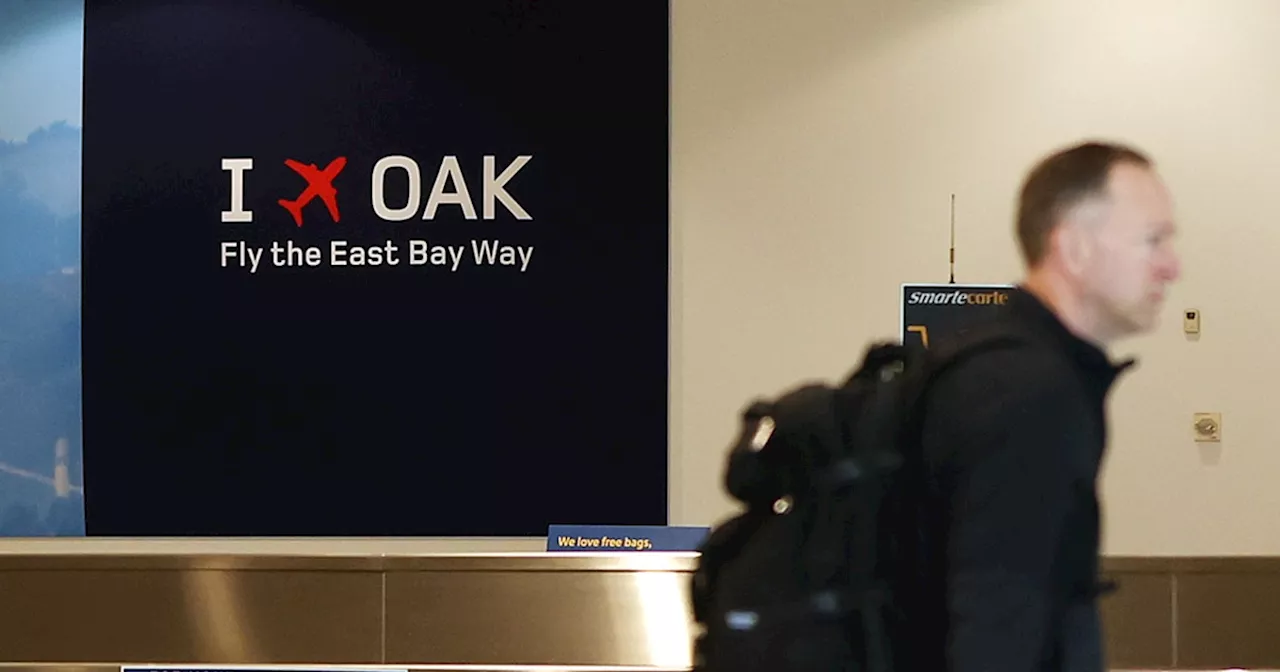 San Francisco wins order blocking Oakland’s airport from using ‘San Francisco’ nameReuters
Read more »
 Page A1View the San Francisco for Wednesday, November 27, 2024
Read more »
 Page A1View the San Francisco for Thursday, November 28, 2024
Read more »
 Page A1View the San Francisco for Sunday, December 1, 2024
Read more »
 Page A1View the San Francisco for Wednesday, December 4, 2024
Read more »
 Page A1View the San Francisco for Thursday, December 5, 2024
Read more »