
View the San Francisco for Thursday, December 5, 2024
Connie Chan beat out Marjan Philhour for the District 1 supervisorial seat in a pair of close elections in 2020 and 2024.Chan said her mother, Irene Tam, whom she frequently cites as her biggest inspiration, discouraged her from even paying attention to government affairs, let alone making it her living.
“I just sort of never look back,” Chan told The Examiner. Now, that circuitous journey has placed her not just in San Francisco politics, but at the center of it. Last month, Chan won a second term representing a swath of San Francisco’s west-side residential corridors, including the Richmond, Sea Cliff and parts of Golden Gate Park. She will be sworn in Jan. 8.as the original, but it still contained plenty of tension — Chan beat Philhour by 1,301 votes in the 2024 rematch, but the fourth round of tallied ballots, each candidate had exactly 11,001 counted votes.But the celebration over the victory has been short-lived, Chan said.Chan will be at the forefront of sorting through those decisions when her next term starts in the new year, as a second-term supervisor and the outgoing chair of the Board of Supervisors’ budget committee. She said addressing But for most of her life, Chan said, she never envisioned she would be in the middle of these types of critical citywide choices. “I never thought about politics growing up,” Chan said. “My mom wanted me to be as far away from politics as possible.”Supervisor Connie Chan during the Board of Supervisors meeting at City Hall in San Francisco on Tuesday, May 7, 2024. Chan was born in Hong Kong and spent her childhood in Taiwan. Her parents divorced when she was in grade school, leaving her mother alone to raise Chan and her younger brother. She grew up in a time of “political uncertainty,” Chan said. The United Kingdom had just agreed to hand over the territory of Hong Kong back to China. Taiwan was in the midst of transitioning from a one-party state under martial law to a democracy. In 1989, when Chan was 13, her mother, seeking a stable and democratic environment in which to raise her kids, moved the family to San Francisco, where her sister had taken root. They arrived in San Francisco’s Chinatown without many resources and with few connections. “There were some tough years during the teenage years,” Chan said. “But I look back, and I always appreciate those years growing up in San Francisco.” Chan’s mother took computer and English classes at San Francisco City College, which put her in a position to land her first job as an insurance-claims processor at the Chinese Hospital. With her new income, Chan’s mother moved the family into a rent-controlled one-bedroom apartment on the border between Chinatown and North Beach. The family slept on bunk beds; Chan and her mother on the bottom and her brother on the top. As they settled in the neighborhood, Chan said, she and her family increasingly became ingrained in it. While Chan’s mother distanced the family from politics, she encouraged them to be involved in the community. For the rest of her life — until she died in 2021, shortly after Chan was sworn into office — Chan’s mother was a social worker in Chinatown. Tam mainly worked at the nonprofit On Lok, where she helped many Chinese-speaking seniors and families acclimate to America. Robyn Burke, Chan’s legislative aide, said visits to Chinatown inevitably lead to strangers approaching Chan to say they either knew her mother or she helped their family in some way. “It’s really amazing, because her mom was just so active in the community,” said Burke, a longtime friend and colleague of Chan. “She helped so many people. It’s always a really touching moment.” Chan said her mother was acting just as the Chinatown residents did for Chan’s family when they first arrived in the U.S. “I wasn’t just one person — it was the entire Chinatown village at every turn and corner,” she said. “We didn’t know anybody, but everywhere we went like there’s always a person willing to extend their hand to help you. It was just amazing, how this tiny little area had so much resources and love and care for an immigrant family.”Born in Hong Kong and raised for a time in Taiwan, District 1 Supervisor Connie Chan moved to San Francisco with her family in 1989. After graduating from Galileo High School and UC Davis, Chan said the first steps of her professional journey involved bouncing around to different odd jobs, working the latest and earliest of shifts. She was a waitress at TGI Friday’s, a Starbucks barista, a shelf-stocker at KB Toys in Hayward and a baker at Cafe Roma in Davis. Chan said she was determined to learn every intricate detail of where she worked, no matter how temporary the position. How do you make coffee? How do you do inventory? How do you schedule staffing? How does this business make a profit?Her entry into civic life was as a community organizer at the Community Youth Center in Chinatown. She eventually became an aide for Supervisors Sophie Maxwell and Aaron Peskin and“I got a job that motivates me to wake up every morning,” Chan said. “It’s an obsession to problem-solve, in that the reward is to see that the problems are solved.” Even then, Chan said, she did not consider being a legislator until former San Francisco Supervisor Sandra Lee Fewer announced she was retiring after one term on the board.“I looked around. She looked around. We looked around to see if anyone else would step up to the plate,” Chan said. “That’s how I ended up running for office.” Sean Kim, owner of Joe’s Ice Cream in the Richmond, said Chan stood out in her first term because she prioritized “livelihood over politics.”that passed and will permanently close part of the Great Highway to car traffic — as an example of her putting the needs of her community above her political ideology. Many of her progressive colleagues supported the measure, while the majority of voters in her district who weighed in on the measure “Even though she’s known for her political progressiveness, we know she cares more about the neighborhood,” Kim said. And even though the neighborhood is not in her district, those close to her say Chan is dedicated to carrying on her mother’s legacy in Chinatown. Malcolm Yeung, executive director of the Chinatown Community Development Center, called Chan a “woman warrior,” referencing Chinese American author Maxine Hong Kingston’s award-winning memoir of the same name, exploring the cultural dynamics of a Chinese American girl growing up in California. “To me that that moniker is really critical, because being a warrior isn’t just about being a woman and being fierce,” Yeung said. “It’s about being an immigrant woman, a Chinese American woman, and wading through all of the layers of challenge, opportunity and beauty that entails, and emerging from that as as a warrior, somebody who fights for what they believe in, fights for their community and places the burdens of communities on their shoulder.”Kat Siegal, transit advocate, riding a Muni F-Line streetcar on 17th Street at Market Street in San Francisco on Tuesday, Nov. 19, 2024.She’s an enthusiastic transit rider, defender and promoter. She has helped fend off Muni fare hikes and service cuts and helped lead a grassroots campaign to secure more funding for the San Francisco Municipal Transportation Agency. And should voters be asked in two years whether to back a regional tax measure to shore up the budgets of Muni, BART and other area transit agencies, she’ll likely play a key role in trying to convince them to do so. “She is just, like, a bada-- on these issues,” said Preston Kilgore, Supervisor Dean Preston’s chief of staff and the colleague who called her a “transit nerd.”By her own telling, the 33-year-old Siegal has long been a transit enthusiast. Growing up near the border of Maryland and Washington, D.C., she used the region’s Metro trains and buses to get around. That was partly because she had loved trains for as long as she could remember, and partly because she was anxious around cars; she didn’t end up getting her driver’s license until she was 21, she said. Taking the transit system allowed Siegal to explore Washington and gave her a sense of independence, she said.She came to appreciate transit even more while attending Carleton College in rural Minnesota, which doesn’t have an extensive system. After graduating with a degree in computer science in 2013, she was determined to move to a place that had “great” transit service, she said. Siegal ended up in the Bay Area, initially in Berkeley. After commuting for about two years via BART to work in the Financial District, she moved to San Francisco. Siegal now lives in Cole Valley.Kat Siegal, transit advocate, at a Muni bus stop on Castro Street at Market Street in San Francisco on Tuesday, Nov. 19, 2024. Despite her enthusiasm for transit, Siegal didn’t immediately jump into transit policy. But she did meet someone soon after moving to the area who pushed her in that direction.met at Expedia soon after she started there in 2014. They worked near each other in the company’s downtown office and were on some of the same projects, Arvin said. They soon became friends and romantic partners outside of work and almost immediately started talking about transit, Arvin said. Arvin, who uses they/them pronouns, liked transit, was interested in it and took it regularly, but they hadn’t thought all that deeply about it, they said. But Siegal’s enthusiasm got them thinking more and more about it, Arvin said. A web and app designer, Arvin had found at a book fair a book about Muni that had photos of old streetcars. The pair bonded over that, and The website got the attention of the Market Street Railway, a nonprofit group that promotes and advocates for the historic streetcars that run on Muni’s F line and The City’s famous cable cars. They then joined the nonprofit’s board. A few years later, Arvin and Siegal, a software engineer, pitched the organization on a website that would show the real time locations of F-line streetcars. In 2019, working in their spare time for about six months, Arvin and Siegal created s, a website that not only tells visitors where each streetcar is at any moment in time, but shows them graphically on a map, each represented by an icon that resembles it. The site, which Arvin designed and Siegal engineered, also offers pictures and details of each train.The website delighted Rick Laubscher, the nonprofit’s president. He was also impressed with Siegal. Soon after, with Laubscher’s approval, Siegal joined the Market Street Railway’s board. On the board, on which she has served since, Siegal has been an active participant in discussions and an “intense listener,” Laubscher said. She’s also someone who knows San Francisco’s transit history well and its importance in shaping The City, he said. “She represents that new generation of San Franciscans that are stepping up to extend and defend our transit system,” Laubscher said.Siegal got more actively involved in transit advocacy during the COVID-19 pandemic. In response to the lockdowns in the early days of the outbreak, Muni cancelled many of its routes, dramatically shrinking its service. After the initial restrictions lifted, Siegal grew increasingly concerned Muni was not moving quickly enough to resume service, she said. Siegal said she worried how people who depended on transit to get around would be affected by lack of options. She was also concerned for those who had moved to particular locations specifically to be close to transit. So Siegal started attending rallies in support of restoring service. She also started lobbying City Hall.. Preston opposed the move, Kilgore said, and in advocating against it, he found an ally in Siegal. After the pushback, Muni Later, when Muni proposed eliminating routes to save money, Siegal worked with other transit advocates to lobby against the move, Kilgore said. She also played a key role in providing research to Preston’s office that would support restoring rather than canceling the lines, he said., which illustrated on a map all of the routes the agency had suspended and how many riders took those routes in 2019, the year before the pandemic hit. Then she and Arvin created t, which allowed visitors to see how Muni was faring compared with other transit agencies around the nation in terms of bringing back riders and service.In response to lockdowns in the early days of the COVID-19 outbreak, Muni cancelled many of its routes, dramatically shrinking its service. With the first site, Siegal wanted “to communicate to people just how many people relied on these lines and how many people were being left out in the cold by their indefinite suspensions,” she said. With the latter site, she and Arvin were trying “to draw attention to MTA’s slower recovery” than other agencies, she said. Siegal’s work with Preston’s office in that period prompted the supervisor to name her to be his representative on the citizens advisory board for the San Francisco County Transportation Authority, which oversees large-scale roadway and transit projects. Siegal soon became vice chair and then chair of the commission, attending both meetings of the commission and the authority’s board. That has given her insight into how transit is funded and allowed her to weigh in on particular projects, she said. As part of SFMTA’s effort to improve safety on Upper Market, for example, she raised a concern that the pedestrian signals at Octavia Boulevard didn’t last long enough for people to actually make it all the way across, Siegal said. SFMTA initially didn’t want to address the issue out of concern that lengthening the signal would cause traffic backups, she said. But her advocacy prompted Preston to raise the same issue, and SFMTA later reconsidered, agreeing to study the problem, she said. “That was an example of something where advocacy for pedestrian improvements made a difference,” Siegal said.At a Market Street Railway board meeting, Julie Kirschbaum, SFMTA’s director of transit, warned that Muni would have to start curtailing its service in the next year due to its impending budget deficit. This spring, after more than a yearlong process, the Transit Justice Coalition, a collection of community groups and advocates, put out a report in response to those budget problems laying out itsArvin, in response, pushed to put a measure on the ballot this fall to try to shore up Muni’s budget. Although the pair had broken up by that point, Arvin quickly brought Siegal on board afterTransit advocate Kat Siegal takes in the view from a Muni F-Line streetcar on Market Street in San Francisco. Siegal read through and gave feedback on the draft and threw herself into the effort to pass it. She helped collect signatures to get it on the ballot. She trained campaign volunteers, helped draft press releases and made presentations to community groups, Arvin said.Prop. L drew nearly 57% of the vote on the backs of a grassroots effort, despite an opposition campaign — backed by Uber and Lyft — thatThat makes a regional measure, slated for the 2026 ballot, all the more important for stabilizing the agency’s finances. It’s still unclear what that measure would look like or how much of SFMTA’s deficit it would close. But Siegal said she plans to be a part of the fight for it, as well for both local and state measures to shore up SFMTA’s funding. She wants to do what she can to avoid service cuts, she said. In those efforts, Siegal plans to tap the organization she and Arvin helped build to promote Prop. L.Mayor London Breed directed city departments to plan to permanently cut their budgets by 15% as The City faces a budget deficit that approaches $1 billion over two years. Though she won’t be around to see it through, San Francisco Mayor London Breed issued instructions that will set the course of what is expected to be a tumultuous city budget process next year. Facing yet another major deficit that approaches $1 billion over two years, Breed on Tuesday directed city departments to plan to permanently cut their budgets by 15%. The issuance of budget instructions from the mayor’s office and controller’s office in December is a normal part of The City’s budget process. This year is a bit different, however, because Breed is on her way out the door after losing her reelection bid to. It will be Lurie and a new Board of Supervisors who will be tasked with introducing and approving a two-year budget, respectively. After Breed announced her budget instructions Tuesday, Lurie issued a statement calling the deficit a “crisis we must face head-on.” “We need to stop spending more than we can afford while prioritizing investments that are critical to a full economic recovery and the maintenance of essential services,” Lurie said in a post on X. “Beyond living within our means, fostering a diverse and growing economy is critical to eliminating chronic budget deficits.” This year is also noteworthy due to the scale of The City’s financial obstacles. The budget deficit is projected to be $253 million in the first year of the budget, and $623 million the next. City spending is expected to grow by $1.99 billion over the next five years, while revenues are projected to rise by only $520 million. By the time 2027 rolls around, the deficit is slated to hit an even $1 billion. The deficit is largely due to The City’s economic core and largest tax-revenue generator — a bustling and thriving downtown center — having been unmoored by the COVID-19 pandemic and not yet recovered. San Francisco’s hotel taxes were lower than expected, and changes to business taxes approved by voters through Proposition M in November contributed to a $132 million decrease in expected revenue this year. As its tax revenues have languished, The City’s spending has been affected by a sharp increases in salary and benefit costs. “We eliminated vacant positions; we’ve frozen spending for ,” said Jeff Cretan, a spokesperson for Breed. “We’ve done things like that, but those big pieces are still growing.”If Trump looks to deny The City federal funding — as he did in his first term, for example, as punishment for— he could further worsen its fiscal position. The City is awaiting $244 million in outstanding Federal Emergency Management Agency reimbursements that could be at risk. Although Breed started to come down hard on departments last year — beginning by asking them in December 2023 to cut spending by 10% — The City has yet to right the ship.Lurie, the founder and former head of antipoverty nonprofit Tipping Point, ran a campaign that promised to bring change to City Hall and embed accountability into every decision. It remains to be seen precisely how Lurie might handle the budget differently than Breed had, but he has given at least some indications about what might be off the table when it comes to cuts. “Even amidst an unprecedented budget deficit, some things are untouchable. SF’s cherished cable cars are integral to our history and attract visitors who fill hotels, restaurants, and bars,”, referencing the San Francisco Municipal Transportation Agency’s fiscal woes. “Our iconic cable cars play a role in our economic recovery, and they’re here to stay.”“Ultimately, the budget decisions will be up to him, it’s not like we’re all sitting down in a room together, but it’s a process kickoff situation,” Cretan said of the budget instructions. “It’s always good to have as much information as possible as you’re making these decisions.” In the meantime, Breed has directed departments to eliminate vacant positions and consider a hiring freeze.Click and hold your mouse button on the page to select the area you wish to save or print. You can click and drag the clipping box to move it or click and drag in the bottom right corner to resize it. When you're happy with your selection, click the checkmark icon next to the clipping area to continue.This is the name that will be displayed next to your photo for comments, blog posts, and more. Choose wisely!Create a password that only you will remember. If you forget it, you'll be able to recover it using your email address.Forgot Password An email message containing instructions on how to reset your password has been sent to the email address listed on your account.
United States Latest News, United States Headlines
Similar News:You can also read news stories similar to this one that we have collected from other news sources.
 Page A1View the San Francisco for Wednesday, November 6, 2024
Read more »
 Page A1View the San Francisco for Thursday, November 7, 2024
Read more »
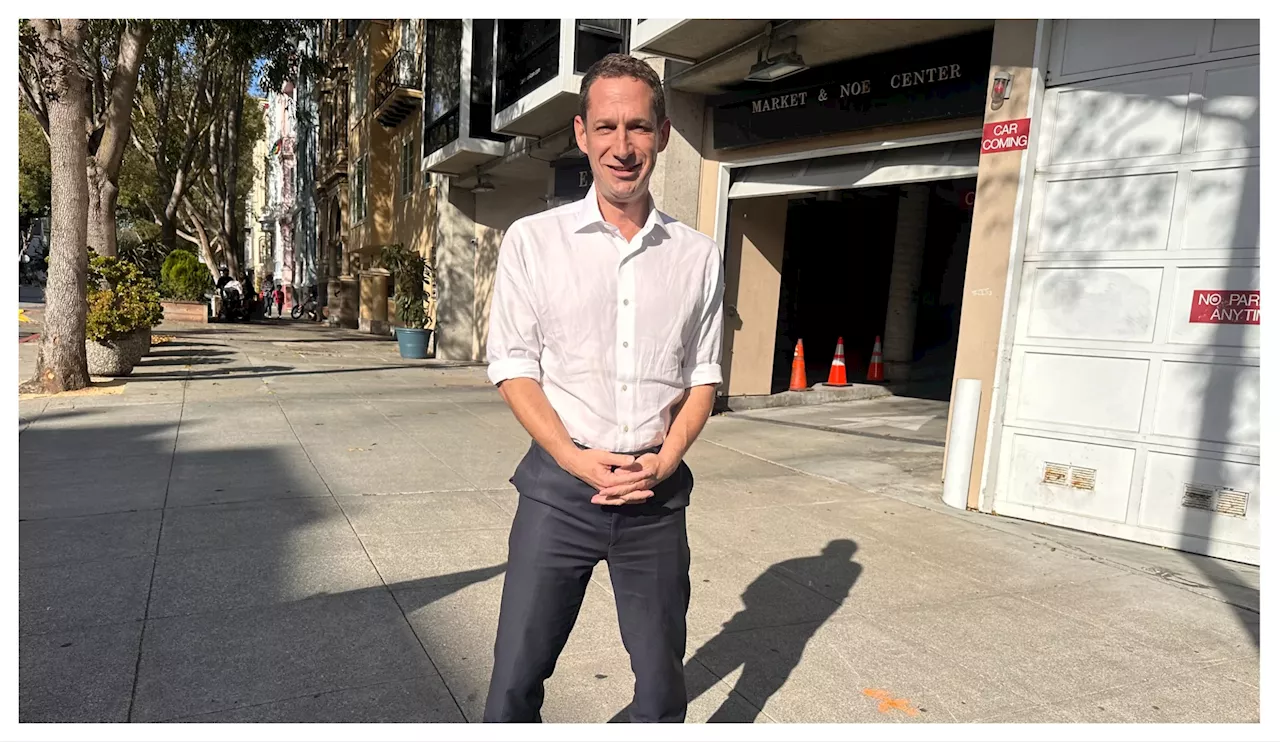 San Francisco mayoral race: Billionaire Daniel Lurie topples San Francisco Mayor London BreedPolitical News and Conservative Analysis About Congress, the President, and the Federal Government
Read more »
 Win Tickets To FanExpo San Francisco With Our Exclusive GiveawayFanExpo San Francisco Ticket Giveaway - a hand holds a ticket for FanExpo San Francisco
Read more »
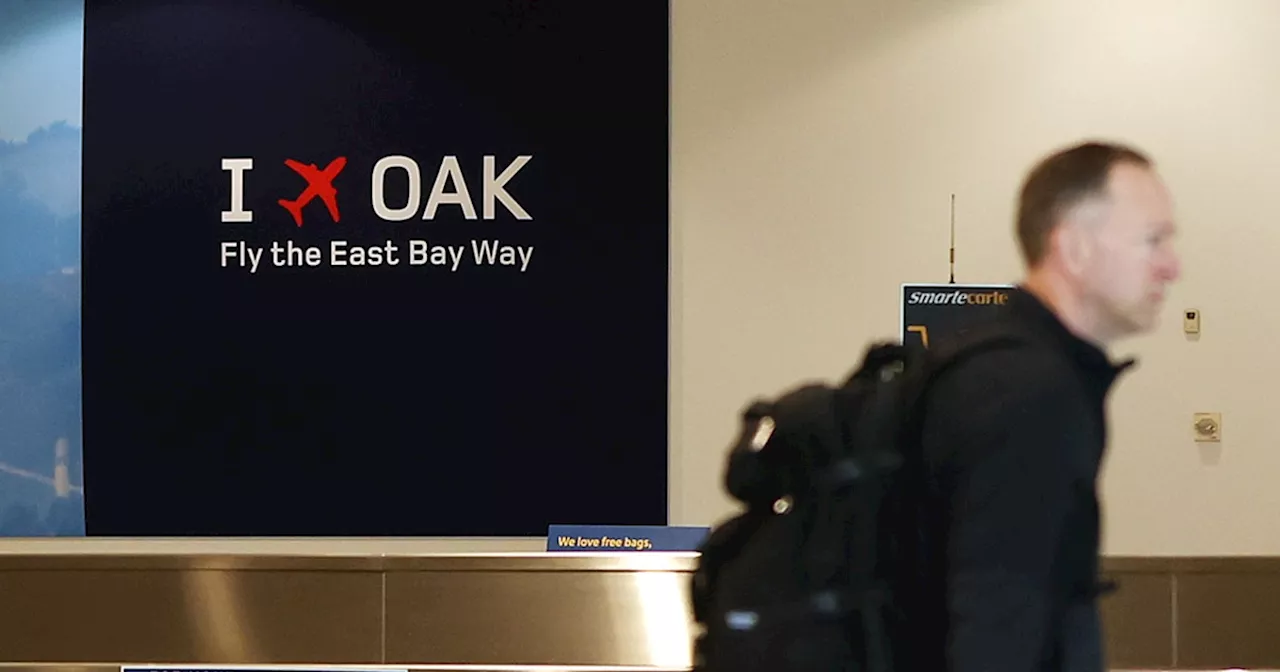 San Francisco wins order blocking Oakland’s airport from using ‘San Francisco’ nameReuters
Read more »
 Page A1View the San Francisco for Wednesday, December 4, 2024
Read more »