
View the San Francisco for Sunday, December 1, 2024
Terry Asten Bennet, co-owner of Cliff’s Variety: “The community takes care of us, we take care of the community, and we carry what the community needs.” The twists and turns of the Castro’s local history have also unfolded on the shelves of Cliff’s Variety, a neighborhood store boasting a massive and ever-changing catalog of goods.
That’s because the San Francisco retailer’s offerings have evolved along with the surrounding community’s changes over the last century. “You know, it’s always been about what the neighborhood needs,” said Terry Asten Bennett, whose great-grandfather, Hilario DeBaca, founded Cliff’s in 1936. “So what the neighborhood is has created what you see .” Keeping the Castro stocked up on everything its residents need — or didn’t even know they needed — has become a labor of love for Asten Bennett, one that she continues to carry out, even as brick-and-mortar retail businesses have faced increasing headwinds. Cliff’s was established at a time when the Castro was developing into an ethnically diverse working-class neighborhood. The store got its start selling magazines, cigars, sewing supplies, greeting cards and candy. Many years later, once the neighborhood came to be known as the beating heart of gay culture in The City and the drag scene began to grow in prominence, Cliff’s kept pace, adding wigs, fake eyelashes and other accessories to its offerings. More recently, when many residents discovered a newfound passion for holiday home decorations during the COVID-19 pandemic, Cliff’s once again stepped up to meet demand, making sure that the Castro has stayed well supplied with spooky Halloween skulls as well as festive — not to mention custom-made — Christmas lights. “The community takes care of us, we take care of the community, and we carry what the community needs,” Asten Bennett said.Marian Kerrisk, a manager at the counter of Cliff’s Variety at 479 Castro St. in San Francisco on Monday, Nov. 18, 2024. Very much living up to its name, what you will see at Cliff’s Variety — now located less than a block south of Market and 17th streets — could include just about anything under the sun. Depending on where you feast your eyes, you might spot power tools, high-end cookware, art supplies, perfume, gardening tools, jewelry, board games, or perhaps brightly colored novelty knickknacks.Things might have turned out very differently, though. Cliff’s very nearly came to an end in 1998 when Asten Bennett’s parents received an offer of $5 million from the Sav-on Drugs chain to sell the business, she said. Soon thereafter, Asten Bennett’s parents put the question to her: Should they go through with the “once-in-a-lifetime” sale, or did she want to one day run the store herself? After a considerable amount of soul searching that included a six-week cross-country road trip, Asten Bennett decided to make a major life pivot: She dropped her plans to become a schoolteacher and instead took up the family business. “I just couldn’t imagine what the Castro would be like without Cliff’s,” said Asten Bennet, who now co-owns the shop with her mother. “I was always raised with community first, and so I jumped in with both feet head first, and I’ve been here ever since.” The 25-plus years that have followed that decision have seen the rise of online retail, the outbreak of COVID-19, and what Asten Bennett described as a surge in shoplifting that has become an increasing affliction for the store. But even amid all the retail industry’s convulsions, Cliff’s continues to draw a loyal customer base. On a recent weekday morning, just as the holiday shopping season was getting underway, Asten Bennett led The Examiner on a tour of her store, occasionally rearranging the merchandise as she went. “I can’t help myself,” admitted Asten Bennett, who grew especially fastidious as she walked through the children’s toys section. Many of the games and gizmos on display had been picked out by Asten Bennett herself. “I mean, the front of the store is my baby.” “I want it to be a magical shopping experience for people, because I want people to remember that it matters to come and touch and see things in person, and to have that human interaction,” she said.“I buy everything here,” said Bright Winn, a retired plumber who said he has been a frequent patron for 60 years now.Retired plumber Bright Winn, 80, said he has been shopping at Cliff’s Variety for 60 years. “I buy everything here,” he said. “Here, I’m gonna get a smile – I’m gonna get what I want,” said Winn, who said he pays Cliff’s a visit just about every day. “I own property, and there’s always something I need.” But it’s not just the wide selection he likes, he said — it’s the people, many of whom he has known for decades. “As a matter of fact, when I feed the meter , I put in some extra, because I’m going to hold off for a conversation,” he said. As beloved as the shop is, Asten Bennett said running the business has not been easy in recent years. “This year has been the worst year in retail I’ve seen in a long time,” said Asten Bennett, who also serves as president of the Castro Merchants Association.experienced in the wake of the pandemic is largely to blame, she said. Meanwhile, the rapid ascent of online shopping that picked up speed amid the 2020 lockdowns hasn’t helped either. The store has been forced to scale back on hours and also reduce staff from 43 to 38, Asten Bennett said. Castro neighborhood sales-tax revenue in the second quarter of 2024 had fallen 11% from the same period in 2019. The City as a whole saw a 22% decline.Kitchenware items for sale at Cliff’s Variety at 479 Castro St. in San Francisco on Monday, Nov. 18, 2024. In the meantime, Asten Bennett said her store has also had to contend with a worsening shoplifting problem. Beyond the financial toll that retail theft has inflicted on her business, she said, for her, these crimes also represent a deep betrayal of trust between the store and the suspected perpetrators, many of whom had been customers. “It’s not until you catch them that you realize, hey, I thought you were OK, but you’re stealing from me,” said Asten Bennett. “It’s really painful,”For her part, Asten Bennett doesn’t put much stock in the official crime statistics for shoplifting.The long-term future of Cliff’s remains uncertain. Neither of Asten Bennett’s adult daughters have yet expressed an interest in carrying on the family business. And given all the challenges she said she’s experienced, Asten Bennett said, “in all honesty, I wouldn’t wish retail on my children.” But that is not to say that she regrets taking up her parents’ offer all those years ago — outside of, perhaps, the occasional bad day.seems to be embracing brick-and-mortar retail over the digital equivalentPets Are Wonderful Support program “I felt like it brought together so many of the things that I’ve worked on,” said Scrafano, whose career has included stints at, the San Francisco AIDS Foundation and New York City’s Gay Men’s Health Crisis social services center, one of the oldest and largest HIV/AIDS organizations in the United States. She joined the Shanti Project in April 2023 as its chief executive.PAWS merged with the Shanti Project in 2015 “PAWS is really unique,” she said. “There’s a lot of need out there, particularly to support low-income folks and help them stay with their families.”Kimberly Scrafano, CEO of the Shanti Project: “There’s a lot of need out there, particularly to support low-income folks and help them stay with their families.”Scrafano said staff and volunteers are focused on helping their clients maintain strong social health by connecting them with a person, an animal or both in some cases. She told The Examiner that patients are “just incredibly grateful” for the chances to get stabilizing support for themselves or their pets. The Shanti Project specializes in care navigation, which Scrafano said entails making sure that clients get all the needed resources to treat their health conditions. The nonprofit also matches volunteers with its clients as a means of creating social connections and support systems such as grocery assistance or being driven to a doctor’s appointment. “PAWS is just another one of those pieces that I think is really valuable,” Scrafano said of the pet-support program’s simultaneous role.The Shanti Project partners with city departments and agencies to sustain PAWS, in addition to receiving financial contributions from donors. A network ofprovided to them. If clients have to leave their homes for extended hospital stays, the program’s volunteers can temporarily house those clients’ animals so they don’t have to worry about taking care of the pets. Scrafano said some PAWS volunteers initially sign up because they have strong connections to animals, while others will end up learning about the program over the course of attending peer-support training sessions. “There’s more need in the community than we can even meet,” Scrafano said. “It’s really this continual process of, how can we expand to meet the large community need out there?” Kristal, a Shanti volunteer who declined to give her last name, said that after a few trips to the organization, she began seeking out relationships with people outside of her age group more frequently in her professional and personal lives. “I think Shanti helped me open myself to the richness of diverse connections,” she said. “I feel more rooted in the San Francisco community and more motivated to reach out of my circles to connect with people.” Lyneé, another volunteer who also declined to give her last name, said she began working with the Shanti Project at the onset of the COVID-19 pandemic in 2020. She said giving back to her community through acts of kindness continues “to fill me with hope for a better future and stronger community.” “I have always felt that one of the best ways to learn about yourself is found within service to others,” Lyneé said.PAWS’ holiday stocking drive, which requires preparation in the Shanti Project’s warehouse as pictured the night before in 2023, will return to an in-person event for the first time since the COVID-19 pandemic., in which 300 low-income seniors or people living with disabilities and their 450 animals will receive supply-stuffed stockings. Typically, 100 volunteers are brought in that day to make deliveries. This year marks the first in-person event since the pandemic began in 2020. The editions between 2021 and 2023 involved mailing out the supplies, rather than dropping them off with clients. Scrafano said the event has existed in some capacity for at least 15 years, with diverse guest lists that have included local policymakers and The stocking drive is a collaborative process, Scrafano said — PAWS staff will come together with community-outreach organizations and other volunteers to determine how they can address each client’s needs. Scrafano said the event also serves as a great introduction for people looking to get involved with the Shanti Project, as they can get a sense of what impact the PAWS program has in the community. Events such as the stocking drive exemplify the nonprofit’s mission of “reducing social isolation, and even small acts like that — of giving someone this gift around the holiday for the holidays for their animal companion — is really powerful,” Scarfano said.“It’s reflective of what we’re trying to do every day, really create that connection and create that feeling that people have support, that there’s this community effort around it,” she said.Del Seymour, founder of Code Tenderloin, often sits by the office window to observe who might need help as they walk by at 55 Taylor Street in San Francisco on Thursday, Nov. 21, 2024. Del Seymour says San Francisco remains “the craziest place” he has been in his life, but he strikes a much different tone about the Tenderloin. A Chicago native who said he prefers Southern California, Seymour spent 18 years living on the neighborhood’s streets and dealing drugs. He first came to the Tenderloin in 1986. “I call this the breakout neighborhood,” he said, meaning that if he was smoking his last cigarette and someone came and asked him for one, he’d break it in half and give it to them. “We help each other, we love on each other.” Seymour said he thinks no other neighborhood in the world displays this level of compassion among its residents, because most everyone who lives there “has been there before” — homeless, on drugs, or just down on their luck.It’s this dedication to the Tenderloin that led him to found the Tenderloin Walking Tours 17 years ago, which morphed into Code Tenderloin in 2015. The neighborhood nonprofit provides job training and opportunities for homeless residents, among other services and resources. Seymour, who is also the co-chair of San Francisco’s Local Homeless Coordinating Board, has become a well-known advocate for his adopted neighborhood and its inhabitants. He has long argued the Tenderloin’s residents are the most underserved in The City, and he attempts to bridge that gap by linking education, job opportunities, housing, and other resources to those living in the neighborhood struggling with homelessness, substance-use issues, mental health and other challenges, earning himself the nickname, “Mayor of the Tenderloin.”, which was released in September. He told The Examiner he initially wanted nothing to do with a book about himself, changing his mind when he realized it could be used to help others on the road to recovery from substance abuse. “I remember when I first got clean, and I was depressed, because I ruined 18 years of my life,” Seymour said. Attending a Narcotics Anonymous meeting and hearing the testimony of a man there “made me feel so much better and maybe helped me get my life together,” he said. Seymour said, with a grin and a chuckle, that maybe his story would make someone else’s not seem so bad, and they would say, “at least I didn’t mess up like this.” If Seymour is the Tenderloin’s mayor, then Code Tenderloin’s 55 Taylor St. headquarters is his City Hall. But the founder said he deliberately set up the organization’s offices so it wouldn’t feel like “a government agency” — he said he wants visitors to be able to walk in off the street without appointments.Terrill Jones, the senior director of Code Tenderloin’s community ambassadors program, said he was once one of those people in 2019, needing an ID voucher.Terrill Jones, senior director of ambassadors at Code Tenderloin: “I feel like we’re gap-fillers, meaning anything that comes up, we’re in the gap, filling that role.” After speaking with a case manager, putting together a resume, and eventually landing a couple of job opportunities, Jones said he brought “that experience back into the fold” at Code Tenderloin. “I feel like we’re gap-fillers, meaning anything that comes up, we’re in the gap, filling that role,” he said. “That’s from getting housing help to ID vouchers — it could be as simple as that — or starting your own business, as advanced as that is.” A large part of the organization’s work has been in expanding career opportunities for participants, particularly in technology. Seymour said he developed relationships with several tech companies such as Dolby, Zendesk and Twitter — now known as X — following Code Tenderloin’s founding.. Although many tech companies have moved from their offices in The City in recent years, Dolby is still at 1275 Market St. — and that firm gave Code Tenderloin its first corporate grant. “In advance of when Dolby moved to the Mid-Market neighborhood in 2015, we worked with Del to provide Tenderloin Walking tours to our employees to introduce them to our new neighborhood and ways to get involved,” said Joan Scott, senior director of social impact and sustainability at Dolby, in a statement. Scott said she remembers when Seymour first shared the concept for Code Tenderloin with her over lunch, and that in the years since, Dolby has provided everything from mock interview sessions to serving on the Code Tenderloin board. “When PG&E was close to turning our lights out. Dolby was over there that same day to ensure that we kept our programs going on,” Seymour said.Sitting with Seymour on a recent rainy San Francisco day at Code Tenderloin, he led a reporter to an easy chair in the window of the front office. He pointed at the far corner of Turk and Taylor Streets — where, he said, he sold crack cocaine for nearly two decades.“I could sit here all day, literally,” he said of this new vantage point. “That helps me to keep my focus on.” But he rarely spends his time just sitting. The original walking-tour host at Code Tenderloin’s predecessor, Seymour still spends a lot of his time traversing the streets of the Tenderloin, although the average walk down a block takes much longer than the average pedestrian, with Seymour stopping to shake hands, exchange words or hug passersby. Ever the gentleman, he made sure to gently steer The Examiner’s reporter clear of any errant feces on the sidewalk. Seymour took The Examiner to Boeddeker Park, which today is a lush oasis with green grass, a bright-blue basketball court and a playground. Twenty or so years ago, Seymour said “there were so many people in here doing and using drugs, it was just like fighting cockroaches.” Back then, Seymour said there wasn’t a police station across the street like there is now at Eddy and Jones Streets, and it was easier to come to the park when his corner got too “hot.”The park was one of the only places in the neighborhood at the time that was completely “safe” from police enforcement, he said. The park underwent an extensive renovation before reopening in its new form in 2014. Touring his Tenderloin could have kept going for five hours, Seymour said, but he just didn’t have that much time to spare. Seymour’s last stop on the mini walk with The Examiner was at the Tenderloin Museum at 398 Eddy St., where a special exhibition was on display. “Tenderloin Blackness” is running there through the end of November before moving to UC Law San Francisco.Code Tenderloin founder Del Seymour: “When we see a neighbor in need, we know where he or she is at.”, as well as to highlight the work of around a dozen current figures that he chose by crowdsourcing from the community. Majeid Crawford, who serves on the board of directors of the Tenderloin Housing Clinic, was also among the group. “To be one of the people featured in ‘Tenderloin Blackness’ exhibit is truly humbling,” Crawford said. “It is a beautiful far-reaching campaign to recognize the Black community’s place in the Tenderloin and the impact our community is making.” The exhibit features Black Tenderloin artists working in different media, from painting to doll-making to poetry. “Part of the idea here was to have it expand over time and grow and accumulate,” said Alex Spoto, the program director of the museum. “ hosted a couple of oral-history style open houses, where people would come in and tell their story that’ll be included in future exhibits, so that the project will live on.” It’s just one of Seymour’s projects, and as he ambled back to the Code Tenderloin office for a meeting about outreach for homeless veterans, he once again said that no matter how much he disliked San Francisco, he’d always return to the Tenderloin.Supervisor Myrna Melgar: “If we can’t work it out here between ourselves ... then how can we have the public accept it?” People in and around Supervisor Myrna Melgar’s orbit say they are used to hearing her call herself a “bridge-builder.”champions her ability to connect and compromise as her “superpower,” with an origin story that traces back to her childhood in Central America. “This thing about being a bridge-builder, that’s not new,” she told The Examiner inside her second-floor City Hall offices. “That’s based on my real-life experiences.” The trait is useful for any politician, but Melgar says it especially comes in handy for someone in her role representing a massive slice of San Francisco’s west side as part of The City’s largest supervisorial district by area. Balance is an ever-present theme in Melgar’s life, according to the supervisor. She says she has learned to balance the needs of her broad base of constituents and those of her hectic and busy life outside of politics, which includes weekly samba dancing in the Mission and cooking nightly feasts for her family (Melgar is the three-time defending “Her energy level is insane,” said outgoing Supervisor Hilary Ronen, a close friend of Melgar. “I don’t know that the woman has ever spent a moment of her life where she’s not working her ass off. She’s like Wonder Woman.” Her constituents have a wide range of competing interests on both sides of San Francisco’s political aisle, from more progressive-minded folks living in multiunit apartments in the Inner Sunset and Parkmerced to moderate families residing in wealthy enclaves such as Forest Hill and Westwood Park. So it’s only natural that Melgar positions herself as someone near the center of The City’s political spectrum. It’s a philosophy that even extends to her four-person supervisorial staff, two of whom are moderate while the other two are progressive.“If we can’t work it out here between ourselves in terms of putting it in legislation and policy, then how can we have the public accept it?” she said. Her District 7 predecessor, former Supervisor Norman Yee, described Melgar as “just a nice person” who is always willing to have a dialogue with you. “She’ll talk to people, even though she knows that with that particular issue they might not agree,” said Yee, who said he regularly gets drinks with Melgar. “She’s not going to hide.”Supervisor, Myrna Melgar, District 7, during a Board of Supervisors meeting at City Hall in San Francisco on Tuesday, July 25, 2023.Melgar grew up in Las Mercedes, a middle-upper class neighborhood in San Salvador, the capital city of El Salvador, amid the country’s civil war. The 12-year conflict pitted a coalition of left-wing guerilla groups — radicalized by inequality and oppression — against the Salvadoran government.“We felt the war all around us,” she said. Melgar said she grew up in a house divided. Her mother, Myrna, who gave birth to her at 16, became a leftist in college. Melgar’s father, Guillermo, came from a conservative family of Jewish immigrants. “I’m good at talking to people who I disagree with and still loving them, because that was my experience growing up,” Melgar said. Melgar said she grew up in a “privileged childhood” economically and socially. Her dad made good money as an engineer. Personal drivers took the family from place to place. Melgar and her two sisters attended the private French school of Lycée Français de San Salvador.When Melgar was 6 years old, she said her mother left her family to join the revolution and subsequently went underground. Melgar did not see her again until she was an adult. Six years later, her father and his driver were shot in their car in an apparent assassination attempt. The driver was wounded, but her father was unharmed.To this day, the details around the assassination attempt remain unclear, including the identity of the shooter. Melgar said the family has speculated that it stemmed from the fact her father owned a construction company and “was not particularly good with his workers.” Melgar did not even know there was an assassination attempt until two years later. Her father originally told her they were moving simply because of the war. Melgar’s life in The City was much different than in the Salvadoran capital. The family — Melgar, her sisters, her father and her stepmother, Gloria — settled in a working-class neighborhood in the Outer Mission. Her father worked a variety of odd jobs, including cleaning offices and delivering pizzas for Domino’s. Her stepmother was a nanny. The stress of their new American reality, Melgar said, burdened her father, who turned abusive. Eventually, he learned enough English to earn his engineering license and secure a well-paying job in Redwood City, where he moved the family. Melgar said that through it all, she continued to have a “hole in her heart” from her lack of relationship with her biological mother.Supervisor Myrna Melgar came out ahead of rival Matt Moschetto after a vigorous reelection fight in District 7 this year. When she was in her early 20s, Melgar said, she learned that her mom had taken asylum in Sweden. Melgar flew out to meet her and ended up living with her for two years. “It’s probably the most important thing I’ve ever done in my life,” she said. “It took a lot of processing and tears to get to the place where we are today.” Her mother, who now lives in Spain with Melgar’s stepfather, will be in San Francisco in January to attend Melgar’s swearing-in ceremony at City Hall, the most recent setting where Melgar has utilized her knack for mending relationships. But being someone that positions themselves in the middle can both make just as many enemies as friends. Melgar endured athis year, primarily from Matt Boschetto, a flower-shop owner who rallied a significant contingent of west-side voters — mainly the more conservative residents living in the district’s suburban-esque enclaves who claim that Melgar does not represent their interests.“It was hard on my family more than anything,” said Melgar, who beat Boschetto by about seven percentage points. Melgar has long maintained that her family is what has and continues to steer every facet of her life. It’s why Melgar,, says she is a staunch advocate for denser housing in all of the neighborhoods in her district, including wealthy areas notoriously resistant to such policies that argue the changes could ruin the fabric of their communities. But Melgar said more housing is needed to ensure that her daughters’ generation can still afford to live in San Francisco. Melgar made clear she hears her detractors loud and clear and will continue to have open dialogue with people who disagree with her over the next four years. “The only way that I know how to engage is to keep talking to them and show up for every meeting,” she said. “Even if people are kind of salty, I’ll still engage with them.”Click and hold your mouse button on the page to select the area you wish to save or print. You can click and drag the clipping box to move it or click and drag in the bottom right corner to resize it. When you're happy with your selection, click the checkmark icon next to the clipping area to continue.This is the name that will be displayed next to your photo for comments, blog posts, and more. Choose wisely!Create a password that only you will remember. If you forget it, you'll be able to recover it using your email address.Forgot Password An email message containing instructions on how to reset your password has been sent to the email address listed on your account.
United States Latest News, United States Headlines
Similar News:You can also read news stories similar to this one that we have collected from other news sources.
 Page A1View the San Francisco for Wednesday, November 6, 2024
Read more »
 Page A1View the San Francisco for Thursday, November 7, 2024
Read more »
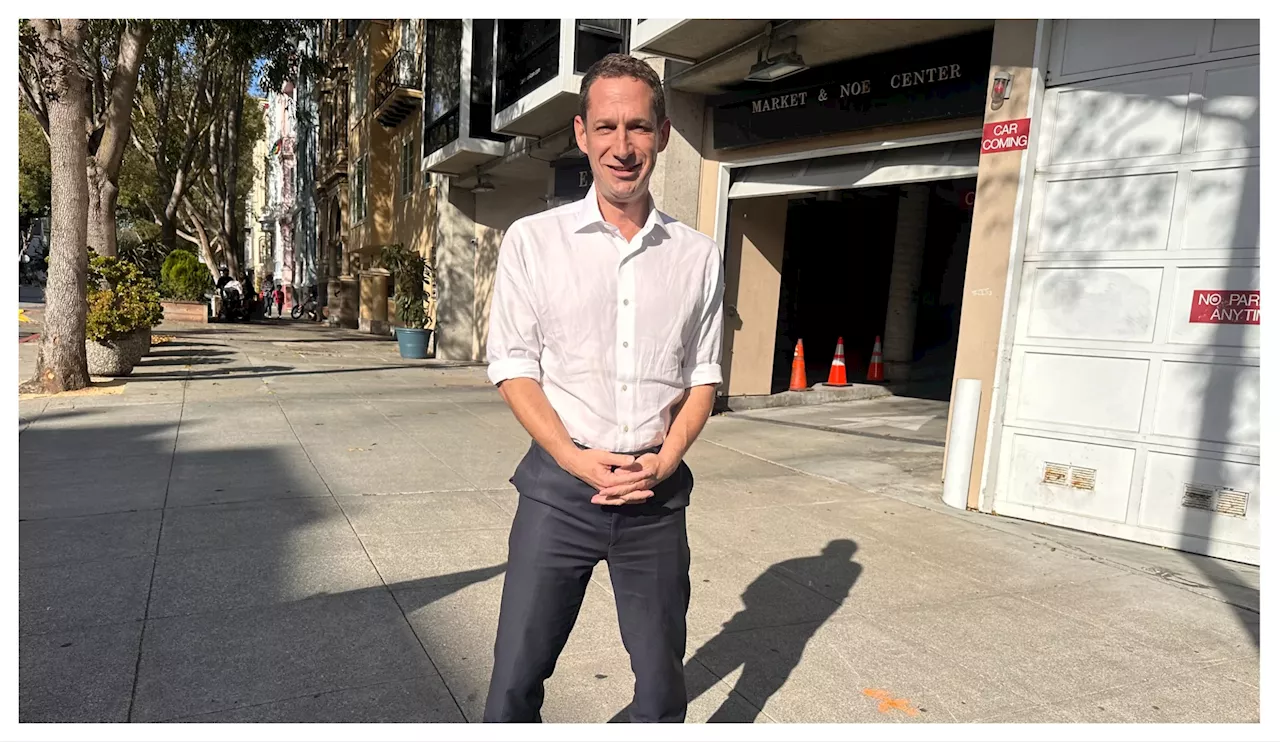 San Francisco mayoral race: Billionaire Daniel Lurie topples San Francisco Mayor London BreedPolitical News and Conservative Analysis About Congress, the President, and the Federal Government
Read more »
 Win Tickets To FanExpo San Francisco With Our Exclusive GiveawayFanExpo San Francisco Ticket Giveaway - a hand holds a ticket for FanExpo San Francisco
Read more »
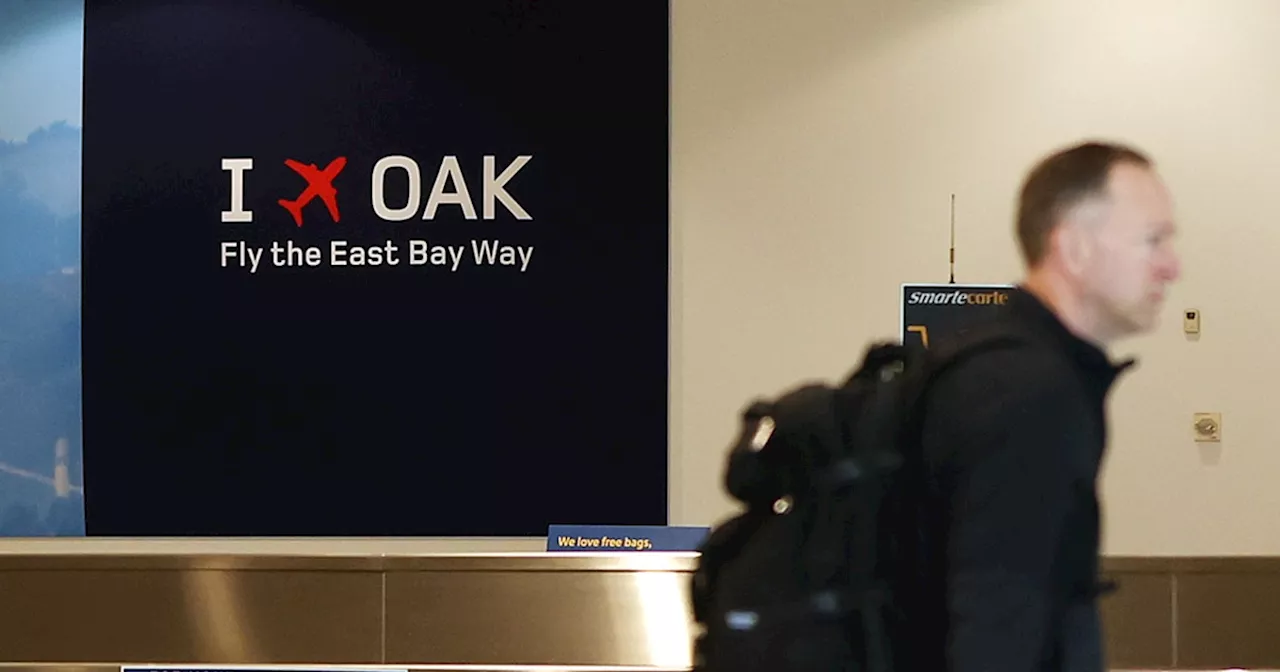 San Francisco wins order blocking Oakland’s airport from using ‘San Francisco’ nameReuters
Read more »
 Page A1View the San Francisco for Wednesday, November 27, 2024
Read more »