


View the San Francisco for Thursday, September 19, 2024
Dr. Albert Yu shows off an exam room at Chinatown Public Health Center with a portable air-conditioning unit on the counter at right and a fan on the floor at left. Perched atop the Broadway Tunnel, sandwiched between storefronts and Victorian-style apartment buildings at the crest of Chinatown and North Beach, sits one of San Francisco’s most critical health institutions.
The Chinatown Public Health Center has provided vital services to The City’s dense Chinese population for 56 years, but hospital staff say its archaic infrastructure has been left largely untouched during that time. Chinatown advocates and medical leaders’ reason for optimism lies in San Franciscans heading to the ballot box in November, where they will vote on Proposition B,to earmark funding for four health-care facilities in The City. The Chinatown Public Health Center would receive $71 million of those funds, paving the way for a complete renovation of the facility that stakeholders say is decades overdue. “Without the bond funding, there will be no rebuild,” said Dr. Albert Yu, chief health officer for the department of public health and former medical director of the Chinatown Public Health Center.The Chinatown Public Health Center — largely a primary-care hospital — is one of three entities catering to the 180,000 Chinese Americans living in San Francisco, or roughly a fifth of The City’s population.The public-health center’s 4,400 patients are primarily low-income, uninsured, elderly and new immigrants, many of whom also live in Chinatown’s single-room occupancy hotels that advocates have It’s practically a prerequisite for the public-health center’s staff to speak a Chinese-language dialect, since 70% of its patients only speak Cantonese and 10% can only understand Mandarin. Other San Francisco hospitals offer translators and multilingual physicians, but medical director Stephanie Le said that the clinic’s staff is uniquely fluent in the “cultural nuances” of The City’s Chinese Americans. Le pointed to the rise in prediabetes and fatty-liver disease among the community, noting that medical staff can’t simply forbid patients from eating noodles and rice in order to cut back on carbohydrates. “Trying to tell someone who has been eating two bowls of rice every meal for decades that they need to cut back is like telling them to cut their toes off,” Le said. She said doctors could speak to types of noodles and rice for patients to avoid. Dr. Stephanie Le: “hose resources could be better spent actually continuing to improve patient care.” Yu detailed the story of a patient who was diagnosed with cancer, but did not want to decide on his treatment plan until his oldest son arrived. Some doctors might be flummoxed by that decision when medical consent in America is generally made autonomously, but in traditional Chinese culture, choices are familial — and the eldest son often holds the most powerful voice. “If you don’t appreciate that, you will lose the ultimate effectiveness of that decision for that family and for that individual,” Yu said. “That cultural concordance, that appreciation of the differences in health systems and belief models really impacts care decisions that will translate to treatment plans, that will translate to outcomes.” That connection has built a trust between staff and patients that has made the public health center a pillar of Chinatown, said Malcolm Yeung, executive director of the Chinatown Community Development Center. “We’ve always understood that it was critical as a community to have our health care systems that are specific to and address the needs of this community, both language, culture and health,” Yeung said. “That, in many ways, is the cornerstone to the sustainability of the community.” “I’d be surprised if any Chinatown resident hasn’t benefited from the public health center over the years,” he said.“It was where my family and I got our health examinations and records so we, as many new immigrants, could live, work and attend school in San Francisco,” said Chan, who lived in a Chinatown apartment after immigrating from Hong Kong when she was 13 years old. “The pandemic highlighted the important role this clinic plays in Chinatown and underscored the desperate need for renovations to bring the clinic up to current medical demands.”The facility’s list of infrastructure and technological issues is lengthy. Health center officials said they’re tied up daily with maintenance requests for faulty elevators, central-heating repairs and even spotty Wi-Fi. “We spend so much time calling facilities about X, Y and Z issues when those resources could be better spent actually continuing to improve patient care,” Le said.Portable air conditioner unit and fan unit at the blood draw lab room at Chinatown Public Health Center, 1490 Mason Street in San Francisco on Friday, Aug. 30, 2024.The dental exam room at Chinatown Public Health Center, 1490 Mason Street in San Francisco on Friday, Aug. 30, 2024. Beyond desperately needed seismic retrofitting, advocates said. the building’s most pressing problem is its lack of resilience against extreme weather, a concernMost of San Francisco’s structures were built for a Mediterranean climate, not for an area that has experienced more yearly extreme heat — defined by The City as any day during which the average temperature exceeds 85 degrees — and poor air quality than ever before. The Chinatown Public Health Center is a prime example. Its lack of insulation from severe weather is particularly concerning because so many people inside are immunocompromised. The staff also needs properly maintained air quality so the air remains clean amid potential airborne diseases circulating through the halls.The public health center’s HVAC system — which is standard at hospitals throughout the Bay Area — doesn’t work very well, Yu said, and many of the structure’s windows both face directly into the sun and were locked shut for safety reasons when first built. To account for the insufficient ventilation, the hospital’s staff purchased portable air-filtration units for every room, which are noisy and make it difficult for hard-of-hearing patients to understand their physicians. They also received temporary air-conditioning units, but largely can’t utilize them because most of the rooms don’t have outdoor windows to install the ducting necessary for the devices to funnel hot air out of the building. As a workaround in some rooms, staffers have engineered a makeshift cooling devices by running plastic tubes from giant air-conditioning units to vents on the ceiling, securing them with duct tape and zip ties.Portable air conditioner unit inside Chinatown Public Health Center at 1490 Mason Street in San Francisco on Friday, Aug. 30, 2024. Yu and Le said room temperatures frequently rise to above 80 degrees Fahrenheit. Twice in the last two years, officials said the health center had to shut down operations for a day when the temperature reached 87 degrees. “That’s just not the level of service that we want to provide for our patients, but we don’t have the capability to fix that without something like the renovation,” Le said. “We still offer excellent care at an amazing level,” Le said. “But we could be even better if we didn’t have to constantly think about, ‘What are we going to do during this heat wave? What are our emergency plans? How are we going to manage the cold? How are we going to manage the elevator that broke?’”Prop. B — the brainchild of two dueling mayoral candidates, Mayor London Breed and Board of Supervisors President Aaron Peskin — is backed by a plethora of prominent San Francisco leaders, including every other supervisor and most of The City’s top health officials.Chinatown Public Health Center, 1490 Mason Street above Broadway in San Francisco on Friday, Aug. 30, 2024. The changes to the public-health center would be expansive, including seismic retrofitting, larger patient rooms and more integrated mental-health services. Medical officials stressed the importance of the latter, as mental illness has long been stigmatized in many Asian cultures. It’s pressing both for children — whose social lives were thwarted by the pandemic — and adults, many of whom remain scarred by experiences during China’s cultural revolution or immigration trauma, according to Nancy Lim, former director of the Chinatown Child Development Center. Part of the bond will transfer a section of the Chinatown Child Development Center, a children’s mental-health clinic run by the Department of Public Health and the only bilingual Chinese children’s clinic in The City, to the Chinatown Public Health Center, which officials hope will allow for better and more convenient access to mental health care. “People who are accessing services will be able to access both the physical care that they need as a public-health center, and then now be able to access mental-health care at the same location,” Lim said. “And I see that as a really great way to probably destigmatize mental health.” Le said she’s exceptionally proud of the care her team puts in right now with its constraints. But, she said, she also sees the potential for so much more. “I would just hope that San Francisco can see the breadth and the quality of services that we provide, even with our limited resources,” she said. “But just imagine how much more we could do if we didn’t have to spend so much day-to-day operational time, managing small buyers here and there. I really think that we would be able to provide even better services than we already do, and I’m hopeful San Franciscans can see that.”A community of RV-dwellers — some of whom had been displaced from their previous location on nearby Winston Drive — was relocated from Zoo Road last month due to impending roadwork. The future of Mayor London Breed’s proposed citywide ban on overnight RV parking is unclear after San Francisco Municipal Transportation Agency leadership did not consider the plan this week.and an agency presentation dated for Tuesday through a public-records request. That presentation referred to the plan — which would make overnight parking a towable offense and allow the SFMTA transportation director to extend restrictions without board approval — as the mayor’s. An agency spokesperson referred The Examiner to the Mayor’s Office. A spokesperson for Breed’s office told The Examiner that there are “currently no changes to our policy, but we will continue to explore a range of options while our outreach teams engage and offer shelter on a regular basis to try to help people off of our streets and into The City’s system of care.” The mayoral spokesperson said Breed does believe that “people need to accept offers of shelter and services, and not be allowed to stay where they are when shelter and services are refused.” San Francisco RV residents and homelessness advocacy groups gathered Tuesday in front of City Hall to protest the proposal, which some have argued would further displace unhoused people already struggling to find a safe place to park their vehicles amid The City’s ongoing crackdown on homelessness. making their dissatisfaction known before and during the board meeting.RV dwellers take part in a rally with their advocates outside City Hall on Tuesday ahead of an SFMTA board meeting. “If today passes, I just don’t know what else to do,” one said. “This ban will destroy the fragile stability at the center of the lives of hundreds of extremely vulnerable families,” said Hope Kamer, the director of public policy and external affairs for Compass Family Services. “If a child is sleeping in an RV, they are not sleeping on the street. If a child is sleeping in a car, they are not sleeping on the street. This decision will push them onto the street.” Based on the SFMTA document, the proposed ban’s implementation would be based on reports of complaints to The City’s 311 hotline in order to identify certain streets. Flyers would then be posted to notify people of the impending restriction, followed by the installation of signage outlining the restriction. The annual cost of the proposal is estimated to be $350,000 a year. The San Francisco Homeless Outreach Team would continue to make offers of shelter to people in the area. The restrictions would make any vehicles found to be in violation of the new ban towable. Parking overnight for large vehicles between midnight and 6 a.m. is already prohibited in certain areas, but SFMTA is currently unable to tow these vehicles without warrants.. The current waitlist is more than 500 families, according to the latest numbers from the San Francisco Department of Homelessness and Supportive Housing. RV residents have already been feeling the pressure from The City, with the majority-immigrant community at Zoo Road forced to relocate from the area last month. Many of those residents had already been displaced from Winston Drive after four-hour parking limits were enacted near Lake Merced. They wound up on Zoo Road and were tasked with“They’ve been pushed to Zoo Road, and then even further into the margins,” said Lukas Illa with the Coalition on Homelessness. “There are no housing vouchers waiting for the rest that weren’t able to get them from The City.” Lucas Chamberlain said he has lived in an RV in San Francisco for the last five years because his efforts to find housing proved too costly to maintain. “If today passes, I just don’t know what else to do,” he said during the rally prior to the meeting. “I have a surgery coming up, and I looked everywhere for parking, and it was impossible.” Another RV resident, Armando Bravo Martinez, shared that in the weeks since moving his RV from place to place in The City, his emotional support dog, Audrey, was killed in a hit-and-run on Folsom Street, which is “the very street where we’ve been pushed around.” “I’m not going to say that it’s a direct result of being homeless or being pushed around by the SFMTA and the police, but there you have it,” he said. During the meeting’s public comment, many stood up and voiced their concern about the long-lasting effects of the ban. “We really need to be working together to establish places where people could go, and a citywide ban will just create chaos,” said Christin Evans, the vice chair of the Homelessness Oversight Commission during public comment at Tuesday’s meeting. “We really need to pause and think how we’re going to approach addressing the over 1,400 people that are living in their vehicles in San Francisco tonight.” Eleana Binder, the policy manager for GLIDE, said the cost of implementing and enforcing the ban should instead be applied to other services in The City’s budget. “As deeply affordable housing remains out of reach in San Francisco, many households are turning to RVs as a form of shelter,” she said. “We must address this growing community, including tailoring approaches for a diverse population ranging from families to seniors.”Mirna Vasquez, a parent and Parents Making a Change at Coleman Advocates, speaking at Stop Proposed School Closures rally in front of the SFSUSD School Headquarters at 555 Franklin Street in San Francisco on Wednesday, Sept. 18, 2024. Students, parents and the nonprofits supporting them are pressuring San Francisco Unified School District to directly engage with the communities of soon-to-close schools, warning that small ones in The City could face the same consequences that befell families during the last round of closures nearly 20 years ago.. Organizers with the nonprofit Coleman Advocates said during a rally outside of district headquarters Wednesday that Black and brown families have not been invited to participate in the district’s process of closing, merging and consolidating schools. Blanca Catalan, a SFUSD parent and Coleman Advocates organizer, said families have not been invited to participate in the district’s Resource Alignment Initiative, its name for the process for closing, merging and consolidating school sites. “If they were, then the focus would be on how to make our schools better, instead of closing them,” she said. The nonprofit student-advocacy group, which focuses on the interests of Black and brown students in the district, continued to raise concerns over how the closures will affect students with the highest needs. Many of them attend schools with the smallest student populations, according to advocates. The nonprofit distributed a survey to school communities earlier this year, asking parents and students what their top concerns are regarding school closures. Coleman Advocates reported that more than 80% of respondents to a survey distributed earlier this year said they wanted an opportunity to choose their children’s new schools should their old ones close, and many voiced concerns over transportation and how teachers would be trained to handle an influx of students.“We were the first to come out, along with our partners, out against school closures,” Coleman Advocates Executive Director Chris Ballard told The Examiner. “School closures should always be the last resort after you’ve exhausted every other option.”Coleman Advocates Co-Executive Director, Chris Ballard, at Stop Proposed School Closures rally in front of the SFSUSD School Headquarters at 555 Franklin Street in San Francisco on Wednesday, Sept. 18, 2024. Officials have said the closures are necessary following the expiration of pandemic-era relief funds and yearslong enrollment declines. The latter have pushed the district toward financial insolvency and a potential state takeover, which state auditors say necessitates school closures.throughout the process and have partnered with Stanford University researchers to oversee it, but Ballard said that isn’t enough. “Why not partner with the community?” he said. “From an expert lens, sure, it’s helpful to go out and get a survey done that looks good on paper — but the community, they have a different perspective.” District officials say the engagement process has been robust, including 16 in-person town halls, two virtual ones — with a total of 2,070 attendees — and a districtwide survey that received more than 12,200 responses. “This was SFUSD’s most extensive community engagement process in recent memory,” a SFUSD spokesperson told The Examiner. Ballard said Coleman Advocates released its own survey because the district’s surveys didn’t “center around harm reduction and social emotional support” for parents and students, he said. “ was centered around questions that had impact, like, ‘If your school had to close, what means the most to you?’” he said. “We gathered those data points. We heard from folks around the need to have a transportation plan in place for kids whose schools are going to close.” Ballard said SFUSD should instead be using resources to explore how it can make schools more attractive to families to increase enrollment. He said the nonprofit would like to work with the district to achieve that goal, but it does not have a seat at the decision-making table. Brandie Bowen of Coleman Advocates speaks Wednesday at the nonprofit’s rally outside SFSUSD headquarters on Franklin Street. Parents, students and teachers at the district’s smallest schools raised fears over potential closures as early as last year, when SFUSD officials committed to exploring all avenues of cost-cutting measures before resorting to school closures. June Jordan School for Equity, with just shy of 200 students, has come into the spotlight in recent months as community members organized to speak at school board meetings and hold rallies to urge the district to spare their school. “The school year just started, and instead of worrying about studying for my next test or what clubs I’m going to join, I’m stressed about the possibility of my school closing and how this will harm me and my peers,” said Neveah Nathan, a June Jordan School for Equity student. Patrick Mendoza, a math teacher at San Francisco Community School, said he started teaching at the K-8 school just last month. He told The Examiner that he wasn’t aware of the school-closures process before his hiring, learning about it from students and parents who advocated against it. “One of the things that attracted me to SFCS was the design,” he said. “It provides the ability to have more direct contact with your students, and those students feel a sense of community with each other and don’t feel alienated while they’re in school.” Mendoza said there have been onboarding challenges since he’s been hired — he just received a laptop necessary for classroom instruction from the district this week, he said. Closures would only make things worse, he said.SFCS parent Gaelan Spor told The Examiner that the school, which recently celebrated its 50th anniversary, has weathered prior storms. They’ve lost an assistant principal and faculty who chose to move to higher-paying districts, she said. “SFUSD knows that we’re a small school,” she said, but the district created schools such as SFCS and June Jordan “because they understand how important they are.” While SFUSD officials have not specifically targeted small schools for closure, Ballard said history says otherwise. When San Francisco last merged and closed public schools in 2006, those with small populations that primarily served minority students bore the brunt of those decisions. “So you’ve got a school that is small and effective and a model school for The City, yet you still want to close it because it’s a small school?” he said. “It just makes no sense.”Click and hold your mouse button on the page to select the area you wish to save or print. You can click and drag the clipping box to move it or click and drag in the bottom right corner to resize it. When you're happy with your selection, click the checkmark icon next to the clipping area to continue.This is the name that will be displayed next to your photo for comments, blog posts, and more. Choose wisely!Create a password that only you will remember. If you forget it, you'll be able to recover it using your email address.Forgot Password An email message containing instructions on how to reset your password has been sent to the email address listed on your account.
United States Latest News, United States Headlines
Similar News:You can also read news stories similar to this one that we have collected from other news sources.
 Page A1View the San Francisco for Wednesday, August 21, 2024
Read more »
 Page A1View the San Francisco for Thursday, August 22, 2024
Read more »
 49ers' Ricky Pearsall to miss at least 4 games after being shot in attempted robberySan Francisco 49ers rookie Ricky Pearsall was shot in an attempted robbery in San Francisco.
Read more »
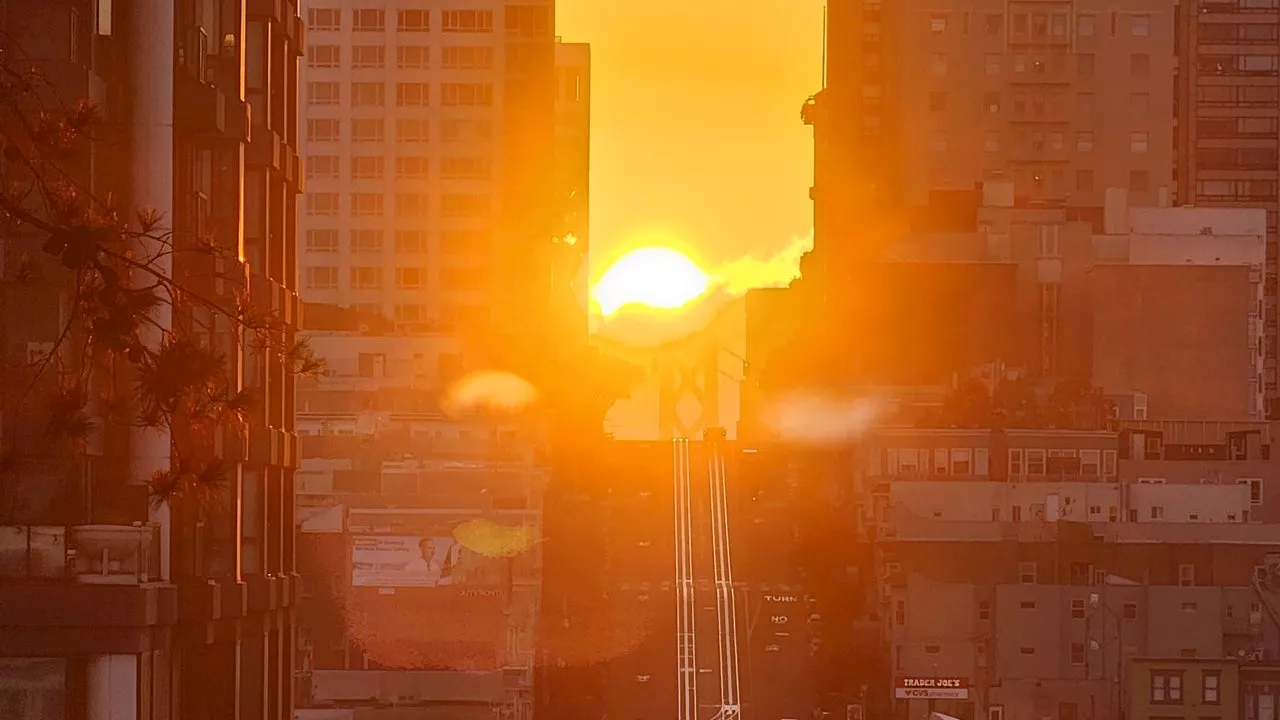 California Henge: Here's how to catch the best view in San FranciscoArticles and videos about California Henge: Here's how to catch the best view in San Francisco on FOX 11 Los Angeles.
Read more »
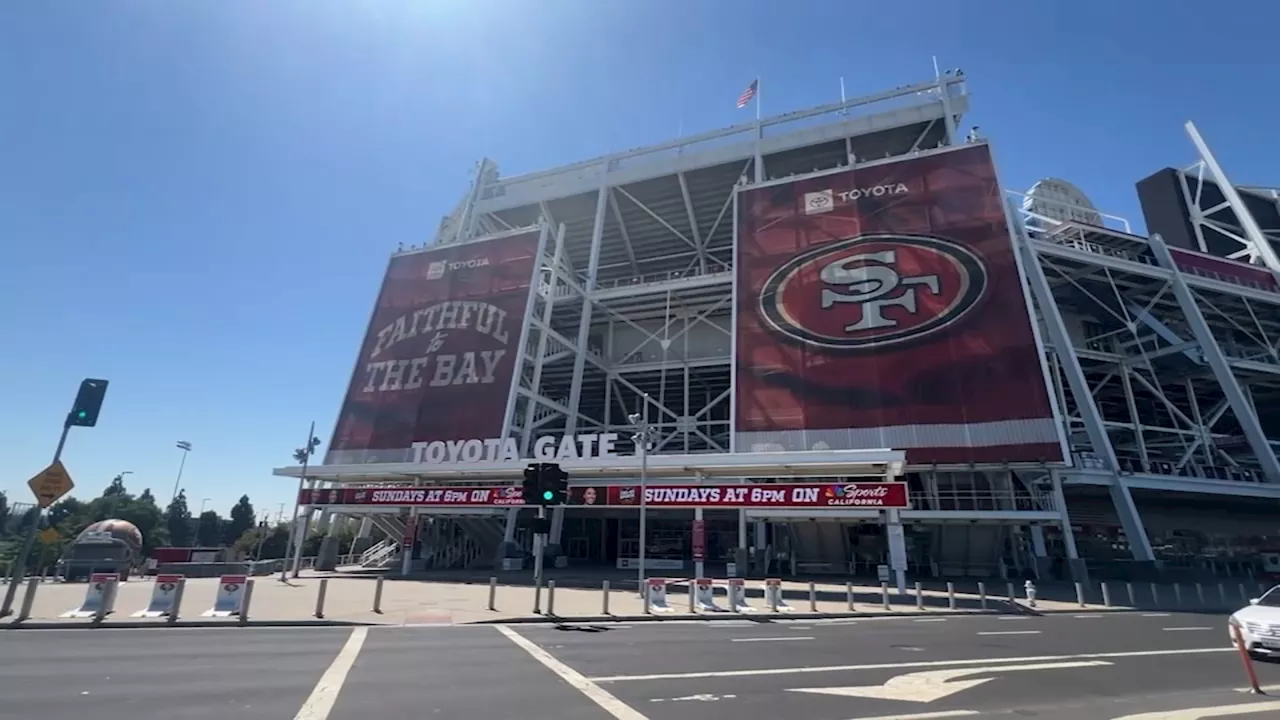 San Francisco 49ers, fans ready to turn the page on unsettled offseasonFrom a close Super Bowl loss, to two major contract disputes and now mix in the shooting of a young star. It's been a lot to take in for the Faithful, but everyone is ready to turn the page.
Read more »
 Page A1View the San Francisco for Sunday, September 8, 2024
Read more »