


Oscar voters themselves determine whether a performance qualifies as lead or supporting, but the distinction remains a mystery for movie fans
Oscar nominations stir up controversy for myriad reasons nearly every year, but there’s one question that pops up again and again: What determines whether a performance is categorized as lead or supporting? While the first Oscars ceremony took place in 1929 and honored the Best Actress and Best Actor of the year, the supporting actor categories weren’t added until the 9th Academy Awards, which occurred in 1937 and honored the films of the year prior.
The decision allowed the Academy to honor more performers and a wider range of roles. Since then, movie fans have been confused about what constitutes a lead performance vs. a supporting role. Especially in recent years, actors have won supporting trophies for roles that many audience members interpreted as lead performances and vice versa. It might seem like the categories are determined by a strict number of minutes onscreen, but that’s not the case. Keep scrolling for a complete breakdown of the lead vs. supporting actor Oscars:While the Academy of Motion Picture Arts and Sciences has tons of rules and regulations for nominated films, the guidance on lead vs. supporting is surprisingly vague. Per the official rules, “The determination as to whether a role is a leading or supporting role shall be made individually by members of the branch at the time of balloting.” This means that Academy voters themselves decide whether a role qualifies as lead or supporting when they’re choosing who to nominate. They can certainly factor in an actor’s screen time when making their choices, but there’s nothing that says you can’t nominate a performer as a lead actor when they were only on screen for 15 minutes. Similarly, an actor who appeared in the majority of a movie’s scenes could be nominated for supporting if Academy voters didn’t view their role as a main character.Officially, Academy voters decide whether a performance should be categorized as lead or supporting, but unofficially, publicists, distributors and actors themselves often try to steer voters in one direction or another. This often happens when there are multiple potentially award-worthy performances in one movie. In 2018’s The Favourite, for example, Olivia Colman, Emma Stone and Rachel Weisz had similar amounts of screen time, but only Colman competed in the lead actress category. If she had competed in the supporting actress category, she might have split the vote between her costars. Competing — and then winning — as a lead actress is also undeniably a better line to add to a résumé. Colman’s 2019 win catapulted her to a much higher level of fame, and she’s since earned two additional Oscar nominations. On the flip side, this ability to slot an actor in either category can also lead to controversy — and loss. At the 2023 Oscars, Michelle Williams competed as a lead actress for The Fabelmans, despite the fact that the film was very much not about her character. Pundits thought she’d be a shoo-in for a supporting actress nomination and win, which would have been her first, but competing as a lead actress gave her a very small shot at victory. Category fraud is the term for when a supporting performance ends up in a lead category or vice versa. There’s no official consequence for engaging in it, but the tradeoff is that Academy members could choose to vote against a performance simply because they don’t feel it’s in the right category. Despite that risk, the strategy still sometimes pays off. In 2020, Brad Pitt took home the supporting actor trophy for Once Upon a Time in Hollywood even though his character, Cliff Booth, was on screen for more than 55 minutes and had his own story line independent of Leonardo DiCaprio’s character, Rick Dalton. In 2019, Mahershala Ali broke the record for longest performance as a “supporting” actor with his win for Green Book, which featured him in 66 minutes and 38 seconds of the film’s 130-minute run time. According to The Hollywood Reporter, Ali’s choice to compete as a supporting actor was deliberate, as his character, Don Shirley, never appeared on screen without Viggo Mortensen’s character, Tony Lip. Christoph Waltz comes in at second place for his 2013 role in Django Unchained, which clocked in at 66 minutes and 17 seconds. Rounding at the top five are Timothy Hutton in 1980’s Ordinary People , Haing S. Ngor in 1984’s The Killing Fields and Jack Albertson in 1968’s The Subject Was Roses . In the supporting actress category, Tatum O’Neal won for Paper Moon in 1974 after appearing on screen for 66 minutes and 58 seconds. It’s common for child actors to earn supporting nods rather than lead no matter how much screen time they get, so it’s not surprising that she landed in the supporting category instead of lead. She’s also the youngest person to ever win an Oscar, as she was 10 when she won. Rounding out the top five are Patty Duke in 1962’s The Miracle Worker , Alicia Vikander in 2015’s The Danish Girl , Shelley Winters in 1959’s The Diary of Anne Frank and Viola Davis in 2016’s Fences .The record for shortest performance by a best actress has been held since 1964 when Patricia Neal won for Hud after appearing on screen for just 21 minutes and 51 seconds. Neal holds the record for shortest performance by a lead in either category. After Neal, the shortest best actress performances are Louise Fletcher in 1975’s One Flew Over the Cuckoo’s Nest , Nicole Kidman in 2002’s The Hours , Frances McDormand in 1996’s Fargo and Luise Rainer in 1936’s The Great Ziegfeld . In the lead actor category, David Niven has held the shortest performance record since 1959 when he won for Separate Tables after appearing for just 23 minutes and 39 seconds. He’s followed by Anthony Hopkins, who won in 1992 for his iconic turn as Hannibal Lecter in The Silence of the Lambs after appearing for 24 minutes and 52 seconds. Rounding out the top five are Lee Marvin for 1965’s Cat Ballou , Geoffrey Rush for 1996’s Shine and Peter Finch for 1976’s Network .
United States Latest News, United States Headlines
Similar News:You can also read news stories similar to this one that we have collected from other news sources.
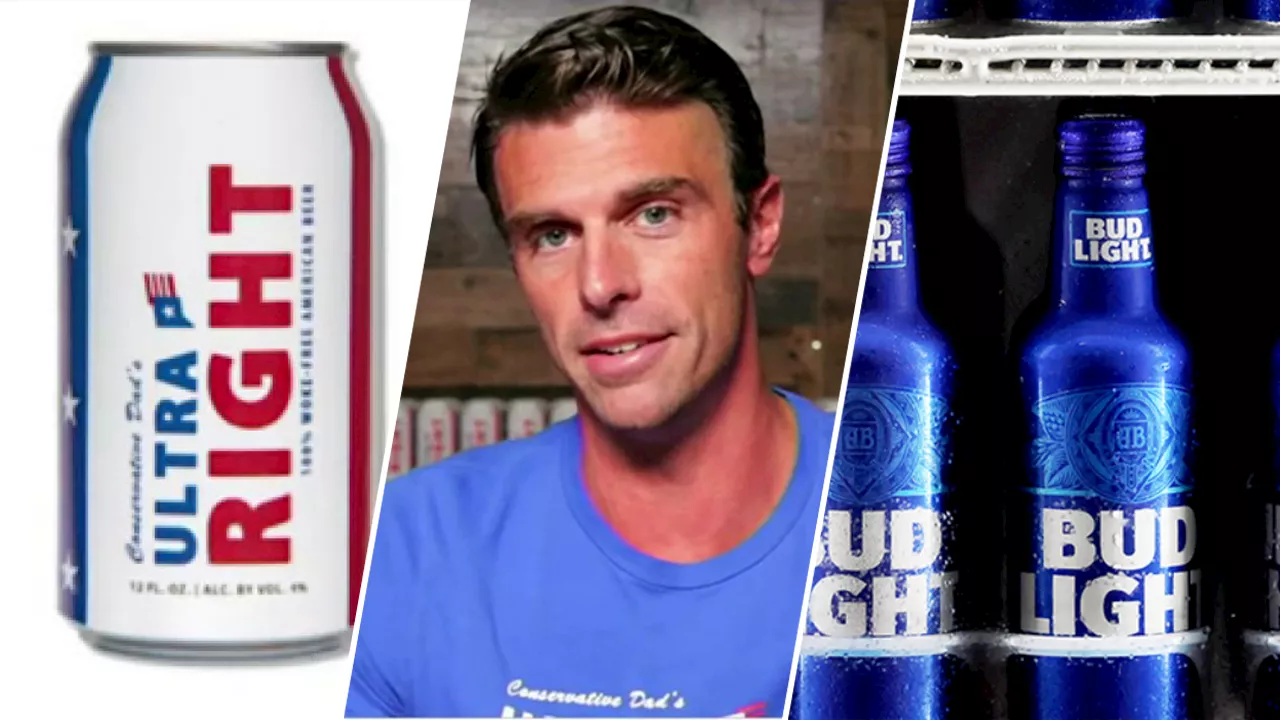 Conservative CEO Calls for Beverage Supporting Republican Values After Trump Defends Bud LightA conservative CEO says that Republican beer drinkers want a beverage that "truly supports their values" after former President Donald Trump defended rival brand Bud Light. Trump tried to soothe things over with the beer brand by saying that Bud Light's parent company Anheuser-Busch "is not a woke company" and that the brand "perhaps deserves a second chance."
Read more »
 Navigating mental health issues and supporting Valley teenagersLATEST FROM ABC15's KALEY O'KELLEY:
Read more »
 Trump-supporting truckers vow their boycott could 'shut New York City down' after $355M fraud rulingTrump-supporting truckers vow their boycott 'could shut down New York'
Read more »
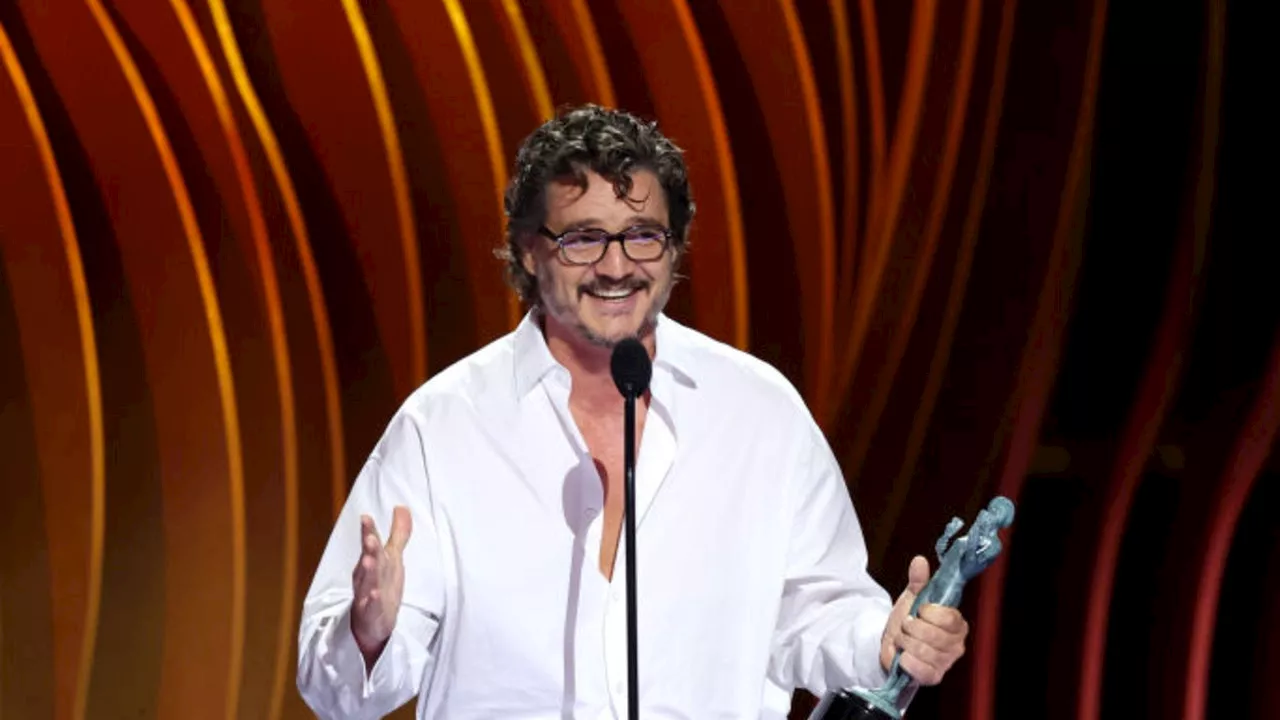 Pedro Pascal Admits 'I'm a Little Drunk' in Hilarious SAG Awards Acceptance SpeechThe actor won the award for Best Performance by a Male Actor in a Drama Series.
Read more »
 The Willy Wonka Event’s Lead Actor Speaks Out: ‘It Was Just Gibberish’Paul Connell, who portrayed “Willy McDuff” at Willy’s Chocolate Experience, talks to WIRED about the Unknown, jelly beans, and an impossible vacuum cleaner trick.
Read more »
 Every Actor Who Won an Oscar for Playing a Real-Life PerformerStay up to date with new movie news, watch the latest movie trailers & get trusted reviews of upcoming movies & more from the team at Collider.
Read more »