


BMW has unveiled the Vision Driving Experience, a radical quad-motor electric vehicle designed to push the boundaries of technology for its upcoming Neue Klasse EVs. While it shares similarities with the next-generation M3, BMW emphasizes its role as a rolling test rig for the 'Heart of Joy', a new computer system that will integrate drivetrain and driving dynamics. The Vision Driving Experience features four high-power motors, 5 fans for increased downforce, and aims to test the limits of performance and efficiency.
BMW has revealed the radical Vision Driving Experience , a quad-motor high-performance text vehicle fitted with five fans designed to suck it to the ground that is being used to hone the advanced technology that will power its next-generation of Neue Klasse electric vehicles – including the forthcoming M3 EV .
While the powertrain layout, featuring four high-power motors mounted on each axle of the vehicle, has clear parallels to plans for the next-generation M3, BMW insists the Vision Driving Experience serves a wider purpose as a rolling test rig – and the lack of sporty bodywork elements marks it out from spy shots of the first electric car from the Munich firm’s performance division. Because the focus is on vehicle development, BMW has not given a power output for the machine. The focus of the Vision Driving Experience is to be a high-performance machine that can be used to push development of the ‘Heart of Joy’, the new black box computer system that will combine the drivetrain and driving dynamics systems in all future Neue Klasse EV models. That system will first be seen in the next-generation iX3 that is set to be revealed later this year, and on the next-gen 3 Series saloon that will follow soon afterwards. Frank Weber, BMW’s development boss, said that the Heart of Joy system “enables us to take driving pleasure not just to the next level, but another one beyond that,” adding that the system would offer “efficient dynamics squared”. Autocar was given access to the Vision Driving Experience for a ride in the car, and to talk to the engineers who have developed it. First ride: inside the BMW Vision Driving Experience, and how it will develop a computer chip "The engineers won’t even tell me how much power this has,” says development driver Jens Klingmann, as he casually hurls the BMW Vision Driving Experience into a corner fast enough for the tyres to howl in protest. “But it’s a lot.” Given that my insides are still churning from the hit of acceleration at the start, he didn’t really need to say that last bit. The Vision Driving Experience is, indeed, a lot. It’s a lot of car, with a lot of motors, a lot of fans and a lot of performance. And it has a lot of significance for the ongoing development of BMW’s next-generation Neue Klasse EVs, which will start to arrive this year. This isn’t just your average prototype, then. But at heart that’s basically what it is: a quad-motor, high-power EV test mule styled on the next-gen 3 Series saloon, which has been pounding around various test facilities during recent months. Four motors and a ridiculous power output? That sounds quite a lot like the forthcoming first electric M3, doesn’t it? Except BMW insists the Vision Driving Experience isn’t a test mule for the next M3. Instead, the firm describes it as a one-off test rig on wheels, a moving laboratory used to hone technology being developed for all future Neue Klasse models in an extreme environment. The development work being done with it is as relevant to the next single-motor, entry-level iX3 SUV as it will be to whatever M division’s engineers concoct for their electric offerings. Perhaps because of the development work for which it has been created, until now the VDE has been cloaked in secrecy – and we’re not just talking about its camouflage wrap. But the fact that BMW recently strapped me into the passenger seat for a short – but very fast – ride shows that Munich now wants to showcase exactly why it has been created. Although Klingmann’s inability to share its power output indicates that the veil of secrecy isn’t fully lifted. What BMW has confirmed is that the VDE is powered by four electric motors – one for each wheel – and can produce peak torque of 13,269lb ft. And no, that’s not a typo. There isn’t an ofofficial power output, but given its ridiculous torque output, you can probably guess it’s pretty high. BMW hasn’t given any performance stats, either, but after my ride in it, I would say the 0-62mph time can be described as ‘brisk’. Beyond the four motors, the other thing we have been told about are those fans. Five of them, in fact. BMW calls them impellers, and they serve to literally suck the car to the ground. Each fan requires 50kW of energy to run, but combined they add around 1000kg of downforce without creating any drag, in turn allowing Klingmann to push even harder in corners. All of that torque and downforce is really there to develop one small but very significant black box full of computer chips and loaded with software. That would be BMW’s new Heart of Joy, the unusually named hardware and software stack that will unify the computer systems that run the powertrain and driving dynamics systems on future EVs into a single unit. It’s the first time BMW has unified those systems, and the firm claims the system has been developed entirely in-house. “The Heart of Joy will run all the key driving functions of the car,” says BMW driving dynamics expert Christian Thalmeier. “But to develop those, we need to push the technology. Even production cars with only one electric motor will gain advantages from the work we’re doing on a car with four motors.” It might seem like overkill to build a superpowerful, fan-laden development hack just to test a computer processing unit, but the idea is that if the Heart of Joy can handle anything the VDE can throw at it in the real world, it can handle pretty much anything. So how does it work? Traditionally, the powertrain and driving dynamics systems have been separate units. The powertrain system takes the inputs from your foot on the accelerator and sends that as a request to the powertrain, whether a combustion engine or a single or pair of electric motors. Meanwhile, a separate driving dynamics unit receives inputs from the steering wheel and brakes, along with any other data the car’s sensors might get from the external environment. Those two systems run in parallel, so there’s a small but potentially significant lag when they need to send data to each other, and there are limitations on how closely they can operate together. The Heart of Joy unites those systems into a single unit that receives all those inputs in the same place, processes them simultaneously and then sends the information to up to four motors along with the brakes, steering and so on. BMW says it allows for communication that’s up to 10 times faster than that used on cars that were on sale in 2021. That’s a big boost when trying to precisely modulate power and braking to best fit the conditions. But there are other benefits too. On most current EVs, friction braking is controlled by the driving dynamics unit while regeneration through the motors is the responsibility of the powertrain system. That’s why you can sometimes feel an imbalance if you’re slowing using the regen and then need to apply the brakes. “When recuperation is only done by the powertrain, you can’t use the whole potential of it,” says Thalmeier. “You need the driving dynamics system to work out how to enlarge the recuperation.” He cites the example of a rearbiased car – yes, future BMW EVs will still be rear-driven or rear-biased – cornering at speed. “ When there’s a load change, you can only put a certain amount of longitudinal force on the tyres before the car becomes unstable,” he says. “So to keep the car balanced, you have to take away either lateral or longitudinal force. Because you’re cornering and you can’t remove the lateral force, you have to reduce the recuperation to keep the car stable. But that’s not what we want: we want to add stability by recuperation. “Now, though, we’re so quick at taking data from the sensors on the car about yaw rate, lateral and longitudinal acceleration and how stable the car is that we can change things. If it’s still stable, we can do a bit of recuperation, and when it gets unstable, it will be quickly reduced.” There’s another benefit: the Heart of Joy can take your braking inputs and work out the most efficient way of stopping the car, which in most cases will be via the motor. That increases the use of regen, which BMW claims makes the car up to 25% more efficient. Not a huge amount but a useful gain, given that the aim is for most drivers to not know whether it’s the brakes or the motor slowing their machine. The Heart of Joy won’t just help when you’re slowing down your BMW, though: it will help you go faster. Again, a combustion car has a single power source, so systems such as variable four-wheel drive or torque vectoring have to go through various mechanical systems to divide up that power. But the new system can take power from one, two, three or four motors and continuously adjust where it’s sent to, keeping the car better balanced and more stable. Besides simply adding raw power, Thalmeier says adding motors will make a big difference to future Neue Klasse models. “We’re influencing the driving dynamics,” he adds. “If you think of three electric motors with one on the front axle and two on the rear, you can help steer with the rear axle by making one wheel faster and the other slower. "So you can make the car agile purely through running the electric motors at different speeds. Any existing actuator or rear-wheel steering system isn’t as quick as our new electric motors will be.” Which brings us back to the passenger seat of the VDE, with Klingmann laughing as he jams the throttle and sends the machine down the straight of the BMW Spartanburg Performance Centre test track at something approaching warp speed. It’s actually surprisingly comfortable inside, with comfy sports seats and a working version of BMW’s new iDrive system on the dashboard. Even in its test hacks, Munich does premium well. But can you feel the Heart of Joy at work? Being honest, no, not really, but that’s in part because on a cold day in South Carolina tyre grip is limited and Klingmann confesses the road-legal rubber is the limiting factor. But as my innards slowly settle once I’ve escaped the passenger seat, the performance of the Vision Driving Experience – and the systems underpinning it – is clear. The closest comparison I can make is with a passenger ride in an electric rallycross supercar. Impressive, then. And it certainly whets the appetite for the potential of a quad-motor electric M3. Why five impeller fans are needed to make the car suck The BMW Vision Driving Experience’s five impeller fans are the car’s undoubted party piece, as demonstrated when its engineers fired them up for a demonstration when it was back in the garage. For a comparison of how loud they are, imagine standing underneath the wing of an Airbus A380 when the pilot presses the start button. Essentially, they serve to stick the car to the ground, adding grip without creating aerodynamic downforce. But could they ever reach production? “You won’t see anything like this in a production car,” says Thalmeier. “It’s just too expensive. They are just for the system on this car. If you have a lot of downforce and then you add a lot of torque, it makes it very hard to accelerate. What we’re interested in with this car is how to deal with the acceleration in the software. “It’s purely a development tool. It’s not even a driving dynamics tool; it’s just another thing that makes it faster for us to develop functions.”
BMW Vision Driving Experience Electric Vehicles Neue Klasse M3 EV Heart Of Joy Technology Performance
United States Latest News, United States Headlines
Similar News:You can also read news stories similar to this one that we have collected from other news sources.
 Noem's Vision for CISA: Return to Roots or Risk Oversights?South Dakota Governor Kristi Noem's potential leadership at the Department of Homeland Security will likely reshape CISA. Her vision emphasizes a return to core technical cybersecurity functions, but critics worry about the potential for gaps in addressing hybrid threats and online radicalization.
Read more »
 Vision Quest: Exploring the Depths of Vision's HumanityMarvel Studios' upcoming Vision Quest series dives into the aftermath of WandaVision, following Vision's journey to reclaim his memories and rediscover his humanity. The series boasts a stellar cast, including Paul Bettany, James Spader, Faran Tahir, and newcomer Alessandro Mollica.
Read more »
 Lyft Joins the Race for Autonomous Vehicles with Plans for Self-Driving Robotaxis in DetroitLyft is venturing into the world of autonomous driving with plans to launch a fleet of self-driving robotaxis in Detroit. Partnering with Mobileye, a leading autonomous-driving technology provider, Lyft aims to deploy thousands of these vehicles on Detroit's roads. This initiative marks a significant step for Lyft in its pursuit of expanding its transportation services beyond traditional rideshare operations. The company is collaborating with Marubeni, a major auto financing firm, to own and manage the robotaxi fleet. Lyft aims to expand these self-driving services to other cities in the future. Meanwhile, Lyft continues to develop other autonomous vehicle projects, including a collaboration with May Mobility to deploy a fleet of self-driving Toyota Sienna minivans. This foray into autonomous driving highlights Lyft's commitment to innovation and its vision for the future of transportation.
Read more »
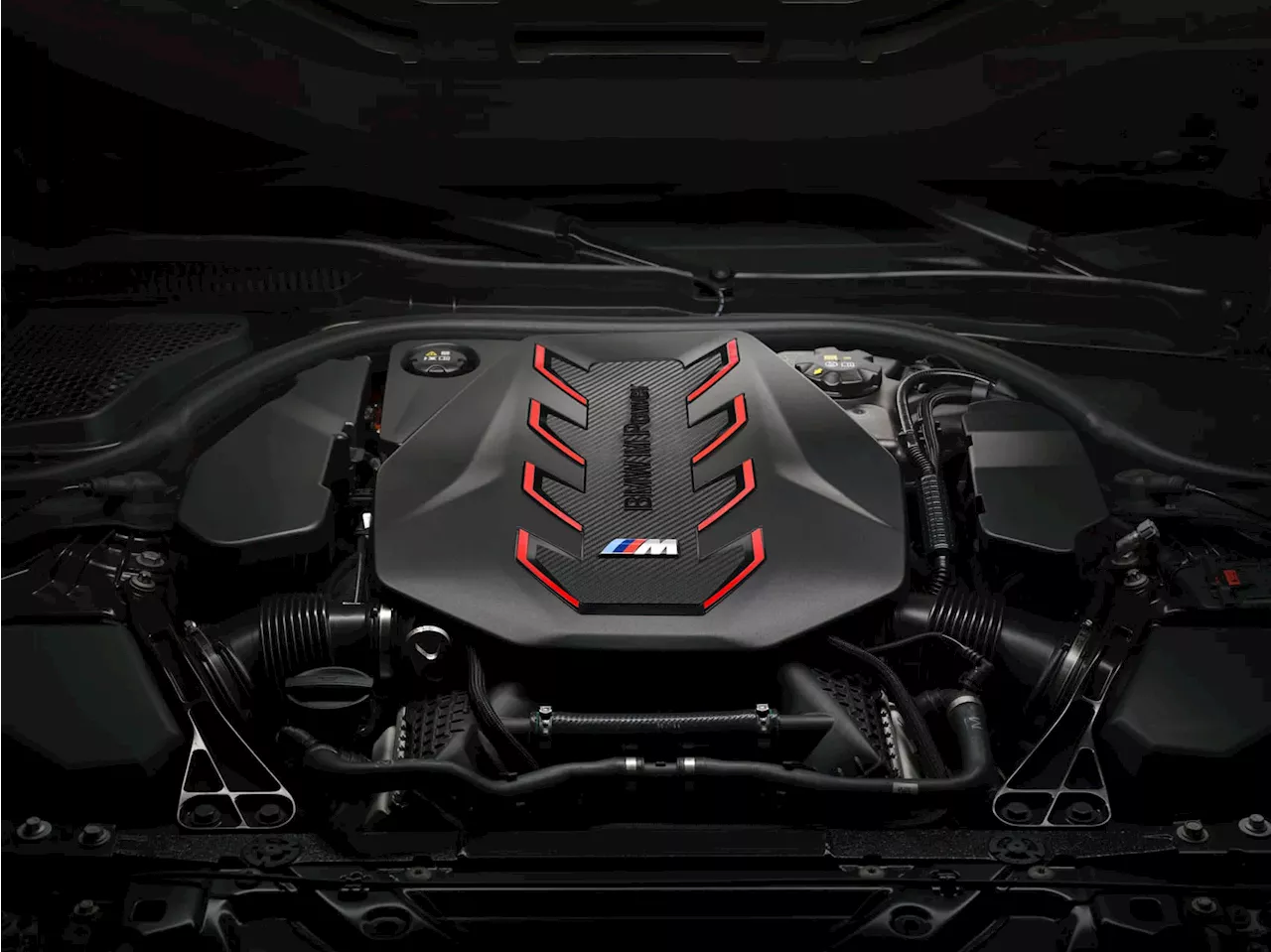 BMW Says It Will Keep V-8 Engines But Embraces Hybrid TechBMW CEO Oliver Zipse has stated that the automaker will continue to use V-8 engines, but these will increasingly be paired with hybrid systems to meet emissions regulations. This comes after Mercedes-AMG controversially replaced the V-8 in the C 63 with a 4-cylinder hybrid, sparking debate about the future of iconic engines. While BMW acknowledges that hybrid setups can rival V-8 performance, they prioritize the driving experience offered by the larger engine.
Read more »
 BMW's 'Heart of Joy' ECU: Reinventing Driving Dynamics in the Electric EraBMW unveils its innovative 'Heart of Joy' ECU, a single computer system that controls every aspect of its upcoming electric vehicles. This in-house development promises to deliver unparalleled performance, efficiency, and a distinctive driving experience.
Read more »
 BMW's Vision Driving Experience: A Glimpse into the Future of EVsBMW unveiled its Vision Driving Experience (VDX) technology demonstrator, showcasing its next-generation software-defined EVs. The VDX boasts an alleged 13,269 lb-ft of torque and impressive handling capabilities. It features a new drivetrain management system called 'Heart of Joy,' which processes data ten times faster than current ECUs. This software-first approach aims to revolutionize traction management and efficiency, with real-world benefits like variable recuperation. While the VDX is not production-ready, its technology will underpin BMW's Neue Klasse EVs, which will arrive in the U.S. later this year.
Read more »