


A catastrophic gas explosion at the Liushenyu Coal Mine in Shanxi, China, has claimed 82 lives. A deep-dive investigation reveals a shocking web of unauthorized tunnels, falsified blueprints, and unregistered workers that led to the country’s worst mining tragedy in nearly two decades.
On the evening of Friday, May 22, 2026, a catastrophic gas explosion ripped through the Liushenyu Coal Mine in Qinyuan County, Shanxi Province, China. The blast, which occurred at approximately 7:29 p.m. local time, has claimed at least82 lives, left128 workers hospitalized, and left two others missing.
It stands as China's deadliest mining disaster since the 2009 Xinxing Mine explosion in Heilongjiang, which killed 108 people.
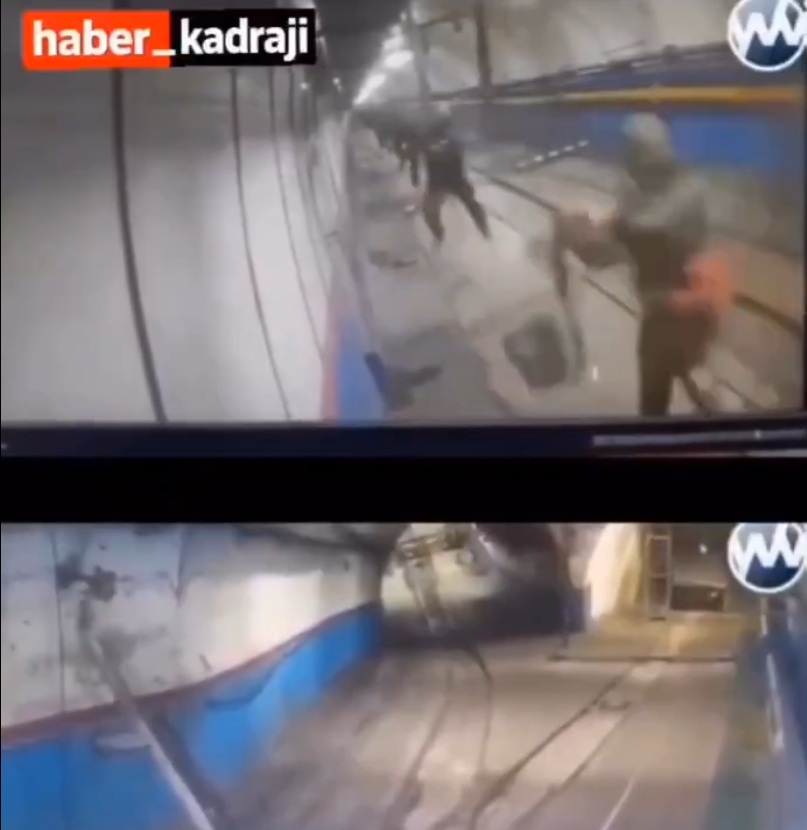
As rescuers battle unstable underground structures, water accumulation, and toxic gas pockets, a preliminary state investigation has exposed a shocking architecture of corporate negligence, secret tunnels, and systemic safety violations that directly contributed to the heavy loss of life.
The Cascade of Failure: What Happened at Liushenyu
At the time of the explosion, 247 workers were underground. According to initial reports, the mine's monitoring infrastructure had triggered an underground carbon monoxide sensor shortly before the blast occurred. Rather than initiating immediate evacuation protocols, the warning was reportedly ignored, and operations continued until the devastating gas ignition occurred. The majority of the hospitalized survivors suffered from acute carbon monoxide inhalation and severe injuries.The immediate rescue efforts were described by local officials as "chaotic". Emergency responders were severely hampered by inaccurate tunnel maps and an understated tally of the actual number of miners underground, complicating search patterns in the early, critical hours of the disaster.
'Yin-Yang' Drawings and Fake Mortar Doors

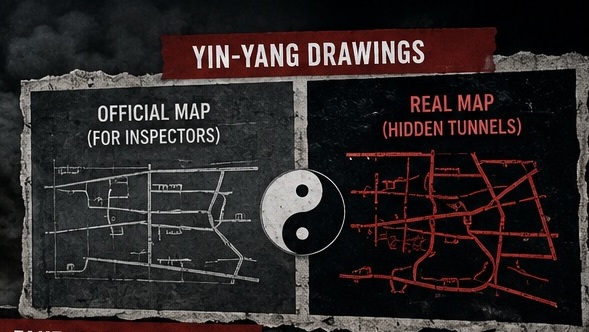
On Tuesday, May 26, 2026, China's state news agency, Xinhua, released damning preliminary findings detailing how the mine’s operator actively deceived regulators. The investigation revealed that the mine utilized"yin-yang drawings"—two entirely different sets of underground layouts and surveillance plans.
One set was kept visible in the "light" to appease official inspectors, while the other reflected the real, darker layout of the mine, which included extensive unauthorized and hidden tunnels designed to boost coal output tax-free. To keep these secret corridors hidden from regulatory visits, the operators constructed fake rock walls. Workers used wire mesh and woven plastic sacks sprayed with mortar to build highly convincing fake doors that blended seamlessly into the natural rock tunnels.
Whenever inspectors were scheduled to visit, management tipped off the workers underground, who would close these false doors and smear them with coal ash to mask any seams. Behind these fake doors, unregistered subcontracted laborers worked in high-risk zones without proper ventilation or monitoring equipment.
An Invisible, Untracked Workforce
Perhaps the most tragic aspect of the deception was the deliberate omission of safety gear for subcontracted workers.To avoid leaving a paper trail of the unauthorized operations, the mine operators hired subcontracted labor to work in the concealed tunnels without logging them in the official entry registry or providing them with mandatorylocation-tracking devices. Of the 247 miners underground at the time of the explosion, only 124 were officially logged as having entered. The remaining 123 were essentially invisible to surface monitoring.
Without trackers, rescue teams and robotic inspection systems sent into the debris-ridden, flooded tunnels had no way of knowing where the trapped miners were located, greatly complicating rescue efforts.
The Operator: Who is Shanxi Tongzhou Coal Coking Group?
The Liushenyu Coal Mine is operated byShanxi Tongzhou Group Liushenyu Coal Industry Co., established in 2010 and controlled by the privately-ownedShanxi Tongzhou Coal Coking Group. The group is one of the top 100 privately-owned mining firms in China, with the Liushenyu mine alone boasting an annual production capacity of 1.2 million tons of coking coal.Despite its commercial scale, the company has a documented history of severe safety violations. In 2024, China's National Mine Safety Administration (NMSA) formally placed the Liushenyu mine on a nationwide list of disaster-prone facilities due to its "high gas content". Throughout 2025, the company was hit with at least two separate administrative penalties for safety non-compliance. Yet, driven by high production demands, the mine continued its high-risk operations without addressing the fundamental hazards.
State Intervention and the Current Status of Accountability
The scale of the tragedy has drawn direct attention from the highest levels of the Chinese government. President Xi Jinping called for an "all-out" effort to rescue any remaining missing persons and demanded a "thorough and uncompromising" investigation, urging strict accountability under the law. Premier Li Qiang also instructed agencies to focus on systemic overhauls in the mining sector. The immediate political and legal fallout has been swift:- Detention of Executives:Several high-ranking executives and managers of the Shanxi Tongzhou Coal Coking Group have been placed under detention and are facing criminal investigation.
- Procuratorate Supervision:China's top prosecution body, the Supreme People's Procuratorate (SPP), has taken the rare step of placing the case under its direct supervision to prevent local interference and ensure rigorous legal accountability.
- Total Suspension of Operations:All four coal mines operated by the Tongzhou Group have been closed indefinitely for a comprehensive safety overhaul.
- Provincial Mine Shutdowns:Fearing wider systemic issues, provincial authorities ordered a sweeping safety audit. Consequently, more than 96 other coal mines across Shanxi Province have suspended production, halting over 100 million tons of annual coal capacity to conduct emergency checks.
The disaster has triggered widespread public outrage on Chinese social media platforms like Weibo, with citizens expressing deep anger over corporate greed putting workers' lives at risk.
The investigation is ongoing, and the State Council's task force has pledged that those responsible will face severe legal consequences as China faces renewed pressure to reform its industrial safety protocols.Tags:China mining accident, Liushenyu Coal Mine, Shanxi mine blast, Tongzhou Group, China coal disaster, industrial safety violations, Yin-Yang Drawings
Liushenyu Coal Mine Shanxi mine blast Tongzhou Group China coal disaster industrial safety violations Yin-Yang Drawings