
Researchers at LMU Munich have developed a groundbreaking molecule called azo-menthol that allows precise control of TRPM8 ion channels using light. This discovery has significant therapeutic potential as TRPM8 channels are involved in various diseases, including cancer, metabolic disorders, and inflammation.
LMU researchers have developed a molecule that allows an important ion channel to be regulated -- a breakthrough with therapeutic potential. Located in the cell membrane, TRPM8 ion channels are known as receptors that recognize cold and respond to menthol, the cooling agent in peppermint.
In addition, these channels influence pain perception and play a key role in numerous diseases. This makes them promising targets for the development of new drugs to combat cancer, metabolic diseases, inflammations, and more. Researchers have been studying TRPM8 ion channels in order to better understand their complex functions and develop innovative therapeutic approaches. An LMU research team led by Professor Michael Mederos y Schnitzler and Dr. David B. Konrad, in collaboration with Professor Dirk Trauner and Professor Ursula Storch , has now made an important breakthrough in this area. The researchers have developed an innovative molecule called azo-menthol, which is able to precisely control TRPM8 channels using light, as they report in the journal"With azo-menthol, it's possible for the first time to specifically activate TRPM8 channels using UV light and deactivate them again with blue light -- and to do so in a way that's spatiotemporally precise and reversible," emphasizes Mederos y Schnitzler. Using light as a tool to control biological processes has great therapeutic potential, say the authors."Such photopharmacological approaches could help, for example, avoid systemic side effects such as arise during conventional chemotherapy," notes Mederos y Schnitzler."Accordingly, the progress being made in this area opens up exciting new prospects for the development of novel therapies that could be more precise in their action and gentler in their effects."Jasmin Becker, Clara S. Ellerkmann, Hannah Schmelzer, Christian Hermann, Kyra Lützel, Thomas Gudermann, David B. Konrad, Dirk Trauner, Ursula Storch, Michael Mederos y Schnitzler.Intrigued by the properties of ion channel proteins commonly observed in cells, researchers have developed the first synthetic mechanosensitive potassium channel using a newly developed aromatic ... Researchers have developed an atomic-scale ion transistor based on electrically gated graphene channels of around 3 angstrom width which demonstrated highly selective ion transport. They also found ... Researchers have discovered a new mechanism by which substances can open a certain type of ion channel and in this way regulate nerve impulses. The study identifies a large group of substances that ... Nerve cells have a special ion channel that has a key role in starting the electrical impulse that signals pain and is sent to the brain. New research finds that people who inherited the Neanderthal ...
TRPM8 Ion Channels Photopharmacology Drug Development Therapeutics Light Control
United States Latest News, United States Headlines
Similar News:You can also read news stories similar to this one that we have collected from other news sources.
 UBC Researchers Develop Groundbreaking Coating for Medical DevicesA new coating developed by UBC researchers could revolutionize the safety of medical devices by mimicking the natural behavior of blood vessels, reducing the risk of thrombosis and dangerous bleeding.
Read more »
 Chinese Researchers Develop BHMbot-B, a Microrobot for Small Space NavigationChinese researchers have developed the BHMbot-B, a 15 mm long microrobot capable of quick forward and backward movements. The robot switches between motions using vibration mode transition control and is equipped with a battery, control circuit, and electromagnetic actuators, allowing it to perform tasks in confined spaces with accuracy and agility.
Read more »
 University of Illinois researchers develop DNA NanoGripper to detect, inhibit virusesUniversity of Illinois researchers develop DNA NanoGripper to detect viruses
Read more »
 MIT Researchers Develop Open-Source AI Model to Rival AlphaFold3Boltz-1, a groundbreaking open-source AI model developed by MIT scientists, promises to democratize access to advanced structural biology tools for researchers worldwide.
Read more »
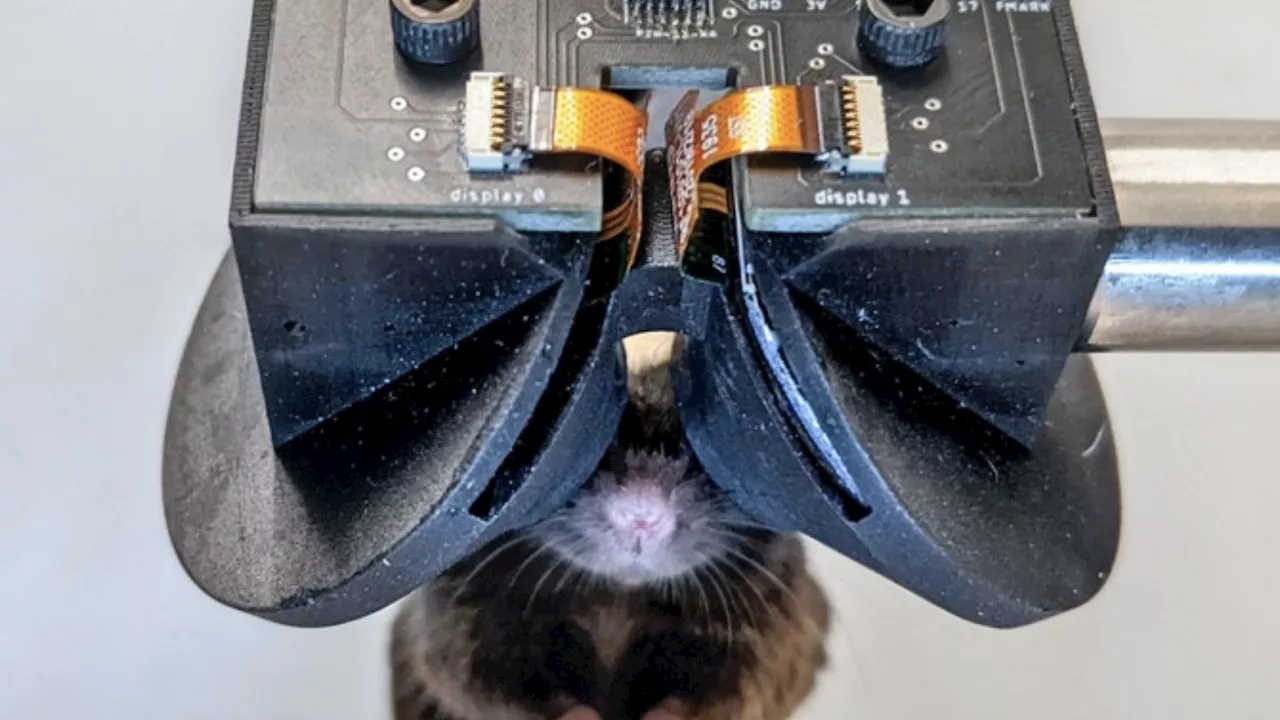 Cornell Researchers Develop Miniature VR Headsets to Study Mouse Brain ActivityResearchers from Cornell University have created MouseGoggles, miniature VR headsets designed to immerse mice in virtual environments. These headsets, built with affordable components, aim to provide deeper insights into the neural activity related to spatial navigation and memory function in mice. The technology holds potential for understanding disorders like Alzheimer's disease and exploring potential treatments.
Read more »
 Engineering researchers develop revolutionary diamond fabrication technologyA research team has developed a groundbreaking method for massively producing ultrathin and ultra-flexible diamond membranes.
Read more »