


This article challenges the traditional concept of the Habitable Zone as the primary region for finding extraterrestrial life. It explores alternative environments where life could potentially exist, including icy moons, hycean worlds, tidally locked planets, and molecular clouds. The article argues for a broader perspective in the search for life, emphasizing the need to explore a wider range of possibilities beyond our current assumptions.
The Habitable Zone , a concept central to the search for extraterrestrial life , has long been considered the primary region where liquid water, a key ingredient for life as we know it, could exist on a planet's surface. This zone, defined as the area around a star where temperatures allow liquid water, initially seemed like a promising starting point for finding alien life. After all, all known life in the universe resides within the Sun's Habitable Zone .
However, researchers have increasingly recognized the limitations of this approach.Life's ability to influence a planet's chemistry and the existence of diverse planetary environments challenge the restrictive nature of the Habitable Zone concept. Icy moons within our own solar system demonstrate that life can thrive in conditions beyond the traditional definition. Furthermore, even within the constraints of Earth-like biochemistry, the possibilities for life are far more extensive than initially thought. Planets called hycean worlds, enveloped by water and thick hydrogen atmospheres, were once considered too toxic for life but now hold potential. Consider the unique environments of tidally locked planets orbiting red dwarf stars, such as Proxima b and the TRAPPIST-1 system. These planets experience extreme conditions, with one side perpetually bathed in starlight and the other locked in eternal night. While seemingly inhospitable, these worlds could still harbor temperate atmospheres under specific circumstances. The delicate balance required for life to exist in these environments highlights the complex interplay of factors that contribute to habitability. Even dead stars, like pulsars, can retain planets from their past or create new ones from stellar debris. These stars, though devoid of light, can still emit significant heat, providing energy for potential life. Additionally, planets might exist in the cold, dense regions of molecular clouds, utilizing the energy from ancient starlight and the exotic chemistry present.The search for life, therefore, should not be confined to the traditional Habitable Zone. We must broaden our perspectives and explore a wider range of possibilities. Investing in research that pushes the boundaries of our understanding of life and its potential environments is crucial. This includes identifying and observing those potential habitats, such as icy moons, hycean worlds, tidally locked planets, and molecular cloud environments. By expanding our search criteria, we increase the likelihood of discovering life beyond our initial assumptions
Extraterrestrial Life Habitable Zone Hycean Worlds Tidally Locked Planets Molecular Clouds
United States Latest News, United States Headlines
Similar News:You can also read news stories similar to this one that we have collected from other news sources.
 Atmospheric Composition Could Influence Habitable Zones and Support Microbial LifeNew research is challenging the traditional definition of the habitable zone, emphasizing the role of a planet's atmosphere in supporting life. A team of scientists used lab experiments with E. coli and climate simulations to explore how different atmospheric compositions affect the potential for liquid water and microbial survival.
Read more »
 Super-Earth HD 20794 d: An Eccentric Wanderer in the Habitable ZoneThis article explores the discovery and characteristics of HD 20794 d, a super-Earth exoplanet with an unusual orbit that takes it in and out of its star's habitable zone. Its proximity to Earth and the star's brightness make it an ideal target for future atmospheric studies and provide valuable insights into planet formation, habitability, and the search for life beyond our solar system.
Read more »
 Newly Confirmed Exoplanet Orbiting Nearby Star Offers Glimpse into Habitable WorldsAstronomers have confirmed a potentially habitable exoplanet orbiting a sunlike star just 20 light-years from Earth. Dubbed HD 20794 d, this super-Earth or mini-Neptune candidate boasts a unique eccentric orbit that takes it through its star's habitable zone, experiencing both scorching temperatures and frigid cold. While the planet's true nature remains uncertain, its discovery offers a tantalizing opportunity to study the conditions for life beyond our solar system.
Read more »
 Could Life Thrive on White Dwarf Planets?While initially considered barren and inhospitable, recent research suggests that some white dwarf planets might retain atmospheres and even harbor water. These planets could potentially evolve into habitable environments if they migrate inward to the white dwarf's habitable zone. Furthermore, a new study reveals that a small percentage of white dwarfs exhibit a cooling pause due to a process called distillation, which could stabilize their habitable zones for billions of years.
Read more »
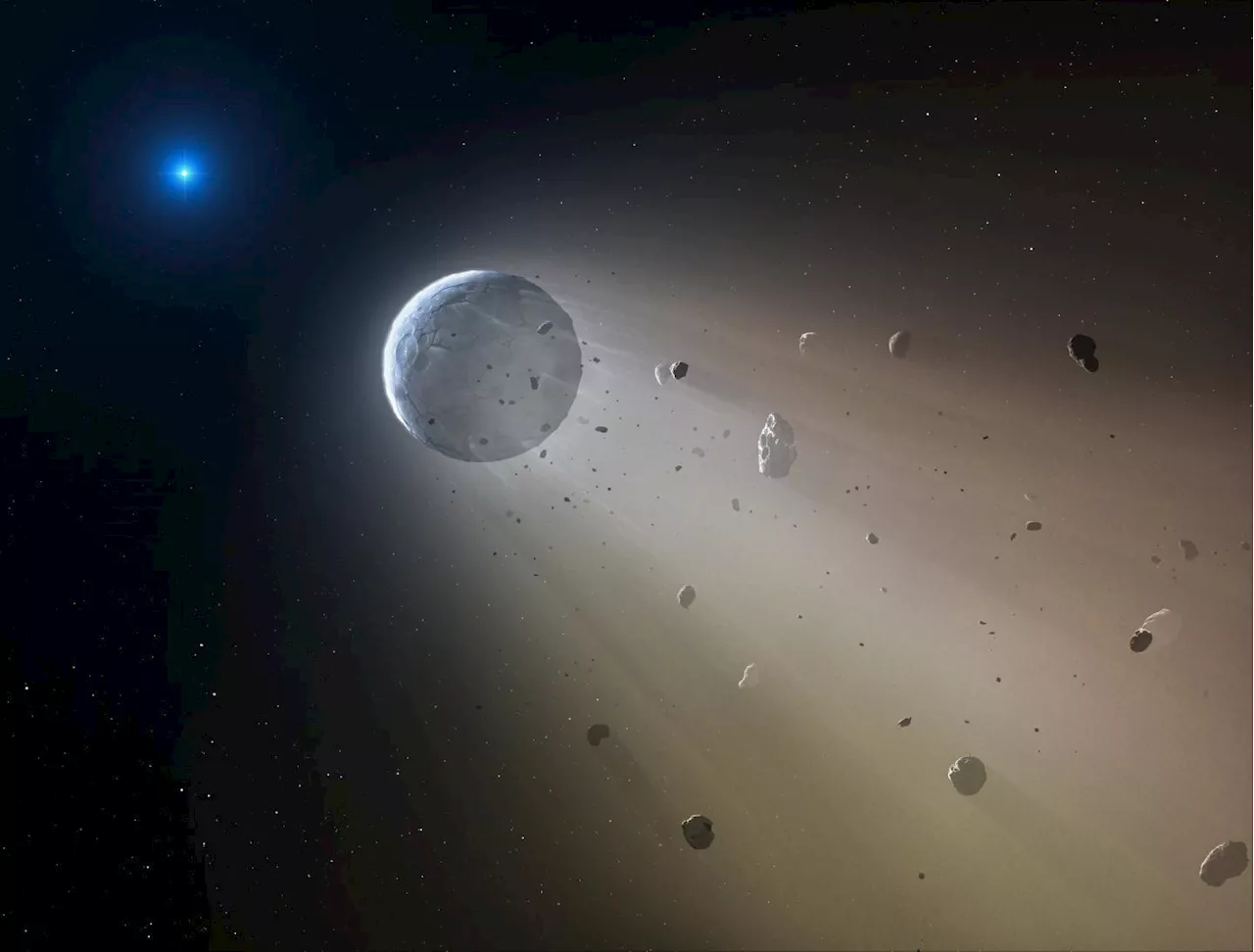 Could Paused Cooling White Dwarfs Harbor Habitable Planets?Recent research has shown that some white dwarf stars, which were previously thought to be too cold for life, may actually be capable of supporting habitable planets. This is due to a process called distillation, which can pause the cooling of a white dwarf for billions of years, creating a stable habitable zone.
Read more »
 Expanding the Search for Life: Beyond the Habitable ZoneThe upcoming Habitable Worlds Observatory (HWO) aims to directly image exoplanets and search for biosignatures. While focusing on Earth-like planets within the Habitable Zone is crucial, the article argues for diversifying life-hunting programs to explore potentially habitable environments beyond these traditional boundaries.
Read more »