
Disney and OpenAI thought their billion-dollar deal would underscore the importance of AI for Hollywood's future. Its ignominious collapse proves just the opposite
It was supposed to be Bob Iger's legacy. On Dec. 11, Iger, the departing Disney chief executive, joined OpenAI CEO Sam Altman to announce what they labeled a 'landmark' deal allowing users of OpenAI's text-to-video platform to generate videos featuring 'beloved' Disney characters, including even Mickey Mouse.
Iger and Altman embarked on a virtual PR tour, appearing on CNBC to praise each other's sagacity in grasping this new technology ahead of their rivals in Hollywood and Silicon Valley. The deal encompassed a $1-billion investment by Disney in OpenAI. 'We want to participate in what Sam is creating,' Iger said on CNBC, with Altman, occupying an adjacent on-screen window, nodding in acknowledgment. 'Obviously,' Iger continued, 'we've been mindful of the significant growth in AI' and mentioned OpenAI's 'agreement to both honor and value and respect our content.' Altman told CNBC's audience that demand from its users for Disney characters was 'sort of off the charts.' The deal, he said, represented “a wonderful start for what our customers want to do when it comes to putting themselves in that . . . lightsabre fight in Star Wars or making a Buzz Lightyear custom birthday video for their kid.” The thrill lasted less than four months. On March 24, OpenAI announced it was shutting down Sora in a move that reportedly came as a surprise to Disney. But it shouldn't have. As my colleagues Samantha Masunaga and Nilesh Christopher reported, almost nothing about the deal had been formalized; Disney had not paid anything to OpenAI, nor had OpenAI paid any fees to license Disney characters. Long before that, it had become clear that Sora was a bust. Unveiled in 2024, the Sora app went public last September and by November had soared to more than 6 million monthly downloads. But interest rapidly faded; by February the download pace had fallen to just over 1 million, according to market researchers. Furthering the downside, Sora demanded a huge proportion of OpenAI's computing resources as Altman was facing more pressure to directly compete with rivals such as Anthropic. Meanwhile, Disney was coming under fire for its climbing into bed with a company that artists, writers and other content creators regard as a plagiarism machine. Many have sued AI firms, alleging copyright infringement; in fact, Disney is a plaintiff in some of that litigation. The day of the surprise announcement, a chastened Disney said, 'we respect OpenAI’s decision to exit the video generation business and to shift its priorities elsewhere.' Even before users voted with their feet, Disney was facing a backlash from its own content creators. Its deal with OpenAI 'appears to sanction its theft of our work and cedes the value of what we create to a tech company that has built its business off our backs,' the Writers Guild of America stated. Sora's demise points to more than the collapse of a big-media financial deal. It's yet another indication that the allure of AI-created content for paying customers has been vastly overestimated. So too have been the ostensible efficiencies that AI brings to businesses. For example, Walmart has reportedly found that conversion rates — the percentage of consumers who complete an online transaction after an online search — are appreciably lower for consumers who attempt to complete the purchase through ChatGPT than among those who exit the bot and finish their purchase without it. Amazon has suffered a spate of outages, some of them lasting hours, since it began entrusting more software coding responsibilities to AI bots while laying off human engineers, according to the Financial Times. An internal memo issued prior to a corporate meeting attributed some of the problems to 'Gen AI-assisted changes in its software,' the FT said. Amazon called that a 'false claim' and stated that only one of the outages involved 'AI-assisted tooling.' That case, the company said, 'related to an engineer following inaccurate advice that an AI tool inferred from an outdated internal wiki,' and none involved 'AI-written code.' Its explanation, however, in effect said that AI didn't generate the troublesome software coding itself, but did give an engineer instructions about how to write the code — erroneously. The company added that it had 'updated internal guidance to help prevent similar problems in the future.' AI-generated errors have afflicted customer service operations at some companies and have caused doctors and lawyers no end of grief, affecting their services to patients and clients. Another bust was OpenAI's 'Instant Checkout' platform, introduced in September, which enabled consumers to place a purchase order from merchants such as Walmart, Spotify and Etsy without exiting ChatGPT to finish their transaction directly with the merchant. Some retailers — including Walmart — became concerned that the process disconnected them from their own customers rather than keeping the retailer-consumer relationship in their own hands. Walmart now steers online customers to its own AI app, dubbed 'Sparky,' which is available via ChatGPT and allows customers to search for products, receive purchase suggestions and complete the buy within Walmart's ecosystem. A Walmart spokesperson didn't comment on the reports about its disappointment with Instant Checkout's conversion rate, but said the company is still optimistic about rolling out AI-enabled searches and purchases. OpenAI, meanwhile, has indicated that it's retooling, if not scrapping, Instant Checkout. 'The initial version of Instant Checkout did not offer the level of flexibility that we aspire to provide, so we’re allowing merchants to use their own checkout experiences while we focus our efforts on product discovery,' OpenAI acknowledged in a statement last week. The AI-related issues confronting content creators such as Disney start with fears that they will lose control over their own intellectual property. In announcing its partnership with OpenAI, Disney said it would license a selection of its animated characters for users, with some Sora-generated and 'fan-inspired' videos to be selected to appear on Disney+, the company's streaming service, later this year. Yet the loss of creative control quickly manifested itself: OpenAI 'strengthened its copyright guardrails and 'content violation' warnings became a routine part of denying user requests,' The Times reported. Perhaps more telling, viewers found Sora-generated videos and those from other platforms less than compelling. Much of it has fallen into the category of 'AI slop,' which as I reported in December was typically flat, dull and hopelessly generic. One example is an 11-minute video titled 'Next Stop Paris,' produced under the aegis of the Chinese TV maker TCL, an unrelentingly cliched meet-cute romcom, that managed to accumulate only a meager 10,000 views since it was posted on YouTube a year ago. TCL's AI-powered plunge into the content-creation business appears to have stalled. TCL Film Machine, an AI-fueled film studio that was launched with great fanfare in 2024, appears becalmed, its webpage currently featuring to a single unclickable image. I asked TCL for the status of its AI film production project, but received no reply. The company's U.S. content chief, Chris Regina, told Jason Koebler of 404 Media in December 2024 that viewer resistance to AI-generated films stemmed from the manifest imperfections of the AI-generated images, and that as the product got better it would be competitive with live-action films. 'When we get a little closer to perfection or closer in quality to what’s being produced ,' he said, 'my question to the marketplace is, ‘Well then what?’” Then what, indeed? It's possible that the public will become accustomed to AI slop as entertainment content, or that AI video quality will become essentially indistinguishable from filmed live action. Consumer resistance — or indifference — to AI slop, however, suggests that people still seek in entertainment some emotional or intellectual connection with human creators, which AI may be unable to replicate. The technology's real allure for studio executives may not wane, however. They don't appreciate AI as a technology that can revolutionize storytelling, but more as one that can revolutionize the economics of entertainment by replacing all those troublesome and expensive actors and writers with docile bots that don't have to be paid wages, points and residuals dictated by union contracts and have to be personally cosseted to do their work. That's why unions and other representatives of filmmaking humans are nervous about the encroachment of AI into their livelihoods. They should be.
United States Latest News, United States Headlines
Similar News:You can also read news stories similar to this one that we have collected from other news sources.
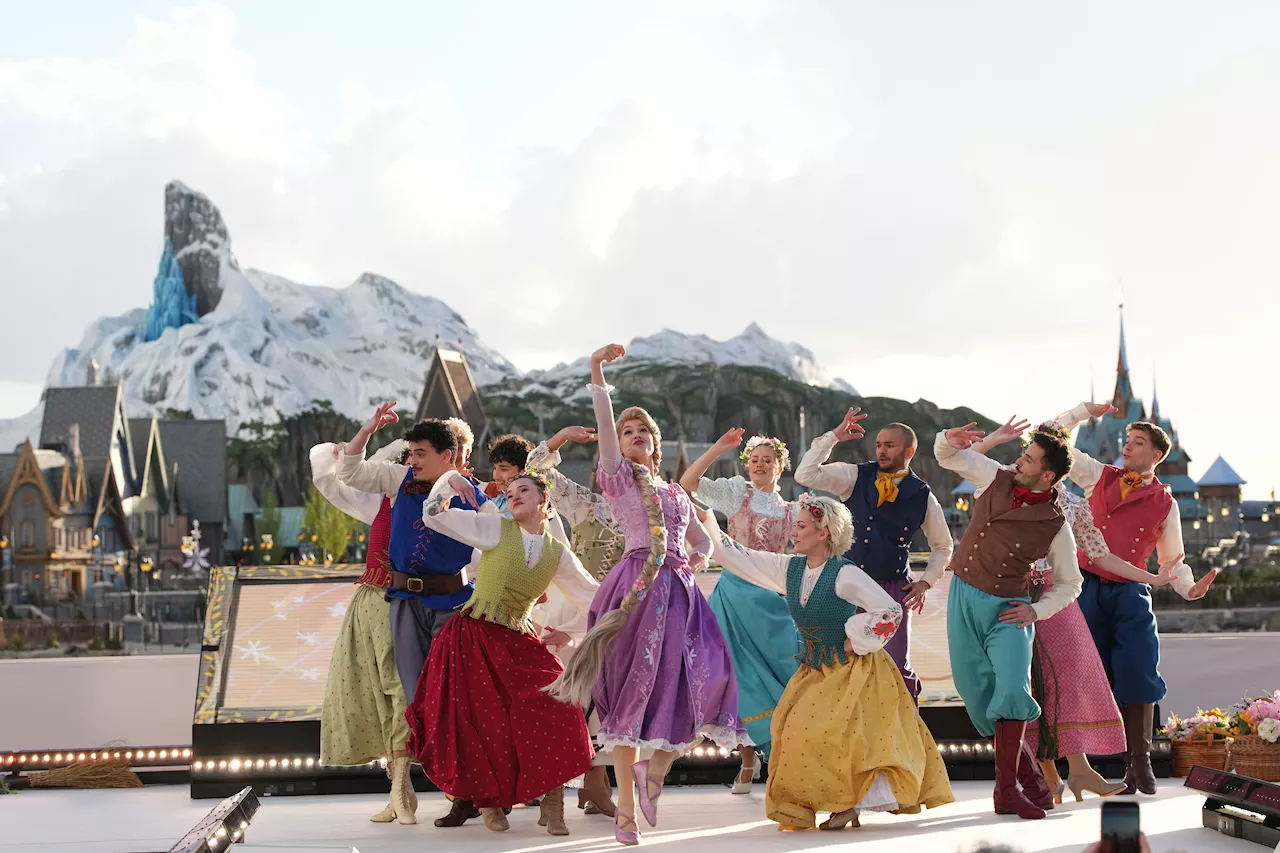 Walt Disney Studios Park Rebrands as Disney Adventure World with 'World of Frozen' OpeningWalt Disney Studios Park in Disneyland Paris officially reopens as Disney Adventure World, featuring the debut of the 'World of Frozen' land, as part of a major expansion including new attractions, dining, and a nighttime spectacular. The relaunch highlights European-inspired themes, a $2.18 billion investment, and the creation of new jobs.
Read more »
 OpenAI’s Obsession With Data Centers Is Running Into TroubleI've been at Futurism since 2017, where my role has evolved to encompass design, writing, and increasingly editing.
Read more »
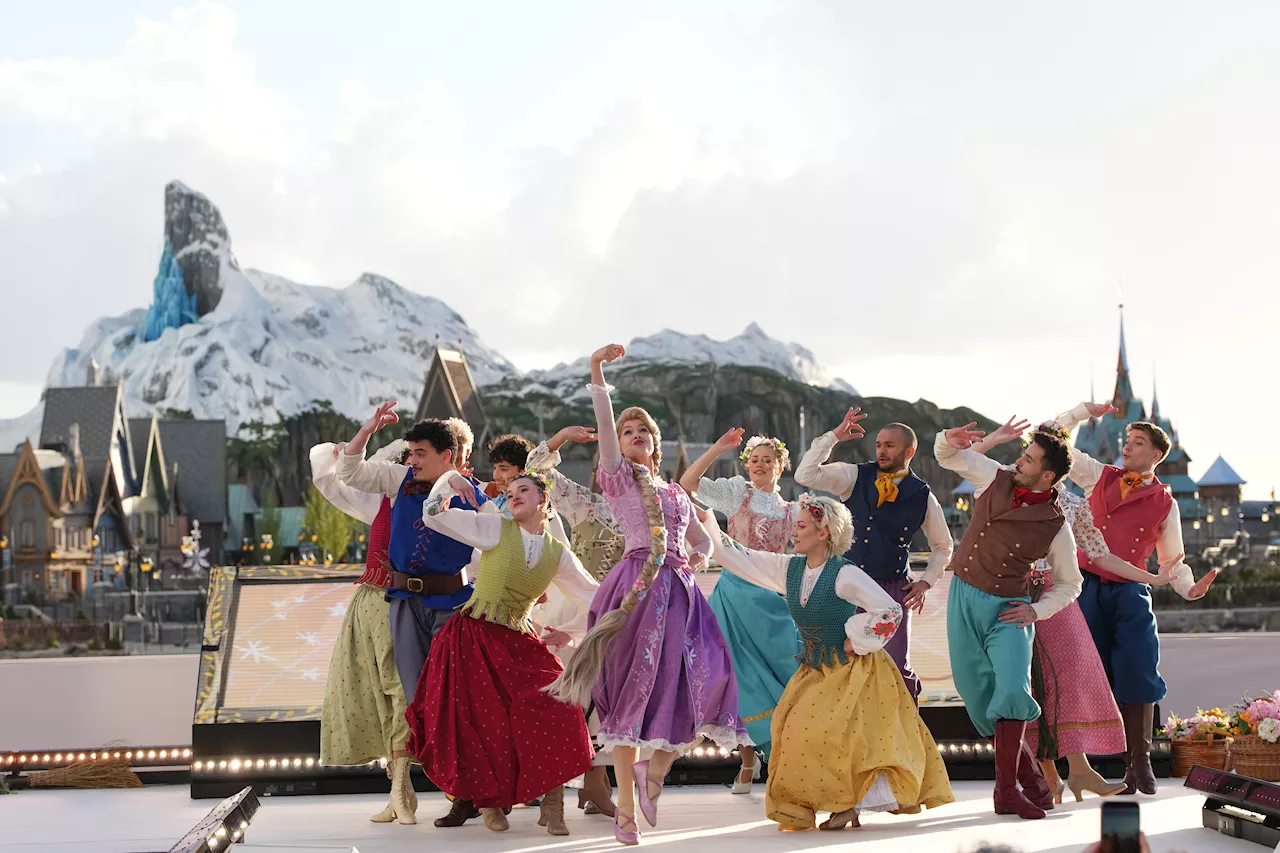 Walt Disney Studios Park Rebrands as Disney Adventure World with World of Frozen DebutWalt Disney Studios Park in Disneyland Paris officially becomes Disney Adventure World with the opening of the World of Frozen, a key element of a 2 billion euro expansion. The relaunch includes a Frozen-themed land, a Tangled attraction, new dining options, and a nighttime show. This investment is part of a larger global expansion by Disney, aiming to boost the resort's status as a leading European tourist destination and create new jobs.
Read more »
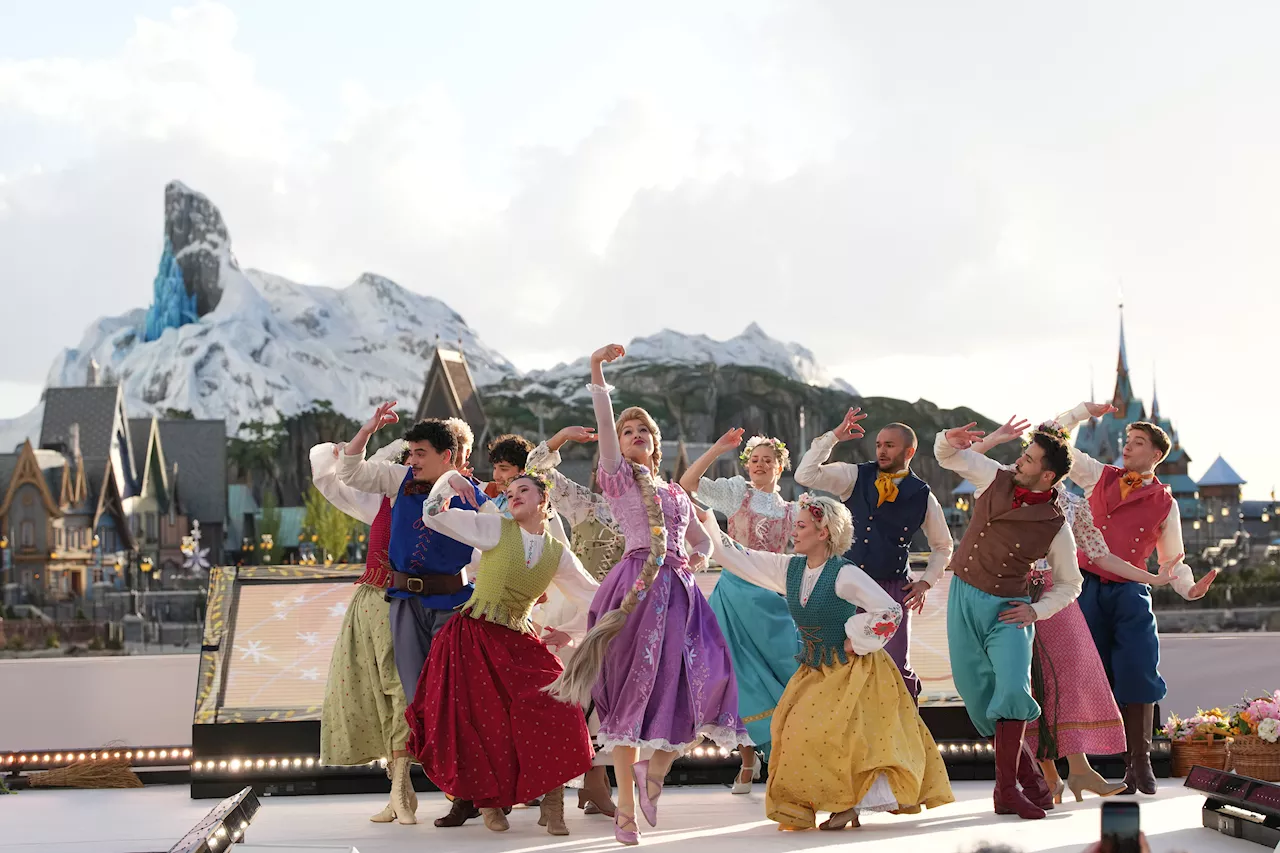 Walt Disney Studios Park Transforms into Disney Adventure World with 'World of Frozen' LaunchDisneyland Paris unveils Disney Adventure World, a major expansion featuring 'World of Frozen,' a new Tangled attraction, and a nighttime spectacular. The 2 billion euro project aims to revitalize the park, Europe's leading tourist destination, creating jobs and boosting Disney's global expansion.
Read more »
 OpenAI killed the Sora AI video generator and you’re probably guessing the “why” wrongTech Product Reviews, How To, Best Ofs, deals and Advice
Read more »
 ‘More AI Slop than AI Magic’: WSJ Reveals the Reason OpenAI Suddenly Shut Down SoraSource of breaking news and analysis, insightful commentary and original reporting, curated and written specifically for the new generation of independent and conservative thinkers.
Read more »