
Ben Turner is a U.K. based staff writer at Live Science. He covers physics and astronomy, among other topics like tech and climate change. He graduated from University College London with a degree in particle physics before training as a journalist.
Scientists have discovered a groundbreaking method to shield quantum information from"noise" — and it could finally let us build practicalof two particles that are shared instantaneously across time and space.
This enables quantum computers to perform faster calculations than their traditional counterparts because they can process information in parallel rather than in sequence. But maintaining this"coherence" is difficult due to"noise" from the outside world, as interactions with loose particles, rays of light andcan break the entanglement and disperse the information within. That's why the error rate in qubits is much higher than in conventional bits in classical computing. "Basically even though companies claim 1,000 qubits, very few of them are useful. Noise is the reason," study co-author, a professor of physics at the University of Witwatersrand in Johannesburg, South Africa told Live Science."Everyone agrees that there is no point in pushing for more qubits unless we can make them less noisy." Now, by encoding the information in the topology of two entangled photons, a team of physicists has found a way to preserve quantum information, even amid a storm of noise. The researchers published their findings on March 26 in the journalqubit s encode quantum information. Like bits, qubits can exist as a 1 or a 0, representing the two possible positions in a two-state system.Get the world’s most fascinating discoveries delivered straight to your inbox.Receive email from us on behalf of our trusted partners or sponsors Thanks to the bizarre rules of the quantum world, qubits can also exist in theoretically infinite superpositions of the two classical states. And when they're entangled inside quantum computers, their ability to crunch numbers grows exponentially. But this quantum daisy chain is fragile: Even when housed inside extremely cold and highly insulated cryostats, current quantum computers are still infiltrated by tiny disturbances that rapidly disrupt the delicate processes within.is to preserve entanglement, but this has so far only enjoyed relative success. To look for a way around this, the researchers behind the new study sought to preserve information even in systems that had already been partially decohered. "We decided to let the entanglement decay — it is always fragile so let it be so — and instead preserve information even with very little entanglement," Forbes said. For their solution, Forbes and his colleagues turned to a type of qubit known as a"topological qubit" that encodes information in the shape made by two entangled particles. They settled on a quasiparticle known as an optical skyrmion, a wave-like field formed between two entangled photons. Qubits are notoriously prone to failure — but building them from a single laser pulse may change this After exposing the skyrmions to varying levels of noise, the researchers found that the patterns and information coded within remained resilient far beyond the point where non-topological systems would decohere. "It turns out that so long as some entanglement remains, no matter how little, the topology stays intact," Forbes said."The topology only disappears when the entanglement vanishes." The scientists believe their approach could play a key role in making quantum computers and networks that can overcome noise in any environment. Their next step will be to create a"topological toolkit" that can encode practical information into a skyrmion and get it out again. "Once we have this, we can start to think about using topology in practical situations, like communication networks and in computing," Forbes said. Ben Turner is a U.K. based staff writer at Live Science. He covers physics and astronomy, among other topics like tech and climate change. He graduated from University College London with a degree in particle physics before training as a journalist. When he's not writing, Ben enjoys reading literature, playing the guitar and embarrassing himself with chess.MIT invents new way for QPUs to communicate — paving the way for a scalable 'quantum supercomputer' Mini desktop supercomputer coming this year — powerful enough to run advanced AI models and small enough to fit in your bag
United States Latest News, United States Headlines
Similar News:You can also read news stories similar to this one that we have collected from other news sources.
 Are D-Wave’s Claims of ‘Quantum Advantage’ Just ‘Quantum Hype’?D-Wave’s fresh claim that it has achieved “quantum advantage” has sparked criticism of the company—and of the scientific process itself
Read more »
 SA Live deals this week: Mention SA Live & get discountsDeals & steals for the week of Mar. 17, 2025.
Read more »
 How to watch ‘Opry 100: A Live Celebration’ with a FREE live streamBlake Shelton will host the special that celebrates the 100th anniversary of the Grand Ole Opry.
Read more »
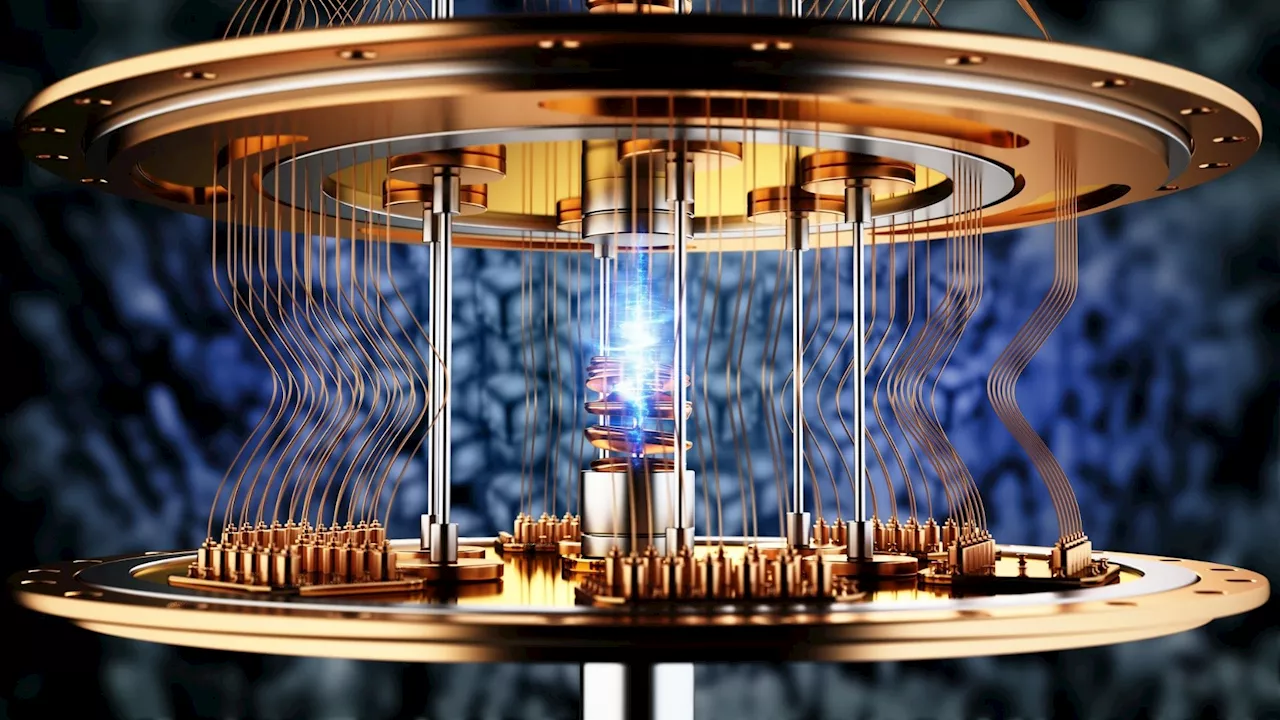 US engineers create quantum ‘super highway’ for instant processor communicationUS researchers have built a breakthrough quantum interconnect allowing direct, high-speed communication between quantum processors.
Read more »
 Quantum Computing Is Dead. Long Live Quantum Computing!Schrödinger’s cat is alive and dead at the same time. Ironically enough, so is quantum computing.
Read more »
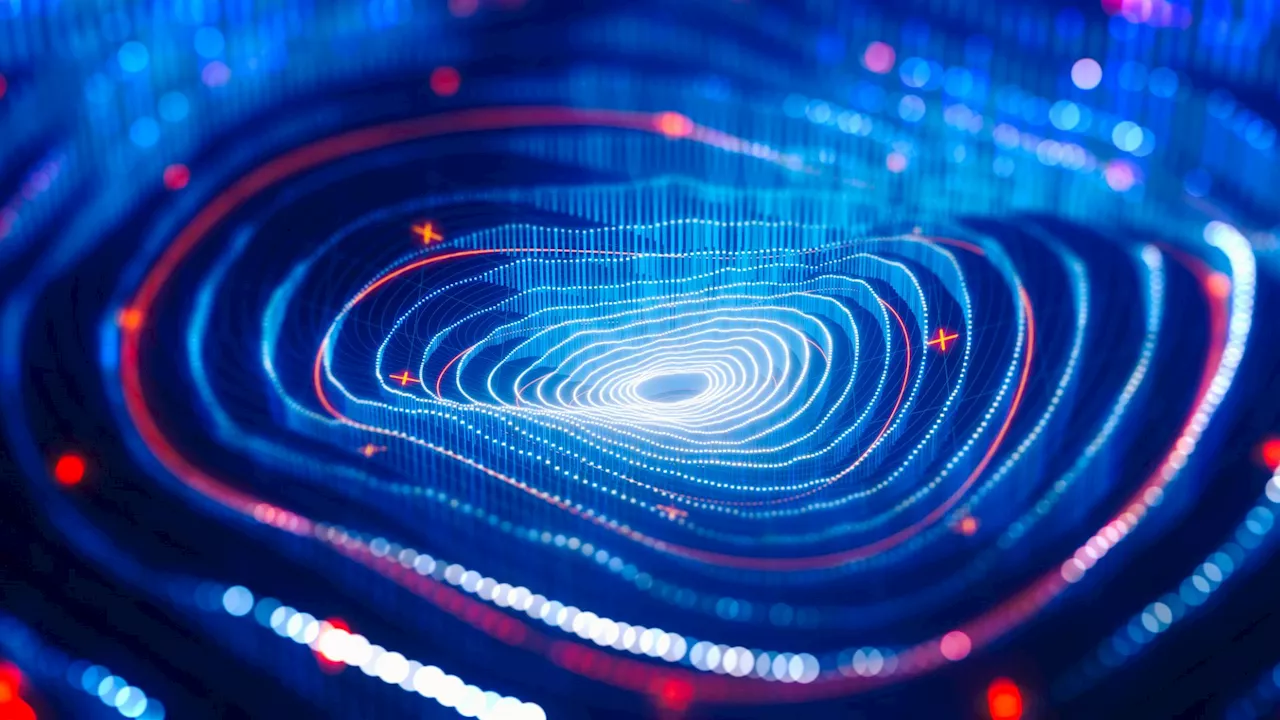 Quantum armor: Breakthrough method promises to shield information against noiseIn quantum mechanics, skyrmions can appear as stable, wave-like structures that help protect quantum information.
Read more »