
The U.S. space agency’s Skyfall project calls for sending robotic helicopters to Mars on a nuclear-powered spacecraft before the end of Donald Trump’s presidency
The U.S. space agency’s Skyfall project calls for sending robotic helicopters to Mars on a nuclear-powered spacecraft before the end of Donald Trump’s presidencyAn artist’s concept of NASA’s Space Reactor-1 Freedom, a proposed nuclear-powered spacecraft that the space agency plans to launch to Mars in late 2028.
a new Mars helicopter mission called Skyfall last week, the immediate response from most scientists had little to do with the ambitious plan to launch tiny, robotic aircraft to the Red Planet in December 2028. The bigger, more shocking news was that Skyfall would fly to Mars on a first-of-its-kind nuclear rocket. “After decades of study and billions spent on concepts that have never left Earth, America will finally get underway on nuclear power in space,” said NASA administrator Jared Isaacman during the Skyfall announcement.hadn’t included anything quite like this. Besides the “who ordered that?” reaction, there’s also the matter of timing; in spaceflight terms late 2028 is practically tomorrow, setting a too-close-for-comfort deadline even without the added complexity of NASA’s nuclear aspirations. How could the space agency possibly make this work?. By purchasing a subscription you are helping to ensure the future of impactful stories about the discoveries and ideas shaping our world today.No clarity emerged from repeated unanswered phone calls and emails to NASA headquarters and its Jet Propulsion Laboratory in Pasadena where Skyfall’s predecessor helicopter, called Ingenuity, was born. Ingenuity, a tissue box-sized robotic aircraft, madebetween 2021 and 2024. Despite the space agency staying relatively mum about the finer details of its plan, a former senior NASA official, speaking anonymously, believes there’s reason for optimism. “If somebody came into my office and pitched me a handful of Ingenuity helicopters to launch in 2028, and it's ‘26 right now, I would say, ‘ah, it’s tight,’” the official tells. “But is it impossible? No. I’d like to see what the plans are... The biggest indicator that this is serious will be to look at the budget. Because a vision by itself is a dream—a vision and a budget is a possible future.” Even within NASA’s approximately $24 billion annual budget, there is no such thing as a free lunch. Most of NASA’s money is tied up in the space agency’s human spaceflight efforts: maintaining the International Space Station and pursuing the Artemis program to send astronauts back to the moon and buildthere. If Skyfall’s funding comes from human-spaceflight largesse, many scientists say, they won’t complain about new helicopters and a new nuclear-powered mission architecture. If instead funding comes from NASA’s far smaller planetary-science coffers, however, barring a significant budget boost something else must die for Skyfall to fly. Despite the risk that NASA’s nuclear ambitions could starve other parts of planetary science, Skyfall and the proposed nuclear-powered spacecraft should be seen as good news, says Paul Byrne, a planetary scientist at Washington University in St. Louis. “This is the kind of thing that NASA should’ve been doing in the late 1970s. Like, where the hell is our moon base? If this comes to pass—and there is an enormous ‘if’ here—it gets us to a NASA that many of us grew up hoping to see. People on the moon with routine landings, nuclear propulsion that gets us to distant targets quickly, carrying large payloads.”Skyfall is intended to reach Mars using a small, 20-kilowatt nuclear-powered spacecraft called Space Reactor-1 Freedom. Many elements of the spacecraft and reactor are either deep into development or already built, Isaacman said, with NASA taking the lead on the project and acting as the spacecraft’s “prime integrator” in partnership with the Department of Energy , which handles U.S. nuclear stockpiles. Even so, the reactor itself has not been built, and it is distinct from a reactor NASA intends to landwhere it would power an outpost. SR-1 Freedom’s main add-on will be repurposed from the Power & Propulsion Element of NASA’s. . Conceived in 2023, this “Demonstration Rocket for Agile Cislunar Operations” mission was a half-billion-dollar crash program to launch a nuclear thermal propulsion rocket by 2027. By using a larger amount of low-enriched uranium, rather than a smaller amount of highly enriched weapons-grade stuff, DRACO was meant to sidestep regulatory red-tape that could stifle the launch approval process. To simplify testing, DARPA designed it to switch on for the first time only after it was in space. In 2024, however, the DOE added a requirement for ground testing, which would take years and hundreds of millions of dollars; DARPA abandoned the project in 2025. “In many ways, DRACO was a half-technical, half-regulatory pilot program,” says Scott Pace, director of the Space Policy Institute at George Washington University. “I regretted its cancellation as we lost an opportunity to pilot the regulatory approval process for putting a nuclear reactor in space.” Now, he says, the situation has possibly improved thanks to four executive orders signed last year streamlining some nuclear regulations. ‘The policy foundations are absolutely there,” Pace says. “I've seen more positive support out of the Energy Department for doing things in space than I've seen since, probably, Bush 41.”Not everyone is so sanguine about NASA’s latest likelihood of nuclear success. Andrew Higgins, an aerospace engineer at McGill University, worries that the Lego-like way SR-1 is planned—lots of parts from different, unrelated projects just waiting to be bolted together—vastly understates the challenge ahead. Although the nuclear spacecraft and the Mars helicopters are packaged together like peanut butter and jelly, there’s no obvious reason to combine the two, he says. “If you’re orbiting several moons of Jupiter, or going to Neptune’s moon Triton, then nuclear electric propulsion makes sense. You have years and years for thrust to contribute.” But Mars, he says, is too nearby for SR-1 to flex its muscles and build up high speed. Additionally, solar power is far more efficient for most destinations in the inner solar system. “Maybe SR-1 is fine as a demonstrator of running a nuclear reactor in space, but it won’t contribute to shortening a mission or bringing more payload.” The realist view is that NASA wants to fly a nuclear reactor as soon as possible, and the Mars launch window justifies the aggressive development schedule to appropriators. A December 2028 deadline also happens to coincide with the last month of the Trump administration—timing that could help sustain White House support for the program and defend against any congressional cancellation attempts during its delicate, rushed development. Why Skyfall, though? The answer is that this is the easiest possible Mars surface mission because the helicopters are basically print-to-order, and the mission won’t require a separate lander. In other words: Sure, SR-1 makes no sense for Skyfall, but that’s okay, because Skyfall wouldn’t exist without SR-1. Each by necessity hoists the other by its bootstraps out of abject improbability. And as a bonus, it reminds everyone that sending astronauts to Mars is the over-the-horizon goal for NASA’s moon-centric Artemis plan. Whether the mission will launch in 2028 remains unclear—but thanks to Isaacman’s prominent support, its proponents say, Skyfall could make enough progress to ensure NASA sticks with it until 2030. “Suppose it all worked, but it launched two years behind schedule,” the former NASA official says. “You think that would be a horrible failure? We would have nuclear electric propulsion! I would be cheering up and down.”has served as an advocate for science and industry for 180 years, and right now may be the most critical moment in that two-century history.always educates and delights me, and inspires a sense of awe for our vast, beautiful universe. I hope it does that for you, too., you help ensure that our coverage is centered on meaningful research and discovery; that we have the resources to report on the decisions that threaten labs across the U.S.; and that we support both budding and working scientists at a time when the value of science itself too often goes unrecognized.There has never been a more important time for us to stand up and show why science matters. I hope you’ll support us in that mission.
United States Latest News, United States Headlines
Similar News:You can also read news stories similar to this one that we have collected from other news sources.
 Mars Was Once a World of RainMars today is a frozen, barren world where liquid water can briefly appear on its surface but evaporates almost instantly in the thin atmosphere, unable to persist in any meaningful quantity.
Read more »
 NASA’s nuclear Mars mission, Iran war’s carbon emissions surge and Pfizer’s promising Lyme vaccine trialNASA’s nuclear Mars mission, the Iran war’s carbon fallout, the looming climate cost of rebuilding and a hopeful new Lyme vaccine
Read more »
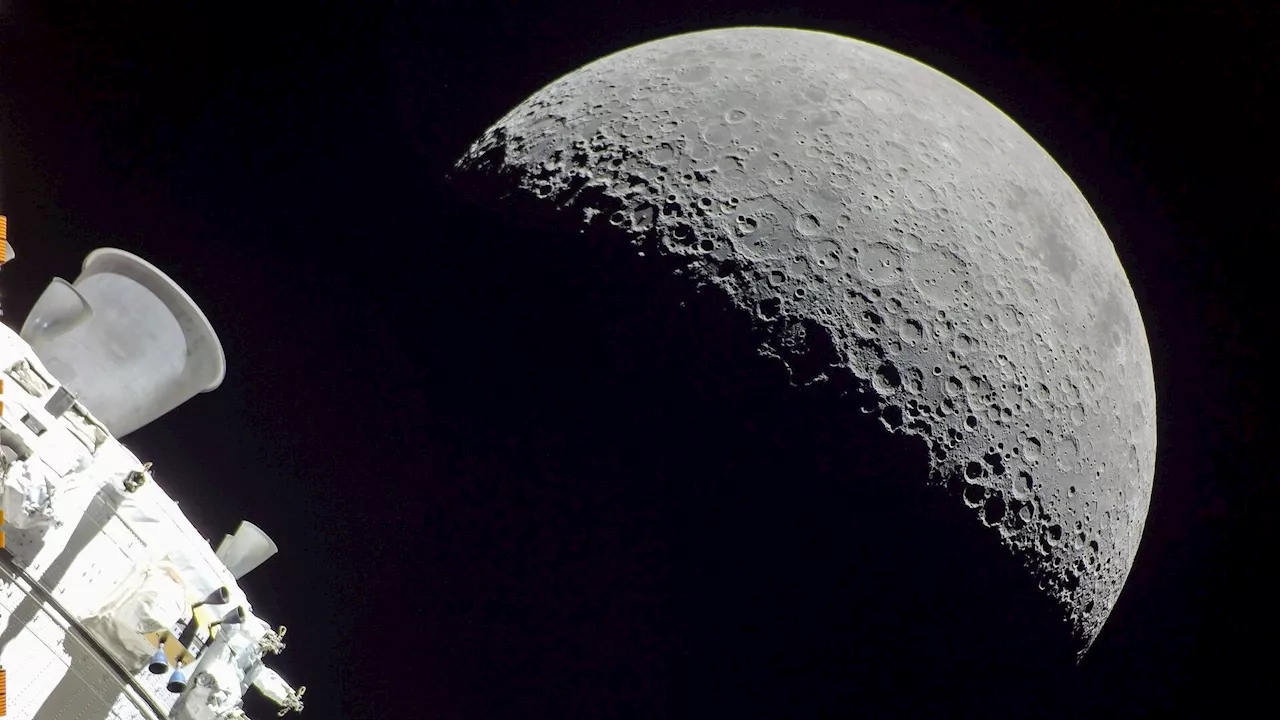 Could bad space weather endanger the Artemis 2 moon astronauts?Leonard David is an award-winning space journalist who has been reporting on space activities for more than 50 years. Currently writing as Space.
Read more »
 Why the lack of water on Mars is so mysteriousAn accounting of all the water that should have been and gone on Mars’s surface has come up with a discrepancy that shows just how little we understand the Red Planet’s hydrological history
Read more »
 How to watch NASA’s Artemis II launch liveNASA is sending astronauts around the moon for the first time in more than 50 years to test technologies needed for long-term lunar exploration and human missions to Mars.
Read more »
 NASA Is Planning A Nuclear-Powered Trip To MarsWhy nuclear makes sense for the Red Planet. Google’s new memory math for AI. Why video games help you sleep. All that and more in this week’s edition of The Prototype.
Read more »