
NASA engineers are developing a novel cone-shaped payload adapter to ensure the successful launch of larger and more complex payloads on the future SLS Block 1B rocket. This adapter, essential for Artemis IV and beyond, will enable the delivery of crucial elements for the Gateway lunar space station, paving the way for expanded lunar exploration and future journeys to Mars.
NASA engineers are developing a crucial component for the next generation of Artemis missions: a cone-shaped payload adapter designed for the super heavy-lift Moon rocket, SLS Block 1B. This adapter will enable the launch of larger and more sophisticated payloads, including elements of the Gateway lunar space station and scientific instruments, marking a significant advancement in lunar exploration.
The adapter, slated for its debut on Artemis IV, is being meticulously engineered at NASA's Marshall Space Flight Center in Huntsville, Alabama. It will sit atop the SLS Block 1B's exploration upper stage, acting as a secure connection point for a large payload co-manifested with the Orion spacecraft. This adapter is not a one-size-fits-all solution. It's designed with flexibility in mind to accommodate a variety of payload configurations. To achieve this, engineers are employing innovative manufacturing techniques, including structured light scanning and automated placement robots. Structured light scanning creates a precise 3D model of each component, ensuring accurate drilling and assembly. Automated robots swiftly and accurately laminate eight lightweight composite panels, significantly reducing production time and cost.The payload adapter's robustness is paramount. Extensive testing is underway at NASA Marshall. An engineering development unit has already successfully demonstrated its ability to withstand forces three times greater than expected. Another test version, the qualification unit, will undergo rigorous testing to meet NASA standards for composite structures, guaranteeing the flight unit's reliability. This rigorous testing process is crucial, as the cone-shaped design presents unique challenges compared to traditional cylindrical structures. The adapter's success will pave the way for ambitious lunar missions, enabling the delivery of large scientific instruments and components of the Gateway lunar space station. This station, built by ESA (European Space Agency), will serve as a vital hub for astronaut habitation, research, and preparation for future lunar surface missions.
SPACE EXPLORATION NASA SLS ARTEMIS GATEWAY PAYLOAD ENGINEERING TESTING
United States Latest News, United States Headlines
Similar News:You can also read news stories similar to this one that we have collected from other news sources.
 NASA Develops Flexible Shape Memory Alloy Tires for Future RoversNASA researchers are developing a new type of tire for future rovers using shape memory alloy (SMA) technology. These tires, unlike traditional solid tires, are more flexible and can return to their original shape after being deformed. The SMA tires were tested in a simulated Martian environment and showed promising results in terms of stability and durability.
Read more »
 Electrical Engineers Develop Revolutionary Method for Comparative GenomicsA new method called CASTER allows researchers to analyze entire genomes simultaneously, unlocking new possibilities for understanding evolutionary relationships.
Read more »
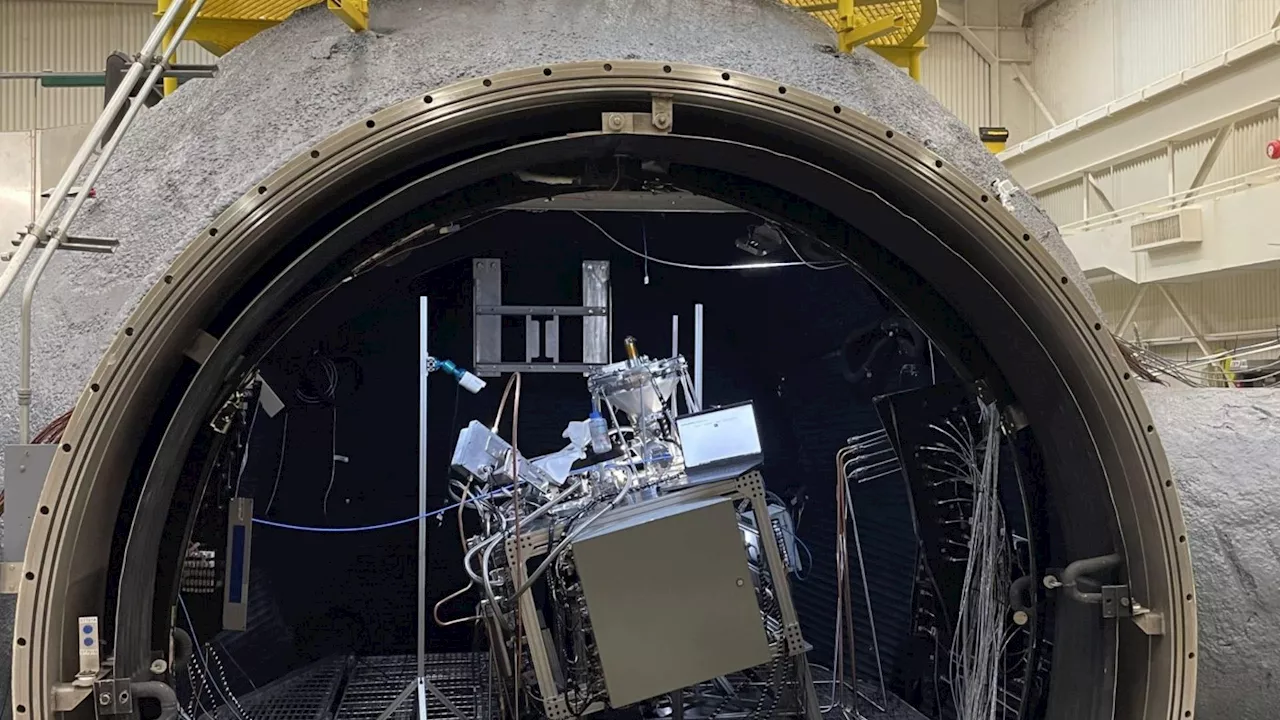 Engineers Develop Lunar Oxygen Generator in Giant Vacuum SphereA team of engineers at Sierra Space have made significant strides in developing a machine to produce oxygen on the moon. The device, tested in a giant vacuum sphere, utilizes carbothermal reduction to extract oxygen from simulated lunar regolith. This groundbreaking technology could enable sustainable lunar habitats, reduce mission costs, and pave the way for deeper space exploration.
Read more »
 BYU Engineers Develop Helpful, Super-Strong RobotA team of engineers at Brigham Young University (BYU) has created a revolutionary robot named Baloo that boasts impressive strength and the potential to assist humans in various tasks. Inspired by the helpful robot 'Roz' from the movie 'The Wild Robot,' Baloo is designed to be both powerful and practical.
Read more »
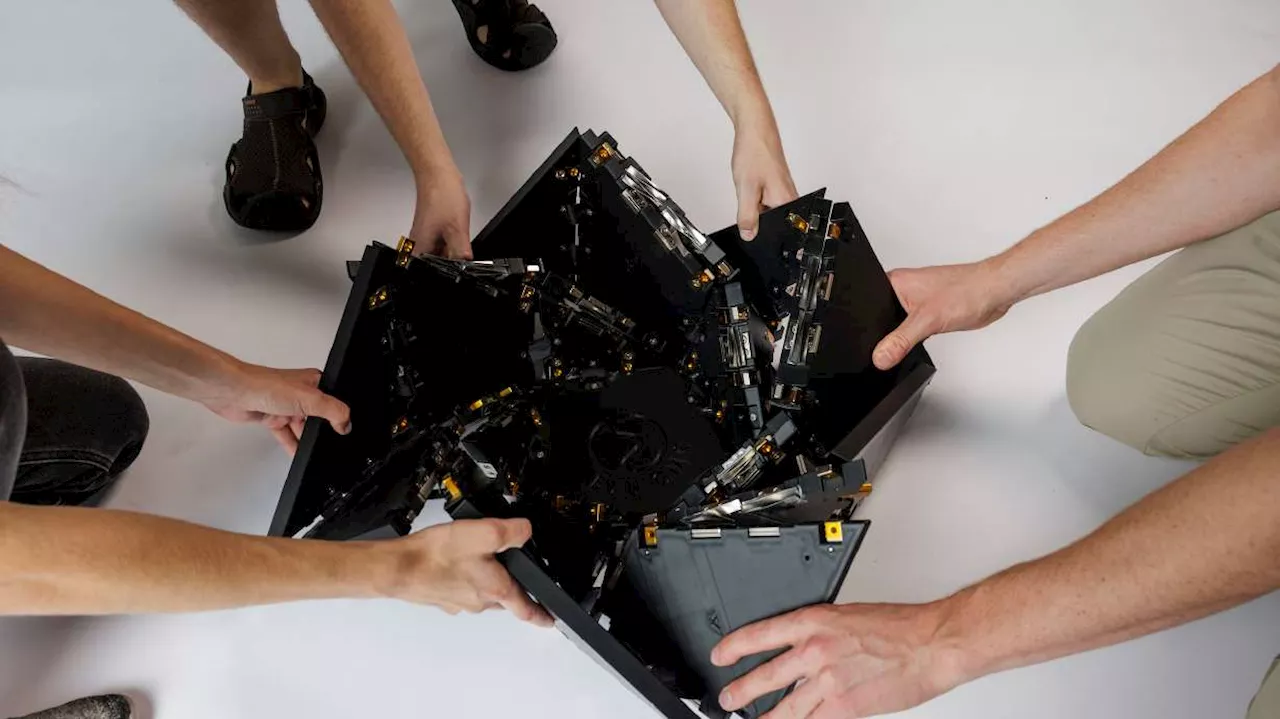 BYU engineers use origami techniques to develop foldable space antennasAfter five years of research and several hours spent folding paper, BYU professors are presenting origami-inspired technology to NASA and the U.S. Air Force.
Read more »
 MIT Engineers Develop Training Method to Ensure Safety in Multiagent SystemsMIT engineers have created a groundbreaking training method that guarantees the safe operation of multiagent systems, such as robots, drones, and self-driving cars, even in crowded environments. The method, tested successfully with small drones performing complex tasks, utilizes continuous mapping of safety margins and a reactive controller, enabling agents to navigate safely and adapt to changing situations.
Read more »