A team of engineers at Sierra Space have made significant strides in developing a machine to produce oxygen on the moon. The device, tested in a giant vacuum sphere, utilizes carbothermal reduction to extract oxygen from simulated lunar regolith. This groundbreaking technology could enable sustainable lunar habitats, reduce mission costs, and pave the way for deeper space exploration.
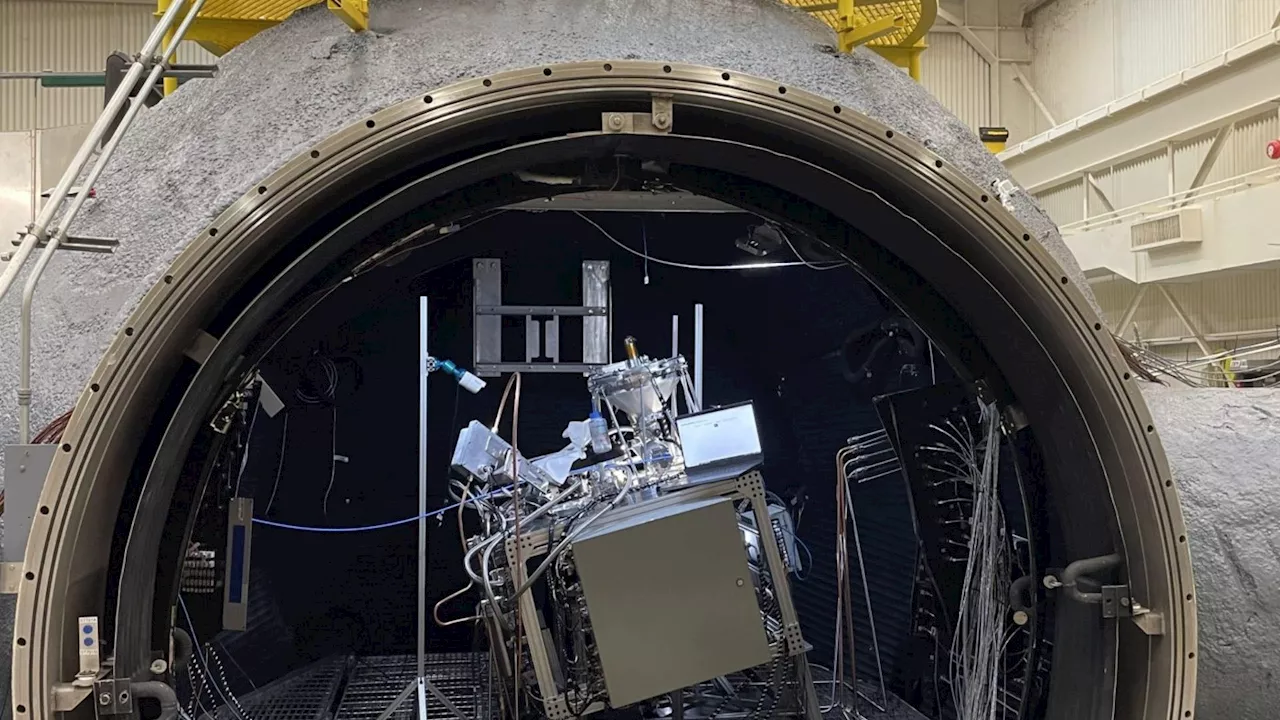
A team of engineers at Sierra Space, a private aerospace company, are making significant strides in space innovation by developing a groundbreaking machine designed to produce oxygen on the moon. This ambitious project is taking place within a giant vacuum sphere at NASA’s Johnson Space Center, pushing the limits of current technology. The device, a silvery metal contraption adorned with colorful wires, represents a major leap forward in developing life-sustaining technology for lunar habitats.
Brant White, program manager at Sierra Space, emphasized the importance of this experiment to BBC, stating, “We’ve tested everything we can on Earth now. The next step is going to the moon.” This groundbreaking endeavor is one of several initiatives aimed at creating systems capable of extracting resources from the moon’s surface. These systems are crucial for ensuring astronauts have access to oxygen and other essential materials needed for survival and deep-space exploration.The experiment involves feeding simulated lunar regolith – the dusty, sharp, and gritty soil found on the moon – into the box-like machine. Heated to over 1,650°C, the regolith transforms into a molten gloop. When combined with reactants, oxygen-containing molecules begin to bubble out. This process, known as carbothermal reduction, holds great promise but faces challenges. Lunar regolith is rich in metal oxides, making it a potential source of oxygen. However, replicating Earth-based extraction techniques on the moon is complicated due to harsh conditions like low gravity, extreme temperatures, and the abrasive texture of the regolith. “We’ve had to improve how the machine works to handle the jagged, abrasive texture of the regolith,” said White to BBC. The company’s tests in a vacuum chamber simulated lunar pressures and temperatures, but the unique challenge of lunar gravity—one-sixth of Earth’s—remains an unresolved issue. Paul Burke, a researcher at Johns Hopkins University, highlighted this challenge. His team’s studies on molten regolith electrolysis, another oxygen-extraction method, revealed that low gravity might hinder the detachment of oxygen bubbles from electrodes in the molten material. “Those bubbles aren’t going to rise as fast – and may actually be delayed from detaching from the electrodes,” Burke explained.Despite these challenges, the benefits of oxygen-extraction technologies are immense. Lunar oxygen could not only support astronauts but also serve as an oxidizer for rocket fuel, enabling missions to Mars and beyond. “It could save billions of dollars from mission costs,” said White, noting the high expense of transporting oxygen from Earth. In addition to oxygen, regolith holds potential for extracting metals like iron, titanium, and lithium. Palak Patel, a Ph.D. student at MIT, developed a molten regolith electrolysis system that addresses the low-gravity issue by using a sonicator to dislodge oxygen bubbles. “We’re really looking at it from the standpoint of, ‘Let’s try to minimize the number of resupply missions,’” she said. Patel’s research also explored melting simulated regolith into a tough, glass-like material that could be formed into hollow bricks for construction on the moon. Such materials might enable astronauts to build durable structures, 3D-printed spare parts, or even replacement spacecraft components. Sierra Space’s system, while promising, requires the addition of some carbon to produce oxygen. However, most of this carbon can be recycled after each cycle, making the process efficient. As lunar exploration advances, developing resource-extraction technologies like Sierra Space’s oxygen generator will be critical. These innovations could transform the moon into a hub for scientific research, sustainable living, and interplanetary travel. For now, teams like those led by White, Burke, and Patel are pushing the boundaries of engineering to make lunar independence a reality. As Patel optimistically noted, “The more resources that can be made on the moon, the better.
Lunar Exploration Oxygen Generation Regolith Space Technology Sustainability
United States Latest News, United States Headlines
Similar News:You can also read news stories similar to this one that we have collected from other news sources.
 University of Illinois Students Propose Lunar Infrastructure Module for Sustained Lunar ExplorationA group of students at the University of Illinois Urbana-Champaign have proposed a lunar infrastructure module called THEIA, designed to support long-term lunar missions. THEIA would focus on providing power, communications, transportation, and in-situ resource utilization (ISRU) capabilities to the lunar south pole. The proposal, submitted as part of NASA's Revolutionary Aerospace Systems Concepts – Academic Linkage project, envisions THEIA being delivered by a SpaceX Starship and utilizing LUNARSABER poles and robots for setup.
Read more »
 Starship: Paving the Way for a Lunar Economy2025 will be a pivotal year for lunar exploration as SpaceX's Starship rocket promises to revolutionize space travel and lay the groundwork for a sustainable lunar economy. With its reusable design and refueling capabilities, Starship can transport significantly more payload to the moon than traditional rockets, making lunar missions more affordable and enabling the development of profitable enterprises on the lunar surface.
Read more »
 Columbia University Engineers Develop Highly Sensitive 'All-Optical' Nanoscale Force SensorsColumbia University engineers have created groundbreaking nanoscale sensors capable of detecting minute forces through changes in light intensity or color. These 'all-optical' sensors offer the potential for remote force measurements without wires, opening new possibilities in robotics, biophysics, and beyond.
Read more »
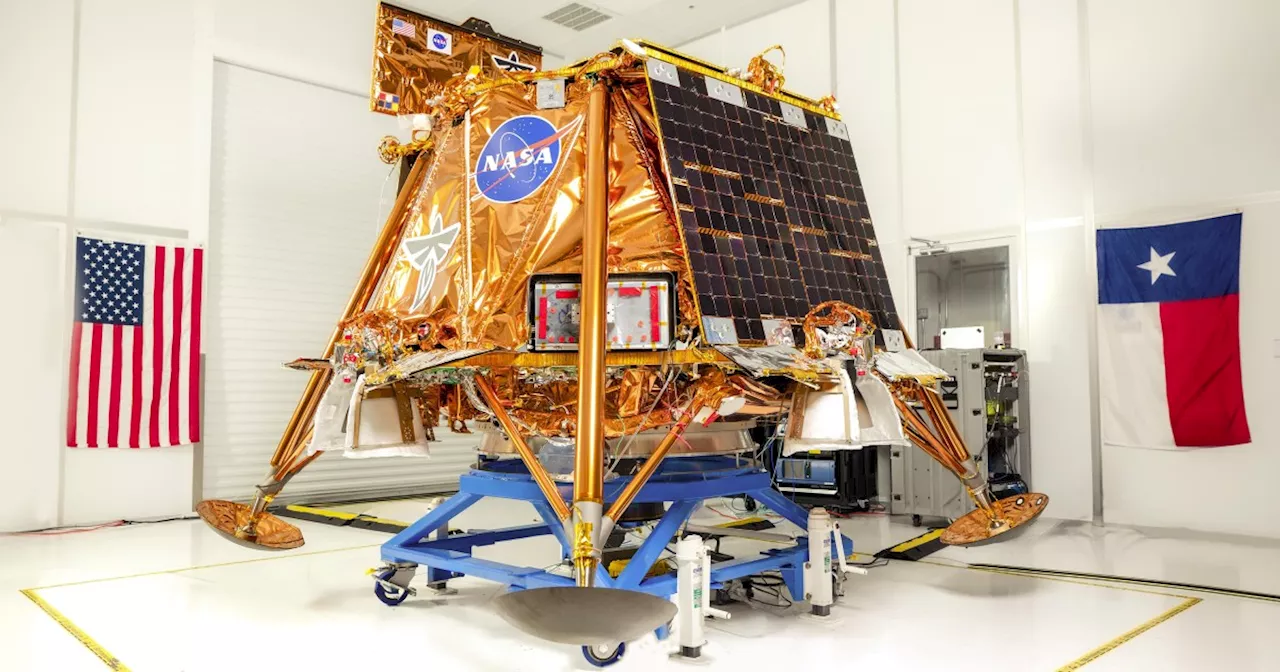 NASA's Blue Ghost Mission to Launch with Firefly's Lunar LanderFirefly Aerospace's first lunar lander, carrying 10 NASA science instruments, is set to launch on January 15th as part of NASA's Commercial Lunar Payload Services (CLPS) initiative. The mission, named Blue Ghost, will aim to land near Mons Latreille in the Mare Crisium basin, collecting samples of lunar regolith and drilling beneath the surface. This launch signifies NASA's increasing reliance on private companies like Firefly to advance its lunar exploration goals.
Read more »
 NASA's Blue Ghost Mission Prepares for Lunar Landing with Cutting-Edge ExperimentsNASA's Blue Ghost mission, set to launch in mid-January, will deploy a sophisticated payload of 10 experiments to the lunar surface, marking a significant milestone in the agency's ongoing exploration of the moon. The mission will investigate various aspects of the lunar environment, including the behavior of lunar regolith, the precise measurement of the Earth-Moon distance, and the mitigation of dust accumulation on lunar equipment.
Read more »
 Electrical Engineers Develop Revolutionary Method for Comparative GenomicsA new method called CASTER allows researchers to analyze entire genomes simultaneously, unlocking new possibilities for understanding evolutionary relationships.
Read more »