
David D. Kirkpatrick tells the unknown story of a former C.I.A. officer who recruited scientists as part of the United States’ effort to disrupt Iran’s nuclear program.
Chalker reminded her that his father had been an enlisted marine who joined a C.I.A. paramilitary force operating in Southeast Asia during the early years of the Vietnam War, a time when “the agency was doing wacky stuff all over the world.
” Chalker promised her that he would do only “traditional espionage—no big deal,” adding, “Everything’s going to be cool.” He queued up a few days later at the C.I.A. table at his school’s national-security job fair. Chalker had a more martial bearing than most graduate students. He had been a nationally ranked judo fighter and a Golden Gloves boxer in high school and college, and he had spent two years at the United States Air Force Academy, in Colorado Springs. He also had an aptitude for languages. He could read and speak basic Mandarin and fluent Japanese—he had lived and worked in Japan for several years after college. He had even picked up a little Farsi from an Iranian American girlfriend in college. A C.I.A. analyst at the job fair put Chalker on the phone with a native Japanese speaker at headquarters, to test his proficiency, and soon he was on the way to a Marriott in northern Virginia for the first of half a dozen interviews. In the fall of 2003, he entered the first class of C.I.A. trainees who had applied after 9/11. The training culminated in months at the Farm, the legendary C.I.A. base at Camp Peary, in Virginia. The agency assigned each new trainee a randomly generated alias for internal use. Chalker became Fred E. Snappleton. So I was surprised when, in early 2024, Chalker sent me an e-mail introducing himself. He had read an article I wrote for this magazine about an innocent American caught up in spy-vs.-spy battles among Persian Gulf monarchies, and he wanted to talk. We arranged to meet at his office, high in the World Trade Center. Now fifty-four, Chalker is nearly six feet tall and barrel-chested, with short brown hair and a thick, graying red beard. His suite in the World Trade Center is cavernous, with a view that sweeps from the Brooklyn Bridge to the Statue of Liberty. A collection of historic encryption machines is displayed in vitrines in the main room, and in his corner office he keeps half-empty bottles of obscure liquors from around the world. The whole place could have accommodated dozens of people. But, aside from a receptionist, he appeared to be alone. Chalker told me that his consulting firm, Global Risk Advisors, had once employed nearly two hundred people, almost all of them former military and intelligence officers. Before Broidy’s lawsuit, the company had earned about a hundred million dollars a year. By 2018, he had also founded a second company, Qrypt, which develops cutting-edge quantum encryption, and had hired dozens of computer programmers. But Broidy’s suit received tremendous publicity, driving away all of Global Risk’s clients, even the Qataris, and Chalker was forced to lay off its entire staff. Qrypt had been negotiating its first large contract, with the Pentagon, until a counterintelligence official called about Broidy’s allegations. Chalker virtually shut down that company, too, although he kept its name on the empty suite in the World Trade Center. Since then, Chalker said, he had “not earned a single penny.” He lost a lectureship at Yale after the Yale Daily News wrote about Broidy’s lawsuit. Banks refused to do business with him. His insurance company had even cancelled his homeowner’s policy, because he was deemed too great a risk. News reports, citing anonymous sources and Broidy’s suit, alleged that Chalker had hacked various other eminent figures, including the Emirati Ambassador to Washington; that he had spied on Switzerland’s top prosecutor and two Republican senators; and that he had deployed such spy tricks as covert surveillance and honey traps—sexual lures—in order to help Qatar secure the rights to host the soccer World Cup in 2022. Chalker, who denied all of these allegations, told me that the stress of Broidy’s lawsuit made him vomit so frequently that he eventually required esophagus surgery. Recently, however, he and Broidy had settled the suit. Chalker told me that the terms were confidential but that he wanted to repair his reputation. He had always been an American patriot, he insisted, and to prove it he was willing to talk publicly, for the first time, about his years of clandestine work for the C.I.A.—which, he said, had “prevented Iran from getting a nuke.” Chalker told me that, just as he had promised his wife, he had never personally engaged in combat or killing. Yet, during many conversations in the past two years, he also told me that he had risked his life for the agency, and that he indirectly carried responsibility for some killings. He acknowledged that luck—“right place, right time”—had played a big role in the success of his various covert operations. But he also insisted that he had helped obtain pivotal information that laid the groundwork for more than a decade of American efforts to disrupt the Iranian nuclear-weapons program, from the Stuxnet cyberattacks, which occurred around 2010, to the Obama Administration’s nuclear deal, in 2015, to the U.S. air strikes on Iranian atomic-energy facilities in the summer of 2025. Chalker’s strategy for clearing his reputation—which had been the foundation of his lucrative business—was unexpected, to say the least. It is nearly unheard of for ex-spies to divulge their past activities. But Chalker spoke in detail, aware that I would vet his narrative. As we talked, I sensed a certain resentment. The C.I.A., despite all the crucial and dangerous work he claimed to have done, had offered him no help as the lawsuit ruined his life. I wondered how much of his story I could trust. He began as a clandestine-services trainee on the East Africa desk at C.I.A. headquarters, in Langley, Virginia. Part of the desk’s work at the time entailed paying favored Somali warlords to capture or kill suspected Al Qaeda terrorists. Chalker told me, “We would say, ‘Fifty thousand dollars alive or twenty-five thousand dead’—because we preferred to have them alive so we could debrief them.” He told me that one of his assignments was shipping dry ice to Mogadishu; the C.I.A. used it to transport human-tissue samples for DNA testing, to confirm the identity of a corpse before paying a bounty. It isn’t clear how many high-level targets, if any, were killed while Chalker worked on the East Africa desk. But the broader pattern of C.I.A. payments to certain warlords was later exposed by a diplomat critical of the practice; the payments, intended to bolster warlords and clans who could counter Islamist extremism, helped set off a backlash in Somalia that culminated in an Islamist takeover in 2006. Matt Bryden, an expert on the Horn of Africa, interviewed Mogadishu warlords who were on the C.I.A. payroll at the time, and he told me that the payments had triggered “a whole chain of counterproductive consequences, as far as the U.S. was concerned.” Transportation in and out of Mogadishu was another problem for the agency. Armed groups had menaced C.I.A. teams driving to and from neighboring Djibouti. Planes arriving in Mogadishu risked getting hit by gunfire as they descended. The desk chief asked Chalker for ideas. Chalker told me that, by reading cable traffic and studying airplane tail numbers, he discovered that inbound charter flights delivering khat—a legal narcotic leaf that many Somalis chew for a buzz—always landed without trouble. When Chalker told me this story, he imitated the desk chief’s throaty response: “Are you telling me that we are going to use U.S.-taxpayer dollars to hire a bunch of fucking drug dealers to fly in and out of fucking Mog?” Then: “That is the best fucking idea I ever heard.” After Chalker completed his assignment, he spent months learning defensive driving, the use of weapons, surveillance detection, nighttime land navigation, techniques to assess the credibility of a potential asset, and other tradecraft. Roleplay exercises at the Farm simulated traps or manipulations that officers might face. About a quarter of the class failed to complete the course, and Chalker told me that many others quit the agency within their first year of “being a spook in the real world.” His class of more than a hundred and twenty trainees eventually slimmed down to fewer than fifty. At thirty-three, Chalker was older than most of his classmates, with more experience professionally and abroad, and he was tapped to spend a day with James Pavitt, then the agency’s director of operations. At the Farm graduation ceremony, envelopes labelled with the first name and last initial of each new officer were placed on a large table. Chalker told me that it was like “finding your seat at a wedding.” Inside were the officers’ first assignments. Many were bound for Iraq, which the U.S. had recently invaded. Chalker assumed that, based on his language skills, he would work in East Asia. Instead, the slip inside the envelope for “Kevin C.” said “CP/IRANNUC”—counterproliferation, working against Iran’s nuclear-weapons program. Chalker was shocked. A classmate with a doctorate in physics had been assigned to enter a two-year Japanese-language program, whereas Chalker, fluent in Japanese, had received a D in physics at the Air Force Academy and had never set foot in the Middle East. After a bus dropped the graduates off at Langley, he started to complain. The officer handling Chalker’s assignment told him to “go sit in that fucking cubicle and don’t speak until spoken to.” Chalker told me that the officer happened to be Valerie Plame, whose cover had recently been blown by the George W. Bush Administration, in a retaliatory leak that came after her husband publicly questioned the rationale behind the Iraq War. Before 9/11, Iran’s nuclear ambitions had been a relatively low priority for American spies. The C.I.A. knew that, in the late eighties, Iran had bought instructions for making an atomic bomb from the Pakistani scientist A. Q. Khan at a meeting in Dubai. But Khan had sold outdated blueprints, and the agency believed that this had handicapped the Iranians, who had never engineered the necessary centrifuges. Then the invasion of Iraq—although it turned up no evidence of a live threat from weapons of mass destruction—raised new concerns about how close Saddam Hussein had come in the nineties to obtaining a nuclear weapon. President Bush, alarmed, directed the National Security Council to prevent Iran from acquiring one. A debate over tactics unfolded within the Bush Administration. Chalker told me that, as he understood it, the Pentagon had suggested running commando operations to kill key Iranian scientists, as Israel subsequently did. But the C.I.A. proposed recruiting those scientists to defect, as U.S. spies had once courted Soviet physicists. Chalker paraphrased the agency’s pitch: “We can debrief them and learn so much more—and, if they say no, then you can kill them.” The White House liked the agency’s idea, and Bush authorized the C.I.A. to conduct clandestine operations to stop Iran from building a bomb. The C.I.A. program that Chalker described to me became publicly known in 2007, when the Los Angeles Times reported on the existence of an agency project called Brain Drain. But the details of the “invitations” to Iranian scientists have not previously been reported. When Chalker joined the Iran desk, roughly two hundred C.I.A. officers there were working on counterproliferation. But nearly all of them were analysts. Aside from the group’s chief and his deputy, only three others—including Chalker—were trained for field operations. Chalker told me that there was an additional challenge: both of the more experienced operators were undergoing treatment for alcoholism, a common problem in their profession. Just weeks after he graduated from the Farm, Chalker became both the desk’s newest case officer and the most senior one available. Chalker recalled that the group’s chief had told him, dryly, “Snappleton, looks like you have a chance to excel.” Chalker suspected that his premature promotion was “a really, really bad idea.” Then, just a few months after Chalker set to work, Bernadine called. Like other covert assets, he had been given a phone number at C.I.A. headquarters to call if he wanted to talk or needed to be pulled out of Iran, along with a secret code and a passphrase to authenticate himself. Bernadine was now viewed with such suspicion that Chalker’s bosses suspected a setup. The unit’s chief told Chalker to arrange a meeting with Bernadine outside Iran but to consider the situation potentially hostile: if the Iranians had compromised Bernadine, their commandos might barge in to capture or kill Chalker. The night before Chalker left to meet Bernadine, in a European city, he thought that these might be his final hours with his family. His wife was pregnant with their second child. After dinner, their two-year-old offered him some of his ice cream, because “sharing is caring.” The global war on terror was near its peak. “Everything was fast back then,” Chalker recalls. The agency sent him to the meeting alone and unarmed. According to Chalker, this was standard: if a case officer needed a weapon, “pretty much everything has already gone wrong.” When he reached the European city, he identified Bernadine on a prearranged street corner—he was the older man standing alone with quavering hands. They exchanged code words. An operative would normally plan to walk alone to a hotel room to avoid being seen with an asset. But in this case the danger was that Bernadine might be conspiring to kidnap or murder Chalker, so he wanted bystanders to see them together. He escorted Bernadine through a nearby hotel lobby to a room he had reserved. As soon as the door closed, Chalker began hammering Bernadine with hostile questions. He recited details from the recent reports filed by Bernadine’s C.I.A. handler, and demanded that Bernadine explain his suspicious behavior. Bernadine looked baffled—nobody from the C.I.A. had ever treated him so disrespectfully. He said that he had never demanded any payments or taken any C.I.A. money. He insisted that he began working with the agency to protect his children from a dangerous nuclear-arms race, not to get rich. He also denied relaying the technical information that had so confused C.I.A. physicists, calling it obvious nonsense. Chalker, unsure what to make of these denials, placed a notebook in front of Bernadine, who spent hours filling it with pages of new details and diagrams related to Iran’s nuclear program. While Bernadine returned to Iran, Chalker took the next flight out of the country. A team of C.I.A. officers detained Chalker at Dulles Airport. The agency was worried that he, too, might have flipped, and made him take a polygraph test. But physicists at the Oak Ridge National Laboratory, in Tennessee, said that the new scientific details from Bernadine checked out. Chalker also judged him to be honest. This raised an obvious question: If Bernadine hadn’t provided the bogus information or requested the payments, had his previous handler at the agency engaged in deception? Chalker later wrote a report accusing the handler of fabricating intelligence and embezzling from the C.I.A. Chalker said he had been told that the agency eventually recovered some two million dollars in stolen funds, and that the handler served time in prison. When Chalker explained the plan to me, he taught me a lot of agency jargon. To pick up a key to the safe house, he set up a “brush-pass” in the city’s souk, in a busy alley where he and the local case officer might make contact unobserved. This followed a protocol known as Screening, Cover, and Flow. To spot the case officer, he asked her to describe her appearance, and he assigned her to carry both a “far recognition signal” and a “near recognition signal” . If she suspected surveillance, she was to remove the scarf to abort the handoff. He also gave the case officer a specific S.D.R., or “surveillance-detection route,” so that he could watch her arriving from an elevated spot and feel confident that nobody was tailing her. She showed up on time. Yet she carried a different newspaper, and her scarf was tied to the wrong part of her purse strap, in the back. Was this a signal or just sloppiness? Chalker panicked. He took the key, but he sent a message to Bernadine to stay in Iran, then hurried to the airport. Three security officers met him at Dulles. This time, a team of gray-haired C.I.A. veterans grilled him about each step of his plan. Chalker wondered what he’d done wrong. Had the Iranians grabbed Bernadine? He interrupted his interrogation: “I get it. I am fired. Just tell me why, and let me go home!” In fact, the questioning of Chalker was part of a postmortem examination of a misstep by the case officer who had handed him the key. She was married to a U.S. official working in the country, and she had rented the safe house using an alias, along with a fake passport. The country’s intelligence officers had already been monitoring her and, upon reviewing the rental agreement, concluded that she was a spy. According to Chalker, the country’s intelligence agency had shared the location of the safe house with the Islamic Revolutionary Guard Corps—who likely would have abducted Chalker had he shown up. It’s not clear how the C.I.A. learned of the tipoff to the I.R.G.C., but it was presumably through intercepted communications. Working with a different undercover officer, this time in a European city, Chalker successfully extracted Bernadine to America. A C.I.A. cable with the subject heading “Exceptional Performance Award for Fred E. Snappleton” commended Chalker for “exemplary ops sense in guiding the asset and his family during this sensitive time,” and awarded him a twenty-five-hundred-dollar bonus. One pivotal source emerged under sordid circumstances. In 2006, Chalker was based in the C.I.A.’s New York station. He sometimes coördinated with the Department of Homeland Security to look out for targets passing through J.F.K., and he developed contacts inside the department’s agencies. One day, Chalker’s counterparts in D.H.S. called with a tip: the local police in a town in the Hudson Valley had received a complaint about an Iranian-born scientist allegedly soliciting prostitutes. F.B.I. special agents told Chalker that he could join them as they questioned the man, and they all headed upstate. The scientist, Masud Naraghi, was about seventy years old. He had studied nuclear physics at the University of Michigan in the early sixties, finished a doctorate at Case Western Reserve University, then returned to Iran and worked for its atomic-energy agency. A short-lived marriage to an American woman had given him a green card, and he had quietly returned on his own to the United States in the early nineties, bringing with him a considerable amount of cash. He’d used the money to found an engineering firm, Torr International, just outside Newburgh, New York. Before Chalker and the F.B.I. agents sat down with Naraghi at his Torr office, Chalker checked with C.I.A. headquarters. He learned that other case officers had debriefed Naraghi years earlier and concluded that he did not know anything useful to the C.I.A. about Iran’s nuclear program. But, as Chalker listened to Naraghi answering the F.B.I.’s questions, he felt that the Iranian seemed “too smart to be playing so dumb.” Impulsively, Chalker threw out Bernadine’s real name and asked if Naraghi knew him. The scientist “turned sheet white,” Chalker said. He recalled thinking, with delight, Oh, you motherfucker. Naraghi, whom the C.I.A. code-named Shelve, turned out to have been the founding father of the country’s covert nuclear program—the J. Robert Oppenheimer of Iran. But he was no loyalist. Chalker concluded that Naraghi had embezzled from the Iranian government to build up the nest egg he used to found Torr. It took Chalker two years of empathetic listening and confident reassurance to convince Naraghi to coöperate fully. But in time Naraghi shared new insights about how Iran had overcome the weaknesses in A. Q. Khan’s blueprints and about the scale and scope of the country’s nuclear ambitions. An internal C.I.A. document recommending Chalker for another award said that Naraghi had provided a “new intelligence-reporting stream on the foundations of Iran’s desire to become a nuclear power.” As they talked, Naraghi decided that he wanted to write a memoir about his career and defection. The agency envisaged the book as a public invitation for other Iranian nuclear scientists to defect as well, and Chalker worked government contacts at Rupert Murdoch’s News Corporation to line up a publisher at its HarperCollins division. But News Corporation executives somehow directed Chalker to Daniel Halpern, the bushy-haired and left-leaning editor of the company’s literary imprint Ecco Press. When I called Halpern, he readily admitted that he was “quite suspicious of the C.I.A.,” and said that he vividly remembered Chalker’s visit to his office. Chalker and another officer had been “right out of central casting—everybody on the floor could tell they weren’t your usual authors,” and the whole project felt very “cloak and dagger.” Halpern told me he ultimately decided that Naraghi was unwilling to reveal enough for a commercially viable book. Still, a member of the Naraghi family told me that Masud, who died in 2020, left behind a completed manuscript. The family declined to share it with me and is now seeking to sell it to a new publisher. Chalker said that, at least for him, the curious-scientist ruse never worked. He told me that every actual scientist he approached immediately guessed that he was a spy, from either the U.S. or Israel. “Every time I walk up and say, ‘Salaam habibi, how are you?,’ they just think, Oh, this is it, and they assume I am there to kill them.” Most of the time, he said, the terrified scientist was “compliant” enough to at least sit down in a café. Chalker typically had about ten minutes to explain, as gently as possible, that he was from the C.I.A., that he had the power to secure the scientist and his family a comfortable new life in the U.S.—and that, if the offer was rejected, the scientist, regrettably, would be assassinated. Killing a civilian scientist would violate international law. The American government has denied ever doing it, and I found no evidence that the U.S. has carried out any such murders. A former senior agency official familiar with the Brain Drain project told me all that mattered was that Iranian scientists had believed they would be killed, regardless of whether the U.S. actually made good on the threat. And Israel had been conducting a campaign to assassinate Iranian scientists, which made the prospect of lethal reprisal highly plausible. Other former officials with knowledge of the project told me that the C.I.A. sometimes shared intelligence with Mossad which enabled its operatives to locate and kill a scientist. Such information exchanges were kept vague enough to preserve deniability if a more legalistic U.S. Administration later took office. According to Ronen Bergman’s “Rise and Kill First” , a history of Israel’s targeted killings, Michael Hayden, Bush’s last C.I.A. director, told then President-elect Barack Obama that the Israeli assassination program “has no American relationship whatsoever,” and that the agency would, of course, never recommend such a thing. But, Hayden continued, his “broad intelligence judgement” was that the Israeli killings were very useful, because “the death of those human beings had a great impact” on deterring Iran from developing a bomb. The Iranian news media has blamed the deaths of at least eighteen scientists in the past two decades on Israeli and American spies; Israeli officials have done little to hide Mossad’s role in the assassinations, many of which were carried out with the assistance of internal Iranian opposition groups. In 2007, Ardeshir Hosseinpour, a physicist in his mid-forties, was killed in Isfahan, either by radiation or by poisonous gas. In 2010, a bomb planted on a parked motorcycle in Tehran killed Massoud Ali Mohammadi, who was fifty. Later that year, a bomb affixed to the car of Majid Shahriari, another scientist in his mid-forties, killed him and injured his wife. In 2011, gunmen on motorcycles shot and killed Darioush Rezaeinejad, aged thirty-five, as he and his wife were picking up their daughter from school; his wife was also wounded. In 2012, yet another bomb affixed to a car killed the thirty-two-year-old Mostafa Ahmadi Roshan, along with his driver. And so on. Chalker told me that he didn’t know the exact fates of the scientists who refused his offers. This wasn’t surprising, given that intelligence agencies compartmentalize information about sensitive operations. Citing stories from friends in the U.S. Special Forces, Chalker said he believed that, on at least a few occasions, U.S. commandos—such as Delta Force operatives, Navy SEALs, or members of the C.I.A.’s paramilitary Ground Branch—have carried out targeted killings of Iranian military officers. He could not name any Iranian scientists assassinated by Americans. But he is confident that those who rebuffed him were, in fact, killed—one way or another. Israel’s assassination campaign sometimes complicated Chalker’s attempts to recruit defectors. He told me that an Iranian scientist who had agreed to coöperate with him—code-named Hustle—once casually mentioned that he was considering an invitation from a colleague outside Iran to attend a conference abroad. Surmising that Mossad must be trying to draw Hustle out of Iran in order to kill him, Chalker wrote out an urgent cable for the C.I.A. to send to the Israelis, taking the exceptional step of disclosing himself and his operation. He summarized the cable to me: “You do not have dibs. . . . And do not, I repeat, do not kill the white guy, about five-eleven, with brown hair and a red beard, who may be with him.” Hustle eventually defected to the U.S., via a city in Asia. According to an internal C.I.A. report, Hustle participated in “an intense, week-long debrief session” with specialists from the C.I.A. and the Department of Energy, and provided “detailed re-engineering” schematics of “Iran’s most advanced and sensitive nuclear technology,” along with “the locations of clandestine facilities within the missile development node of Iran’s weaponization program.” Chalker and a C.I.A. lawyer persuaded a university administrator to ask a member of its physics faculty to assess Hustle’s qualifications to enroll in graduate school; Hustle went on to complete a degree in the U.S. and started a successful new career. Chalker told me that two of the scientists he’d approached outside Iran— “complete dicks” who were “very confrontational”—had brusquely rebuffed him; he was certain that they had immediately reported him to Iranian intelligence, and in both instances he raced to an airport. He was also sure that both men were eventually killed, though he felt little remorse about it. Each scientist had made a choice to side firmly with Iran in a covert war with the U.S., at a time when Iranian-backed militias were actively killing American soldiers in Iraq. Another scientist was tantalized enough by Chalker’s offer to help him defect that he talked for more than two hours. But the scientist worried that the C.I.A. could not fulfill its promise to protect his wife and his children from the Iranian authorities. Chalker told me that he had insisted, “No, I can do this! I’ve done this so many times before—you don’t understand! And, you know, you are gonna die if you don’t let me do this.” The scientist still refused, telling Chalker, “If I say yes, they might die, and, if I say no, only I will.” Chalker told me that he “felt really bad about that one.” The scientist in question felt no loyalty to the Iranian government and, indeed, would have been happy to help defeat its nuclear program. He was sacrificing himself to protect his family. “My only job was to make them feel secure and safe, to get them to agree to let me take them out,” Chalker told me. “I just couldn’t convince him.” But Iranian authorities had told Ejection that the Israelis had killed all of the former colleagues Chalker claimed to have recruited. He remained convinced that everything Chalker said was part of a Mossad plot: the Israelis could have staged the photograph using a mask or a wax dummy; they could have tortured a colleague into writing something in Farsi, then digitally manipulated the letters to form a fake message; they could have hacked Ejection’s medical records. Giving up, Chalker left Ejection a phone number to call if he changed his mind before he was killed. Not long afterward, in Iran, Ejection unexpectedly ran into the daughter-in-law of one of those former colleagues. Defying Chalker’s warnings, she had flown into the country to visit her extended family. In Chalker’s telling, Ejection offered the woman condolences about her father-in-law’s assassination by Mossad. She said not to worry—he was alive and living in the U.S., under the protection of a burly C.I.A. officer with short brown hair and a red beard. Ejection, convinced at last, called the number Chalker had left him. More than two years after their abortive encounter, Chalker sat down again with Ejection, in another hotel room in a European city, and congratulated him on the new life awaiting him in the U.S. Chalker was joined by a C.I.A. translator and by a physicist from the Oak Ridge National Laboratory, who debriefed Ejection for three days. Ejection turned out to have access to Natanz, in central Iran, where a secret facility had been equipped with underground buildings capable of housing thousands of centrifuges for enriching uranium. He knew much more than expected. By the second day, a cable from headquarters informed Chalker that the plan had changed. Instead of flying Ejection to America to start that new life, Chalker was told to persuade him to return to Iran to find out even more. Improvising, Chalker seized on a professional insecurity that he knew haunted Ejection. Chalker told me that his pitch went like this: Ejection was a star scientist with a prodigious intellect, but he had never been promoted to the level he felt his work merited. Surely the Iranian system had been unfair to him. Chalker recalls telling Ejection, “People have never treated you with the respect you deserve, but this is your chance. You can prove to everyone that you are smarter and better than they are.” For Ejection, returning to Iran meant risking his life. He said that he would go back only if the C.I.A. paid him hundreds of thousands of dollars. Chalker, as it happened, had brought along a duffelbag containing three million dollars. But he knew the byways of Iranian culture, and worried that Ejection would stop trusting him if he coughed up the money without haggling. Chalker talked him down to about ten thousand dollars, in part by explaining that carrying more cash would make him too conspicuous at the airport. Sometimes, Chalker told me, a case officer’s job is “to convince someone that something is a really good idea—even though it is actually the worst idea ever.” Ejection agreed to return to Iran for a short period. Chalker, who handed him off to another case officer, never learned where he ended up, or whether he survived. Another cable to Fred E. Snappleton commended Chalker for giving the agency invaluable “eyes and ears on the ground” inside Natanz. According to Chalker, another scientist, code-named Sealion, provided new intelligence about a Syrian weapons program. An asset code-named Omitted added more details during a meeting in a Middle Eastern city, and then returned to Syria; not long afterward, Israel bombed a facility where Omitted was believed to be working, and Chalker told me that he was unsure if Omitted was killed. Former C.I.A. officials told me that intelligence reports from Chalker’s assets were presented to the highest levels of the U.S. government, including to Presidents Bush and Obama. Nevertheless, Chalker’s former colleagues told me that he had demonstrated an indisputable knack for the cold pitch. In my many hours of interviews with him, he appeared relentlessly attentive, and he somehow managed to come off as guilelessly earnest even as he recounted a career of ruthless deception. Then, there is his fighter’s frame. It may have been a dead giveaway at a conference of physicists, but one American colleague told me that looking so much like a spy from central casting had helped Chalker persuade potential defectors that he could actually deliver on a promise of protection. The most salient reason for his success, though, was surely his existential offer: defect or die. One of Chalker’s colleagues told me that, against the backdrop of so many Israeli assassinations, Chalker’s interactions with Iranian scientists could almost be considered humanitarian—he had been “throwing them a lifeline.” Of the many scientists he approached, three-quarters ultimately agreed to coöperate. To corroborate his recollections, I obtained partially redacted excerpts of employee reviews by Chalker’s C.I.A. supervisors. As at many workplaces, agency assessments can be hyperbolic, reflecting the effusiveness of a supportive boss trying to promote the accomplishments of his team and win his employee a raise. But even a skeptical reading confirmed that Chalker had done his job. Some reviewers praised his understanding of the “acquisition cycle” for recruiting an asset, and the “balance between empathy and prescriptive direction” that he brought to his work. One veteran supervisor noted that Chalker’s work “produced Intel of tremendously high impact” that was “regularly briefed to senior policy makers and directly influenced U.S. Policy.” Another supervisor said that the “only criticism” of Chalker within the agency was that he could sometimes fall behind on administrative tasks. Yet another credited Chalker with either debriefing or recruiting Iranian scientists across successive generations of the nuclear program’s history; the reviewer called this a “unique Counterproliferation milestone.” Cumulatively, Chalker’s defectors contributed to what several former senior officials told me had been a dramatic leap forward in the U.S. government’s understanding of Iran’s nuclear ambitions in those years. The consequences were manifold. Around 2010, U.S. and Israeli spies used that intelligence to help carry out the Stuxnet cyberattack, which reportedly destroyed a thousand centrifuges used to enrich uranium. In 2015, the Obama Administration also relied on the intelligence as it negotiated a diplomatic agreement to constrain Iran’s nuclear-weapons program. Gary Samore, a former senior official in the Obama Administration who worked on the deal, told me that negotiators had felt confident the agreement would restrict all of Iran’s uranium enrichment because, in the previous decade, the C.I.A. had achieved such a comprehensive understanding of the program, with “tremendous penetration” into its facilities, sometimes including details “down to the blueprints.” Although Samore personally never knew which information had come from any “specific defector,” he told me that the “picture was very complete.” Drawing at least in part on information from Chalker’s defectors, the Pentagon constructed life-size underground facsimiles of Iranian nuclear facilities where the scientists had worked, attempting to duplicate even the thickness of the walls. The Air Force relied on the facsimiles to plan the bombing raids carried out in the past two years against nuclear facilities in Natanz, Fordow, and Isfahan, and U.S. Special Forces have used a facsimile for training. In the current war, President Trump is reportedly considering ordering a commando operation against one of the Iranian facilities to capture enriched uranium. Chalker’s wife, though, never forgot his promise that spy work would be “no big deal.” In 2009, the agency reassigned him from New York to Rome. He and his family were to move into an apartment building that was home to a Syrian diplomat who was believed to have knowledge of his country’s chemical- and biological-weapons programs. The agency hoped that Chalker and his wife would befriend the diplomat’s entire family. But, just before the move, Young learned that her father had cancer, and she insisted on a change of plans. She told Chalker that he was always away, that he never saw his sons, and that he did not make enough money. Chalker said that she’d given him an ultimatum: “You can leave if you want, but I am staying here, and I am keeping the kids.” In November, 2010, Chalker, who was approaching forty, formally resigned from the agency. He began coaching Little League and had more time to practice martial arts with his boys. Looking back, Young told me that she thought Chalker had tried to be a decent husband and father—“if you catch me on a good day.” Broidy’s criminal convictions notwithstanding, his allegations against Chalker appeared plausible. Global Risk Advisors had been a shadowy operation. A list of specialties on its website had included “intelligence-based advisory services” that might employ techniques “developed from years of expertise within the US government.” For a time, Global Risk had advertised “penetration testing”—hacking clients in order to assess their cyber defenses. Moreover, Qatar was virtually its only publicly known client. Global Risk registered an office in Doha in the fall of 2017, shortly before the Broidy hack, during an escalating feud between the U.A.E. and Qatar . And Global Risk looked highly profitable, despite the absence of other known clients. Chalker and Young lived with their sons in a large apartment in Manhattan, and they also owned sprawling ranches in Texas and North Carolina. Many former U.S. national-security and intelligence officials have cashed in by selling consulting services to Persian Gulf monarchies whose agendas often differ from U.S. policy goals. By 2022, lawyers for Broidy had revised his lawsuit against Chalker to charge that Qatar had paid Chalker “tens of millions of dollars” for “denigration campaigns” against the country’s critics. The complaint cited new information from five unnamed former Global Risk employees. Broidy’s lawyers also alleged that Chalker had orchestrated the hacking of the Emirati Ambassador to Washington and had used spy tactics against critics who opposed Qatar’s role as host of the World Cup in 2022. One detail in the suit was verifiable and seemed to bolster its assertions: Global Risk had set up various shell companies in Gibraltar, and in 2017 and 2018 at least forty million dollars had passed in and out of these accounts. The revised lawsuit, citing the five former employees, claimed that these were payments from Qatar. In 2022, an article in the Associated Press, which quoted anonymous former employees who sounded similar to those cited in the lawsuit, reported that the F.B.I. was investigating Chalker for potential violations of laws against providing foreign governments with information about the covert tactics of American spies. The F.B.I. declined to comment to the A.P.; a lawyer for Chalker denied all of the allegations, and said that he knew of no federal investigation. Vetting Chalker’s account of his C.I.A. career had led me to conclude that he had been a reliable narrator. When it came to his business career, however, I found a few inconsistencies. For example, he insisted to me that his company’s work for Qatar had begun after the country won the right to host a World Cup, in December of 2010. He said that his work had consisted only of making security preparations for the event, including helping to set up a state-of-the-art cyber-operations center and training Qatar’s internal security and intelligence services. Chalker also told me that he’d taken a leave before formally resigning from the C.I.A., and that he had used the time to figure out how to make money. When pressed, he admitted that, during this period, he and a former C.I.A. officer had set up a short-lived business partnership and pitched the Qataris on hiring them as security consultants; he said that he may have provided unpaid services or advice in that context. After further reporting, I concluded that this was likely a cropping of the full picture. Two advisers to Qatar told me that Global Risk had also conducted background checks and written reports on people linked to campaigns criticizing Qatar; corporate-intelligence firms often provide such open-source research. I also reviewed credible documents that appeared to show that, in 2010, while Qatar was still competing to host the World Cup, Chalker’s business partnership had at least sought payment from Qatar, and had hired the private intelligence firm Diligence to snoop around, either for Qatar or at the behest of individual Qatari clients. In the course of my reporting, I met several enemies Chalker had made over the years, sometimes in disputes over money. When I pressed him about the anonymous former employees, he admitted that he had been a hot-tempered and secretive boss, and that Global Risk’s work culture—dominated by former spies and commandos—had been characterized by what he called “toxic masculinity.” Turnover was high, and he readily named a few employees who had left on bad terms and might have seen a chance to profit by coöperating with Broidy. After all, Broidy’s private intelligence company, Circinus, hires the same kinds of former spies and commandos that Chalker’s once did. In that sense, Broidy and Chalker—one working for the U.A.E., the other for Qatar—were two of a kind. As Broidy’s lawsuit dragged on, the allegations it kicked up grew increasingly far-fetched. The A.P. reported obtaining business proposals that Chalker had supposedly submitted to Qatar; Fox News, the Free Press, and two Swiss news outlets eventually posted some of this material online. One putative proposal, titled “Project Endgame,” evidently used “Endgame” as a code name for the Emirati Ambassador to Washington, Yousef Al Otaiba. Printed on Global Risk letterhead, dated March of 2017, and signed only with the initial “K,” it appeared to outline a plan for hacking Otaiba’s e-mails, which leaked later that spring. But the proposal was full of cartoonishly goofy faux spy talk. And it looked less like an authentic pitch to officials in Doha than like a document calculated to embarrass Qatar in the West. Echoing right-wing conspiracy theories, the proposal also offhandedly listed the Times as among “Qatar’s media assets.” John Sipher, a prominent former C.I.A. officer who reviewed some of the supposed proposals as a potential expert witness for Chalker, told me that the documents were “loopy” and “horseshit,” and that they could not have been written by anyone with actual U.S.-government experience. Chalker himself had never been a cyberoperative; in any case, it would hardly require the expertise of a former C.I.A. officer to carry out the run-of-the-mill phishing attacks that snared both the Ambassador and Broidy. Nor, I learned, did Chalker stop working for the agency after resigning. Several former officials told me that Chalker had become a contractor for the agency and for the Pentagon. Global Risk had provided the C.I.A. with covert financial and logistical services for operations around the world. People familiar with Global Risk’s operations told me that the Gibraltar shell companies had been used to move C.I.A. money, and that much of Chalker’s revenue had come from covert work for the U.S. government. Chalker had stayed in contact with the deputy chief of the C.I.A.’s station in Doha while working for Qatar, and had obtained State Department licenses to provide the training and services that Global Risk sold to the country. Pawel Chudzicki, whose law firm handled the licenses for Global Risk, told me that the State Department had conducted an inquiry in response to the Associated Press article and identified no violations of the law. Indeed, given how much money Chalker was making off the C.I.A. and the military, I found it hard to imagine that he would jeopardize his cash flow by hacking Broidy, a prominent Republican fund-raiser close to Trump—much less by spying on senior American lawmakers. Former U.S. officials told me that, in early 2023, Chalker’s lawyers—citing, among other things, the potential exposure of the Gibraltar shell companies—formally asked the C.I.A. to invoke national-security concerns and quash Broidy’s lawsuit. But the agency’s lawyers, following standard policy, responded that they would intercede only when the possibility of Chalker’s testifying was truly imminent. Feeling that the agency had abandoned him, Chalker groused to friends that, as recently as September 11, 2021, the C.I.A.’s New York station had borrowed his World Trade Center office to hold a memorial event with two hundred guests. Three months later, he complained, the station had disinvited him from its annual holiday party because of the stigma surrounding the lawsuit. The unnamed former Global Risk employees remained the linchpin of Broidy’s lawsuit. By 2024, Broidy’s lawyers were requesting an extraordinary protective order that would have blocked them from publicly revealing their names, appearing in open court, or facing questions from Chalker’s lawyers, as though they were testifying against a Mafia don. An anonymous declaration from one of the former employees referred vaguely to Chalker’s unspecified “capabilities” and claimed that the employee feared for the safety of “myself and/or my family” if Chalker ever learned who he was. Meanwhile, an article in the Jerusalem Post speculated, without evidence, that Qatar might have paid Chalker to train Hamas fighters. Chalker told me, incredulously, “I was an Iran guy for the agency, my wife is Jewish, and I am training Hamas?” Finally, on April 2, 2024, a magistrate judge gave Broidy’s lawyers a one-month deadline to justify the supposed safety concerns of the former Global Risk employees—veterans of the Special Forces or the C.I.A. who presumably knew how to look out for themselves. Six days later, Broidy settled. Four people familiar with the terms told me that no money changed hands. Chalker faced no criminal charges. Senior national-security officials do not appear to have taken the allegations seriously, either: while the lawsuit was unfolding, Qrypt, Chalker’s other company, signed technology-licensing agreements with both the Oak Ridge National Laboratory and the Los Alamos National Laboratory. Regardless of the merits of Broidy’s lawsuit against Chalker, it effectively doubled as an attack on Qatar, by portraying the country as involved in seedy digital espionage. The resulting negative publicity increased the perceived risks for U.S. consultants, lobbyists, and former officials who might have considered working for Qatar, scaring them off or causing them to raise their prices. All of this surely pleased Qatar’s rivals, the U.A.E. and Saudi Arabia. Still, Chalker is no innocent. Marko Milanovic, a professor at the University of Reading, in Britain, and an expert on international law, told me that the killing of Iranian nuclear scientists in peacetime, whether by Israel or by the United States, was “just murder—just killing someone you don’t like.” Imagine, he said, if Russian or Iranian spies killed American computer scientists merely because they were working on artificial intelligence that had a military application. Of course, a former spy complicit in such killings was not a legitimate target, either. But Milanovic said, of Chalker’s recent difficulties, “Am I going to cry you a river? No.” I asked Chalker about this perspective, and, to my surprise, he said that he could see parallels between his activities as a spy and Broidy’s lawsuit against him. “It was a highly successful nation-state denial-and-disruption campaign,” he said. “Just look at what it cost me—physical and mental health, lost friendships, lost business.” He concluded, “I have to admit, they did a bang-up job.” ♦
United States Latest News, United States Headlines
Similar News:You can also read news stories similar to this one that we have collected from other news sources.
 I Tried Ear Seeding for the First Time—It Helped Reset My Nervous SystemEar seeding helped regulate my nervous system. Experts explain what you need to know about the Traditional Chinese Medicine practice.
Read more »
 Trump's approval rating hits rock bottom with voters who helped him winA new poll shows that younger voters, who helped propel Trump to the Oval Office in 2024, are now souring on his presidency.
Read more »
 How Maryland’s Medical Examiner Helped Conceal Suspicious DeathsFearless Independent Journalism
Read more »
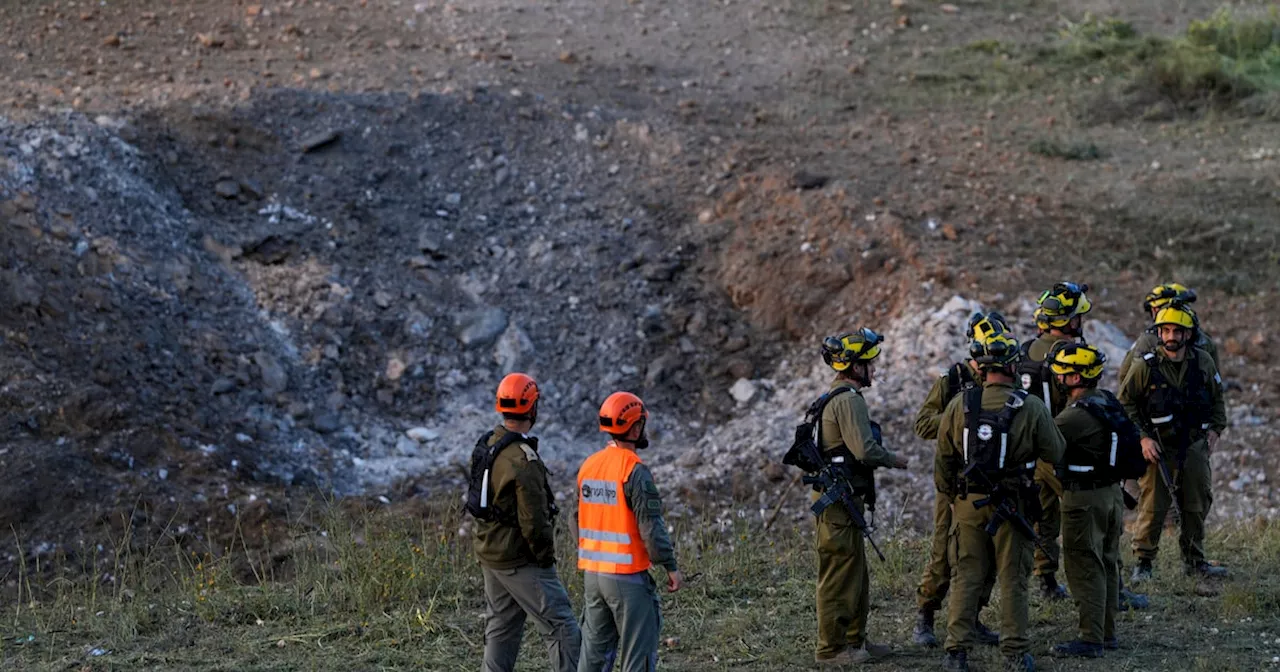 Pakistan says it will host U.S,-Iran talks as Iran warns against ground troopsPakistan announced Sunday that it will soon host talks between the U.S. and Iran.
Read more »
 Our Chicago: For more than 50 years, Haymarket Center has helped people struggling with addictionHaymarket Center was founded here in Chicago in 1975. The founders understood that addiction is a disease. Monsignor Ignatius McDermott and Doctor James West called for treatment instead of criminalization.
Read more »
 Olivia Munn Says John Mulaney Helped Her Face 'Death'Olivia Munn details how husband ohn Mulaney’s humor and presence helped her face the possibility of death during her breast cancer journey
Read more »