


I’m the world's only solar eclipse journalist. I'm the editor of WhenIsTheNextEclipse.com and author of The Complete Guide To The Great North American Eclipse of April 8, 2024 and When Is The Next Eclipse? A traveler’s guide to total solar eclipses 2024-2034.
Two eclipses will occur in the next few weeks—a lunar eclipse in the early hours of Monday, March 25, and a solar eclipse on Monday, April 8. Although they are very different phenomena, they are caused by the same celestial alignment.
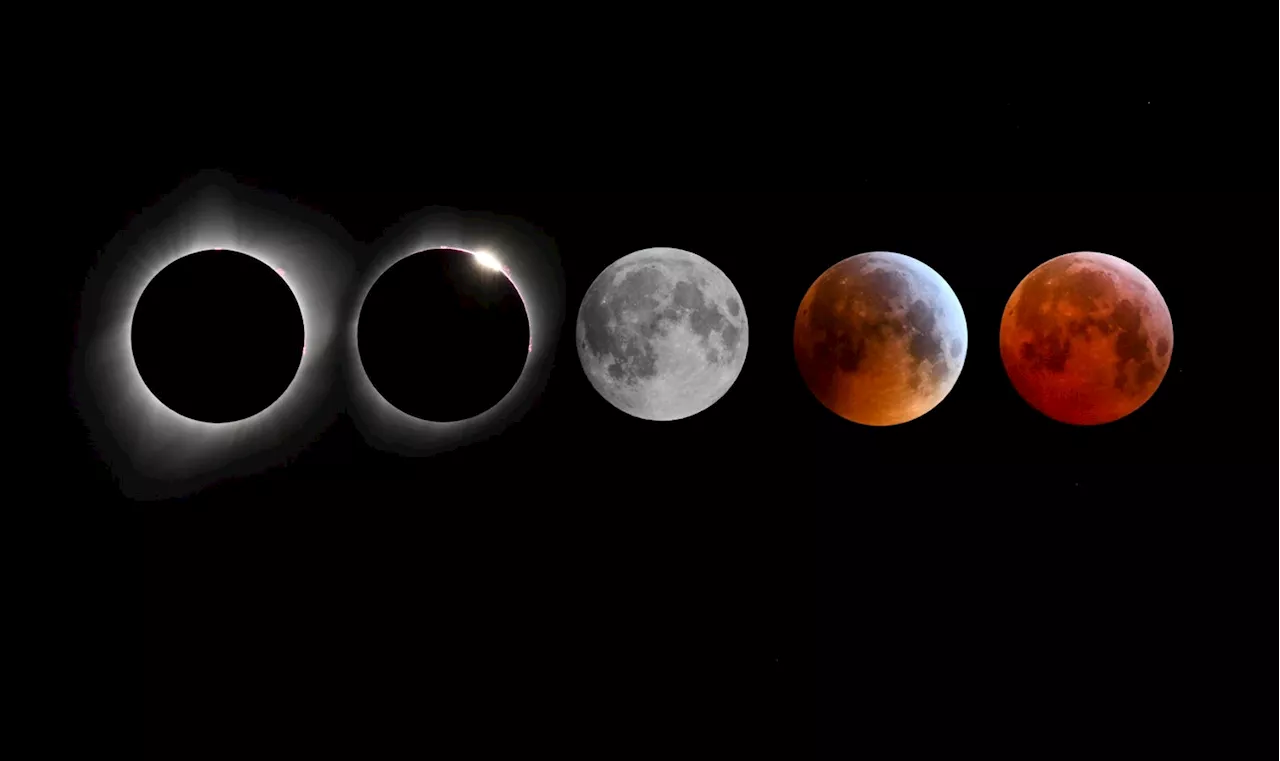
A lunar eclipse happens when Earth's shadow is projected onto the moon, while a solar eclipse happens when the moon blocks the sun's light and causes a shadow on Earth. However, both types of eclipses are rare because the orbital planes of the Earth and the moon around the sun are subtly different.A lunar eclipse can only happen at a full moon, when Earth is between the sun and the moon and projects a shadow into space. Full moons happen every 29 days, of course, but the moon rarely passes through Earth's shadow. When it does, that's a lunar eclipse.A solar eclipse can only happen at a new moon, when the moon is between the sun and Earth and projects a shadow onto Earth. A new moon happens every 29 days—two weeks after a full moon—but rarely does the moon block the sun as seen from Earth. When it does, that's a solar eclipse.iOS 17 4 1 Update Now Warning Issued To All iPhone Users A perfect alignment of the sun, Earth and moon. Earth has two shadows—its fuzzy outer penumbral shadow and its dark central umbral shadow. When a full moon drifts into Earth's umbra, it receives no direct light from the sun. The only light on its surface is sunlight refracted by Earth's atmosphere. The effect is a thousand sunsets on the lunar surface, which turns a pinkish-red for a short time—a"Blood Moon." If you were to stand on the moon during a lunar eclipse, you would be bathed in pinkish-red light and see a partial or total solar eclipse. On March 25, there will be a penumbral lunar eclipse because the full"Worm Moon" will only move through Earth's penumbra.A perfect alignment of sun, moon and Earth—and a celestial fluke—are what cause a total eclipse of the sun. A new moon has two shadows—its fuzzy outer penumbral shadow and dark central umbral shadow. When a new moon perfectly blocks all of the sun—something it can only do because it just happens to be 400 times smaller than the sun but also 400 times closer to Earth—its umbra is projected onto Earth. This shadow of the moon moves across Earth's surface because it's orbiting from west to east. That's also the direction that Earth rotates, which slows down the movement of the moon's shadow. It creates an umbral shadow—a path of totality—that those within can see something incredible: a total eclipse of the sun. If you were standing on the moon during a total solar eclipse, you would see the moon's shadow crossing Earth. On April 8, there will be a total solar eclipse because the new"Pink Moon" will block the sun perfectly and project an umbral shadow over North America.Eclipses of all kinds are relatively rare because the moon's orbit around Earth is tilted about 5 degrees with respect to the sun's path through the sky. That means the moon's path through the sky intersects the sun twice in each orbit—each month—but it must be at its new or full phase to cause a solar or a lunar eclipse. This scenario happens twice yearly, creating two"eclipse seasons" when solar and lunar eclipses always occur. However, most solar eclipses are either partial or annular , while most lunar eclipses are penumbral or partial.There will be two"eclipse seasons" in 2024, starting on March 25 and September 17:April 8, 2024: Total solar eclipse October 2, 2024: Annular solar eclipse There will be two"eclipse seasons" in 2025, starting on March 13 and September 7:March 29, 2025: Partial solar eclipse September 21: Partial solar eclipse
United States Latest News, United States Headlines
Similar News:You can also read news stories similar to this one that we have collected from other news sources.
 Illinois Eclipse 2024: Tips for viewing the last total solar eclipse for 20 yearsMother Nature is putting together quite a show for all to see on April 8. It’s going to be the last total solar eclipse that we will see for the next 20 years and Illinois has some of the best seats to offer.
Read more »
 Eclipse 2024: What time will the solar eclipse happen in Texas?Here are the times of when you can expect to see the 2024 eclipse across the state of Texas.
Read more »
 Solar eclipse 2024: Why wearing red or green could enhance your solar eclipse experienceChoosing the right colors to wear won’t just be about looking good – there’s a science behind the reason why experts say you should think about wearing red or green.
Read more »