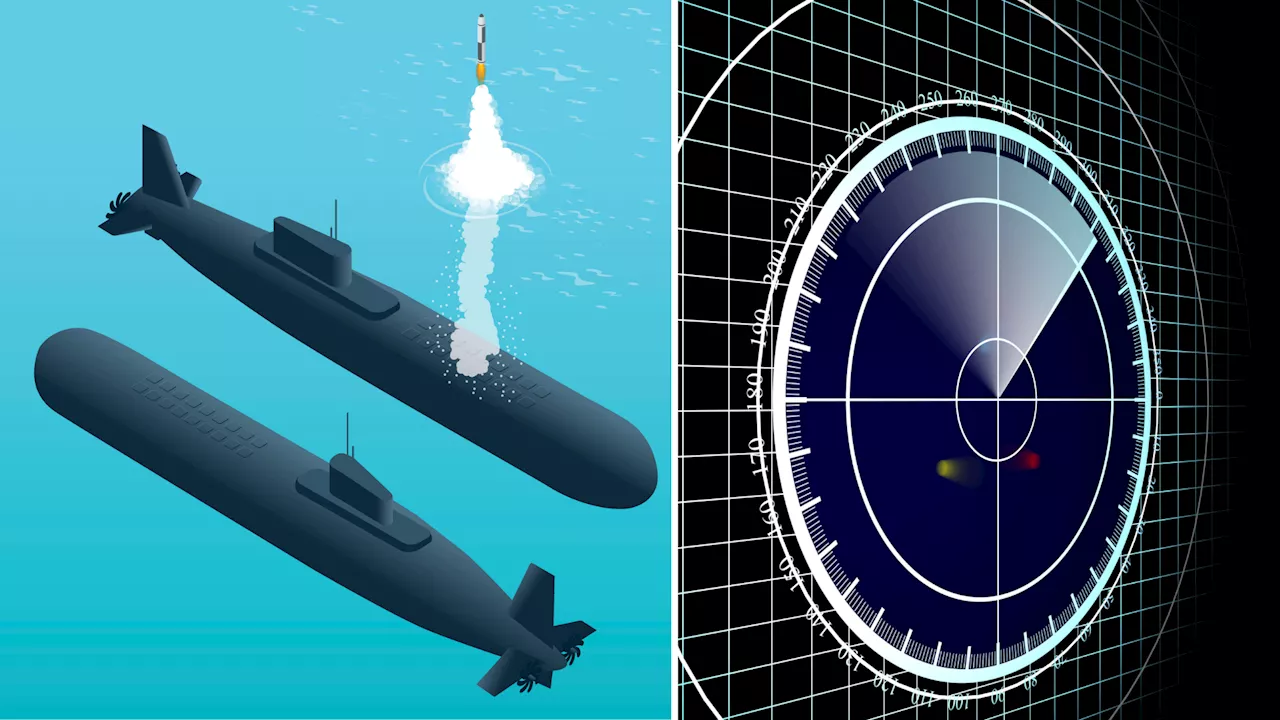
Scientists in China have made a breakthrough in submarine detection technology by harnessing the magnetic fields generated by submarines' wakes. This innovation, developed by researchers at Northwestern Polytechnical University, can reportedly track even the quietest underwater vessels, potentially reshaping naval warfare. The method detects submarines by analyzing the unique magnetic signatures created by their Kelvin wakes, a V-shaped wave pattern that persists long after the submarine passes. This breakthrough could have significant implications for military conflicts, particularly in areas surrounding Taiwan with its vast shallow waters.
Scientists in China have advanced their tech to detect stealth submarines. Their latest innovation can reportedly track the quietest underwater vessels easily. The innovation is expected to reshape naval warfare .
Developed by researchers at Northwestern Polytechnical University in Xian, the groundbreaking discovery detects vessels by harnessing the magnetic fields generated by their wakes.The team focused on studying the impact of Kelvin wake, a V-shaped wave pattern created by submarines or other ships while sailing. The waveforms are at a consistent angle due to the interaction of transverse and divergent waves.Kelvin wake creates detectable magnetic fieldChinese researchers revealed that Kelvin wake creates a faint but detectable magnetic field. It’s generated as seawater ions interact with the Earth’s geomagnetic field after being disturbed by the submarine’s motion.Using numerical simulations, the researchers quantified how these magnetic signatures vary with a submarine’s speed, depth, and size. For example, increasing speed by 2.5 meters per second boosts magnetic intensity tenfold; reducing the depth by 20 meters doubles the field strength; and longer submarines produce weaker fields, while wider hulls amplify them reported SCMP.Magnetic wakes persist long after a submarine passesThe team’s findings published in the Journal of Harbin Engineering University reveal that the Kelvin wakes cannot be silenced, which the team uses to identify stealth vessels in waters.Researchers also revealed that the Magnetic wakes could help China detect stealth submarines. Passes and leave footprints in the ocean’s magnetic fabric.The method is claimed to be useful during a military conflict with Taiwan as the vast areas of shallow waters surround the island nation. However, like the Seawolf class, the United States submarines could slip through such waters undetected. But it’s now being claimed that the Seawolf-class submarines could be detected using China’s latest tech.Seawolf-class submarines could be at risk of detection with latest techEquipped with advanced sensors, this submarine class is exceptionally quiet, fast, and well-armed. Instead of Vertical Launch System , the Seawolf class has eight torpedo tubes and can hold up to 50 weapons in its torpedo room.It has a great diving depth of 600 meters, far exceeding the typical maximum diving depth of around 300 meters for ordinary submarines. Seawolf-class uses anechoic tiles on the exterior and a shock-absorbing floating raft system inside, making it almost undetectable by sonar even at a cruising speed of 20 knots.However, a report claims that magnetic waves could add another layer to the kill web of Seawolf-class submarines. While no technology guarantees sub-detection, China is weaving magnetic tracking into a broader “kill web” that includes acoustic arrays, satellites, drones, and AI algorithms to fuse data streams.
Defense STEALTH SUBMARINES MAGNETIC FIELD DETECTION KELVIN WAKES CHINA NAVAL WARFARE
United States Latest News, United States Headlines
Similar News:You can also read news stories similar to this one that we have collected from other news sources.
 China Develops Potentially Devastating HPM Weapon with Nuclear-Level PowerChinese researchers have reportedly developed a high-power microwave (HPM) weapon with power comparable to a nuclear explosion, raising concerns about its potential impact on military operations and global security.
Read more »
 Fox News AI Newsletter: CES 2025 Tech, Biden's AI Orders, and Trump's Tech AgendaThe latest AI technology advancements, including cutting-edge health and fitness tech from CES 2025, Nvidia's pushback against Biden's AI export order, and the Biden administration's final rule on AI chip exports. Plus, insights into the incoming Trump administration's plans for AI and global innovation.
Read more »
 Crab Tech Ready to Tackle Tech Glitches at Los Gatos Rotary's Crab FestLos Gatos Rotary's annual Crab Fest and Auction is set for February 1st. A volunteer team known as 'Crab Tech' will be on hand to assist attendees with any technical difficulties encountered while placing online auction bids. The event is the club's primary fundraiser, with all proceeds benefiting the Los Gatos Rotary Charities Foundation.
Read more »
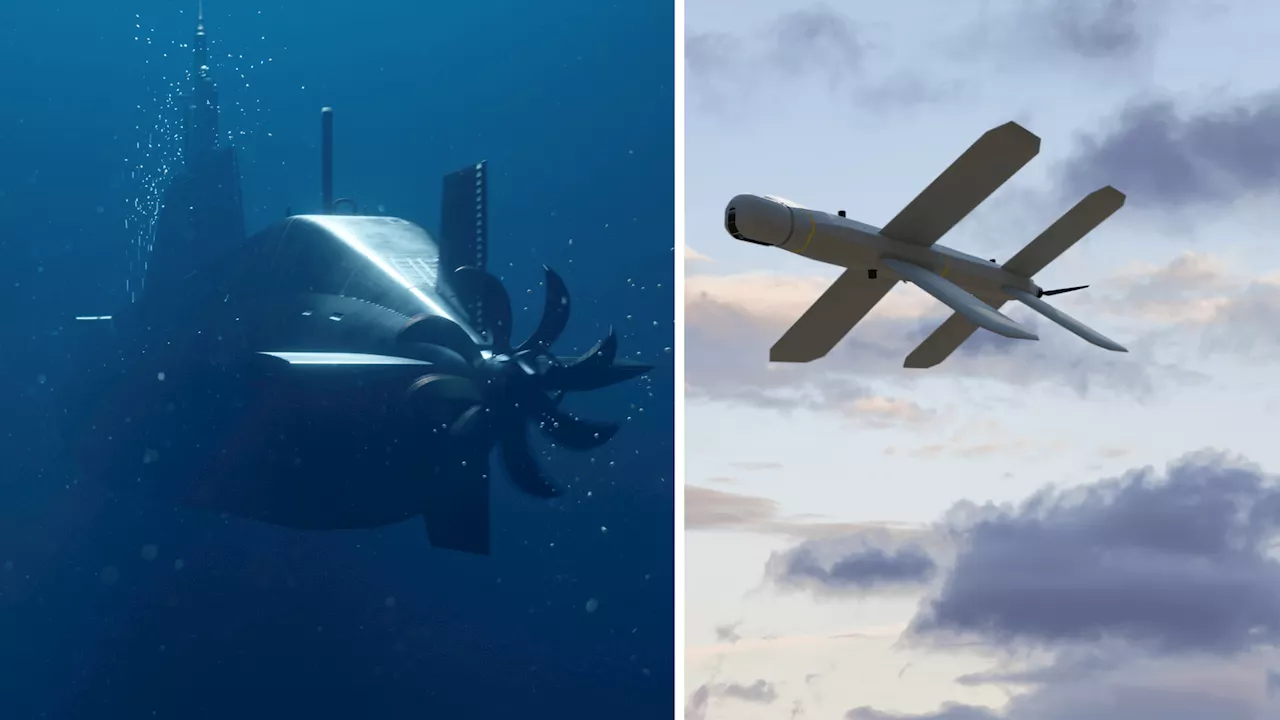 China Develops Revolutionary Drone Capable of Both Air and Underwater OperationsChina has unveiled a cutting-edge drone with the unique ability to operate in both air and underwater environments. This submarine-launched drone is designed to enhance China's military capabilities, particularly in potential conflicts involving Taiwan. The drone's foldable wing design allows for seamless transitions between water and air, providing superior concealment and survival rates in various battlefields. Chinese researchers assert that this advanced technology surpasses existing UUVs employed by the US military, boasting enhanced agility, reconnaissance, and strike capabilities.
Read more »
 Duncan Powell scores career-high 23 to help Georgia Tech beat Virginia Tech 71-64Duncan Powell scored a career-high 23 points and Georgia Tech snapped a four-game losing streak with a 71-64 victory over Virginia Tech. Powell, a junior, made 7 of 11 shots with three 3-pointers and grabbed six rebounds for the Yellow Jackets (9-11, 3-6 Atlantic Coast Conference). Javian McCollum had 16 points and four assists for Georgia Tech.
Read more »
 China Develops Massive Laser Fusion Facility, Fueling Energy and Weapons ConcernsSatellite imagery reveals China's construction of a laser fusion research facility in Mianyang, surpassing the size of the US National Ignition Facility (NIF). This development raises significant implications for both clean energy production and nuclear weapons research. The facility utilizes high-powered lasers to induce fusion reactions in hydrogen isotopes, mimicking the sun's energy generation process. While promising clean and abundant energy, it also presents potential military applications by enabling the refinement of nuclear weapons designs without conducting actual tests.
Read more »