
For the first time in Alaska history, the state Supreme Court has a majority of female justices. Chief Justice Susan Carney discusses the importance of representation, her experiences as a judge, and the challenges facing the state's justice system.
For the first time in Alaska history, the state's supreme court is majority female. It's also being led, for just the second time, by a woman. Chief Justice Susan Carney has served on the Supreme Court since 2016, when she was appointed by Gov. Bill Walker. She sat down for an interview with the Alaska Beacon on Tuesday, ahead of the annual State of the Judiciary address. 'I think it's great,' she said of the majority-female court.
'I think it's important that any court reflects the community that it serves.' Today, more than half, or 56% of law school students are women. Greater numbers of women are pursuing legal careers, and now roughly half of federal government, law firm associates and full-time law school faculty are women, according to the American Bar Association. She said she's seen the growth of opportunities for women first-hand, from her youth playing sports to law school and throughout her legal career. 'It's a good sign for the evolution of practice, evolution of what we do,' she said. 'And I think it's great for kids to see, you know, for Alaskans to think, 'I could do that.' The same with the Legislature, right? The House of Representatives is majority female in Alaska. After graduating from Harvard Law School, she clerked for the Alaska Supreme Court, then worked as a public defender and then with the Alaska Office of Public Advocacy for almost 30 years, focused on criminal law. The office works on issues of child guardianship and advocacy, as well as elder assistance. 'I did hundreds of trials,' she said, many in rural Alaska that allowed her to develop an understanding of rural communities and dynamics. 'I spent a lot of time in Interior villages, North Slope villages, so I just know what it's like to be in a small community,' she said. 'Anchorage might as well be Manhattan.' As a judge, she said that experience has allowed her to work more efficiently. 'So when I'm looking at a (court) transcript, I can see pretty clearly what was going on. I'm not just reading the dry script in English class, you know, I can see the the action is going on, and I think that helps me to orient myself.' 'Like a basketball team with five players, everybody's got different strengths and weaknesses, right? The point guard on a basketball team is not the person you want in rebounding or doing the jump ball at the start, generally. So the same way that team works together, we do too, with people bringing in their different perspectives.' When hearing oral arguments in court, some justices stay silent. Carney is known for frequently asking questions of the attorneys presenting a case. That's by design, she said. 'Because courts are scary. Regular people come to court, and they are scared from the moment they come in generally,' she said. 'So I think it's important to try to tone that down, but it's also important to let them know that I'm listening, and I know why they're here.' After the courtroom arguments are over, the justices gather in a conference room to discuss the issue. Generally, one justice leads the discussion on a given case. 'That person will say, here's what I think we should do. If anybody disagrees, that person will state their disagreement. Those two may go back and forth discussing it. When that discussion is done, then from newest person to most senior, we go around the table and people put out their position,' she said. 'Sometimes there are strongly held disagreements, but we can resolve them in a way that don't do violence to the law and principles,' Carney said. Anchorage Daily News -ProPublica investigation that found that the time needed to try Alaska’s most serious felony cases has nearly tripled in the past decade. 'I'm not going to try and justify cases dragging out for seven years or 10 years,' she said. 'But those cases are real outliers.' She said typical times are much shorter. 'Misdemeanor cases, by and large, they’re all taken care of within six months. And the lowest level felonies are about the same. The most serious cases, which I think both of those were murders, or really high-level sexual assaults,' she said of the cases focused on in the investigation, 'those are classified felonies, and the median time to resolve those is three years. So it’s still substantial, but it’s not outrageous.' Asked about the fact that more than half of Alaska’s prison inmates are jailed because they’re awaiting trial, Carney said she wasn’t familiar with that information. That was reported by the ProPublica investigation and by the Alaska Criminal Justice Data Analysis Commission.
Alaska Supreme Court Susan Carney Women In Law Judicial Reform Criminal Justice Felony Trials Court Backlog
United States Latest News, United States Headlines
Similar News:You can also read news stories similar to this one that we have collected from other news sources.
 Alaska Shoppers Willing to Pay More for 'Alaska Grown' ProduceA new study reveals that Alaska grocery shoppers are willing to pay a premium for locally grown produce, especially when informed about its benefits to health, the environment, and the state economy. The research, conducted by the University of Maine, found that consumers were willing to pay an average of $1.90 extra for a head of lettuce labeled as 'Alaska Grown'. This premium increased to $3.31 when given additional information about the benefits of locally grown food.
Read more »
 Appeals Court Rules Against DACA, Setting Up Potential Supreme Court ShowdownA federal appeals court dealt a blow to the Deferred Action for Childhood Arrivals (DACA) program, ruling against an Obama-era policy that shielded young immigrants who arrived in the U.S. illegally as children. The decision, which bars the federal government from accepting new DACA applications, could lead to another Supreme Court battle over the program's future.
Read more »
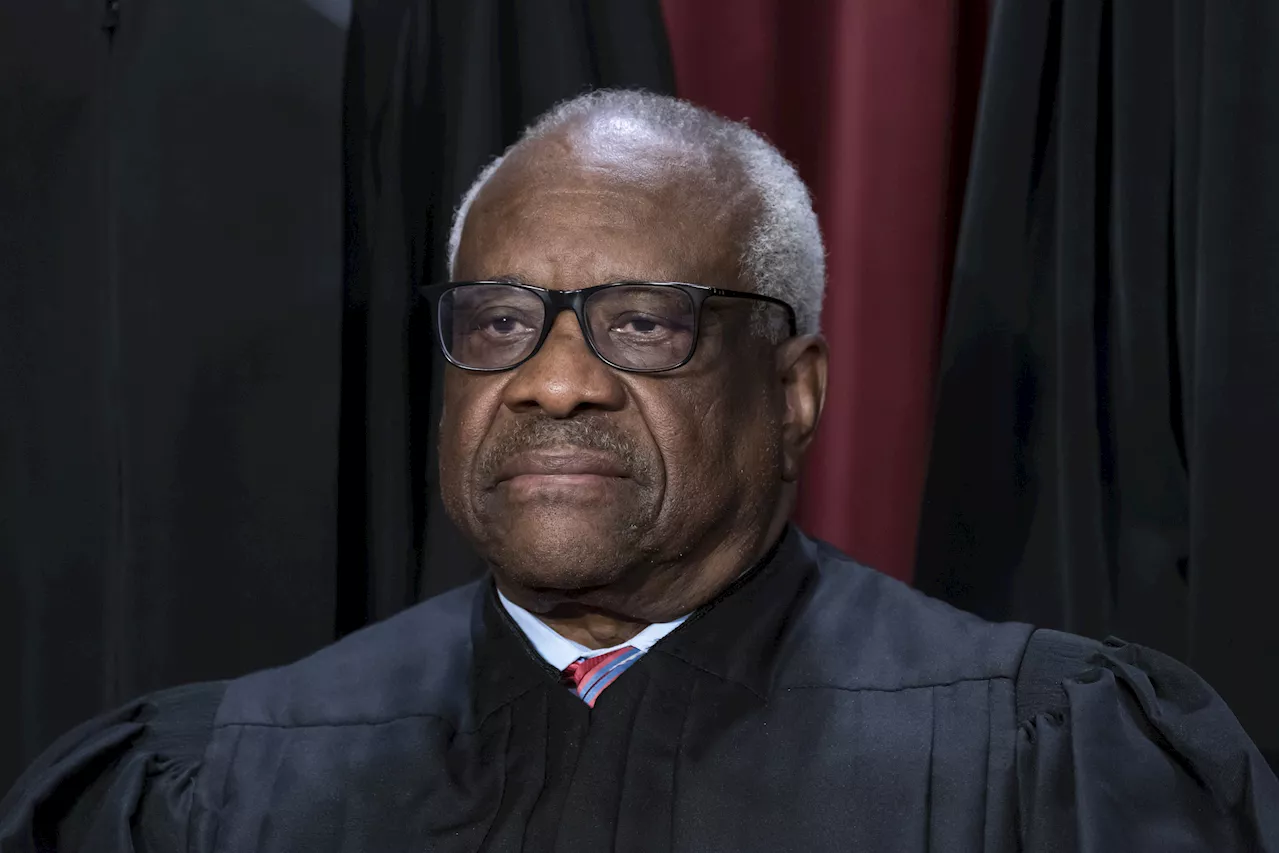 Supreme Court Justice Clarence Thomas Slams Appeals Court for Ignoring Legal PrecedentIn a strong dissent, Justice Thomas criticized the Sixth Circuit Court of Appeals for its handling of a case involving David Smith, an Ohio man convicted of multiple crimes. Justice Thomas argued that the court's interpretation of the Antiterrorism and Effective Death Penalty Act (AEDPA) was flawed and disregarded Supreme Court precedent.
Read more »
 ‘The best job in Alaska’: 30 years of writing about Alaska scienceThe gig has taken Ned Rozell on adventures across Alaska, from Mount Katmai to the Nogahabara Dunes and Kiska Island.
Read more »
 Alaska Supreme Court Chief Justice Addresses Delays, Outlines Plans for EfficiencyAlaska Supreme Court Chief Justice Susan Carney addressed concerns about lengthy court delays in her first State of the Judiciary address, outlining steps taken to improve efficiency and emphasizing the court system's commitment to reducing backlog. While acknowledging the challenges, particularly in complex criminal cases, Carney highlighted initiatives aimed at streamlining processes and expediting justice.
Read more »
 Alaska Supreme Court Chief Justice Outlines Plans for Efficiency and FutureAlaska Supreme Court Chief Justice Susan Carney addressed state lawmakers, defending the court system's work and outlining plans for the future. She acknowledged concerns about yearslong delays in court proceedings, but emphasized efforts to improve efficiency, including rules limiting delays, calling retired judges, and training aimed at speeding up the process. Carney highlighted the court system's efforts to expand restorative justice and collaboration with tribes, and announced plans for an AI-powered chatbot to assist with legal matters after a loved one's death. She also called on lawmakers to support the court system's budget requests.
Read more »