
Philip Ball is a freelance writer and broadcaster, and was an editor at Nature for more than twenty years. He writes regularly in the scientific and popular media and has written many books on the interactions of the sciences, the arts, and wider culture, including 'H2O: A Biography of Water' and 'The Music Instinct.
In the excerpt below taken from"Beautiful Experiments: An Illustrated History of Experimental Science " , Philip Ball dives into the 17th and 18th century experiments that sought to figure out the answer to a fundamental question: What induces eggs to develop? From microscopic observations of spermatozoa to special little sperm-catching trousers for frogs, Ball reveals how we came to understand fertilization.
It was always clear that for the reproduction of humans and other mammals, both the male and the female have a role. But what role, exactly? Aristotle proposed that both sexes contribute a kind of generative principle called"sperma," which combine to produce the rational human soul in the growing fetus in a process he called"epigenesis." Reflecting the chauvinistic attitude that shaped most theories of procreation until modern times, the male principle was considered the active element, which grew like a seed in the passive receptacle supplied by the woman. In one of the earliest recorded examples of experimental science, Aristotle carefully opened and examined chick eggs at different stages from fertilization to birth in order to watch the development of the fetuses. In the 17th century, the English physician William Harvey, while largely endorsing the Aristotelian position, placed more emphasis on the role of the egg from the female. Ex ovo omnia, as he put it in 1651: everything comes from an egg, a position called ovism. But Antonie van Leeuwenhoek's microscopic observations of spermatozoa in the 1670s led to the notion that the developing body is somehow inherent already in the head of the worm-like entities seen in sperm . The concept was strikingly illustrated in 1694 by the Dutch microscopist Nicolaas Hartsoeker, who drew a sperm with a fetal homunculus packed into the head, complete with tiny limbs. In this preformationist view the body was already fully formed, whereas in the view it developed from an unstructured seed. It was all largely conjecture, because of the difficulties of making observations and experiments on human conception. Then, as still today, much of what was known about embryology relied on studies of other animals. In the mid-18th century, an Italian physiologist and priest named Lazzaro Spallanzani set out to investigate the precise role of male semen by studying reproduction in frogs. Spallanzani has been described as having a"lust for knowledge:" a passion that sometimes seemed to exceed propriety, as when he was said to have begun expounding enthusiastically to a group of dignitaries about the mating of frogs he had noticed in a body of water during travels in Constantinople. That was surely a rather indecent topic of discourse for a man who had been ordained in the Church. Frogs do not actually copulate, though. Rather, the female lays her eggs, onto which the male then deposits his semen. Although Spallanzani shared Harvey's epigenetic view of development from a fertilized egg, he suspected that the spermatozoa play no role, but are instead a kind of parasite. It is the thinner, liquid component of the semen, Spallanzani thought, that provides the generative principle. To test that idea, Spallanzani needed to collect frog sperm and separate the microscopic"worms" from the seminal fluid. He borrowed an idea from the French scientist René Antoine de Réaumur, who in 1736 attempted to study fertilization in frogs by fitting the males with tiny trousers made from taffeta and pig's bladder, so that he might collect and study their sperm. He had little success with this, however, because the frogs wriggled out of their garments. But Spallanzani's prophylactic frog trousers were more successful. By applying some of the semen obtained in this way to frog eggs, he conducted the first known example of artificial insemination. Spallanzani never managed to elucidate the connection between spermatozoa and fertilization, however. After filtering the collected sperm to separate the liquid from the thicker residue containing spermatozoa, he found that only the latter could cause fertilization — and yet, to the bemusement of many historians of science, he still believed that the fertilizing capacity resided with the liquid. —Animal sex: How birds do itIn one set of experiments he kept toad sperm and eggs on pocket-watch glasses just a few millimeters apart to see if the eggs might be fertilized by some intangible"aura" emanating from the sperm . Some think Spallanzani was too much in thrall to a kind of preformationist ovism, believing that the embryo's form was already dormant in the egg and needed only the barest stimulus from semen to start it developing. At any rate, he exemplifies how, even if a scientist does the right kind of experiment, there's no guarantee that they will draw the correct conclusion from it. Spallanzani later extended his investigations to dogs, collecting semen from a male and injecting it with a syringe into the uterus of a bitch. Seeing the resulting pregnancy and the birth of pups was, he wrote,"one of the greatest joys of my life." He also experimented with preserving sperm using ice to see if it retained a capacity to fertilize. Reprinted with permission from Beautiful Experiments: An Illustrated History of Experimental Science by Philip Ball, published by The University of Chicago Press. © 2023 by Quarto Publishing plc. All rights reserved.Philip Ball's illustrated history of experimental science is a celebration of the ingenuity that scientists and natural philosophers have used throughout the ages to study — and to change — the world. If you enjoyed this extract you can read another extract from the book: How Isaac Newton's experiments revealed the mystery of light
Fertilization Experiments 17Th Century 18Th Century Reproduction Spermatozoa
United States Latest News, United States Headlines
Similar News:You can also read news stories similar to this one that we have collected from other news sources.
 'Seinfeld' star Michael Richards' memoir will cover 2006 racist outburst that led to 'lifelong spiritual quest'The “Seinfeld” alum will open up about his infamous 2006 racist tirade in his new book, “Entrances and Exits.”
Read more »
 Finding Rom-Coms on Hulu: A Challenging QuestDo you need a funny love story to get you through the holiday season? Then check out the three rom-coms on Hulu that you need to watch in November.
Read more »
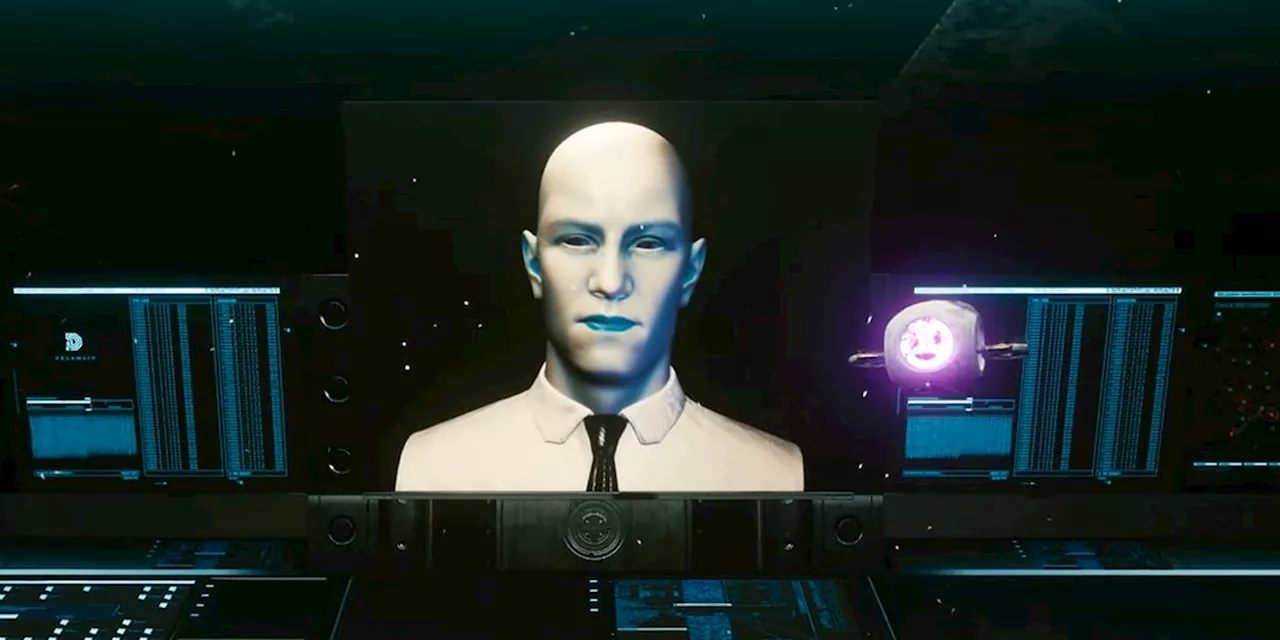 Cyberpunk 2077: All Delamain Car Locations (Epistrophy Quest)To complete the Epistrophy Side Job quest in Cyberpunk 2077, players must search Night City for seven runaway Delamain Cabs with rogue AI.
Read more »
 The Long Quest for a Universal Flu Vaccine Finally Takes Its First StepsThe search for a shot that could protect us against many strains—and maybe a pandemic—is notching achievements at last. But the flu’s endless mutation and our own biology stand in the way.
Read more »
Ukraine Gets Good News About Its EU Membership QuestUkraine, Moldova, and Georgia received positive news Wednesday about their quests to join the European Union, but countries in the volatile Balkans region that have waited years longer to become members of the world's biggest trading bloc appeared to slip back in the...
Read more »
 Dragon Quest Monsters: The Dark Prince Drops New Gameplay TrailerWhether you are a long time Dragon Quester or a first time Monster Wrangler, you'll find plenty to explore in DRAGON QUEST MONSTERS: The Dark Prince, launching December 1 on Nintendo Switch! Can’t wait? Download the demo now from the Nintendo eShop! ⚔ Learn more: dqmonsters.
Read more »