
The James Webb Space Telescope (JWST) has shed new light on SIMP 0136, a mysterious celestial object that could be either a rogue planet or a failed star. By analyzing infrared light, astronomers have detected variations in brightness, cloud patterns, temperature, and even chemical composition, providing valuable clues about this enigmatic wanderer.
Using the James Webb Space Telescope (JWST), astronomers have delved into the atmosphere of a cosmic wanderer, an object that could be a rogue planet or a ' failed star '. Designated SIMP 0136 , this enigmatic celestial body drifts through the universe approximately 20 light-years from Earth, untethered from a parent star. SIMP 0136 possesses a mass roughly 13 times that of Jupiter and rotates with such velocity that a day on this rogue world lasts only about 2.4 Earth hours.
The ambiguity surrounding SIMP 0136's classification stems from the fact that 'failed stars', also known as brown dwarfs, have a lower mass limit of around 13 times Jupiter's mass, which coincidentally aligns with SIMP 0136's mass. Its relatively bright nature for an isolated planetary-mass object, further unmarred by the light of a parent star, has made it a prime target for astronomers.Prior observations had revealed that SIMP 0136 exhibits fluctuations in brightness, prompting the inference that these variations were not solely due to cloud formations on a Jupiter-sized world. Instead, it was hypothesized that they arose from a complex interplay of atmospheric factors. Leveraging the JWST, the research team meticulously monitored infrared light from SIMP 0136 over two complete rotations, meticulously observing variations in the world's cloud layers, temperature, and even its chemical composition. This level of detail, previously obscured, unveiled numerous fascinating insights.The JWST's observations generated hundreds of highly detailed light curves, charting how each wavelength of infrared light fluctuated in brightness as SIMP 0136 rotated. These intricate light curves revealed distinct patterns, with some wavelengths brightening while others dimmed. The researchers discovered that wavelengths probing the same depths in the atmosphere exhibited similar light-curve shapes, suggesting a common underlying mechanism responsible for these variations. Analysis of these light curves pointed towards the presence of patchy clouds deep within SIMP 0136's atmosphere, potentially influencing the observed infrared light variations.Furthermore, the team identified other wavelengths originating from higher altitudes in SIMP 0136's atmosphere, potentially linked to temperature fluctuations. Intriguingly, certain light curves remain unexplained by either cloud or temperature variations, hinting at the potential influence of carbon chemistry within SIMP 0136's atmosphere. Pockets of carbon dioxide and carbon monoxide might be rotating in and out of the JWST's view, causing these anomalies. Alternatively, chemical reactions occurring within SIMP 0136's atmosphere could be responsible for these enigmatic variations
James Webb Space Telescope SIMP 0136 Rogue Planet Failed Star Infrared Light Atmospheric Composition Cloud Patterns Temperature Variations
United States Latest News, United States Headlines
Similar News:You can also read news stories similar to this one that we have collected from other news sources.
 JWST Uncovers Hidden Asteroid Population, Giving Scientists New Tools to Protect EarthThe James Webb Space Telescope (JWST), originally designed to study the cosmos, is revealing crucial information about a population of small main-belt asteroids. This discovery provides valuable insights for planetary defense efforts, as these smaller asteroids can pose a significant threat to Earth.
Read more »
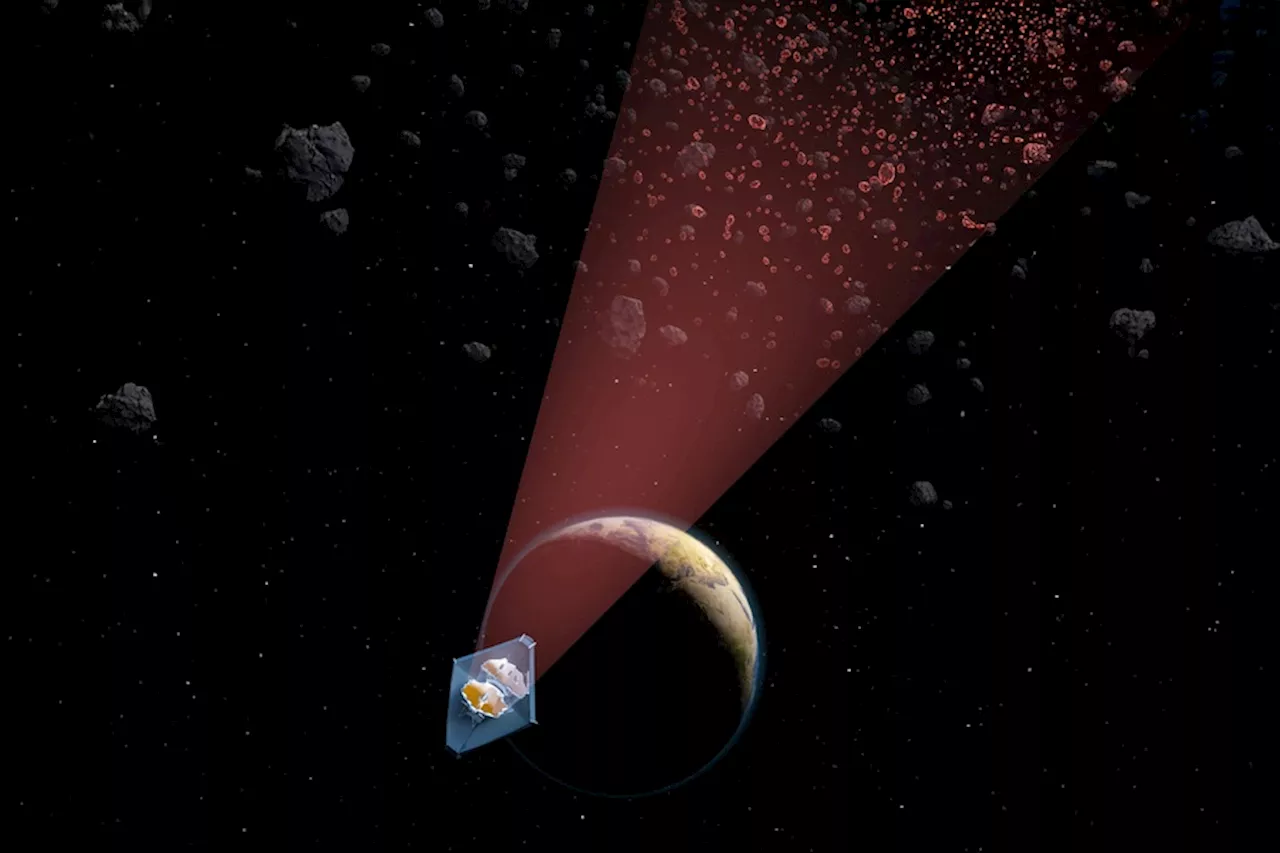 JWST Uncovers New Population of Small Asteroids, Boosting Planetary DefenseNASA's James Webb Space Telescope, initially designed to study the cosmos, is proving instrumental in identifying small asteroids that could pose a threat to Earth. The telescope's powerful infrared capabilities allow it to detect these smaller objects, which are more difficult to spot with traditional methods.
Read more »
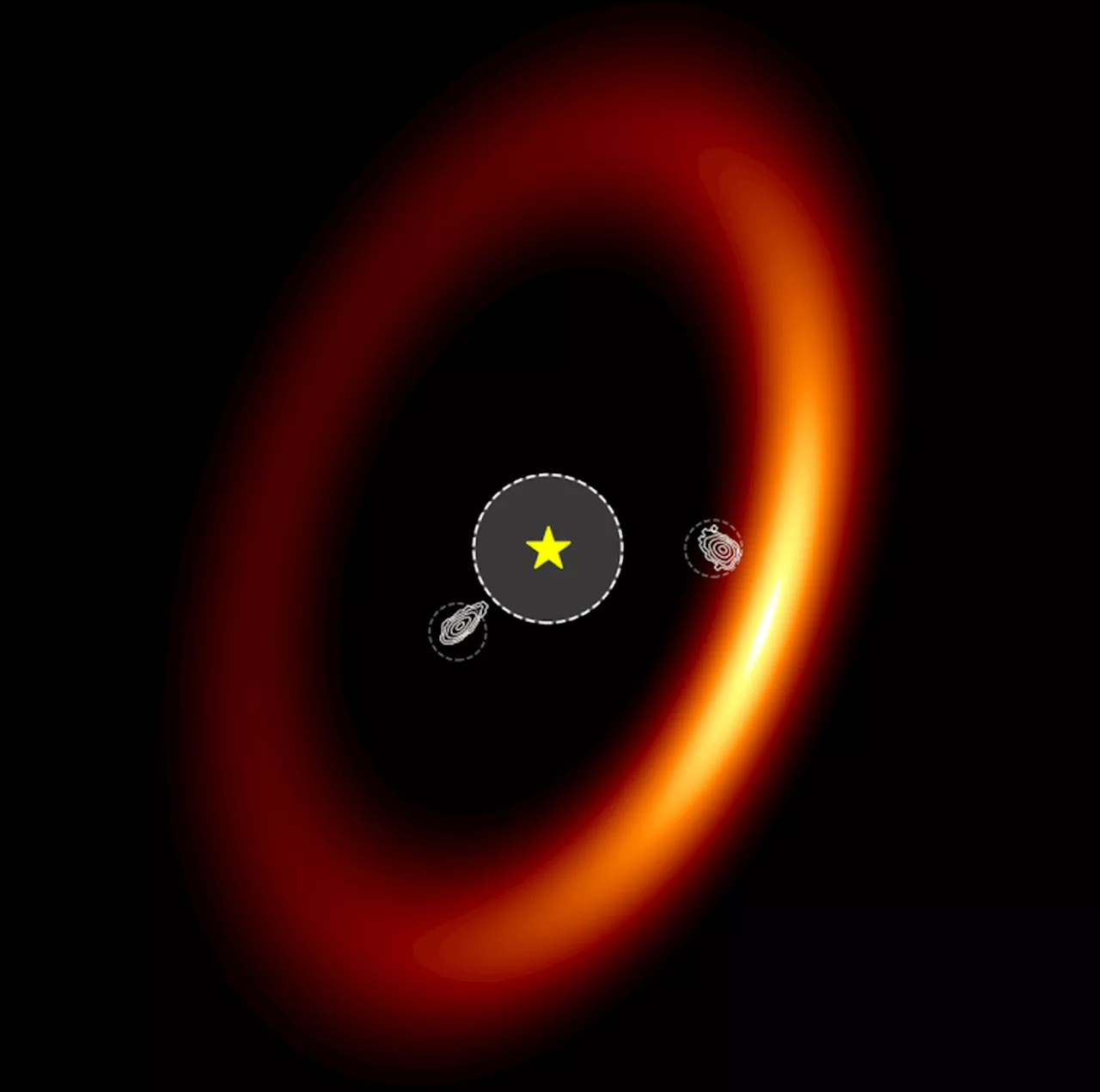 JWST Reveals New Details About Planet Formation in PDS 70 SystemThe James Webb Space Telescope (JWST) provides unprecedented insights into the PDS 70 system, a young star with two directly imaged planets, revealing evidence of ongoing planetary growth and hinting at the potential presence of a third planet.
Read more »
 JWST Reveals New Details About the PDS 70 Planetary SystemThe James Webb Space Telescope (JWST) has provided new insights into the PDS 70 planetary system, one of the few systems with directly imaged protoplanets. Using interferometry, JWST observed the system at longer wavelengths than ever before, revealing evidence of warm material accreting onto the planets and supporting the possibility of a third planet.
Read more »
 JWST Captures Dynamic Flares Near Milky Way's Supermassive Black HoleThe James Webb Space Telescope has provided the longest and most detailed view yet of Sagittarius A*, the supermassive black hole at the center of the Milky Way. Astronomers observed constant, rapid-fire flares of light, ranging from seconds-long flashes to longer, blindingly bright bursts, emanating from the black hole's accretion disk. These flares offer insights into how black holes behave and feed on their surroundings.
Read more »
 JWST Helps Identify Rare Ultra-Hot Neptune 262 Light Years AwayThe weather for Neptune today is sunny, with a chance of reflective clouds. Learn more about the uniquely blazing atmosphere of this ultra-hot exoplanet.
Read more »