
Evolutionary ecologist and ornithologist as well as a science writer and journalist. I'm active on many social medias (linked here) and I curate my writing on Medium and Substack.
of the cavity begging for food as these chicks are, this indicates that they aren't getting enough food. Many of us are familiar with the behaviors of lions. When a coalition of bachelor males successfully takes control over sexual access to a group of females, they often kill all the cubs so the adult females will quickly breed with them, thereby safeguarding the males’ paternity and ensuring that their own DNA gets in to the next generation as quickly as possible.
Infanticide — baby killing — is also commonly seen in gorillas and in a variety of other group-living primates under similar circumstances. And yet, whilst males and females of many species are known to kill the babies of their rivals to secure a sexual or social advantage, others have been observed adopting and caring for the young of dead or missing comrades. Why? What motivates the choice between adoption or infanticide?, may point to some answers. Green-rumped parrotlets are monogamous, sparrow-sized parrots that are common and widespread. They range from northern Venezuela eastwards to the lower Amazon in Brazil, preferring to live in semi-open and semi-arid lowlands, forest edges and deforested areas, and they sometimes even live in city parks., and an international team of students, collaborators, and field assistants have been observing and documenting the community of green-rumped parrotlets residing on a working cattle ranch in Venezuela. Professor Beissinger’s research relies on intensive and long-term field studies that combine observation and quantitative sampling along with field or lab experimentation, and modelling.As Knicks And Rangers Captivate New York The Yankees Quietly Roll AlongUnlike most parrot species that nest high in the rainforest canopy, green-rumped parrotlets prefer to nest in cavities in fence posts and trees. To observe and record the family dynamics of parrotlets, Professor Beissinger and collaborators created artificial nest cavities out of large PVC pipes and installed them throughout the ranch. They then captured and color-banded the local parrotlets so individuals could be visually identified from a distance, and their movements and social relationships could be tracked and recorded. Surprisingly, just as the project was being initiated, Professor Beissinger and one of his former grad students, Scott Stoleson, discovered that a family of seemingly healthy parrotlet chicks had mysteriously died in one of their PVC nest boxes. “We couldn’t tell if something had attacked them, or if they had died from disease, or something else,” Professor Beissinger said in a statement. “But when we were watching some of the nests, all of a sudden in went a male who didn’t belong — who wasn’t a parent at that nest — and out he came with a little bit of blood on his beak.” That was when Professor Beissinger and collaborators began to suspect infanticide, so they commenced tracking occurrences of the behavior.“In parrotlets, infanticide and adoption revolve around real estate and love,” Professor Beissinger replied. Yet, after 27 years of observing 2,742 wild green-rumped parrotlet nests between 1988 and 2015, Professor Beissinger and collaborators found that competition over nesting sites themselves were most likely the primary motivation for the attacks — and not competition for a mate. Professor Beissinger and collaborators found that most infanticidal attacks occurred when a non-breeding bonded pair attempted to evict a breeding pair from its nest cavity, which are usually very limited in number. “Most of the infanticide attacks happened when a breeding pair was attacked by another pair that was trying to take over a coveted nest site,” Professor Beissinger explained.“It also occurred when males wanted to breed with a widow who already had offspring — but we were surprised to find that these new males were just as likely to adopt the offspring as attack them.” Parrotlets killed or wounded nestlings and eggs at 256 of monitored nests. In most cases, the attacks were carried out by a single parrotlet or a breeding pair that later claimed the nesting site for themselves. In fact, the study revealed that infanticide by eviction was directly related to population size, and attacks occurred more frequently when the competition for good nesting sites was especially fierce. “At low population levels, it’s all love and peace, right? But then when you get to high population densities, it’s a bloodbath,” declared Professor Berg. Although both sexes attacked and killed chicks, males were almost twice as likely as females to be directly observed or suspected perpetrators (In their quest to obtain a scarce nest cavity, several parrotlets devised unusual strategies for achieving their objective. For example, one male study parrotlet killed all the offspring in a nest with an intact pair, an act that ended up displacing the male parent and triggering a rare instance of divorce, which occurs in only 1% of parrotlet pairs during a nesting season. So this particular usurper obtained both a nest cavity and a mate. “It’s not that everybody’s born a killer, but the urge to breed is very strong,” Professor Berg pointed out. “When the resources provided by the environment aren’t enough for all individuals to breed, they seek out alternative strategies. Unfortunately, that involves killing innocent little offspring.”The other 31% of attacks occurred at nests where one parent had died and the surviving parent found a new mate. In contrast to lions and gorillas, adoption of unrelated offspring was as common as infanticide amongst parrotlet stepparents — and perhaps surprisingly, choosing to adopt unrelated chicks ultimately did not hurt the stepparent’s overall reproductive success. One possible explanation to choose adoption instead of infanticide is this choice can strengthen the bond between a stepparent and a widow, leading to more mating opportunities, revealed Professor Berg. Further, male stepparents who adopted unrelated offspring not only go on to breed with the widowed females but achieved a younger age of first breeding, compared with competitors, and they also end up having as many offspring of their own over their lifetimes as do infanticidal males. So, new fathers don’t have to be killers to ensure that their DNA will live on. “Stepfathers scored love, a new mate; and real estate, a nest site,” Professor Beissinger summarized simply.Although infanticide and “stepparental adoption” appear to be polar opposites, there is good reason to believe that the evolutionary mechanism of sexual selection explains both behaviors. In, say, a migratory songbird species with high adult mortality, a low incidence of breeding with the same partner in successive years, and a diminishing chance of successful renesting as the breeding season ticks away, a fitness payoff from stepparental care is unlikely, so these birds commonly kill. In contrast, in a non-migratory species that forms pair bonds that may endure for years, like parrotlets, a widowed parent with unfledged chicks has more leverage to make stepparental “adoption” the price of re-partnering. Additionally, other relevant considerations can also include whether mates, nest cavities or territories are scarce; whether renesting in the same season is feasible; whether territories, control of a nest cavity or pair bonds are maintained or abandoned after brood failure; whether adoption or infanticide help maintain the new mate’s residual reproductive value; and to what degree providing care to unrelated young entails lost reproductive opportunities or other costs. According to this study’s findings, infanticide and adoption are equally adaptive strategies in green-rumped parrotlets, a species that is driven by limited availability of nest cavities, male-biased sex ratios, and long-term monogamy. “It was very interesting to see that the reproductive fitness outcomes were about even between adoption and infanticide and suggests that they have an alternative strategy — adoption may be a non-violent means of getting genes into the next generation,” Professor Berg concluded.Our community is about connecting people through open and thoughtful conversations. We want our readers to share their views and exchange ideas and facts in a safe space.Insults, profanity, incoherent, obscene or inflammatory language or threats of any kindContinuous attempts to re-post comments that have been previously moderated/rejectedAttempts or tactics that put the site security at riskProtect your community.
Infanticide Adoption Parrots Grrlscientist Green-Rumped Parrotlet Forpus Passerinus Sexual Conflict Evolution Ecology
United States Latest News, United States Headlines
Similar News:You can also read news stories similar to this one that we have collected from other news sources.
 How many ballerinas can dance on tiptoes in one place? A world record 353 at New York's Plaza HotelBlu is available for adoption and can be found at the MaxFund adoption center.
Read more »
 Pet parrots prefer live video-calls over watching pre-recorded videos of other birdsPet parrots given the choice to video-call each other or watch pre-recorded videos of other birds will flock to the opportunity for live chats, new research shows.
Read more »
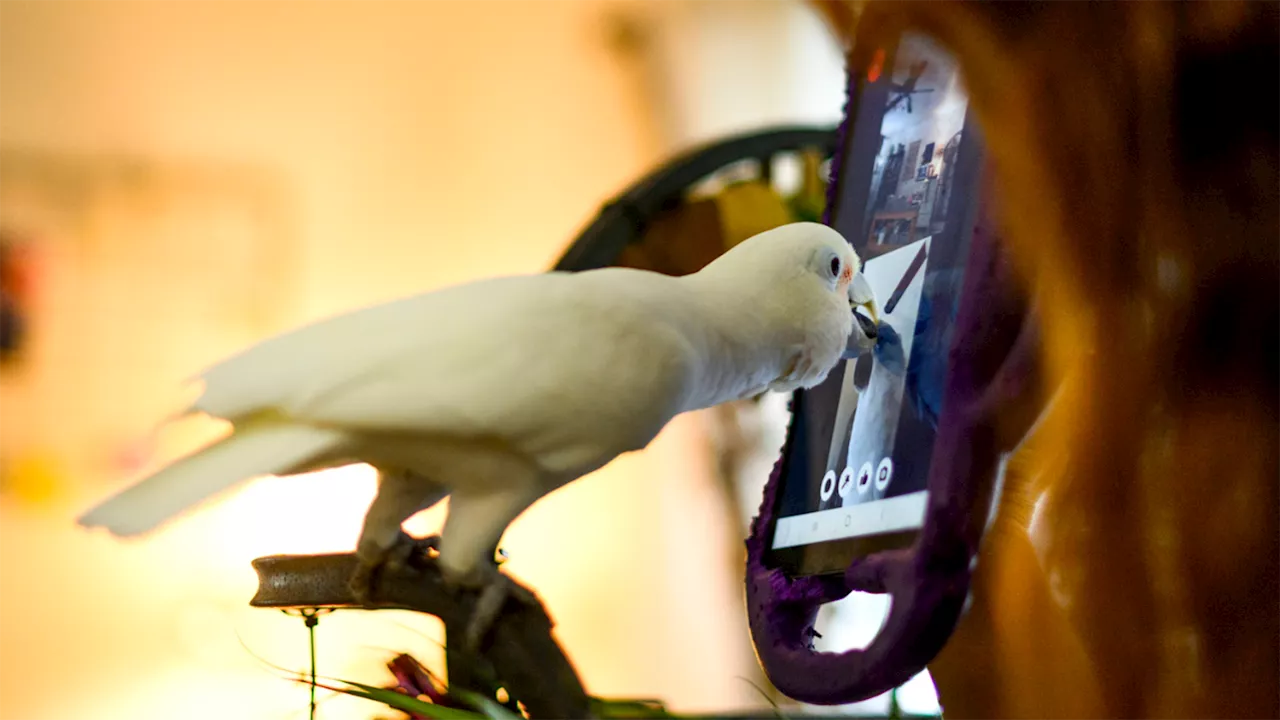 What happened when scientists taught parrots to video chat?Mack DeGeurin is a tech reporter who’s spent years investigating where technology and politics collide. His work has previously appeared in Gizmodo, Insider, New York Magazine, and Vice.
Read more »
 Full Transcript: Why MoonPay and PayPal Partnered to Expand Crypto Adoption in the U.S.MoonPay co-founder and CEO Ivan Soto-Wright joins CoinDesk's Jennifer Sanasie in CDTV's 'First Mover' to discuss MoonPay's recent partnership with PayPal.
Read more »
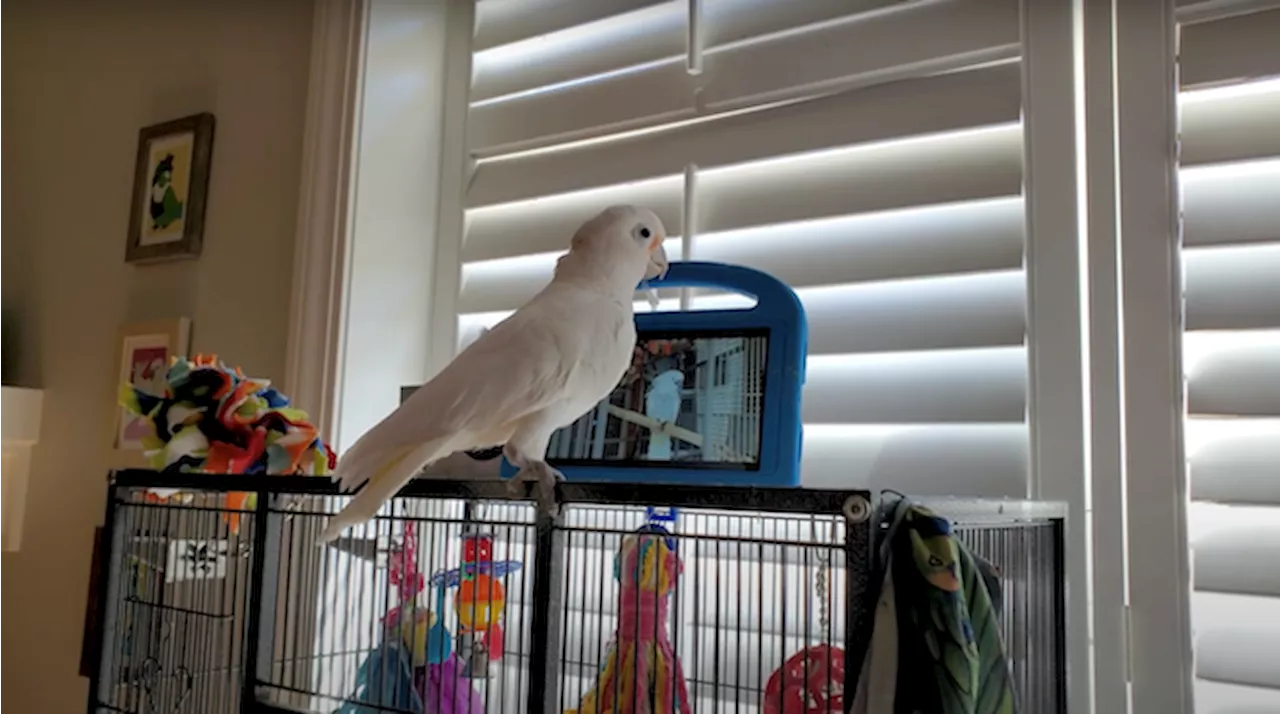 Parrots in captivity seem to enjoy video-chatting with their friends on MessengerCheyenne is Engadget’s weekend editor and covers a little bit of everything. She’s particularly interested in emerging technology and niche gadgets, climate change, space, privacy, and internet culture. She’ll talk your ear off about Tamagotchis if you get her started.
Read more »
 These parrots kill or adopt each others chicksLaura is a science news writer, covering a wide variety of subjects, but she is particularly fascinated by all things aquatic, paleontology, nanotechnology, and exploring how science influences daily life. Laura is a proud former resident of the New Jersey shore, a competitive swimmer, and a fierce defender of the Oxford comma.
Read more »