
Researchers discover a innovative way to utilize sargassum, a type of brown algae that plagues beaches, by incorporating it into ceramic clays used in construction. This method not only addresses the environmental problem of excess sargassum but also creates a more sustainable and eco-friendly building material.
Large amounts of brown algae, commonly known as sargassum, have been increasingly appearing on beaches far from their typical central Atlantic habitats. In recent years, coastlines across the Caribbean, the U.S., and northern Brazil have witnessed these algae accumulating in unprecedented volumes. While sargassum plays a crucial role in the open ocean's ecosystem, its massing on shorelines has become a significant problem.
As the algae decompose, they release gases that can pose threats to human health. Furthermore, the dense mats disrupt local tourism, damage fisheries, and jeopardize the biodiversity of coastal ecosystems, presenting a complex environmental and economic challenge for affected regions. Traditionally, sargassum collected from beaches is often discarded in landfills without any practical use. However, Joao Adriano Rossignolo, a professor of biosystems engineering at the University of São Paulo (USP), and his team have been exploring innovative ways to utilize this abundant resource. Rossignolo, whose expertise lies in applying biological and engineering principles to environmental and agricultural challenges, led a study investigating the possibility of incorporating sargassum into ceramic clays. These clays can be used in construction to reduce the weight of concrete, enhance thermal comfort in slabs, and even in gardening, transforming a problematic coastal waste into a valuable and eco-friendly material. To evaluate the effects of sargassum on ceramic clays, researchers prepared samples containing 20 percent and 40 percent algae, alongside control samples with 0 percent for comparison. The mixtures were molded and then sintered, a process that hardens clay through high heat, at temperatures of 800 °C, 900 °C, and 1,000 °C using both conventional and microwave ovens. Following the preparation of the ceramic samples, a series of tests were conducted to assess key properties, including water absorption, porosity, and compressive strength. The researchers also compared the life cycle of conventional expanded clay with the new formulations containing sargassum. This life cycle assessment evaluates the environmental impact of a product from raw material extraction through to its final disposal, providing insight into how incorporating algae could make construction materials more sustainable.The study revealed that adding sargassum reduced the density of lightweight ceramic clay aggregates, particularly at 40 percent, while only the microwave-sintered samples met strength requirements at all temperatures. Life cycle analysis demonstrated that the algae-infused versions were more environmentally friendly than conventional expanded clay. Researchers concluded that microwave-sintered sargassum clay offers a viable solution to manage coastal algae, reducing natural resource use and improving energy efficiency in construction. Rossignolo further explained that the team successfully incorporated 30 percent sargassum into the panels, completely replacing limestone with its ash, resulting in materials that meet current standards while enhancing both durability and mechanical performance
Sargassum Algae Construction Materials Sustainability Environmental Solutions Algae Waste Circular Economy
United States Latest News, United States Headlines
Similar News:You can also read news stories similar to this one that we have collected from other news sources.
 Algae-based breakthrough offers natural, stable alternative to artificial blue dyesA Cornell research team has developed a heat- and light-stable blue dye from phycocyanin, paving the way for cleaner, multifunctional food ingredients.
Read more »
 Algae harvesting boat is cleaning up Utah LakeUtah Lake officials said there has been a reduction in harmful algal blooms in the water thanks to an algae-harvesting boat a Utah Valley University professor called years in the making.
Read more »
 Blue-green algae at Martinez Marina poses concerns for people, animalsThe City of Martinez is warning people about an algae bloom at the local marina. Officials are worried it could be harmful to people, pets and wildlife.
Read more »
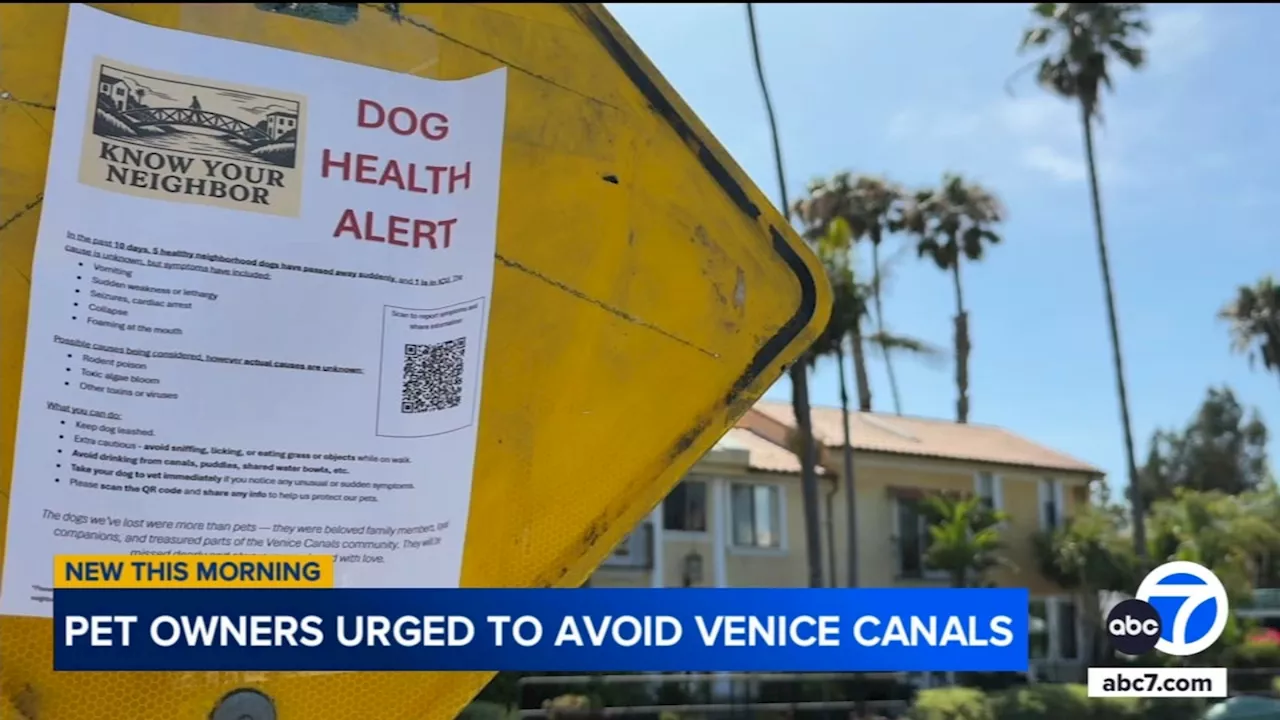 Algae toxins found in water of Venice Canals amid investigation of dog deaths; cause remains unclearTesting of water in the Venice canals where multiple dogs have died for unexplained reasons found the presence of toxins produced by algae, county health officials said.
Read more »
 Algae toxins suspected in Venice Canals dog deaths: What to knowAt least 26 cases of sudden dog illness are now potentially linked to the Venice Canals.
Read more »
 Algae toxins suspected in California dog deaths: What to knowAt least 26 cases of sudden dog illness are now potentially linked to the Venice Canals.
Read more »