
Donald Trump is fond of telling Ukraine it has no cards in its attritional war with Russia. But the US president is facing growing questions about the strength of his own deck in the war with Iran.
Donald Trump is fond of telling Ukraine it has no cards in its attritional war with Russia. But the US president is facing growing questions about the strength of his own deck in the war with Iran. Superficially, the United States, with more than three times Iran’s population and the world’s most powerful military and economy, has an overwhelming edge in the balance of power.
Add in Israel’s tested military and all-seeing intelligence machine and it seems an unfair fight. But Iran — by turning its few areas of advantage into painful pressure points for the US, and by forcing its repressed people to absorb massive punishment — has done more than survive. Some analysts believe it has seized the strategic initiative. One month in, the war has become a contest of leverage. Trump may have more power, but achieving an unequivocal victory would likely require him to accept a level of political and economic damage he’s loath to endure. Iran can’t defeat the US and Israel, but it played its ultimate trump card by closing the Strait of Hormuz, a major energy exporting choke point, thereby holding the global economy hostage and building political costs for the US. A hollow win for Trump’s diplomacy The strategic vulnerability undermining US military superiority was highlighted by an exchange in a White House briefing on Monday. White House press secretary Karoline Leavitt cited Iran’s willingness to allow an additional 20 tankers to sail through the Strait in the coming days as a win for “the president’s diplomacy.” Yet the optics are jarring, since the US, as the greater power, shouldn’t be in the position of negotiating concessions. And this fleet of 20 tankers is insignificant compared to the daily average of well over 100 per day before the war, as calculated by UN Trade and Development. Were it not for the war, the Strait would be open. So, in Leavitt’s telling, Trump’s first ostensible diplomatic victory is merely undoing a fraction of his own negative impact. The unappealing reality for Trump is that the United States undoubtably has the military might to open the Strait. But sending the US Navy through the Strait would hand Iran a propaganda victory if it struck or even sank a US vessel. He’d probably also have to land ground troops to push back Iranian forces, raising the risk of US combat deaths that could buckle his already-low political standing. The same constraints apply to Trump’s other options as he considers whether to seize the nerve center of Iran’s oil exports on Kharg Island in the northern Persian Gulf. He told the Financial Times on Sunday that he’d perhaps like to seize Iran’s oil. Such a move might strangle the Iranian economy. But there’s no guarantee that would cause the regime to capitulate rather than lash out. And it would give it even less of an incentive to loosen its control of the Strait of Hormuz. As he seeks to strengthen his own hand, Trump is claiming that productive diplomacy is unfolding behind the scenes with Iran, despite its denials that direct talks are underway. But he’s also threatening unprecedented violence to bring Tehran to the table. The arrival of thousands of US Marines in the region — and the dispatch of more than 1,000 airborne troops — has some analysts convinced that Trump’s patience will run out and that he will order US troops to take Kharg Island or islands in the Strait. “That’s very far from an off-ramp. That looks like almost certainly like a period of escalation is coming,” Ian Bremmer, president and founder of the Eurasia Group, said on CNN News Central on Monday. Trump had earlier warned that if Iran didn’t make a deal, he would weaponize the US military advantage by “completely obliterating all of their Electric Generating Plants, Oil Wells and Kharg Island .” Certainly the US military could do this. But reprisal attacks by Iran would be inevitable on similar targets on the territory of US Gulf allies. Global markets would go into meltdown. The already-high risk of a worldwide recession would increase. And the prospect of bombing desalination plants vital to supporting life in the parched desert conditions of the Gulf prompted reporters to question Leavitt over the possibility that Trump could commit a war crime. Washington does have an important card that it’s yet to play. It has the capacity to eventually lift sanctions on Iranian oil exports and multiple sectors of the economy. The Islamic Republic has been driven to its knees by its inability to sell oil through normal channels. The latest uprising against the regime — brutally put down by security forces — was partly brought on by this deprivation. One potential US tactic might be to choke off Iran’s oil exports. But this could hurt Trump as much as Iran. This remarkable conundrum was highlighted earlier this month when the administration took the counterintuitive step of lifting sanctions on Iranian ships at sea because it was so spooked by skyrocketing oil prices. Otherwise, the White House is offering Iran little to sweeten its diplomacy. Its 15-point list of demands for a peace deal contains many that Tehran would never accept — including strict curbs on its missile programs and an unconditional loosening of its grip on the Strait. And the administration is determined to view the conflict through the narrowest of military lenses. Its daily updating of a tally of attacks on Iranian targets — which reached 11,000 on Monday — risks drawing comparisons with the body counts in the Vietnam War that obscured the damaging span of the war in its entirety. “It’s no surprise that we are seeing the remaining elements of the regime become increasingly eager to end the destruction and come to the negotiating table while they still can,” Leavitt told reporters on Monday. This is not a summation of the war that seems to match reality. Iran has a small but hugely valuable strategic card to play Iran might not enjoy the upper hand militarily, but its closure of the Strait gives it disproportionate power. Its move has already triggered economic and fuel crises as far away as Africa and Asia. Many more weeks of disrupted maritime traffic could unleash an economic cataclysm — and in turn impose fierce domestic political costs on Trump. Iran’s prolonging of the war is also inflicting huge consequences on its US-allied Gulf neighbors as they seek to transform their carbon-based economies by building global tourism, transit and sporting hubs. The US and Israel are probably right that they’ve destroyed most of Iran’s drones and missile capacity. But Tehran only has to toss a few projectiles into the Strait, or into Gulf cityscapes, to impose a disproportionate economic cost. Iran’s leverage also seems to be growing with time. The longer the war goes on, the higher the costs for the president, meaning he might consider a deal that makes him look more like a supplicant than a strongman. Still, the regime’s long-term regime survival would require sanctions to be lifted. And the clock is ticking on Trump’s tolerance. If genuine diplomacy does not take place soon, he may be pushed inexorably into an escalation that makes it impossible for him to step back and accept a settlement — whatever the costs. “Once he loses that capability, his incentives for an off-ramp, compared to the incentives for doubling down, will then shift again in the wrong direction,” said Trita Parsi of the Quincy Institute for Responsible Statecraft. “So the Iranians need to recognize that they don’t have all the time on their side, even though they probably have more time on their side than Trump does.” Ultimately, leverage in a war is only valuable if it delivers a strategic victory. Both the United States and Iran maintain advantages that could be decisive. But they must play their cards carefully. A failure of each to offer the other a way out could lead them, and the world, toward catastrophe.
United States Latest News, United States Headlines
Similar News:You can also read news stories similar to this one that we have collected from other news sources.
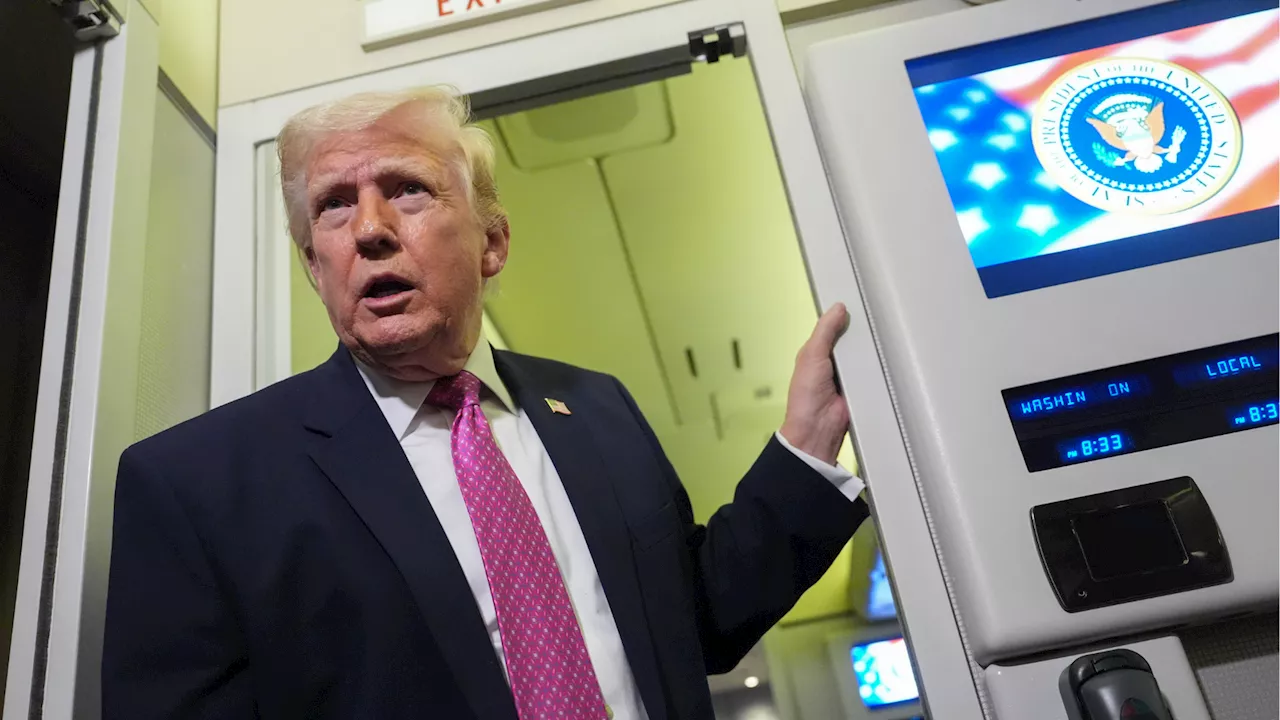 Iran live updates: Trump threatens Iran infrastructure strikes if talks failTrump said 'serious' talks are ongoing with Tehran.
Read more »
 Iran live updates: Trump threatens Iran infrastructure strikes if talks failTrump said 'serious' talks are ongoing with Tehran.
Read more »
 Iran live updates: Trump threatens Iran infrastructure strikes if talks failTrump said 'serious' talks are ongoing with Tehran.
Read more »
 Iran live updates: Trump threatens Iran infrastructure strikes if talks failTrump said 'serious' talks are ongoing with Tehran.
Read more »
 Iran live updates: Trump threatens Iran infrastructure strikes if talks failTrump said 'serious' talks are ongoing with Tehran.
Read more »
 Donald Trump’s Iran War Unpopular With Jewish Americans—New PollThe poll found that 55 percent disapprove of U.S. military action against Iran.
Read more »