
James Webb Telescope finds farthest black hole merger, revealing rapid growth just 740 million years after the Big Bang.
In our cosmic neighborhood, astronomers have discovered supermassive black hole s, much larger than the Sun, residing in many big galaxies like our Milky Way. These colossal black hole s have had a significant influence on how their galaxies evolved, but the reasons behind their rapid growth remain a major focus of scientific investigation.
have made a surprising find. They’ve detected the most distant black hole merger ever seen. This finding, happening when the universe was only 740 million years old, marks the farthest detection ever of black hole merging. It’s also the earliest instance of such a phenomenon observed in space.Dr Hannah Ubler, the lead author from Cambridge’s Cavendish Laboratory and Kavli Institute for Cosmology, highlighted the significance of these findings. “We found evidence for very dense gas with fast motions in the vicinity of the black hole, as well as hot and highly ionised gas illuminated by the energetic radiation typically produced by black holes in their accretion episodes,” Übler explained in a press release.and their respective supermassive black holes, situated at a time when the Universe was just 740 million years old. This system designated ZS7, has provided critical evidence through Webb’s unparalleled observational capabilities. Astronomers can identify actively feeding black holes by studying their special spectrographic features. However, these features can’t be seen from Earth-based observatories and can only be spotted using JWST’s advanced tools for galaxies as far away as the ones in this study.Ubler mentioned that Webb’s exceptional imaging precision enabled their team to spatially distinguish the two black holes. One of the black holes in the ZS7 system boasts a mass equivalent to 50 million Suns. “The mass of the other black hole is likely similar, although it is much harder to measure because this second black hole is buried in dense gas,” noted Professor Roberto Maiolino, also from the Kavli Institute.These findings suggest that merging plays a crucial role in the rapid growth of black holes, even at the cosmic dawn. “Together with other Webb findings of active, massive black holes in the distant Universe, our results also show that massive black holes have been shaping the evolution of galaxies from the very beginning,” UblerWhen these two black holes merge, they will create gravitational waves, which are ripples in spacetime. Future observatories like the Laser Interferometer Space Antenna , recently approved by the European Space Agency as the first space-based observatory for studying gravitational waves, will detect these waves.This amazing discovery came from the Galaxy Assembly program using NIRSpec Integral Field Spectroscopy. Now, the team has earned another chance to study more with JWST’s Cycle 3.will explore the connection between massive black holes and their host galaxies in the first billion years, focusing on finding and studying black hole mergers, their frequency in early cosmic history, and their role in black hole growth and gravitational wave production.In another study, MIT astronomers used the JWST to study distant quasars, revealing insights into the origins of black holes. Their observations, spanning over 13 billion years, showed that the black holes powering these quasars were much larger than their host galaxies, sparking questions about their rapid growth. Minghao Yue from MIT’s Kavli Institute suggests these black holes may have originated from “seed black holes” that quickly consumed material. These primordial seeds, possibly formed from supernovae or direct collapse of gas clouds, could have grown into massive black holes by consuming cosmic matter. suggest that black holes may have gained mass before their host galaxies in the early universe, challenging previous assumptions.
United States Latest News, United States Headlines
Similar News:You can also read news stories similar to this one that we have collected from other news sources.
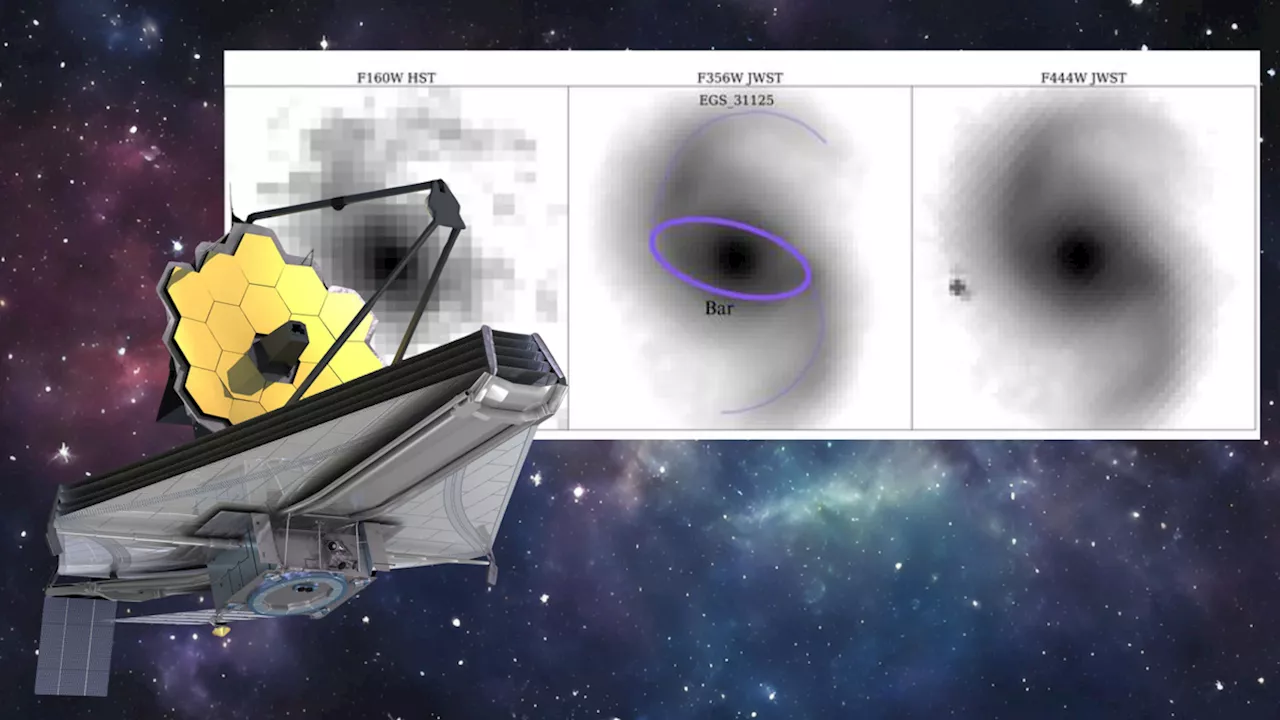 James Webb Space Telescope discovers some early universe galaxies grew up surprisingly fastRobert Lea is a science journalist in the U.K. whose articles have been published in Physics World, New Scientist, Astronomy Magazine, All About Space, Newsweek and ZME Science. He also writes about science communication for Elsevier and the European Journal of Physics. Rob holds a bachelor of science degree in physics and astronomy from the U.K.
Read more »
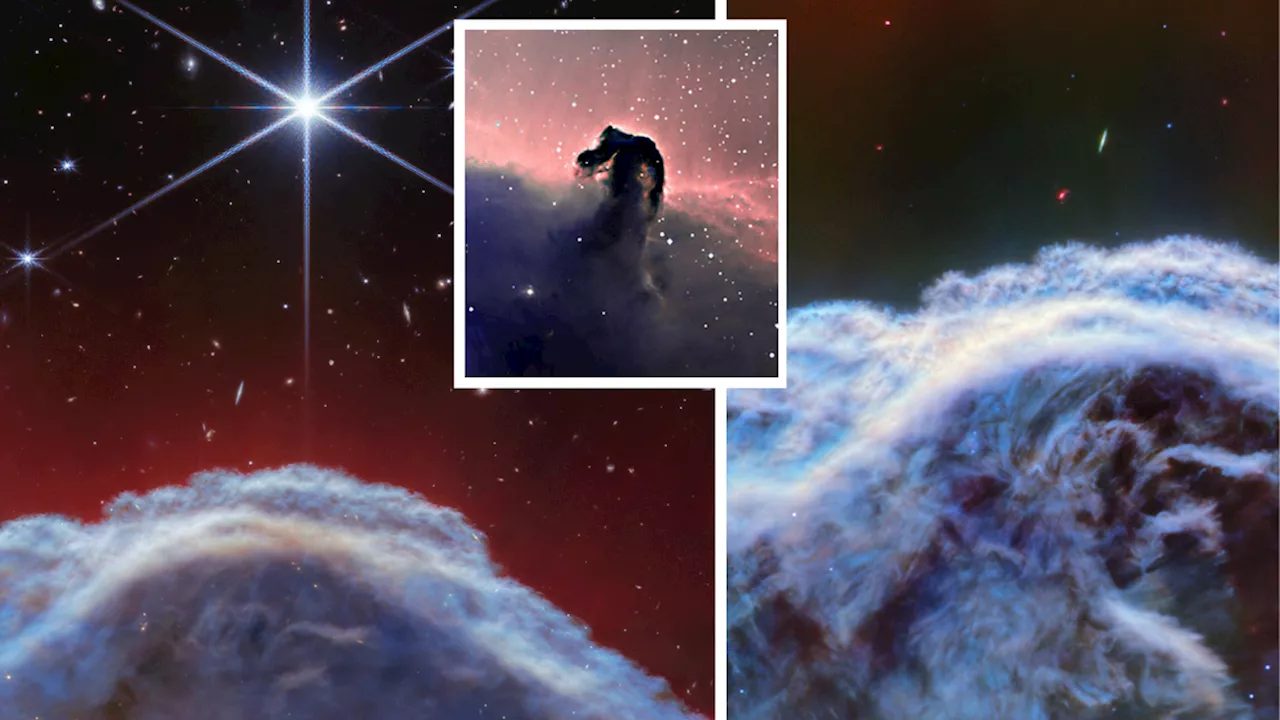 Horsehead Nebula rears its head in gorgeous new James Webb Space Telescope images (video)Robert Lea is a science journalist in the U.K. whose articles have been published in Physics World, New Scientist, Astronomy Magazine, All About Space, Newsweek and ZME Science. He also writes about science communication for Elsevier and the European Journal of Physics. Rob holds a bachelor of science degree in physics and astronomy from the U.K.
Read more »
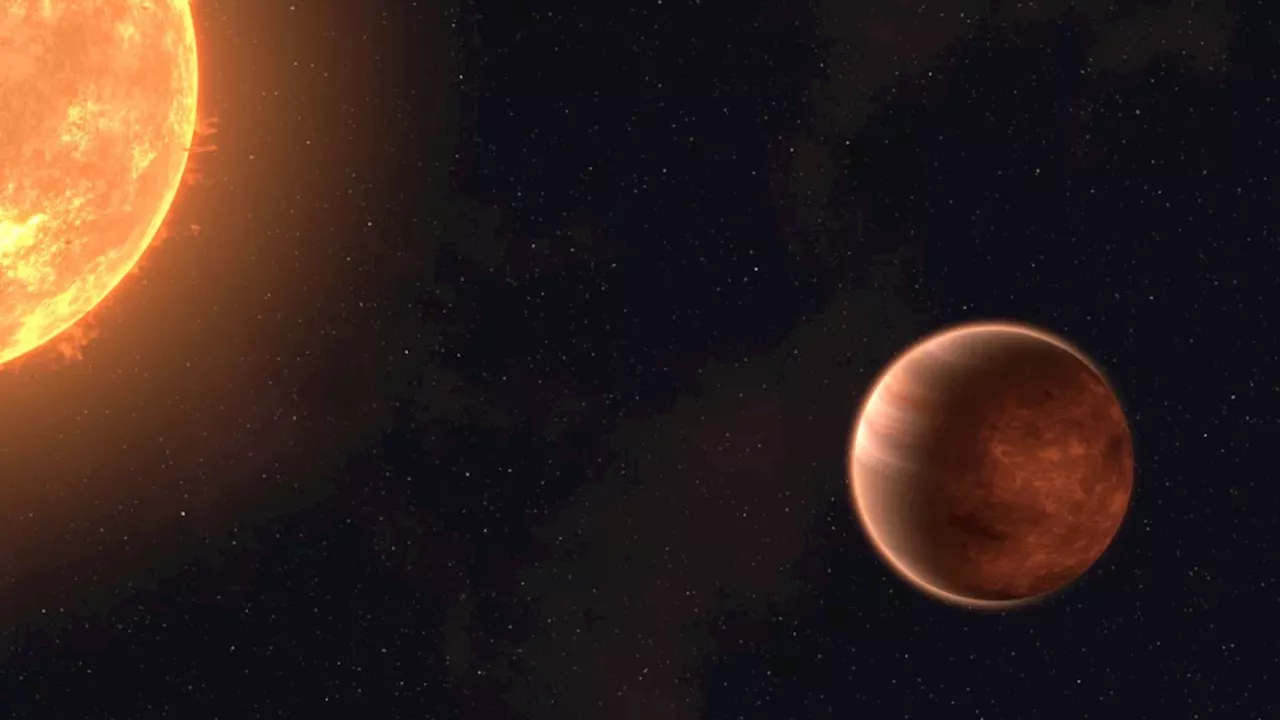 James Webb Space Telescope forecasts clouds of melted rock on this blisteringly hot exoplanetRobert Lea is a science journalist in the U.K. whose articles have been published in Physics World, New Scientist, Astronomy Magazine, All About Space, Newsweek and ZME Science. He also writes about science communication for Elsevier and the European Journal of Physics. Rob holds a bachelor of science degree in physics and astronomy from the U.K.
Read more »
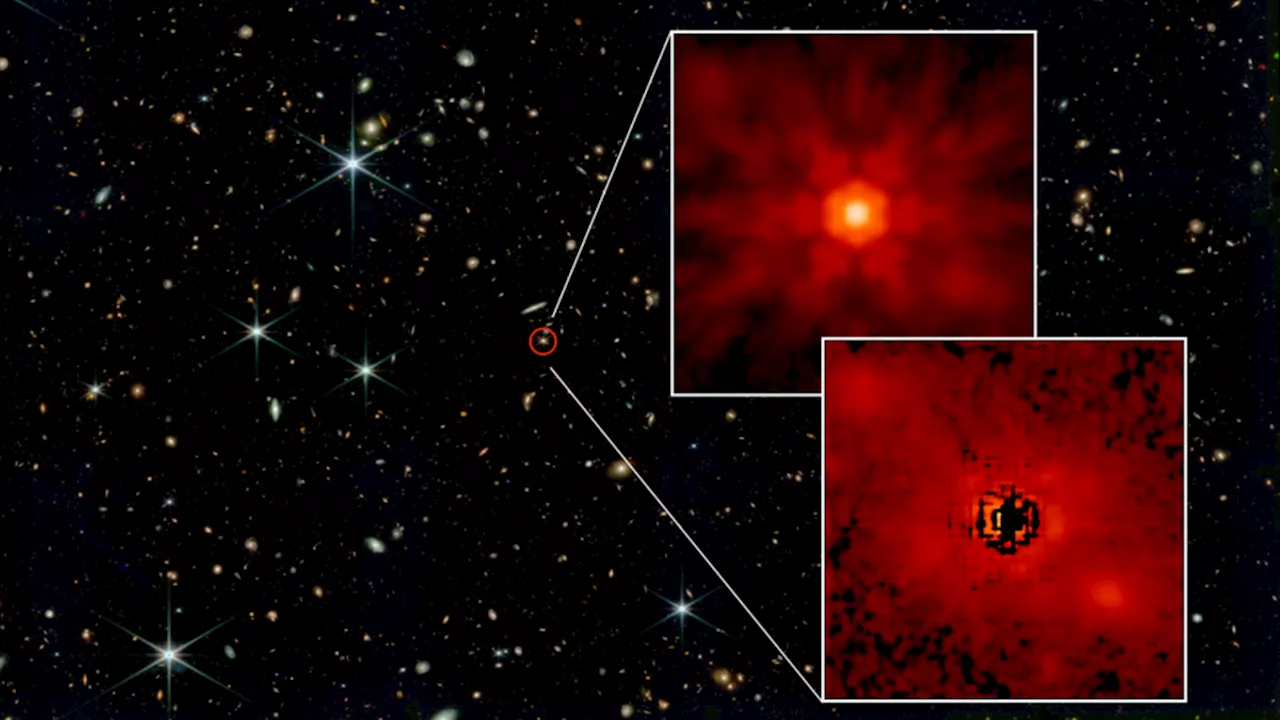 James Webb Space Telescope suggests supermassive black holes grew from heavy cosmic 'seeds'Robert Lea is a science journalist in the U.K. whose articles have been published in Physics World, New Scientist, Astronomy Magazine, All About Space, Newsweek and ZME Science. He also writes about science communication for Elsevier and the European Journal of Physics. Rob holds a bachelor of science degree in physics and astronomy from the U.K.
Read more »
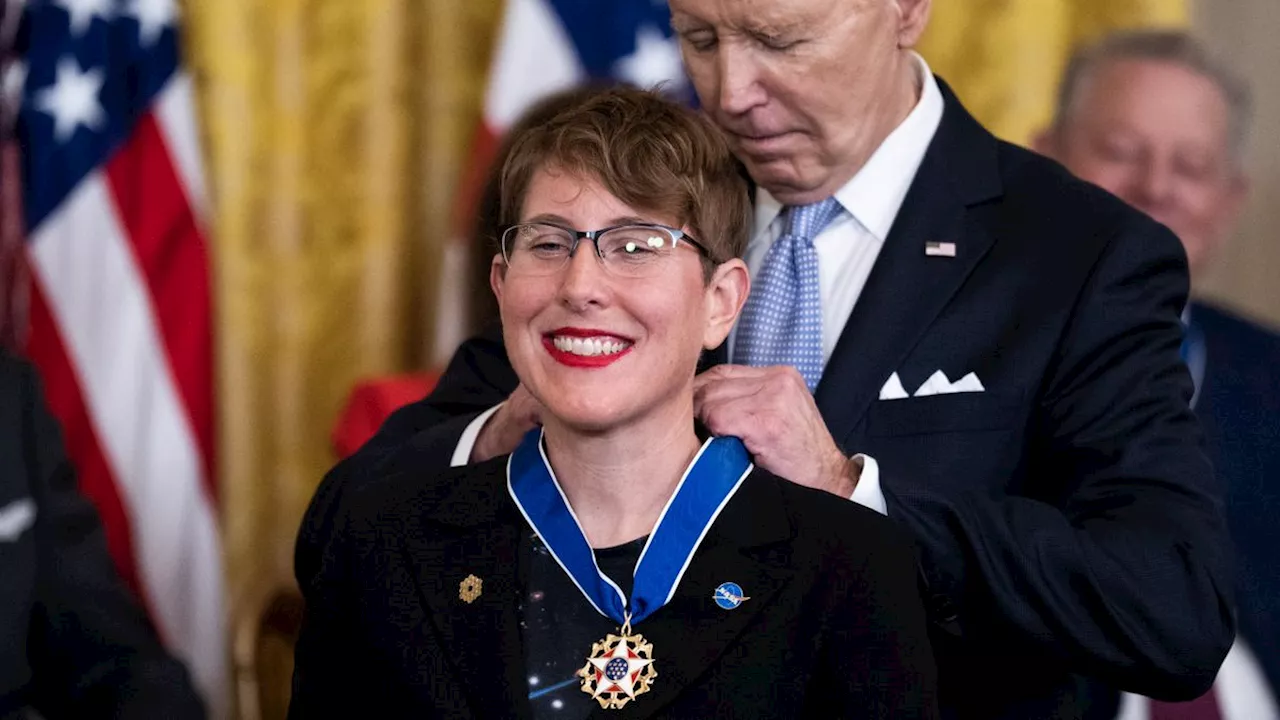 James Webb Space Telescope chief scientist Jane Rigby receives highest US civilian awardMonisha Ravisetti is Space.com's Astronomy Editor. She covers black holes, star explosions, gravitational waves, exoplanet discoveries and other enigmas hidden across the fabric of space and time. Previously, she was a science writer at CNET, and before that, reported for The Academic Times.
Read more »
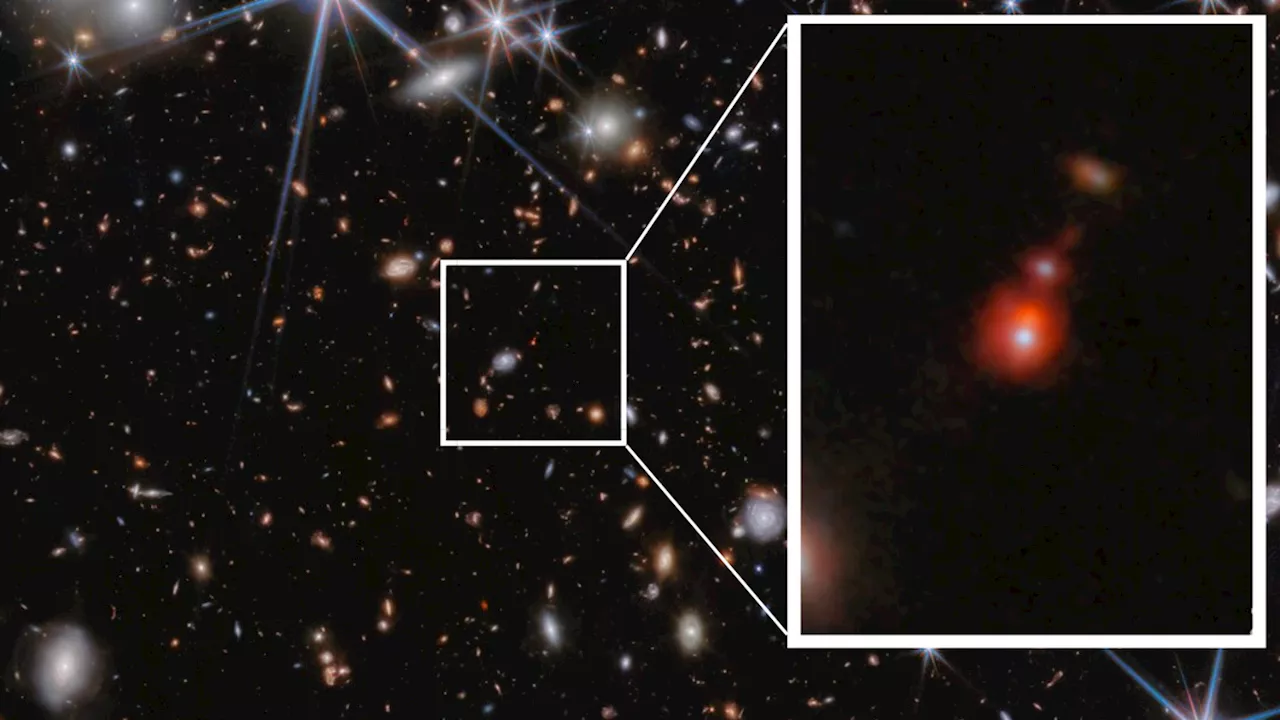 James Webb Space Telescope spots most distant and oldest black hole collision ever seen (video)Robert Lea is a science journalist in the U.K. whose articles have been published in Physics World, New Scientist, Astronomy Magazine, All About Space, Newsweek and ZME Science. He also writes about science communication for Elsevier and the European Journal of Physics. Rob holds a bachelor of science degree in physics and astronomy from the U.K.
Read more »