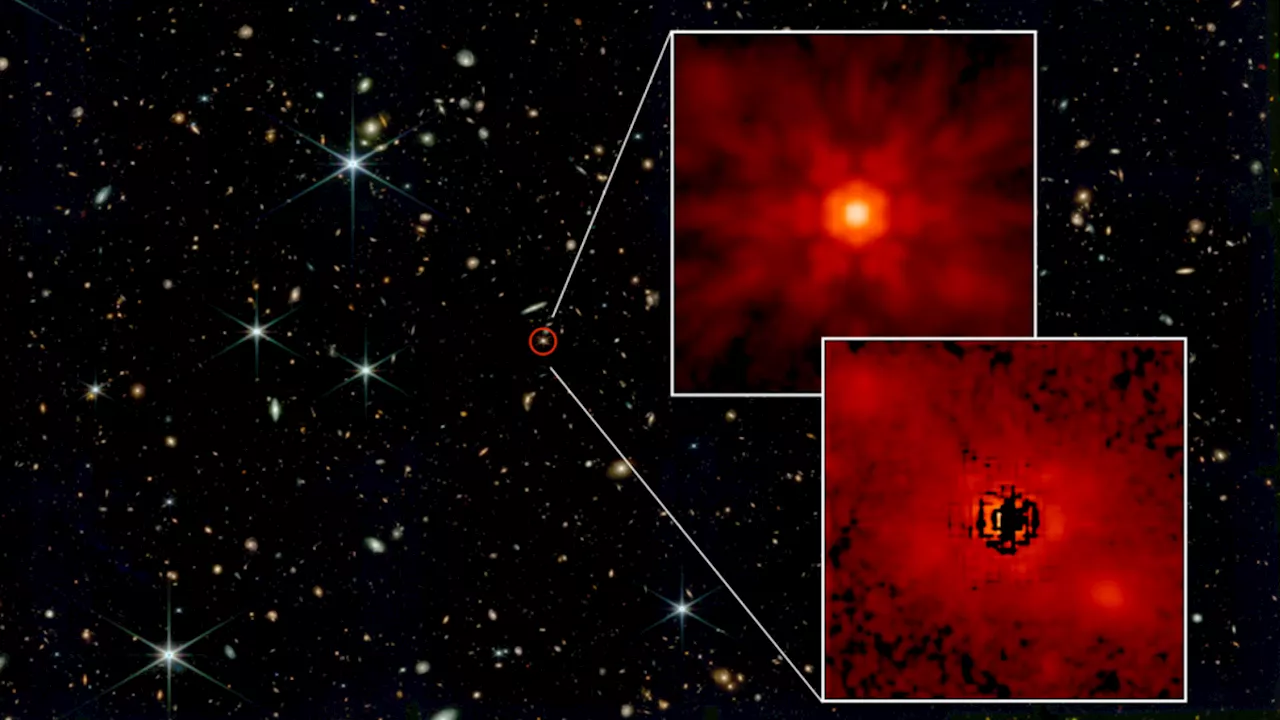
Robert Lea is a science journalist in the U.K. whose articles have been published in Physics World, New Scientist, Astronomy Magazine, All About Space, Newsweek and ZME Science. He also writes about science communication for Elsevier and the European Journal of Physics. Rob holds a bachelor of science degree in physics and astronomy from the U.K.
The James Webb Space Telescope has observed light from stars surrounding some of the earlier supermassive black holes in the universe — black holes seen as they were less than a billion years after the Big Bang.
The observations conducted by a team from the Massachusetts Institute of Technology addresses the question of how these cosmic titans that sit at the hearts of galaxies grew to tremendous masses, equivalent to millions of suns. More specifically, how did they grow so rapidly? The findings could also answer the riddle: What came first, the galaxy or the supermassive The supermassive black holes observed by the MIT team are insatiably feeding on surrounding material, generating immense tidal forces in a disk of matter called an. Quasars are among the most luminous objects in the cosmos, with some so bright they outshine the combined light of every star in the galaxies around them., by which scientists think supermassive black holes grow over time, should take many billions of years to proceed. So, how could these giant voids exist only about 1 billion years after the Big Bang? New view of the supermassive black hole at the heart of the Milky Way hints at an exciting hidden feature, the MIT team has, for the first time, collected evidence that supermassive black holes in the early universe indeed grew from heavy seeds.Breaking space news, the latest updates on rocket launches, skywatching events and more!Receive email from us on behalf of our trusted partners or sponsors "These black holes are billions of times more massive than the sun, at a time when the universe is still in its infancy," Anna-Christina Eilers, team member and assistant professor of physics at MIT,."Our results imply that in the early universe, supermassive black holes might have gained their mass before their host galaxies did, and the initial black hole seeds could have been more massive than today."Discovered in the 1960s, the intense brightness of quasars was initially believed to originate from a single, star-like point. This led to the name"quasar," which is a portmanteau of the term"quasi-stellar" object. Researchers soon found, however, that quasars are actually caused by vast amounts of matter getting accreted toHowever, these objects are also surrounded by stars, which are much fainter and more difficult to observe. That is because this stellar light is washed out by the brighter light of the quasar the stars orbit. Thus, separating out light from quasars and light from stars around them is no mean feat, akin to seeing the light of fireflies sitting on the lamp of a lighthouse around a mile away.than any prior telescope, coupled with its high sensitivity and resolution, has made this challenge less daunting, however. Thus, the MIT team managed to observe light that has been traveling to Earth for around 13 billion years from six quasars in ancient galaxies. "The quasar outshines its host galaxy by orders of magnitude. And previous images were not sharp enough to distinguish what the host galaxy with all its stars looks like," team member Minghao Yue, a postdoc at MIT's Kavli Institute for Astrophysics and Space Research, said."Now, for the first time, we are able to reveal the light from these stars by very carefully modeling JWST's much sharper images of those quasars."The JWST data included measurements of each of the six quasars' light emissions across a range of wavelengths. This information was then introduced to a computer model detailing how much of this light could be attributed to a compact point source — the accretion disk around the black hole — and how much can be attributed to a more diffuse source — the stars scattered around the galaxy. By splitting the light into two sources, the team was also able to infer the mass of both elements of these galaxies. This revealed that the supermassive black holes have masses equal to around 10% of the masses of the stars around them. While this might sound like a massive imbalance in favor of the stars, consider how in modern galaxies, central supermassive black holes have masses merely 0.1% that of the stars in their surrounding galaxies. "This tells us something about what grows first: Is it the black hole that grows first, and then the galaxy catches up? Or is it the galaxy and its stars that first grow, and they dominate and regulate the black hole’s growth?" Eilers said."We see that black holes in the early universe seem to be growing faster than their host galaxies. "After the universe came into existence, there were seed black holes that then consumed material and grew in a very short time. One of the big questions is to understand how those monster black holes could grow so big, so fast," Yue concluded."There must have been some mechanism to make a black hole gain their mass earlier than their host galaxy in those first billion years.to keep talking space on the latest missions, night sky and more! And if you have a news tip, correction or comment, let us know at: Robert Lea is a science journalist in the U.K. whose articles have been published in Physics World, New Scientist, Astronomy Magazine, All About Space, Newsweek and ZME Science. He also writes about science communication for Elsevier and the European Journal of Physics. Rob holds a bachelor of science degree in physics and astronomy from the U.K.’s Open University. Follow him on Twitter @sciencef1rst.
United States Latest News, United States Headlines
Similar News:You can also read news stories similar to this one that we have collected from other news sources.
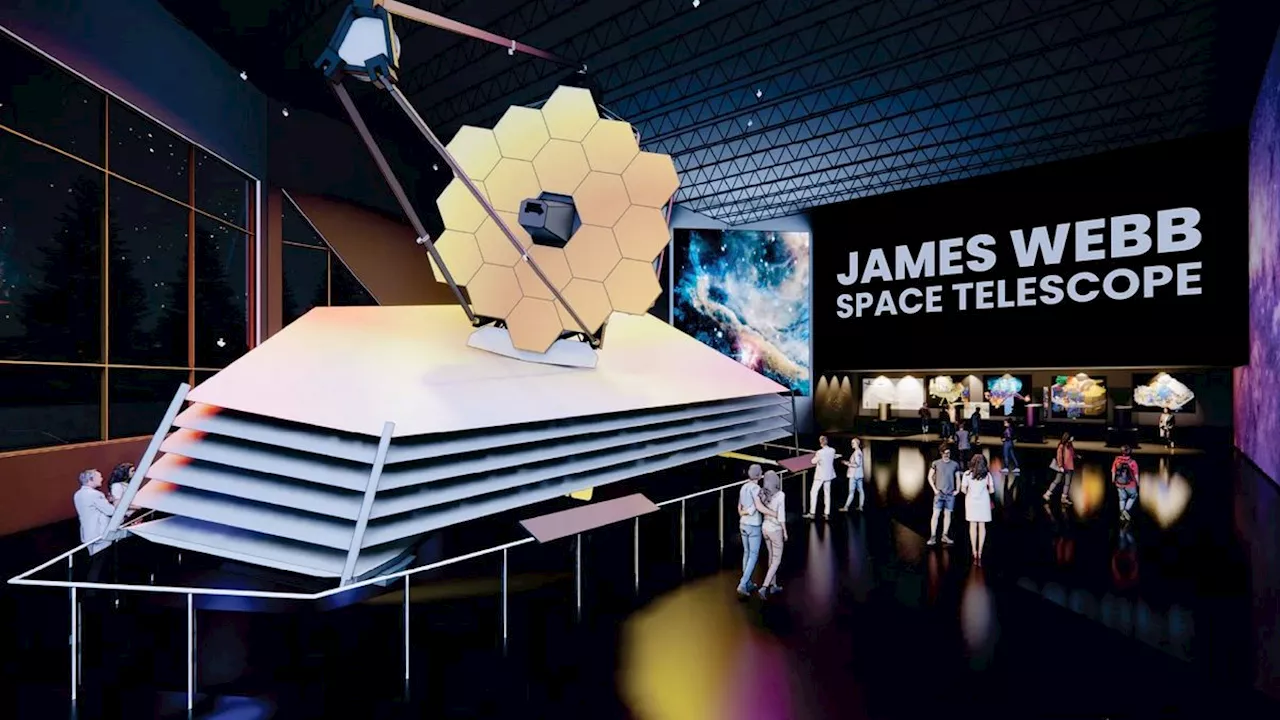 James Webb Space Telescope full-size model to be displayed by Space FoundationRobert Pearlman is a space historian, journalist and the founder and editor of collectSPACE.com, an online publication and community devoted to space history with a particular focus on how and where space exploration intersects with pop culture. Pearlman is also a contributing writer for Space.
Read more »
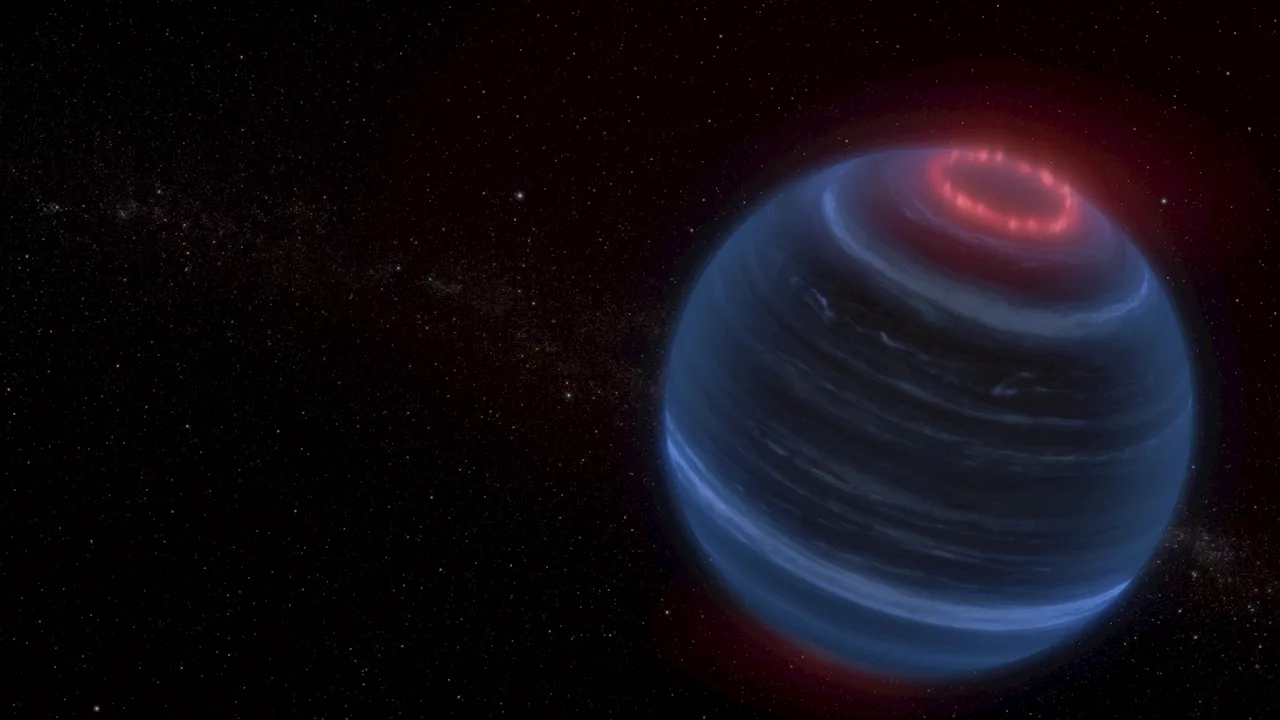 James Webb Space Telescope data pinpoint possible aurorae on a cold brown dwarfUsing new observations from the James Webb Space Telescope (JWST), astronomers have discovered methane emission on a brown dwarf, an unexpected finding for such a cold and isolated world.
Read more »
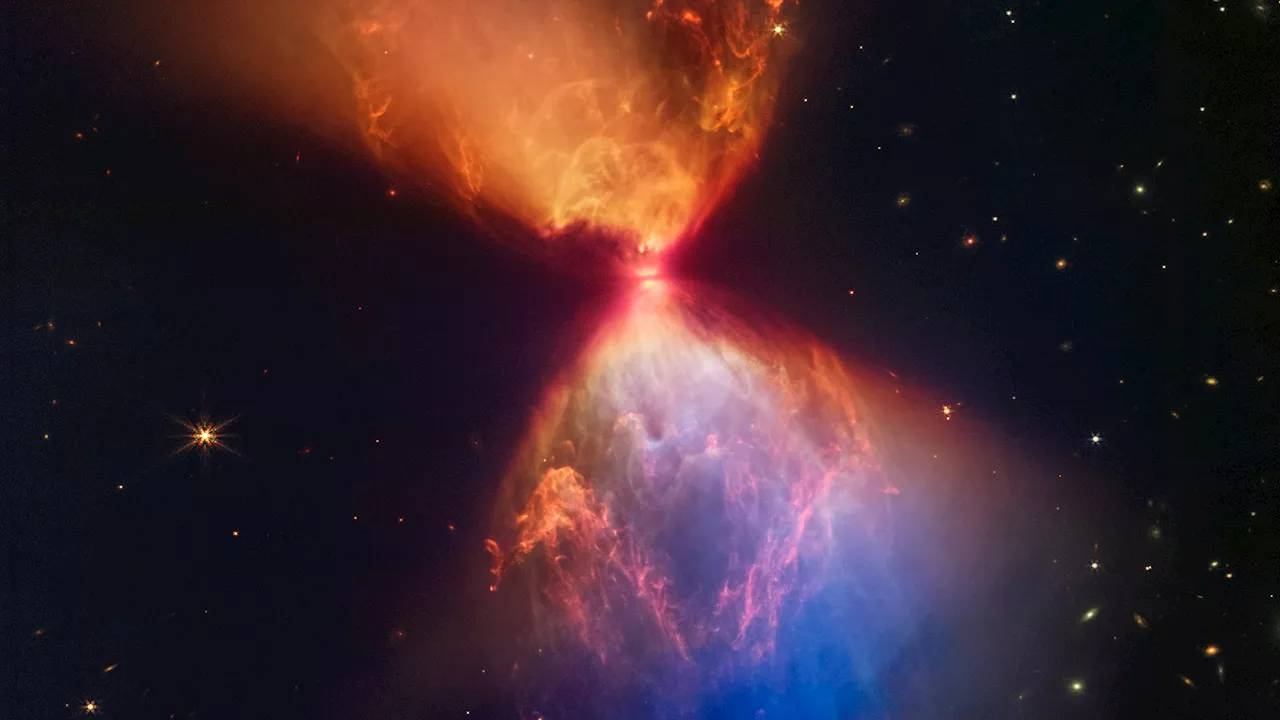 Plunge into an immersive IMAX movie featuring the James Webb Space TelescopeLaura is a science news writer, covering a wide variety of subjects, but she is particularly fascinated by all things aquatic, paleontology, nanotechnology, and exploring how science influences daily life. Laura is a proud former resident of the New Jersey shore, a competitive swimmer, and a fierce defender of the Oxford comma.
Read more »
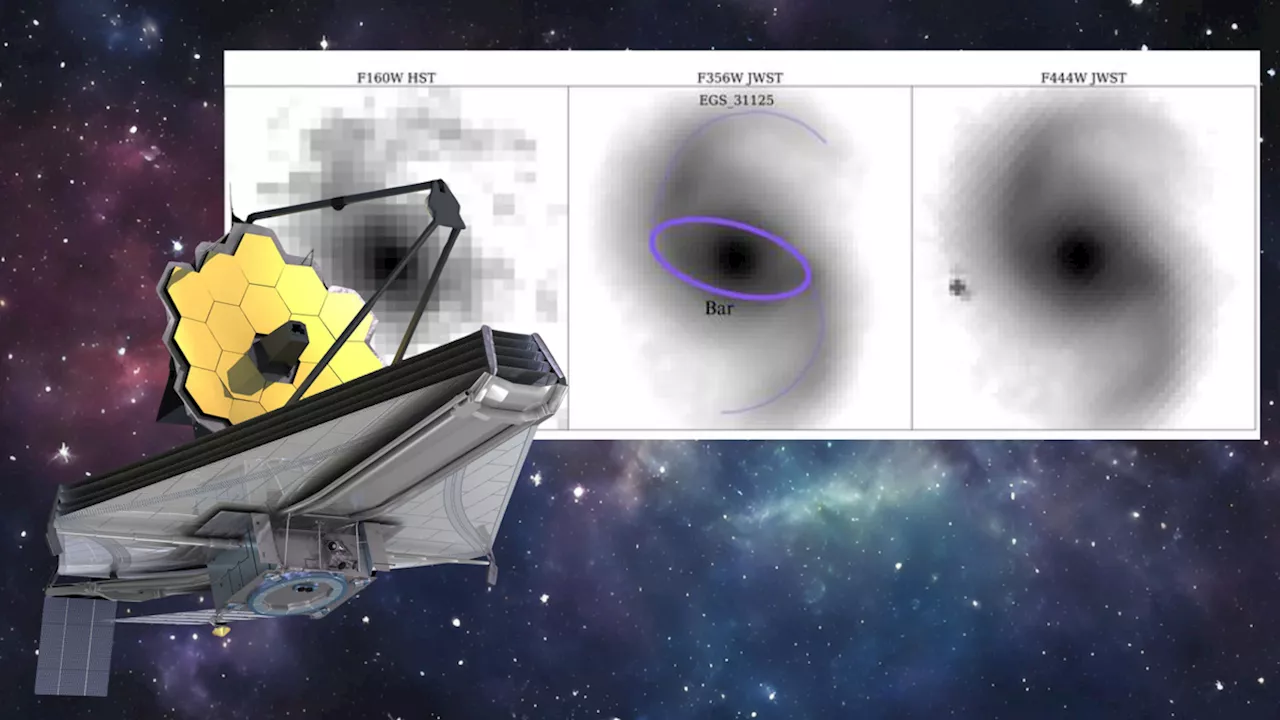 James Webb Space Telescope discovers some early universe galaxies grew up surprisingly fastRobert Lea is a science journalist in the U.K. whose articles have been published in Physics World, New Scientist, Astronomy Magazine, All About Space, Newsweek and ZME Science. He also writes about science communication for Elsevier and the European Journal of Physics. Rob holds a bachelor of science degree in physics and astronomy from the U.K.
Read more »
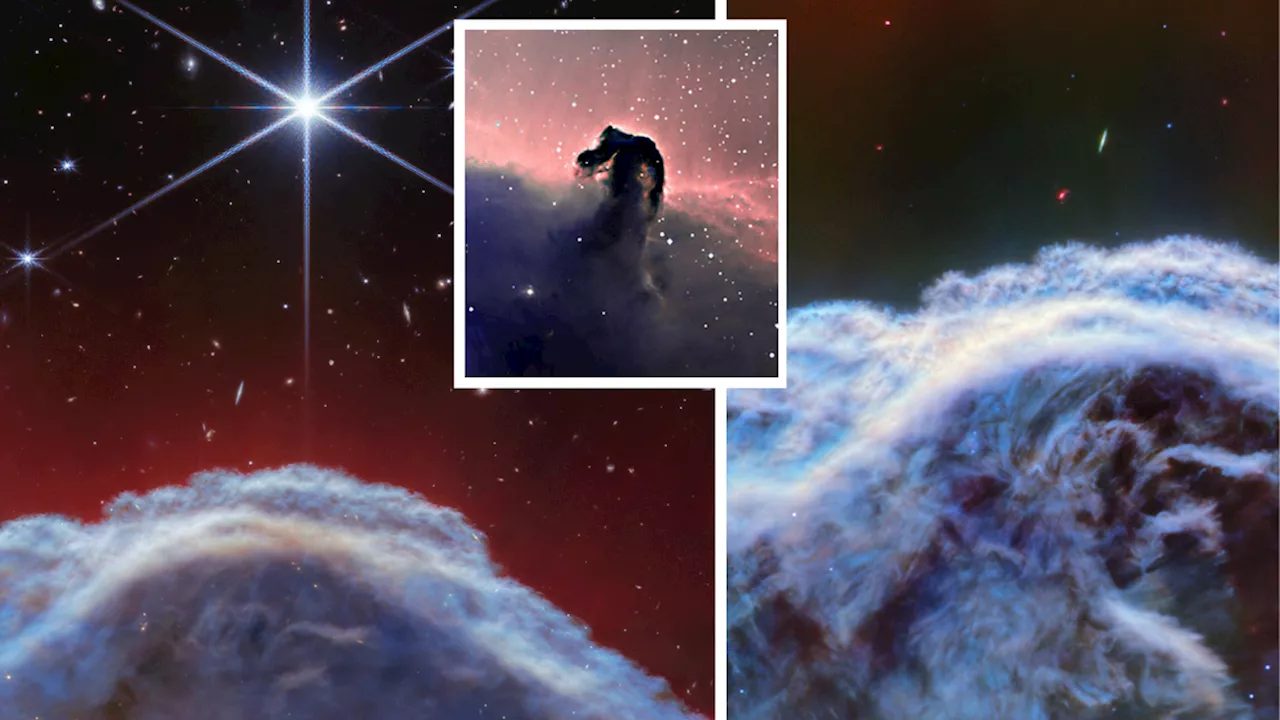 Horsehead Nebula rears its head in gorgeous new James Webb Space Telescope images (video)Robert Lea is a science journalist in the U.K. whose articles have been published in Physics World, New Scientist, Astronomy Magazine, All About Space, Newsweek and ZME Science. He also writes about science communication for Elsevier and the European Journal of Physics. Rob holds a bachelor of science degree in physics and astronomy from the U.K.
Read more »
 James Webb Space Telescope forecasts clouds of melted rock on this blisteringly hot exoplanetRobert Lea is a science journalist in the U.K. whose articles have been published in Physics World, New Scientist, Astronomy Magazine, All About Space, Newsweek and ZME Science. He also writes about science communication for Elsevier and the European Journal of Physics. Rob holds a bachelor of science degree in physics and astronomy from the U.K.
Read more »