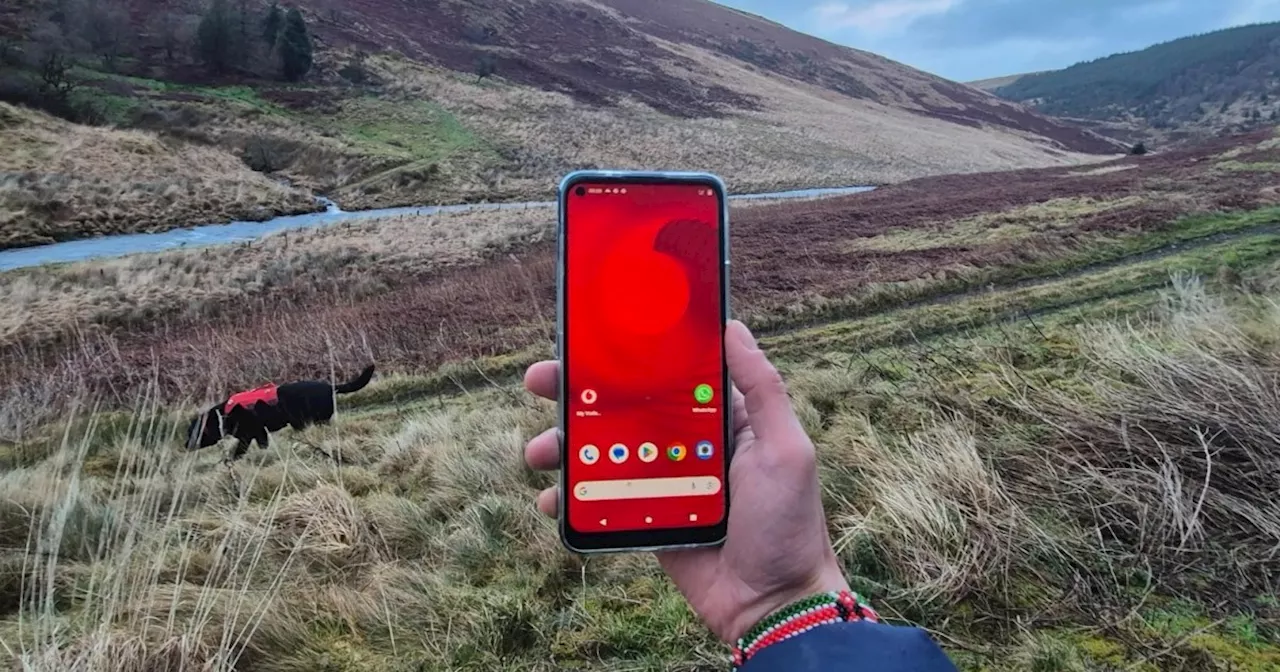
Vodafone has successfully tested a 'space video call' using a standard mobile phone and commercial satellites. This marks a significant step towards eliminating mobile coverage black spots and the company aims to offer commercial direct-to-smartphone broadband satellite service in the UK later this year and across Europe by 2026.
Table of Contents Global telecommunications company Vodafone has successfully tested a “space video call” using a standard mobile phone and commercial satellites. It’s an important step towards eliminating mobile coverage black spots, and the carrier hopes to offer the first commercial direct-to-smartphone broadband satellite service in the U.
K. later this year, and elsewhere in Europe sometime in 2026. To get here, however, various obstacles must be overcome. Why is this new? In recent years, companies like Apple, Samsung, and T-Mobile have begun offering satellite communication capabilities for smartphones and smartwatches. However, this feature is limited to specific devices and is intended for emergency use only. More importantly, it only allows users to send text messages to emergency services in areas without cellular or Wi-Fi coverage. Recommended Videos Vodafone is working to offer a complete mobile broadband experience for anyone without cellular or Wi-Fi coverage. Its first successful test came through a video call from a mountain in Ceredigion, west Wales. The team didn’t call the International Space Station though. Instead, Vodafone’s call, made in an area without any coverage, connected to a satellite which then sent it down to the terrestrial network, ready to connect to another device. The video below shows the call itself. Please enable Javascript to view this content As Vodafone CEO Margherita Della Valle explains, this service could eliminate “not spots,” sometimes called “blackspots,” where there’s currently no coverage. “It’s a really important moment because we are opening the door to universal connectivity, to connecting people in the U.K., wherever they are,” she said.Can this happen? Despite the company’s claims, Vodafone’s successful test doesn’t necessarily mean it will be available to consumers this year. As the BBC explains, Vodafone must overcome key regulatory issues before it can proceed. Additionally, astronomers warn the increasing number of satellites in orbit that might be required for direct-to-smartphone broadband satellite service could make it harder to study space. There’s also the question of price. To date, Vodafone has not mentioned what this type of service will cost. Typically, satellite communication can be expensive, making it cost-prohibitive to some users. Other obstacles have less to do with regulations and costs. For example, satellite connections typically have higher latency and lower bandwidth than terrestrial networks, affecting video call quality. Additionally, weather conditions can affect satellite signals, potentially disrupting video calls. Why this could be a big deal Satellite-enabled smartphone video calls have immense potential to revolutionize communication, provided that any existing obstacles can be addressed. One of the most significant advantages is the ability to bridge the digital divide, ultimately giving everyone access to the internet. This increased connectivity could promote social inclusion, stimulate economic development, and improve access to essential services such as education and healthcare. Additionally, these capabilities would enable travelers, explorers, and researchers in remote areas to stay connected with family, colleagues, and emergency services, enhancing their safety and peace of mind. Satellite-enabled smartphone video calls could facilitate better real-time communication in emergencies or disasters. They would allow for the transmission of visual information about the situation on the ground, helping emergency responders make informed decisions and allocate resources effectively. Vodafone isn’t the only company trying to perfect satellite video communication. In the U.S. T-Mobile is testing a satellite service along the same lines as Vodafone’s, while Apple introduced a satellite messaging feature with the iPhone 14, and MediaTek parterned with Motorola and the Bullitt Group to make the Defy Satellite Link dongle designed for emergency use.
SATELLITE COMMUNICATION MOBIL BROADBAND VODAFONE AST SPACEMOBILE DIGITAL DIVIDE
United States Latest News, United States Headlines
Similar News:You can also read news stories similar to this one that we have collected from other news sources.
 Space Junk Falls to Earth in Kenya, Identified by National Space AgencyA large, red-hot object fell from the sky into a Kenyan village on Monday, prompting an investigation by the Kenya Space Agency (KSA). The object has been identified as a fragment of a space object, believed to be a separation ring from a rocket. The KSA took custody of the 2.5-meter wide, 500 kg object, stating that it is likely an isolated case. The object is still under investigation.
Read more »
 Sierra Space CEO leaves, as $5 billion company pushes to launch space planeSierra Space CEO Tom Vice has left the company, CNBC confirmed Monday.
Read more »
 US Space Force's X-37B Space Plane Marks One Year in OrbitThe US Space Force's X-37B Orbital Test Vehicle has reached its one-year mark in space, performing groundbreaking aerobraking maneuvers to conserve fuel and change orbits.
Read more »
 Expert Not Convinced Mysterious, 8-Foot Ring of 'Space Junk' in Kenya Actually Came from SpaceScience and Technology News and Videos
Read more »
 SpaceX's Starship Makes Successful Booster Catch But Loses Contact in SpaceSpaceX's latest Starship launch test on Thursday saw a mixed outcome, with the company successfully recovering the first stage booster but losing communication with the main spacecraft during its ascent. This seventh test flight, featuring a redesigned upper stage and 33 Raptor engines, aimed to showcase Starship's capabilities as the company's most advanced and fully reusable launch vehicle.
Read more »
 Vodafone Achieves World's First Space Video Call Using Regular SmartphonesVodafone has made history by successfully conducting the world's first space video call using standard 4G and 5G smartphones. This groundbreaking achievement paves the way for global digital connectivity, enabling users in remote areas lacking traditional mobile coverage to access vital communication services.
Read more »