
When Alaska Natives debate proposals to drill and mine the landscape of the nation’s largest state, it involves more than an environmental or economic question.
Florida DOGE expected to be in Jacksonville for 2 days, looking into rising property values and growing annual property tax collectionsDOGE Deadline: State auditors arrive in Jacksonville after back-and-forth between state CFO, Mayor DeeganRead full article: Another day of humidity, showers and storms, but the 80s are back in the game!Next photo Gloria Simeon , co-founder of the Mother Kuskokwim Tribal Coalition, speaks during an interview outside her smokehouse in Bethel, Alaska, on June 18, 2025.
A pickup prepares to pass a pedestrian on a foggy gravel road in Bethel, Alaska, on June 18, 2025. FILE - The Trans-Alaska Pipeline at Pump Station 1 near Deadhorse, Alaska, on the state's North Slope, on Monday, June 2, 2025. FILE - This photo provided by the U.S. Fish and Wildlife Service shows the Porcupine caribou herd in the 1002 area of the Arctic National Wildlife Refuge coastal plain, with the Brooks Range mountains in the distance to the south, in 2008. Sophie Swope, executive director of the Mother Kuskokwim Tribal Coalition, poses for a portrait on the banks of the Kuskokwim River in Bethel, Alaska, on June 17, 2025. FILE - Demonstrators hold signs during a protest outside the annual Alaska Sustainable Energy Conference on Tuesday, June 3, 2025, in Anchorage, Alaska. Crosses are seen at the Ridgecrest Memorial Cemetery in Bethel, Alaska, on June 17, 2025. Gloria Simeon, co-founder of the Mother Kuskokwim Tribal Coalition, speaks during an interview outside her smokehouse in Bethel, Alaska, on June 18, 2025. – Fish camps still dot the banks of the broad Kuskokwim River in southwestern Alaska. Wooden huts and tarped shelters stand beside drying racks draped with bright red strips of salmon, which Alaska Native families have harvested for generations and preserved for the bitter winters ahead. But the once-abundant salmon populations have declined so sharply in recent years that authorities have severely restricted subsistence fishing on Alaska’s second-longest river. They’ve imposed even tighter restrictions on the longerVarious factors are blamed for the salmon collapse, from climate change to commercial fishing practices. What’s clear is the impact is not just on food but on long-standing rituals — fish camps where elders transmit skills and stories to younger generations while bonding over a sacred connection to the land. “Our families are together for that single-minded purpose of providing for our survival,” said Gloria Simeon, a Yup’ik resident of Bethel. “It’s the college of fish camp.”to drill, mine or otherwise develop the landscape of the nation’s largest state, it involves more than an environmental or economic question. It’s also “We have a special spiritual, religious relationship to our river and our land,” said Simeon, standing outside her backyard smokehouse where she uses birch-bark kindling and cottonwood logs to preserve this year’s salmon catch. “Our people have been stewards of this land for millennia, and we’ve taken that relationship seriously.”Such debates are simmering across the state’s vast tundra, broad rivers, sprawling wetlands and towering mountain ranges. Put a pin just about anywhere on the map of Alaska, and you’re likely to hit an area debating a proposed mine, a new wilderness road, a logging site, an oil well, a natural gas pipeline. More than 1 in 5 Alaskans identify as Alaska Native or American Indian alone or in combination with another racial group, the highest ratio of any state, according to 2020 U.S. Census figures. Alaska Natives include Aleut, Athabascan, Iñupiat, Tlingit, Yup’ik and other groups. For all their diversity, they share a history in the region dating back thousands of years, as well as cultural and spiritual traditions, including those closely associated with subsistence hunting and gathering. Native leaders and activists are divided about extraction projects. Supporters say they bring jobs and pay for infrastructure. Opponents say they imperil the environment and their traditions. Tribal members sometimes even find themselves on opposite sides of the same proposal. Native-run corporations — formed to benefit Alaska Native shareholders — are supporting a mine in southwestern Alaska that a regional tribal coalition opposes, a scenario similar to an oil exploration project underway in Interior Alaska. Trump singled out Alaska as a priority for extraction projects in an executive order signed on his first day in office. “Unlocking this bounty of natural wealth will raise the prosperity of our citizens while helping to enhance our Nation’s economic and national security,” the order said.in June to Prudhoe Bay in Alaska’s far north — an aging oil field that is one of the largest in North America. They touted goals of doubling the oil coursing through Alaska’s existing pipeline system and building a massive natural gas pipeline as its “big, beautiful twin.” Trump’s policy shifts came even as he removed one of the most prominent Alaska Native names from the official map. He returned the federal name of “Mount McKinley” to the largest mountain in Alaska and North America. For all their disputes over extraction, Native andremains uncertain. Limited infrastructure and harsh weather raise costs. No major oil company bid during the only two lease sales offered to date in the Arctic refuge. But the measures pushed by the new administration and Congress amount to the latest pendulum swing between Republican and Democratic presidents, between policies prioritizing extraction and environmental protections. The budget bill calls for additional lease sales in the National Petroleum Reserve-Alaska, west of the Arctic refuge, and opening more areas to potential leasing than authorized under recent Democratic administrations. Alaska’s political leaders generally have cheered on the push for more extraction, including its Republican congressional delegation and its governor, who has called his state “America’s natural resource warehouse.” So have some Native leaders, who say their communities stand to benefit from jobs and revenues. They say such projects are critical to their economic prospects and self-determination, providing jobs and helping their communities pay for schools, streets and snow removal. They’ve accused the previous administration of President Joe Biden of ignoring their voices. “We need jobs. Our people need training, to stand on our own two feet. Our kids need a future,” said PJ Simon, first chief of the Allakaket Tribal Council. He said communities can maintain their traditions while benefiting from economic development — but that it’s crucial that public officials and businesses include them in the planning. “Native people want to be heard, not pushed aside,” Simon said. Mayor Nathan Gordon Jr. of Kaktovik, the only community within the Arctic refuge, applauded the budget bill. It enables Kaktovik “to strengthen our community, preserve our cultural traditions, and ensure that we can remain in our homelands for years to come,” he said in a statement issued by Voice of the Arctic Iñupiat, a group advocating for oil exploration.But Native opponents of such projects say short-term economic gains come at the risk of long-term environmental impacts that will reverberate widely. “We’re kind of viewed as the last frontier, like we have unlimited resources,” said Sophie Swope, executive director of the environmental advocacy group Mother Kuskokwim Tribal Coalition. She said Alaska’s most renewable resources — such as salmon, deer and other migratory wildlife — are threatened both by overly aggressive ocean fishing and by extractive industries.Opponents of oil drilling in the Arctic refuge fear it will permanently disrupt the long-range migration of caribou, which Native people have hunted for millennia. The Tanana Chiefs Conference, a coalition representing dozens of tribes in Alaska’s interior south of the refuge, has long opposed the drilling. A massive caribou herd goes to the refuge’s coastal plain to calve in the spring before fanning out across a wider area, providing a crucial food source for Native hunters in Alaska and Canada. If the herd’s migration is disrupted, opponents fear an impact similar to the salmon collapse — a loss not just of food but of a focal point of culture and spirituality. While the source of the salmon crisis is uncertain, researchers say possible causes include the impacts of commercial fishing, disease, warming waters, other environmental changes and competition between wild and hatchery-reared fish. In a June policy brief, Indigenous leaders, scientists and policy experts called for further study and for easing the disproportionate impact of the crisis on subsistence fishermen.It has meant “no fish camps, no traditional knowledge that’s been passed down to our younger generation,” said Kristen Moreland, executive director of the Fairbanks-based advocacy group Gwich’in Steering Committee. Moreland said she regularly takes her children to her home village in the north to reconnect with traditional festivals and activities, including those centered around the caribou hunt: “They learn all our traditional knowledge that way. What if the caribou doesn’t migrate up there anymore?” The yearslong battle over the refuge takes its toll, she said. “How long do we have to advocate for our land and our people?” Chief Brian Ridley of the Tanana Chiefs Conference said he sympathizes with those tribal leaders supporting development, given the shortage of well-paying jobs in many villages. But concern over potential long-term environmental damage has prompted the conference to oppose projects such as oil drilling in the Arctic refuge and the nearer Yukon Flats, as well as construction of the so-called Ambler Road, which could open access to mining in more remote areas. Ridley said he recently attended a national conference with other tribal leaders who echoed a common theme — opposing “development projects on our land or near our land that come in and promise jobs and whatnot, and they come and go and then we get stuck with the long-term negative aspects of cleanup and restoration.”In southwestern Alaska, a proposed major mine, the Donlin Gold project, has long been debated. The project, planned by private investors in cooperation with Native corporations owning the land and mineral rights, would require a massive dam to hold back millions of tons of mineral and chemical waste in a valley. Project proponents say the dam will involve state-of-the-art design, with its wide base anchored to bedrock and the surrounding mountain walls incorporated into containing the debris. Proponents tout benefits including jobs, shareholder payments and funds for such things as village services and education. “This kind of project, since it’s on our lands, is different than most other resource projects,” said Thomas Leonard, vice president of corporate affairs for Calista Corp., a regional Alaska Native corporation involved. “We literally have a seat at the table, have a voice in the project.” But opponents, such as Mother Kuskokwim and some area tribes, aren’t convinced and say the risk of a failure on the Kuskokwim watershed is too great. “Protecting the river and the land and the Earth is part of the partnership and the relationship that we have as caregivers,” Simeon said. That relationship isn’t abstract, Simeon said. She said the disruption of communal hunting and fishing activities leads to a spiritual rootlessness that she believes contributes to alarming rates of addictions and suicide among Alaska Native people. “What does it do to your heart and soul when you have to look at an empty smokehouse year after year after year, and you can’t provide for your family?” Simeon said.Copyright 2025 The Associated Press. All rights reserved. This material may not be published, broadcast, rewritten or redistributed without permission.
Thomas Leonard Nathan Gordon Jr. Gloria Simeon Climate Joe Biden Ethnicity Environment Race Politics Religion U.S. News Kristen Moreland Donald Trump Brian Ridley
United States Latest News, United States Headlines
Similar News:You can also read news stories similar to this one that we have collected from other news sources.
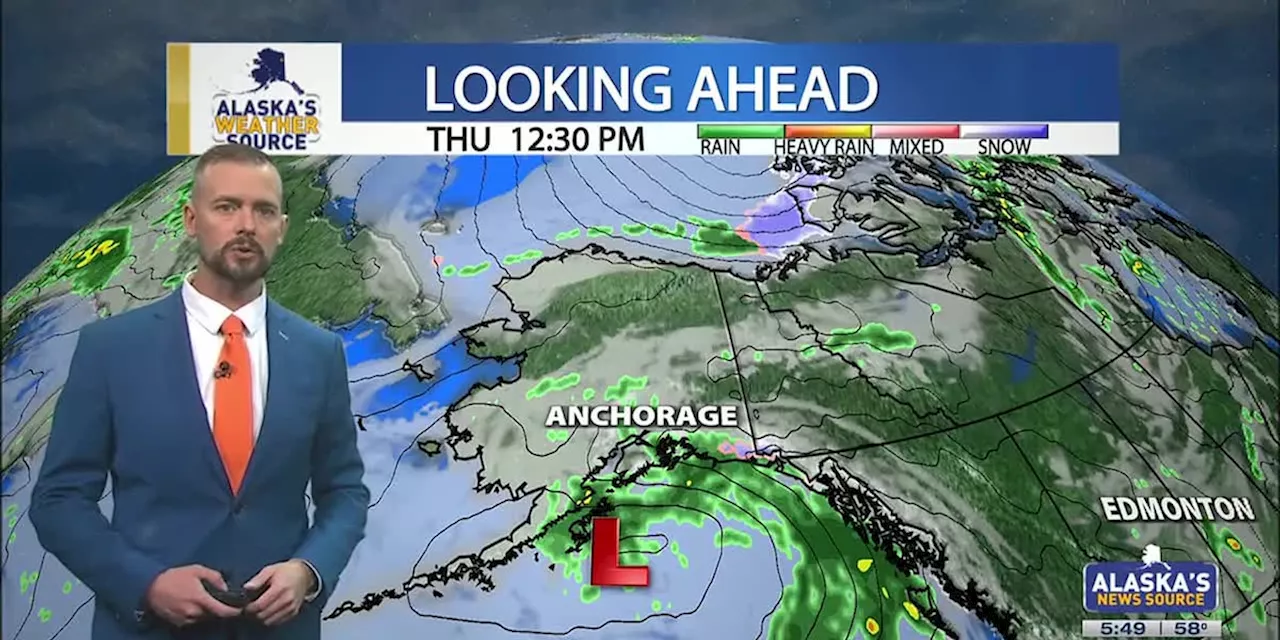 Cold front draped across the state driving in cooler air and heavy rain for InteriorToday's Alaska weather forecast from Alaska's Weather Source.
Read more »
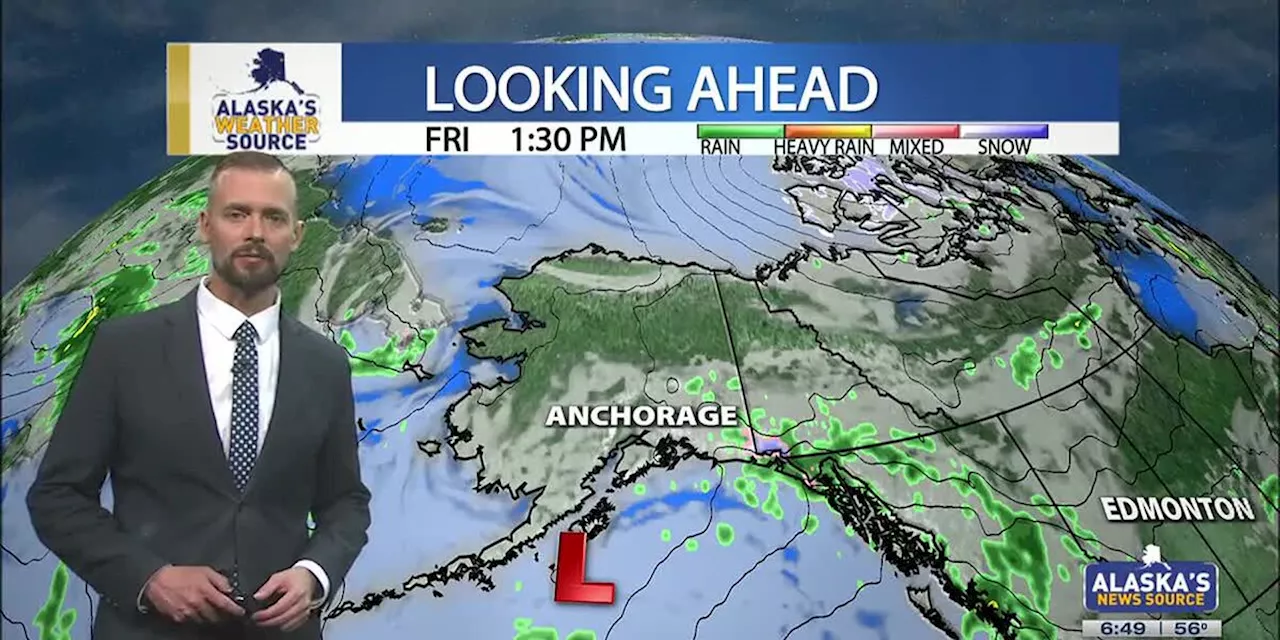 Record rain for Fairbanks, with heavy rain set to return to SoutheastToday's Alaska weather forecast from Alaska's Weather Source.
Read more »
 Trump's EPA could revive controversial Pebble Mine in southwest AlaskaA document filed in Northern Dynasty's pending lawsuit to get a prior EPA veto of the project thrown out says the company and the agency are discussing a possible settlement.
Read more »
 Trump signs into law bills long sought by Alaska congressional delegation to benefit Alaska NativesThe measures had been unanimously supported by Alaska’s congressional delegation.
Read more »
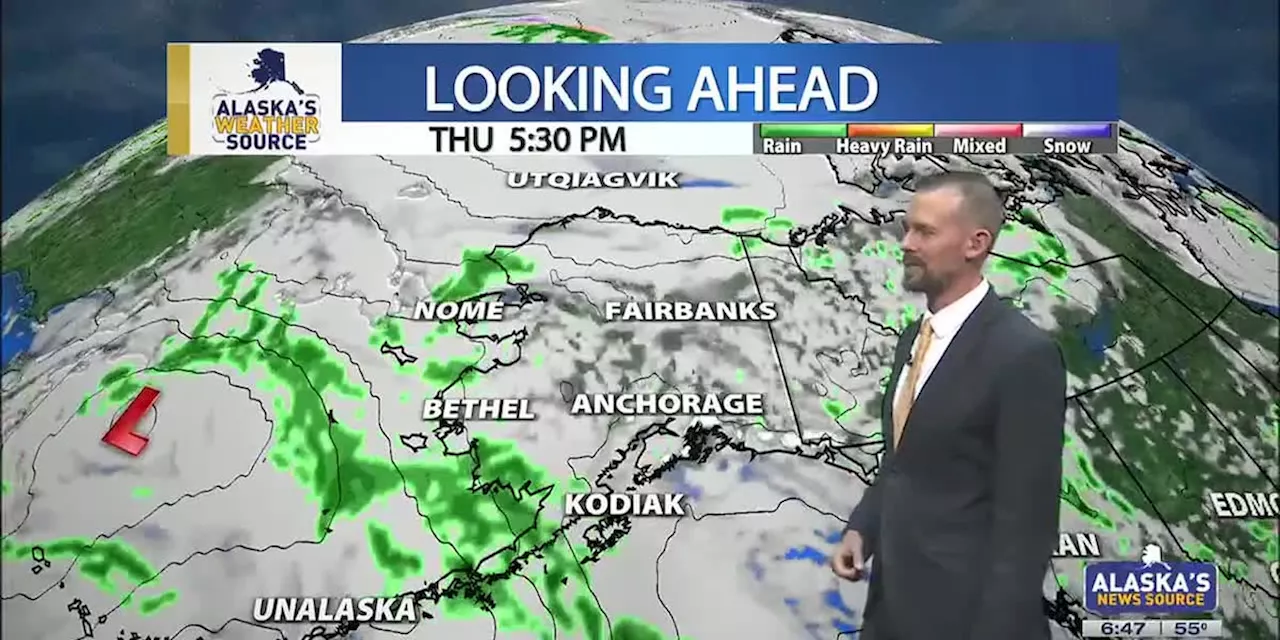 Wetter weather out west, with possible rain showers Friday for SouthcentralToday's Alaska weather forecast from Alaska's Weather Source.
Read more »
 3 Alaska school districts join lawsuit against Trump administration over federal education funding freezeThe Anchorage, Fairbanks North Star Borough and Kuspuk school districts were among 14 plaintiffs in a suit seeking the release of $6 billion in federal education funding.
Read more »