
A wave of technological transformation has been reshaping the landscape of HR and recruitment, with the emergence of artificial intelligence (AI) promising efficiency, accuracy, and unbiased decision-making.
Amid the rapid adoption of AI technology by HR departments, a joint study conducted by NUS Business School, the International Institute for Management Development , and The Hong Kong Polytechnic University delved into a vital question: How do jobseekers perceive AI's role in the selection andAssociate Professor Jayanth Narayanan from NUS Business School shared that the genesis of this subject emerged from a personal anecdote.
"A close friend of mine who had been unwell was evaluated for a role using a video interviewing software," said Professor Jayanth. The software provided feedback that the interviewee did not seem enthusiastic during the video interview. Professor Jayanth expressed that such an outcome would likely not have transpired had a human interviewer been present. A human evaluator, endowed with perceptiveness, could have discerned signs of illness and conceivably asked about the candidate's well-being."A human interviewer may even conclude that if the candidate is sick and still making such a valiant effort, they deserve a positive evaluation," he added.The study, which was conducted from 2017 to 2018, involved over 1,000 participants of various nationalities mostly in their mid-30s. The participants were recruited from Amazon's crowd-sourcing platform Mechanical Turk and were involved in four scenario experiments to examine how people perceive the use of computer algorithms in a recruitment context. The first two experiments studied how the use of algorithms affects the perception of fairness among job applicants in the, while the remaining two sought to understand the reasons behind the lower fairness score. According to the findings, jobseekers viewed the use of AI in recruitment processes as untrustworthy and perceived algorithmic decision-making to be less fair than human-assisted methods. They also perceived a higher degree of fairness when humans are involved in the resume screening and hiring decision process, as compared to an entirely algorithmic approach. This observation remains consistent even among candidates who experienced successful outcomes inThe disparity in perceived fairness is largely attributed to AI's limitations in recognizing the unique attributes of candidates. In contrast to human recruiters, who are more likely to pick up qualitative nuances that set each candidate apart, AI systems can overlook important qualities and potentially screen out good candidates. These findings challenge the widely-held belief that algorithms provide fairer evaluations and eliminate human biases.In balancing AI technology and the human touch in the recruitment process, Professor Jayanth advocates for a collaborative approach, envisioning algorithms as decision co-pilots alongside human recruiters. "For example, algorithms can flag that the recruiter is not shortlisting enough women or people from a minority group. Algorithms can also flag the uniqueness of a candidate compared to other applicants," said Professor Jayanth. Considering the trajectory of AI technology, Professor Jayanth forecasts an imminent surge in its prevalence and accessibility in thespace. However, he underscores the significance of human oversight, suggesting that while algorithms are set to play an essential role, the core responsibility of evaluating fellow humans for job suitability should remain within human purview. "Why would we give up an important aspect of organizational life to an algorithm? Humanity needs to make conscious and mindful choices on how and why we automate. If we simply use the logic that we can automate anything that will result in , we are going to find that we will automate tasks that are inherently enjoyable for humans to do," he said.Maude Lavanchy et al, Applicants' Fairness Perceptions of Algorithm-Driven Hiring Procedures,
United States Latest News, United States Headlines
Similar News:You can also read news stories similar to this one that we have collected from other news sources.
 Study: ‘Forever Chemicals’ show up in nearly half the nation’s drinking waterPFAS have linked to numerous health issues, and a federal study estimates the drinking water of nearly half of U.S. households may contain the chemcials.
Read more »
 Gene Therapy Rewired Monkey's Brains to Treat Alcohol Use Disorder, Study FindsGene therapy used to increase dopamine production in macaque monkeys showed promising results for those who struggle with alcohol use disorder.
Read more »
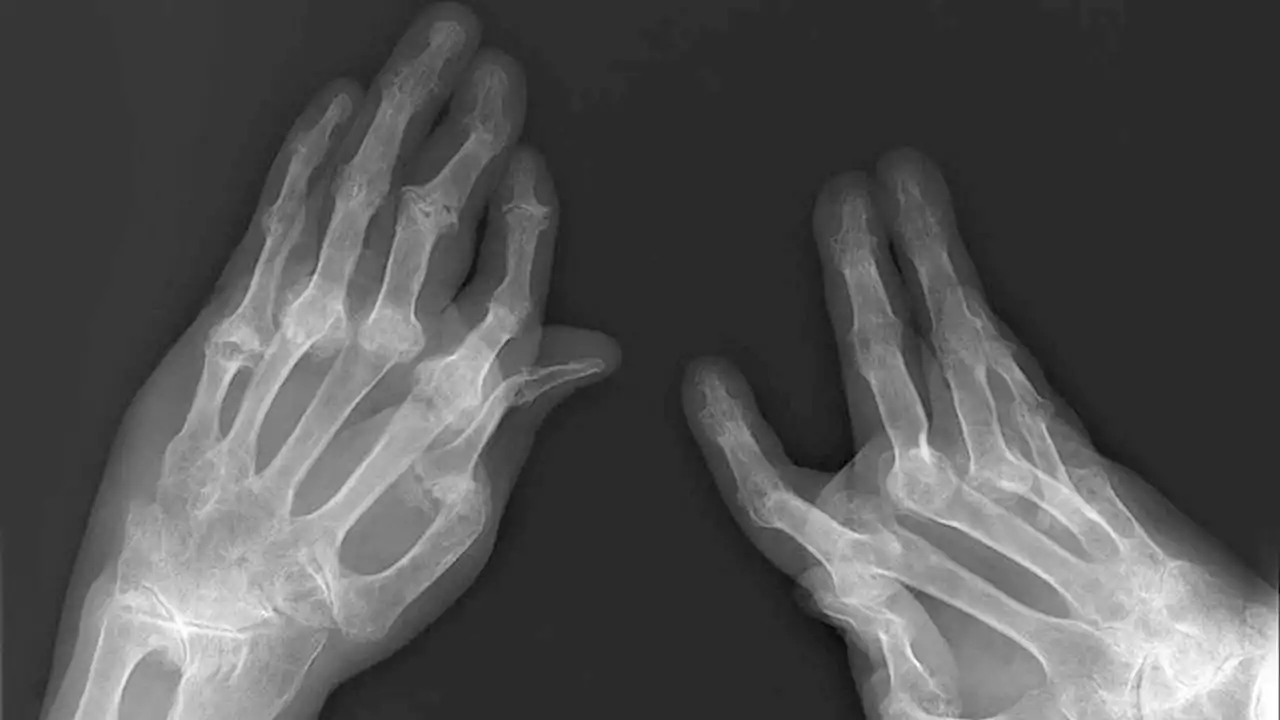 Study Validates New Psoriatic Arthritis Prediction ToolA new predictive tool known as the Psoriatic Arthritis Risk Estimation Tool (PRESTO) is now available to help clinicians estimate the risk of psoriaticarthritis in their patients with psoriasis. PsA
Read more »
 Many Americans wrongly believe exposure to marijuana smoke is safer than tobacco, study findsA survey of American adults found that many erroneously believe it is safer for the lungs to smoke weed than tobacco, and that any secondhand smoke from marijuana is also safer.
Read more »
 Schizophrenia Drugs May Have Been Off Target For Decades, Study FindsA study that peered into live mouse brains suggests for nearly 70 years we've been targeting the wrong neurons in our design of antipsychotic drugs.
Read more »
 Grateful Bible StudyDive into the Bible's teachings on thankfulness and cultivate a heart that overflows with appreciation with our new Bible study, Grateful. Discover how even in challenging times, gratitude can transform your perspective.
Read more »