
SpaceX's Starship rocket exploded during its ascent Thursday, prompting a Federal Aviation Administration investigation. The rocket, which was undertaking a test flight from the company's Starbase facility in South Texas, was intended to land in the Indian Ocean. Instead, it suffered a rapid unscheduled disassembly shortly after liftoff, sending debris falling over Turks and Caicos. The FAA is working with SpaceX and local authorities to assess any damage, and some flights were temporarily delayed due to the debris field.
The Federal Aviation Administration (FAA) has mandated a mishap investigation by SpaceX following the explosion of a Starship over Turks and Caicos during the company's launch on Thursday. The SpaceX Starship embarked on a test flight from the company's Starbase facility in South Texas, with the intention of landing in the Indian Ocean. However, shortly after liftoff, a company spokesperson during the launch's livestream indicated that the Starship was encountering difficulties.
They noted that the ship's engines began to fail prematurely before their scheduled cutoff point, ultimately ceasing to transmit telemetry data. The FAA confirmed that there were no reports of injuries resulting from the explosion. The agency is collaborating with SpaceX and authorities in Turks and Caicos to ascertain the extent of any potential property damage. In response to the incident, the FAA activated a debris response area, leading to delays for flights entering and departing near the location where debris was falling. The agency stated that some flights were diverted due to low fuel levels while they were held.SpaceX acknowledged the incident in a social media statement, stating, 'Starship experienced a rapid unscheduled disassembly during its ascent burn. Teams will continue to review data from today's flight test to better understand the root cause. With a test like this, success comes from what we learn, and today’s flight will help us improve Starship’s reliability.' SpaceX CEO Elon Musk further elaborated on the cause of the explosion, suggesting a leak above the engine firewall. On X, he stated, 'Preliminary indication is that we had an oxygen/fuel leak in the cavity above the ship engine firewall that was large enough to build pressure in excess of the vent capacity.' He added, 'Apart from obviously double-checking for leaks, we will add fire suppression to that volume and probably increase vent area. Nothing so far suggests pushing next launch past next month.'The FAA emphasized that a return to flight is contingent upon their determination that any system, process, or procedure associated with the mishap does not pose a risk to public safety. According to the FAA, a mishap investigation is designed to enhance public safety, pinpoint the root cause of the event, and identify corrective actions to prevent its recurrence. The agency maintains safety inspectors who monitor all stages of commercial space flight.Despite the setback, SpaceX achieved a significant milestone during the launch. The company's Super Heavy booster was successfully guided back to the launch site and captured by the Mechazilla tower. This marked the second successful 'chopsticks' catch for SpaceX. The company's strategy of catching its boosters aims to enable their reuse.
Spacex Starship Explosion Federal Aviation Administration Turks And Caicos Debris Super Heavy Booster Mechazilla Elon Musk
United States Latest News, United States Headlines
Similar News:You can also read news stories similar to this one that we have collected from other news sources.
 SpaceX's Starship Explodes on Ascent, Booster Lands SafelySpaceX successfully landed the Super Heavy booster stage of its Starship rocket on Thursday, but the upper stage spacecraft was lost after experiencing unexpected engine shutdowns or failures. Telemetry from the Starship was lost eight minutes and 27 seconds after launch, and SpaceX later confirmed its destruction. The Federal Aviation Administration reported that the launch caused temporary delays in airline traffic at Miami and Fort Lauderdale airports due to falling debris.
Read more »
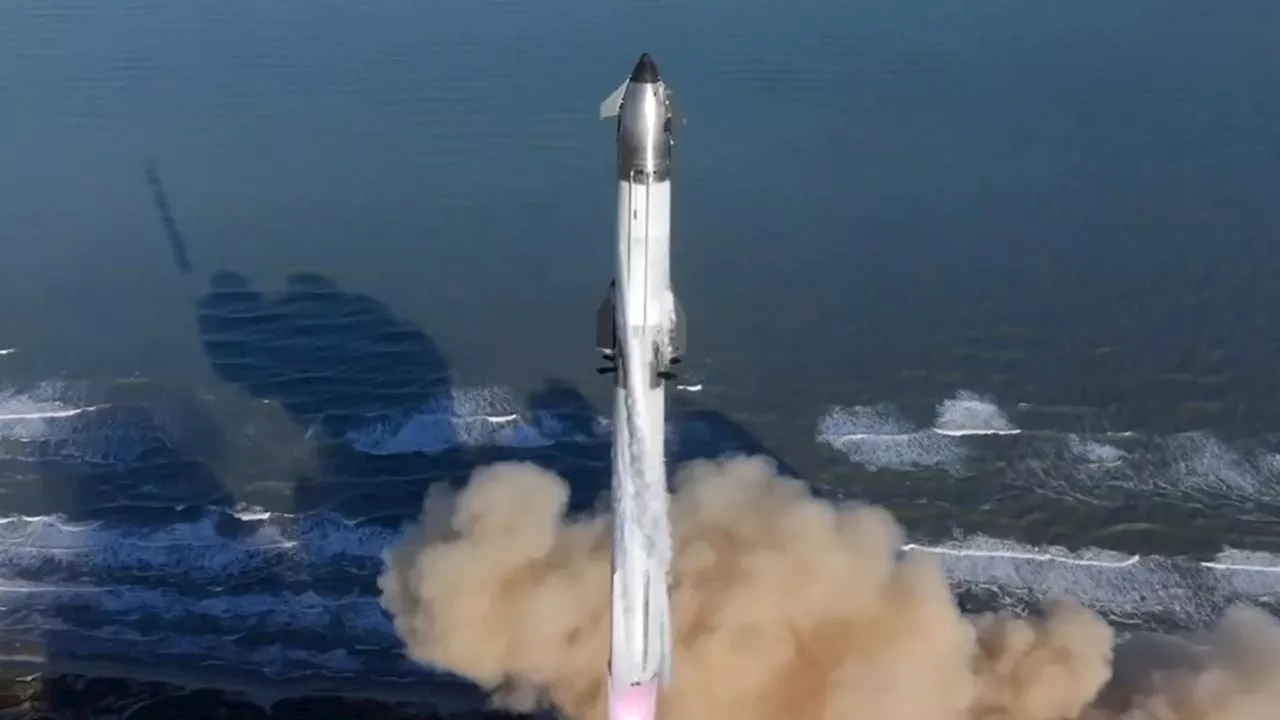 SpaceX Starship Explodes During Test FlightSpaceX's Starship spacecraft experienced a catastrophic failure during its first integrated flight test on Thursday, exploding shortly after liftoff. While the test ultimately ended in disaster, SpaceX highlighted the valuable data gleaned from the event, emphasizing that success comes from learning from failures. The company plans to analyze the data to pinpoint the cause of the explosion and improve the reliability of future Starship flights.
Read more »
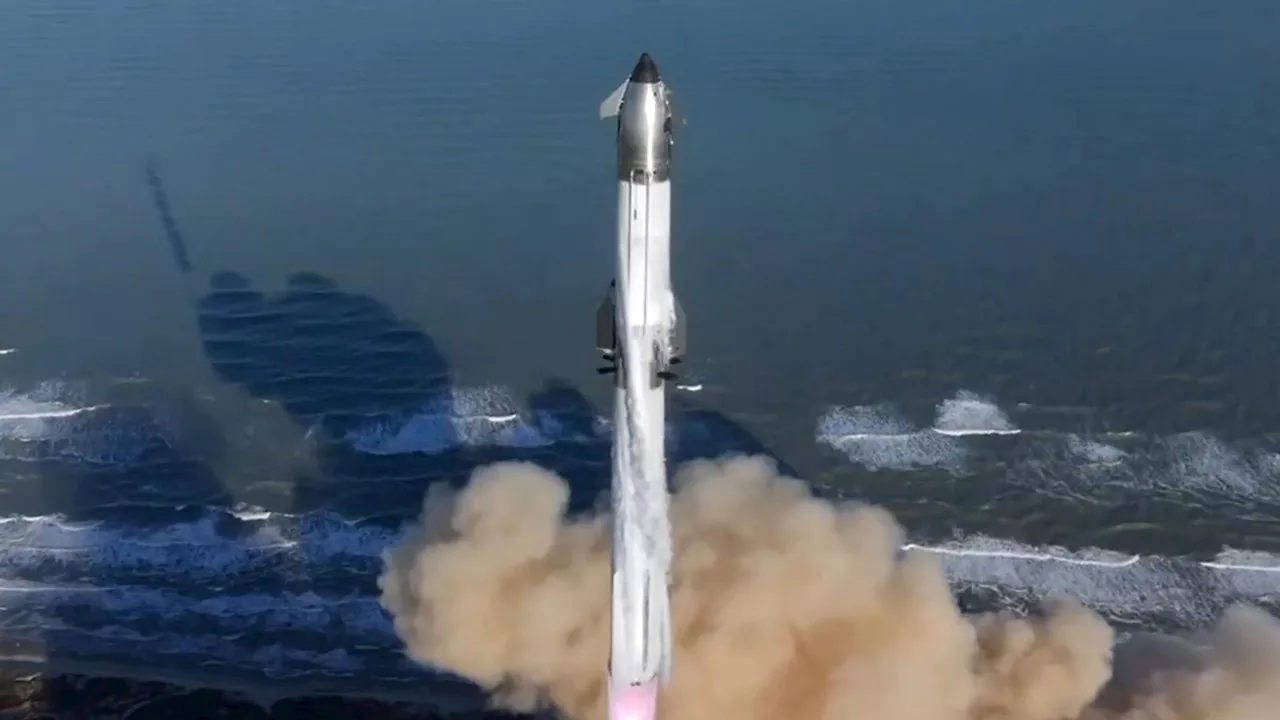 SpaceX Starship explodes in 'rapid unscheduled disassembly,' company saysA SpaceX spacecraft exploded during a test flight on Thursday.
Read more »
 SpaceX Starship Explodes on Dramatic Test FlightSpaceX's Starship suffered a rapid unscheduled disassembly shortly after liftoff during its latest test flight, despite a successful booster catch. The new and upgraded spacecraft lost contact just 8.5 minutes into the ascent, with its six engines appearing to shut down sequentially. Although SpaceX managed to catch the returning booster using the launch tower's giant mechanical arms, the spacecraft itself broke apart over the Atlantic Ocean.
Read more »
 SpaceX's Starship explodes during ascent in its seventh test flightMariella Moon has been a night editor for Engadget since 2013, covering everything from consumer technology and video games to strange little robots that could operate on the human body from the inside one day. She has a special affinity for space, its technologies and its mysteries, though, and has interviewed astronauts for Engadget.
Read more »
 SpaceX's Starship Booster Explodes During Test Flight, Debris Falls From SkyWhile part of the spacecraft successfully returned, the primary Starship experienced an unexpected disassembly during its ascent, scattering debris across the area. The FAA is assessing the incident and SpaceX is analyzing data to understand the cause of the failure.
Read more »