
The rapid increase in space debris poses a significant threat to satellites and space stations. While organizations are working to address the problem, technological limitations and political challenges remain. The European Space Association emphasizes the need for international cooperation, technological advancements, and sustainable space practices to mitigate the risks associated with space debris.
The space debris problem is only getting worse. The ESA says we lack the technology to deal with it. We may also lack the needed political cohesion. Image Credit: ESA The space debris problem won’t solve itself.
We’ve been kicking the can down the road for years as we continue launching more rockets and payloads into space. In the last couple of years, organizations—especially the European Space Association—have begun to address the problem more seriously.At first glance, it may seem unreal, maybe naive. There are billions of pieces of space junk orbiting Earth, and more than 25,000 of those pieces are larger than 10 cm. Though small, these pieces are travelling fast and can cause significant damage when impacting satellites or space stations. What will it take to get rid of all this debris?zero-debris future and propose solutions to get there. The Booklet’s development follows the signing of the “Despite several initiatives for space debris mitigation in recent years and modest improvements in public awareness, there is a general consensus that more ambitious actions are urgently needed from all space stakeholders to prevent, mitigate, and remediate debris,” the report states. The report points out that the Guidelines for the Long-term Sustainability of Outer Space Activities of the United Nations Committee on the Peaceful Uses of Outer SpaceThe booklet defines zero debris targets and presents “technical needs, solutions and key enablers” that can help organizations achieve them.It begins with avoiding the unintentional release of debris. Exposure to the space environment can degrade materials during missions and beyond their end date, and unintentional impacts can also release debris. The Booklet promotes the “Development of multi-layer insulation and coating technologies preventing long-term degradation of materials” and similar developments for materials that can resist impacts. Improved monitoring, simulations, and testing can help us get there. The Booklet also points out the need for different propulsion technologies. Some propulsion technologies release enormous quantities of small particles. The Booklet promotes the development of alternate propulsion systems based on things like, momentum-transfer tethers, and drag or solar radiation pressure augmentation devices. This image shows the Tethered Satellite System . The tether generated electricity as it moved through Earth’s magnetic field and the electricity could be used to adjust the satellite’s orbit without the need for other propulsion. Image Credit: By NASA Johnson Space Center , Public Domain The Booklet also points out how improved Space Traffic surveillance and Coordination can help solve the problem. “Improved STC will help prevent collisions and reduce the occurrence of unnecessary collision avoidance manoeuvres,” the Booklet states. That will require a technological solution, but different space agencies will also have to share information, which some will be more reluctant to do than others. The Technical Booklet explains that standardized guidelines will need to be developed and adopted for this to happen. For existing debris, removal is the only solution. “For space objects which fail to de-orbit themselves for whatever reason, external means can be used to remove these objects from orbit,” the Booklet states. That begins with assessing defunct satellites to determine the best way to de-orbit them. Are they at risk of breaking up due to de-orbiting methods? Once assessed, we need to develop reliable and configurable methods to remove them. That means a technological approach will be needed, as will communication between different space-faring nations. The Booklet states that this will require the “Development of interoperable interfaces and requirements that facilitate removal for different types and sizes of objects , adapted for different orbital regions , for different Disposal strategies , and with easy adoption in mind,” the Booklet explains. It was launched in 2016 and achieved a decay rate of 20/km per year.While the CanX-7 and other similar systems are passive, there are also designs for Active Debris Removal . One ADR system is Clearspace-1. It will demonstrate technologies for rendezvousing, capturing, and de-orbiting an end-of-life satellite called PROBA-1. After capture, both Clearspace-1 and PROBA-1 will plummet into Earth’s atmosphere and be destroyed. Predicting and avoiding the risk of collisions between satellites and other objects in space is also part of the Booklet. “The increasing number of debris and the risk associated with collisions in orbit lead to an ever-increasing need for operators to carry out collision avoidance manoeuvres,” the Booklet states. This can be partially addressed during the design phase but inevitably requires coordination. Again, the Booklet calls for more cooperation between agencies. The effort needs a standardized set of guidelines for collision assessments and “methods to integrate collision risk assessments from multiple providers.” When it comes to technology, collision avoidance and prediction will also benefit from the development of machine-learning algorithms, the development and uptake of optical and radio tracking aids, and a longer list of additional developments. The Technical Booklet summarizes our problem: Space Debris requires standardized methods to assess hazards, avoid hazards, and remove hazards. While the technology needed to address the space debris problem hasn’t been thoroughly developed yet, there’s little doubt that it will be. However, the needed technologies may not be the biggest obstacle to solving the space debris problem. The critical part is cooperation. Without cooperation, the problem will never be fully solved. However, cooperation can be in short supply. Our species is at least partly defined by our internecine squabbling and the. Different nations have different ideologies, politics, and leadership. Can we imagine Russia under Putin taking part in a cooperative effort to reduce space debris? How about China? North Korea? Iran? What’s worse, some nations are actively creating more debris. In 2007, China conducted an anti-satellite missile test that destroyed a defunct satellite and created a massive amount of debris. In 2017, Russia did the same. India conducted a similar test in 2019, though they claim that it was at such a low altitude that the debris would quickly burn up in Earth’s atmosphere. However, the US Strategic Command said the debris remained in space longer than India claimed. It doesn’t seem likely that the planet’s nations and space agencies will be cooperating any time soon, and even the once-reliable United States may eschew increased cooperation under its new leadership. Who knows? But just as with climate change and a host of other problems, we can only solve the space debris problem through cooperation. The ESA deserves credit for outlining the technical challenges and solutions to the problem. Though daunting, that may turn out to be the easy part.
SPACE DEBRIS TECHNOLOGY POLITICS SUSTAINABILITY COLLISION AVOIDANCE
Trending
 A gorgeous April afternoon in store across the Denver metro area
  ‘Artemis Mission Cannot Lead To Interplanetary Wild West,’ Astronomer Warns
  Trump says US forces will ‘finish the job’ soon in first prime-time speech since starting Iran war
  Former Wisconsin football player, who left the sport amid mental health struggles, dead at 24
  Drew McIntyre Gives Honest Take About His Recent WWE Title Reign
  U.S. Sen. Bernie Sanders introduces bill that could keep the Padres in San Diego
 United States Latest News, United States Headlines
Similar News:You can also read news stories similar to this one that we have collected from other news sources.
 Kessler syndrome: How crowded satellite orbits could lead to a runaway space debris problemRooted in fact-based, transparent reporting, Newsy is an award-winning opinion-free network owned by the E.W. Scripps Company that is relentlessly focused on “the why” of every story and seeks to enable a more intimate and immersive understanding of the issues that matter.
Read more »
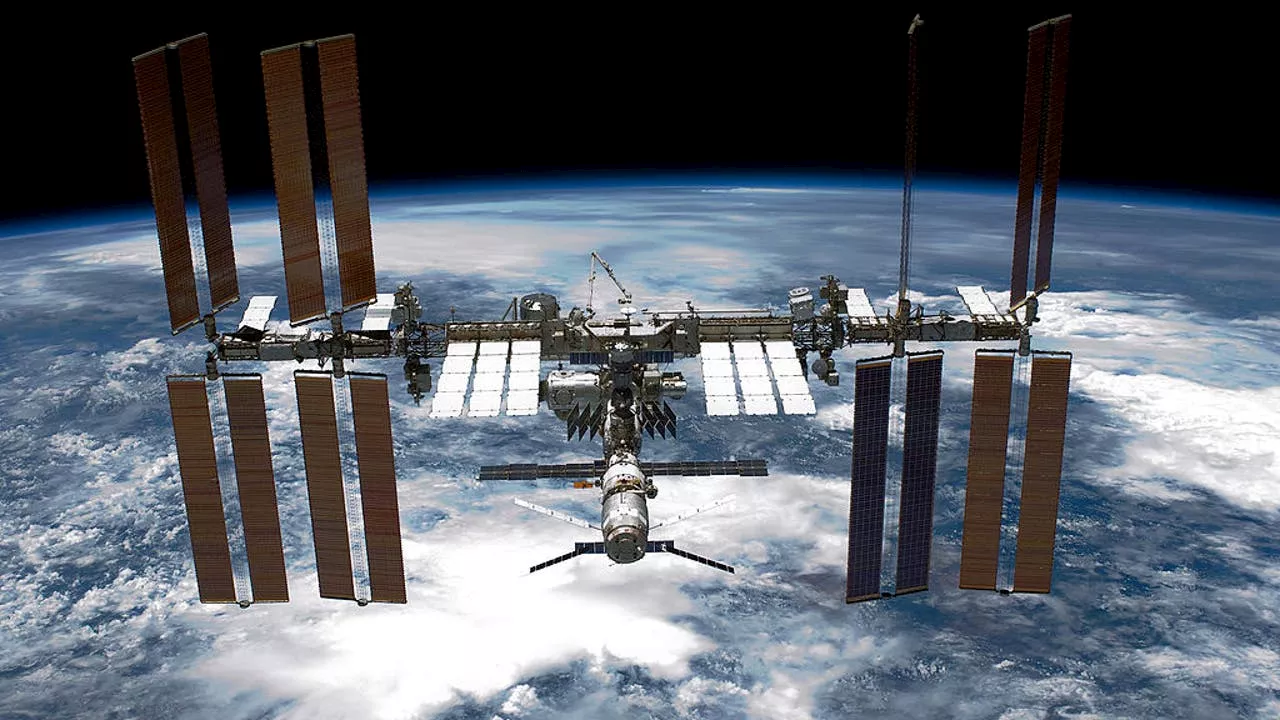 Space Debris Threatens Future of Space TravelThousands of defunct satellites and fragments orbit Earth at dangerous speeds, posing a significant risk to space travel. Experts warn that this space debris could lead to Kessler Syndrome, a chain reaction of collisions that makes parts of Earth's orbit unusable. The European Space Agency reports that only 10,200 out of 13,230 satellites launched remain in orbit, and defunct satellites, rocket boosters, and even lost tools contribute to the growing hazard. Spacefaring nations are taking action to address this threat, with the ESA's Zero Debris Charter aiming to nearly eliminate space junk by 2030.
Read more »
 Space Debris: A Growing Threat to Satellites and MissionsThe increasing number of satellites in Earth orbit raises concerns about space debris and the risk of collisions. Experts warn that certain orbits, particularly low Earth orbit, are becoming dangerously crowded.
Read more »
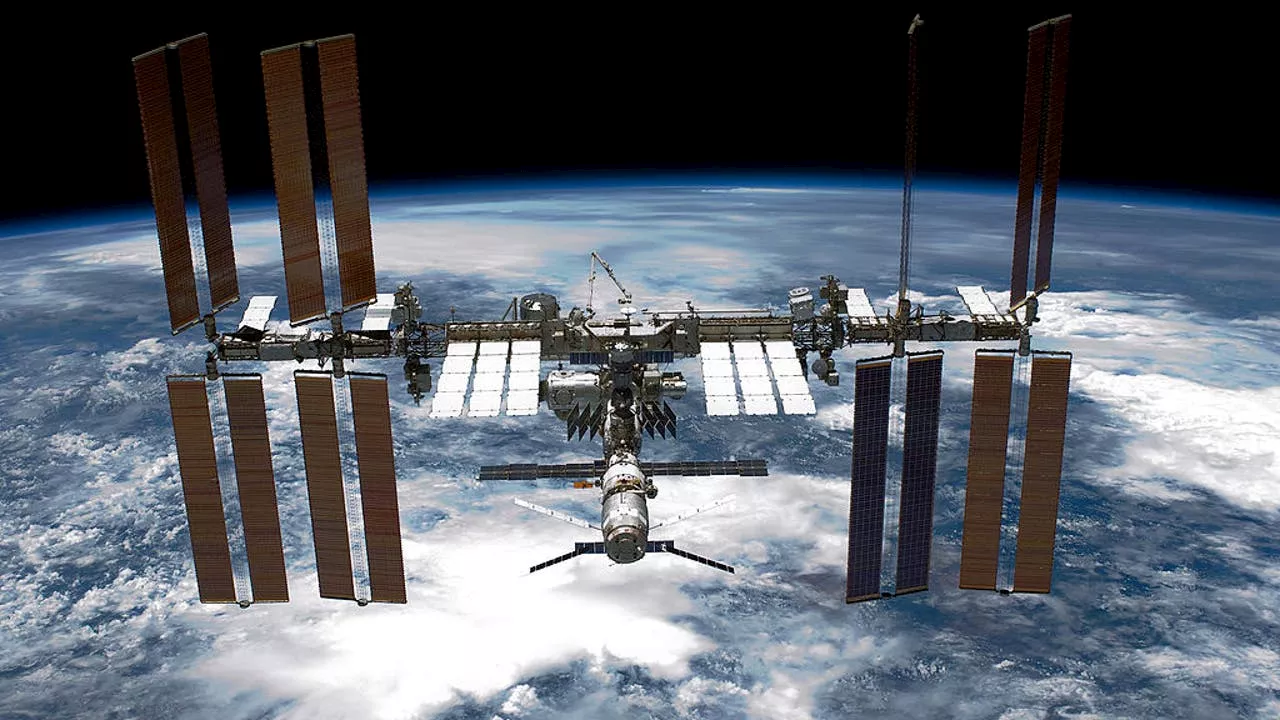 Space Debris Threatens the Future of Space TravelThousands of defunct satellites and fragments circling Earth at dangerous speeds pose a serious threat to future space exploration. Experts warn that the growing amount of space debris could make parts of Earth's orbit unusable.
Read more »
 Urgency builds to remove Eaton, Palisades fire debris, mindful of tragic debris flows, floodingAfter the tragic flooding after the Thomas fire in Santa Barbara in 2017, authorities put debris removal on fast-track.
Read more »
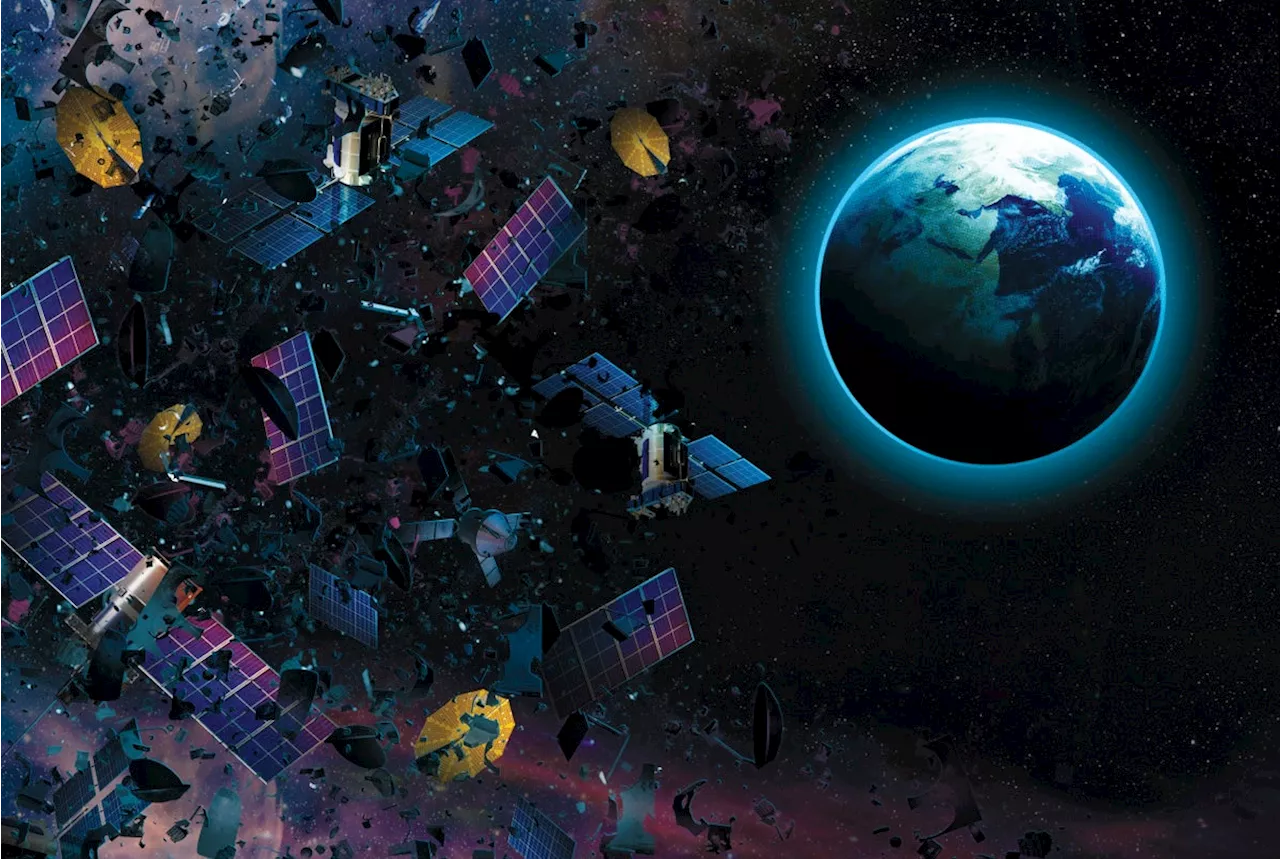 Space Debris: A Growing Threat to SustainabilityThe rapid increase in space launches has led to a dangerous accumulation of debris in Earth orbit, posing a significant threat to working satellites and future space exploration. The article discusses the need for a circular space economy to address this issue, emphasizing the importance of sustainable practices such as designing for reuse, repairing satellites, and recycling space debris.
Read more »