
The Best in Science News and Amazing Breakthroughs
It's happened to the best of us. There you are, minding your own business, sealing envelopes or replacing the printer ream, and tsssss ouch! A freshly minted paper cut, oozing ruby-red human juice, all over the clean white surface.
For how common they are, though, we have a pretty poor understanding of the physics of paper cuts – when the edge of an easily crumpled and torn material somehow manages to slice into your skin, deep enough to draw blood. Experiments conducted by physicists from the Technical University of Denmark have now pinned down a critical feature of the worst offenders; paper sheets with a thickness of around 65 micrometers or microns., newspaper, and the paper on which some magazines and scientific journals are printed. One might think that a thinner edge is more hazardous, but the thinnest papers – such as tissue – are so flimsy that their edges buckle on contact with skin. And the thicker papers, of course, are too blunt. That sweet spot of 65 micrometers is like the goldilocks zone of paper cuts: thick enough to maintain its structure, but thin enough to have a cutting edge. "These results allow us to assess the relative safety of various product categories broadly," physicists Sif Fink Arnbjerg-Nielsen, Matthew Biviano, and Kaare Jensen"While tissues, books, and photos are generally safe, we cannot rule out certain risks of using office paper or magazines. In the future, paper manufacturers, printers, and publishing companies may wish to consider this during the product design process." Paper cuts are not really considered a serious injury, and mostly, they are not. They cause a little bit of discomfort and annoyance, and then we forget about them and move on.. And, at any rate, no one enjoys a paper cut. Plus, the physics thereof posed an interesting mystery, so Arnbjerg-Nielsen and her colleagues set out to investigate. For their experiments, they took sheets of paper of different thickness, and tried slicing them into blocks of freshly prepared gelatin, made to resemble the consistency of flesh. They then used a machine to slide the paper across the gelatin at a carefully controlled speed, and at a variety of angles, using a video camera to record the results. This revealed that thinner papers simply buckle when pressure is applied, resulting in no cut, and that thicker papers simply leave an indentation in the gelatin. Next, the researchers developed a formula for determining the paper thickness most efficient at slicing through human flesh. This revealed that the range between 50 and 100 micrometers is the most potentially hazardous, with 65 micrometers sitting at the sweet spot. This, as the researchers point out, can help with the development of paper products that are less likely to bite back, but it can be used the other way, too. With their findings, the researchers developed a low-cost paper scalpel, called the Papermachete, with which they were able to cut through apple, chicken, capsicum, and banana peel. Papermachete won't replace your metal knives, but it does work in a pinch, which is neat. The 3D print files for the handleMore work needs to be done to better understand the role the slicing angle plays in the ease with which paper can cut humans. Meanwhile, though, you can seize your own destiny through greater care in paper handling.,"that the habits and dexterity of the user also play a role. In particular, most paper cuts can be avoided by adhering to a strict near normal-contact regimen, which minimizes the cutting likelihood."
United States Latest News, United States Headlines
Similar News:You can also read news stories similar to this one that we have collected from other news sources.
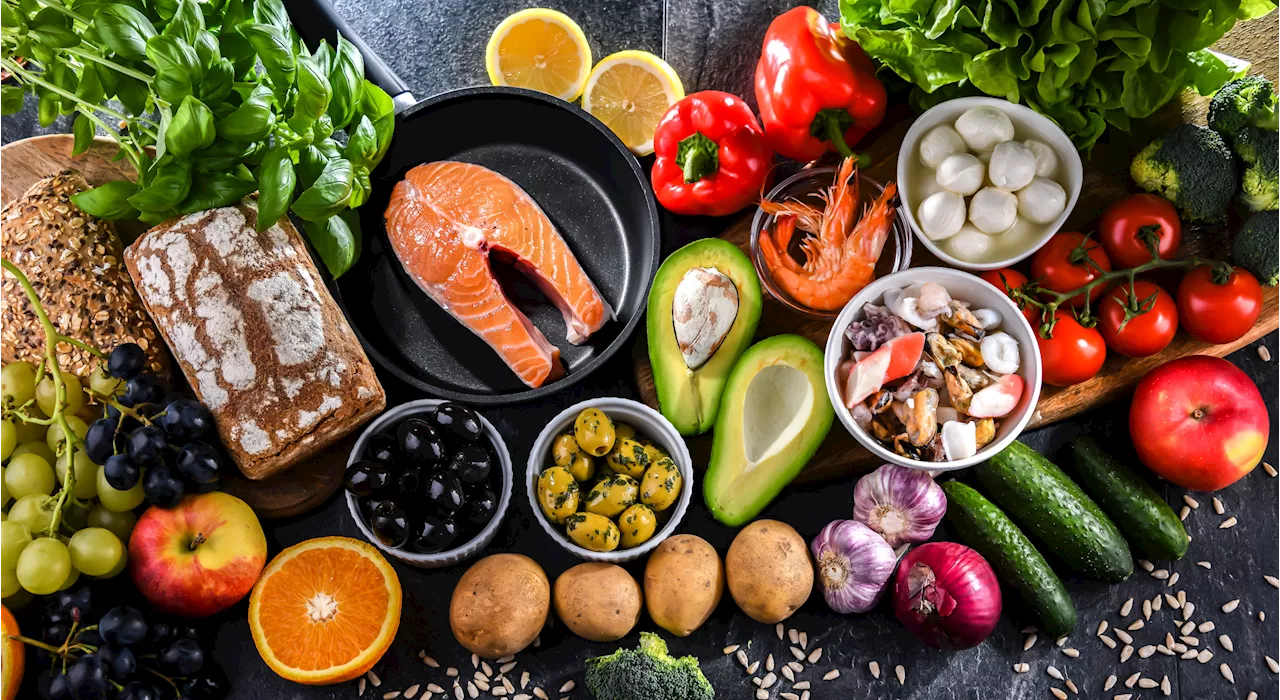 Scientists Reveal Diet Linked to 'Wellbeing and Stress Reduction'The Mediterranean diet consists of salmon, extra virgin olive oil, and a variety of fresh fruits and vegetables.
Read more »
 Drugs Like Ozempic May Help Slow Alzheimer's, Scientists RevealDigital destination for sophisticated men & women. Live your best life with expert tips and news on health, food, sex, relationships, fashion and lifestyle.
Read more »
 Scientists reveal novel mechanism of plant immunity against virusesArginine methylation is an important post-translational modification involved in transcriptional regulation, RNA processing, DNA damage repair, and immune response. Protein arginine methyltransferases (PRMTs) are the evolutionarily conserved protein family responsible for catalyzing protein arginine methylation.
Read more »
 Dementia: Scientists Reveal Possible New Early-Warning SignThe findings may help in the development of effective interventions to help slow, or even stop, cognitive decline.
Read more »
 Scientists Reveal How They Identified The Ancestor of All Life on EarthThe Best in Science News and Amazing Breakthroughs
Read more »
 Stonehenge Mystery: Scientists Reveal How They Traced The Altar StoneThe Best in Science News and Amazing Breakthroughs
Read more »