
Italian researchers recently revealed how to make perfect cacio e pepe, according to a scientific study. Their findings include several tips for making better cacio e pepe, including lowering the temperature of your water and maintaining the perfect starch content. Use these techniques for silky sauce every time.
Making a perfect plate of pasta is undoubtedly an art form. However, as a group of researchers recently discovered, producing that ideal plate takes a lot of science, too. In late December, Italian researchers from the Max Planck Institute for the Physics of Complex Systems, along with researchers from the University of Barcelona and the Institute of Science and Technology Austria, collaborated on aThe researchers explained that the dish, which is believed to have first been created by shepherds who crafted it with fresh sheep's cheese, today typically consists of tonnarelli or spaghetti noodles in a creamy sauce built from pecorino cheese, pepper, and starch-enriched water.
But"despite its simple ingredient list, achieving the perfect texture and creaminess of the sauce can be challenging," the authors pointed out in their report.In their study, the analysts uncovered the key to achieving a balanced texture by systematically exploring the "phase behavior" of the cacio and pepe sauce, and focusing on its "stability at increasing temperatures for various proportions of cheese, water, and starch." The most delicate step, they note, is when a chef mixes the starch-enriched water with grated cheese. They found that an essential strategy is "to wait some time before mixing water and cheese, to let the water cool down. This is because, at high temperatures, cheese proteins can either form clumps upon denaturation or simply aggregate, therefore ruining the sauce." More simply put, if the water is too hot when you add it to the cheese, then you might end up with a lumpy sauce.They also found that the water's "starch concentration" is a key factor in ensuring the integrity and stability of the sauce, which is where the surprise ingredient comes in: corn starch. "The concentration of starch plays a crucial role in keeping the sauce creamy and smooth, without clumps or separation. If the starch content is less than 1% of the cheese weight, the sauce is prone to separating into unpleasant system-sized clumps corresponding to the 'mozzarella phase.' On the other hand, exceeding 4% starch results in a sauce that becomes stiff and unappetizing as it cools," the analysis states. "The ideal range, as confirmed by both taste and texture tests, lies between 2% and 3%, ensuring stability and a pleasant consistency."Luckily, the scientists also provided a practical recipe for two people to test this method at home. It begins with 240 grams of pasta and 160 grams of cheese. They observe that the perfect starch content for developing a silky sauce would be 4 grams of starch for 160 grams of cheese. However, "the pasta water alone does not contain enough starch to stabilize the sauce effectively." For a more "precise and reliable method," the researchers suggest dissolving 4 grams of powdered starch — either potato or corn starch — in 40 grams of plain water. Heat this mixture gently until it thickens and changes "from cloudy to nearly clear." Next, cool it slightly and combine it with the cheese as you would pasta water. Replacing pasta water with a precise starch-water solution is a bold departure from tradition, but if it yields the perfect cacio e pepe, we're willing to give it a try.This is where the academics introduce one other new step: Don't grate your cheese. Instead, blend it with the starchy water to develop a "homogeneous sauce." Then, cook the pasta in slightly salted water until it is al dente, drain the noodles, mix them with the sauce, and adjust the consistency with a bit of reserved pasta water as needed. Before you get too up in arms about these innovations, it's important to know that the research team was primarily made up of Italians. Giacomo Bartolucci, a biophysicist at the University of Barcelona and one of the authors of the paper, also told thethat, “None of our samples were wasted... Our friends came by to say hi, to see how it was going. And they helped us, eating up all the samples.”
United States Latest News, United States Headlines
Similar News:You can also read news stories similar to this one that we have collected from other news sources.
 The Two-Chair Technique Helps A Patient Decide About Her WeddingA therapist uses a unique technique to help a patient struggling with a decision about her upcoming wedding.
Read more »
 Freshly rumored iPhone 17 design update will require Apple to adopt a new manufacturing techniqueAnam Hamid is a computer scientist turned tech journalist who has a keen interest in the tech world, with a particular focus on smartphones and tablets. She has previously written for Android Headlines and has also been a ghostwriter for several tech and car publications.
Read more »
 Beyond Anxiety: A Simple Technique for Finding CalmThis article explores the power of self-compassion and kindness in managing anxiety. Drawing from the author's personal experience and research on Tibetan monks, it introduces a simple technique called KIST (Kind Internal Self-Talk) that can help individuals find calm and reduce emotional unease.
Read more »
 Tianjin University Invites Overseas Young Scientists for 2025 Excellent Young Scientists Fund ProgramThe National Natural Science Foundation of China (NSFC) Excellent Young Scientist Fund (Overseas) program, hosted by Tianjin University, seeks to attract outstanding young scholars from overseas to contribute to China's scientific and technological advancement.
Read more »
 Paradoxical Intention: The Unexpected Sleep Technique That WorksThis sleep expert reveals a surprising technique called paradoxical intention, which involves trying to stay awake instead of forcing sleep to combat insomnia. The article explains how anxiety about sleep can become a self-fulfilling prophecy and how paradoxical intention can help break that cycle.
Read more »
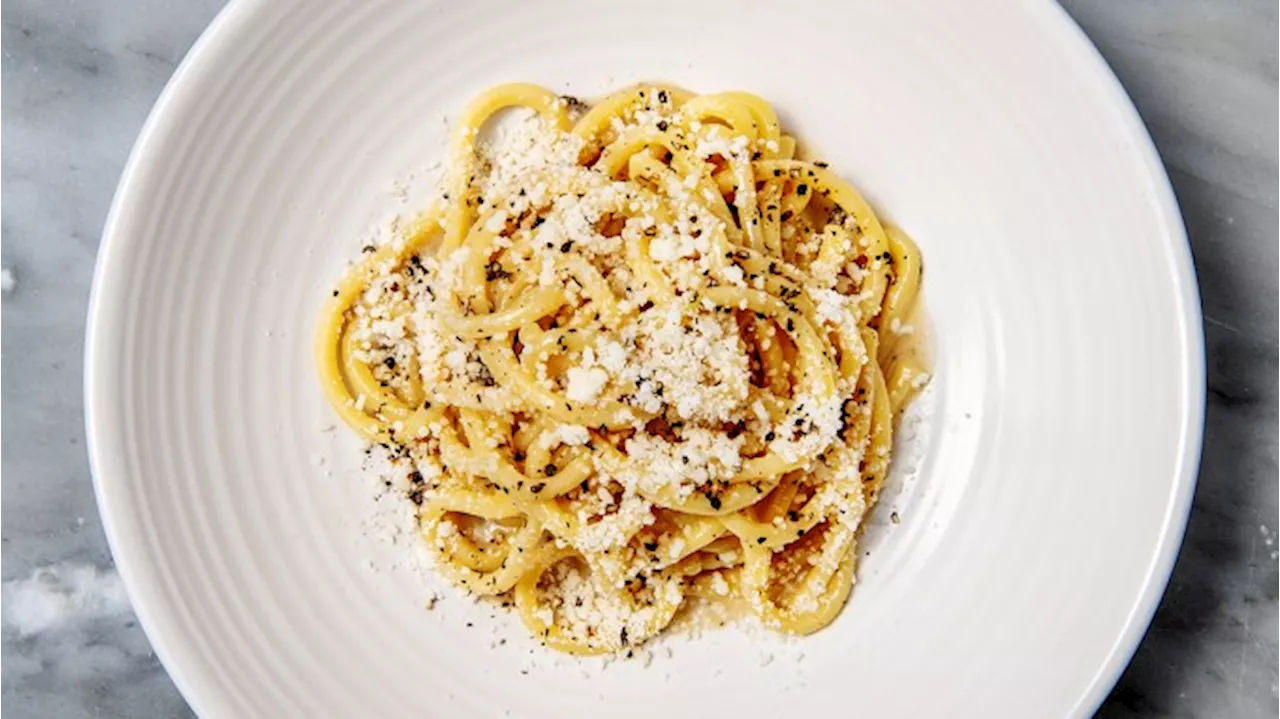 Scientists Say They’ve Unlocked the Key to Perfect Cacio e Pepe—and Traditionalists May ObjectScientists have found that the secret to great cacio e pepe may be the addition of cornstarch, an untraditional ingredient in the pasta dish.
Read more »