
Quantum technology is poised to transform navigation, offering more precise, resilient, and versatile solutions compared to traditional GPS systems. This article explores the potential of quantum navigation, its benefits, challenges, and its impact on various aspects of our lives.
Quantum technology is no longer confined to the lab, it's making its way into our everyday lives. Now, it's about to transform something even more fundamental: how we navigate the world. Imagine planes flying across continents with unshakeable precision, unaffected by signal disruptions. Emergency responders could navigate smoke-filled buildings or underground tunnels with flawless accuracy, while autonomous vehicles chart perfect courses through dense urban environments.
These scenarios might sound like science fiction, but they can all be made possible with an emerging approach known as quantum navigation. This game-changing tech will one day redefine movement, exploration, and connectivity in ways we're only just beginning to imagine. \ Global navigation satellite systems, like GPS, are deeply embedded in modern society. We use them daily for navigation, ordering deliveries, and tagging photo locations. But their impact goes far beyond convenience. Timing signals from satellites in Earth's orbit authenticate stock market trades and help balance the electricity grid. In agriculture, satellite navigation is used to optimize planting and harvesting. Despite these benefits, systems like GPS are quite vulnerable. Satellite signals can be jammed or interfered with. This can be due to active warfare, terrorism, or for legitimate (or illegitimate) privacy concerns. The environment of space isn't constant either. The Sun regularly ejects giant balls of plasma, causing what we know as solar flares. These emissions slam into Earth's magnetic field, disrupting satellites and GPS signals. Often these effects are temporary, but they can also cause significant damage. An outage of global navigation satellite systems would be more than an inconvenience – it would disrupt our most critical infrastructure. \ In some environments, navigation signals from satellites don't work very well. They don't penetrate water or underground spaces, for example. If you've ever tried to use Google Maps in a built-up city with skyscrapers, you may have run into issues. Tall buildings cause signal reflections that degrade accuracy, and signals are weakened or completely unavailable inside buildings. Quantum science describes the behaviour of particles at scales smaller than an atom. It reveals mind-boggling effects like superposition – particles existing in multiple states simultaneously – and entanglement, where two particles remain connected even when separated by vast distances. These effects are fragile and typically collapse under observation, which is why we don't notice them in everyday life. But the very fragility of quantum processes also lets them work as exquisite sensors. A sensor is a device that detects changes in the world around it and turns that information into a signal we can measure or use. Think automatic doors that open when we walk near them, or phone screens that respond to our touch. Quantum sensors are so sensitive because quantum particles react to tiny changes in their environment. Unlike normal sensors, which can miss weak signals, quantum sensors are extremely good at detecting even the smallest changes in things like time, gravity, or magnetic fields. Their sensitivity comes from how easily quantum states change when something in their surroundings shifts, allowing us to measure things with much greater accuracy than before.
Quantum Navigation GPS Quantum Sensors Satellite Navigation Technology
United States Latest News, United States Headlines
Similar News:You can also read news stories similar to this one that we have collected from other news sources.
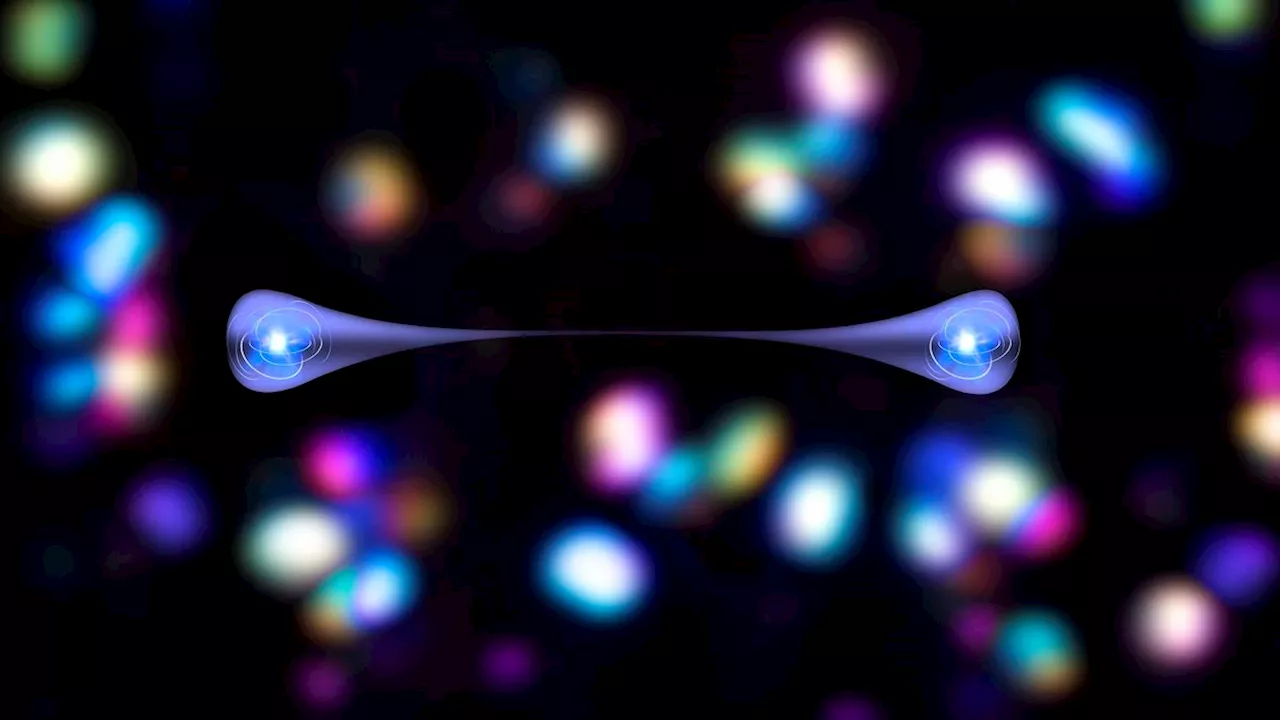 Scientists Discover New Quantum State in 2D Semiconductors, Paving the Way for More Powerful Quantum ComputingResearchers at the Daegu Gyeongbuk Institute of Science and Technology have made a significant breakthrough in quantum computing by discovering a new quantum state within two-dimensional (2D) semiconductor chips. This discovery offers a promising path for controlling quantum information with enhanced reliability, potentially leading to more powerful and efficient quantum computers.
Read more »
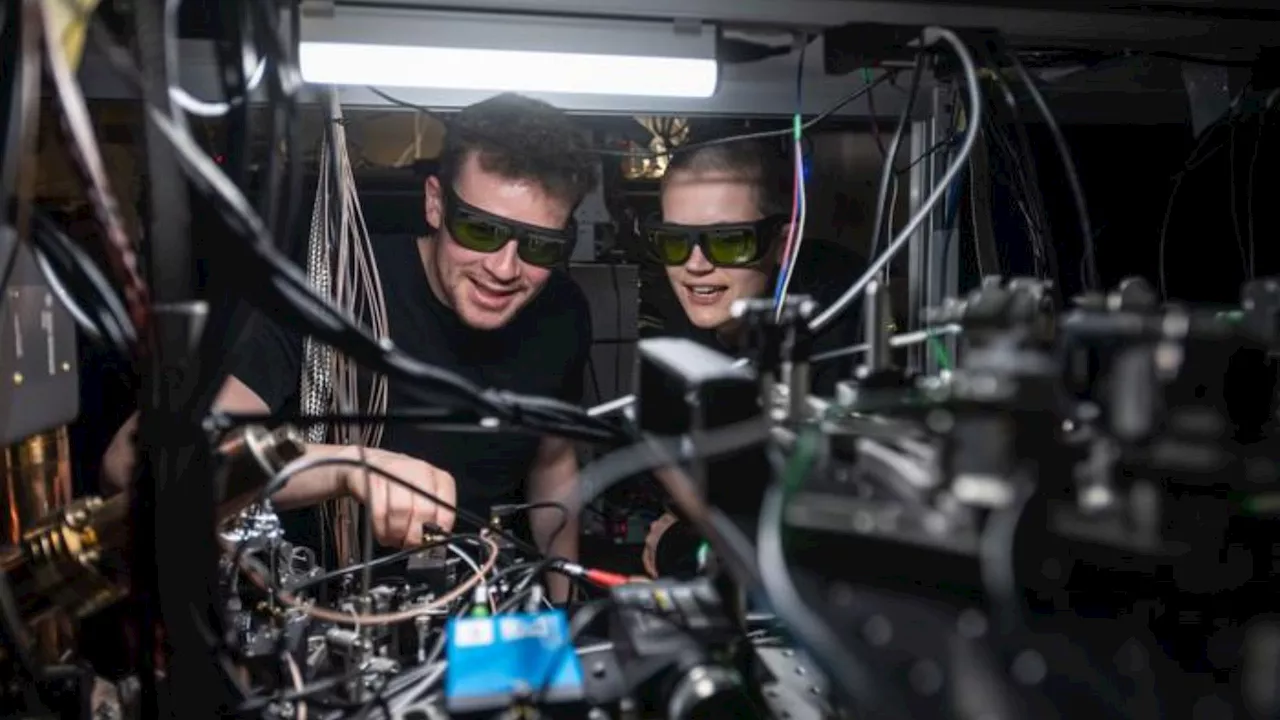 Oxford Researchers Achieve Quantum Teleportation of Logical Gates, Paving the Way for Scalable Quantum ComputingA team of researchers at Oxford University Physics has made a significant breakthrough in quantum computing by successfully demonstrating the first-ever quantum teleportation of logical gates. This achievement paves the way for building larger, more powerful quantum computers and overcomes the scalability challenges that have long hindered their progress.
Read more »
 Quantum Leap: Scientists Achieve Distributed Quantum ComputingScientists at Oxford University Physics have successfully connected two separate quantum processors using a photonic network interface, creating the first distributed quantum computer. This breakthrough paves the way for tackling complex computational challenges and addresses the scalability issue in quantum computing.
Read more »
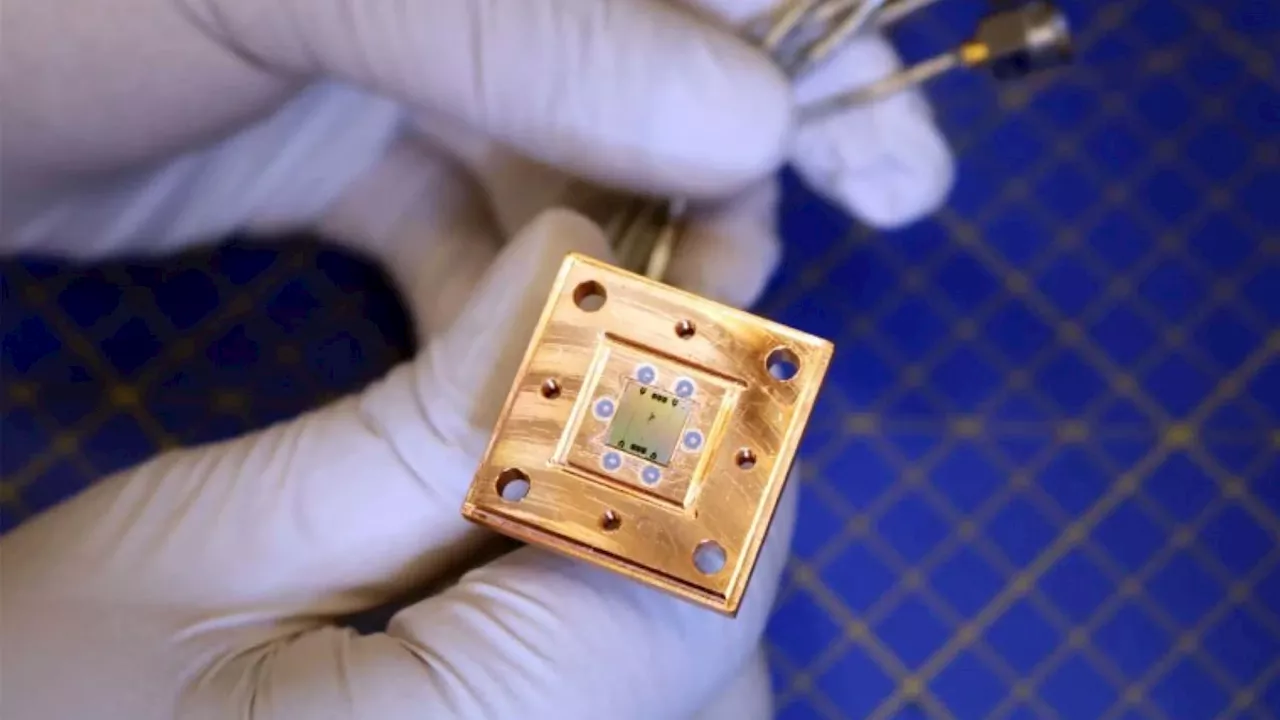 Autonomous Quantum Refrigerator Achieves Record-Low Temperature, Boosting Quantum Computer PerformanceScientists have developed a new type of autonomous quantum refrigerator that can cool qubits to a record-low temperature of 22 millikelvin. This breakthrough could significantly improve the performance and reliability of quantum computers by reducing errors caused by environmental disturbances.
Read more »
 Quantum Teleportation Achieves Milestone in Distributing Quantum ModulesResearchers at Oxford University successfully teleport quantum states between computers, proving the feasibility of distributing quantum modules without performance loss. This breakthrough paves the way for scaling quantum technology and building larger, more powerful quantum computers.
Read more »
 Loky Quantum Analysis: Revolutionizing DeFi On-Chain Data Analysis with AILoky Quantum Analysis (LQA) leverages AI and blockchain technology to transform raw blockchain data into actionable intelligence for DeFi traders, investors, and developers. LQA offers fundamental and technical analysis across various crypto ecosystems, including visualizations of protocols, meme tokens, and signals of upcoming token launches. Backed by a team of blockchain experts, AI developers, and seasoned crypto analysts, Loky continuously evolves with cutting-edge AI-driven DeFi intelligence.
Read more »