
Scientists at Oxford University Physics have successfully connected two separate quantum processors using a photonic network interface, creating the first distributed quantum computer. This breakthrough paves the way for tackling complex computational challenges and addresses the scalability issue in quantum computing.
Scientists at Oxford University Physics have achieved a groundbreaking milestone in quantum computing by demonstrating the first instance of distributed quantum computing. This advancement uses a photonic network interface to connect two separate quantum processors, creating a single, fully interconnected quantum computer. This paves the way for tackling complex computational challenges previously beyond reach.
The breakthrough directly addresses the 'scalability problem' inherent in quantum computing. A quantum computer capable of industry-disruption would require millions of qubits. However, physically housing all these processors in a single device would necessitate a machine of immense size. The distributed approach proposed here circumvents this obstacle by linking small quantum devices together, enabling computations to be spread across the network. Theoretically, there's no limit to the number of processors that could be incorporated into this network.This scalable architecture relies on modules, each containing a small number of trapped-ion qubits—atomic-scale carriers of quantum information. These modules are interconnected using optical fibers, employing light (photons) instead of electrical signals to transmit data. These photonic links enable qubits in separate modules to become entangled, allowing quantum logic to be performed across modules through quantum teleportation. While quantum teleportation of states has been achieved previously, this study marks the first demonstration of quantum teleportation of logical gates—the fundamental building blocks of an algorithm—across a network link. This development holds the potential to lay the groundwork for a future 'quantum internet,' where distant processors could form an ultra-secure network for communication, computation, and sensing.Study lead Dougal Main from Oxford University Physics explains, 'Previous demonstrations of quantum teleportation have focused on transferring quantum states between physically separated systems. In our study, we use quantum teleportation to enable interactions between these distant systems. By carefully tailoring these interactions, we can perform logical quantum gates—the fundamental operations of quantum computing—between qubits housed in separate quantum computers. This breakthrough enables us to effectively 'wire together' distinct quantum processors into a single, fully-connected quantum computer.'This concept mirrors the way traditional supercomputers operate, consisting of smaller computers linked together to achieve capabilities exceeding those of individual units. This strategy circumvents many engineering hurdles associated with packing increasingly larger numbers of qubits into a single device while preserving the delicate quantum properties essential for accurate and robust computations.Dougal Main adds, 'By interconnecting the modules using photonic links, the system gains valuable flexibility, allowing modules to be upgraded or swapped out without disrupting the entire architecture.' The researchers validated the effectiveness of this method by executing Grover's search algorithm. This quantum algorithm searches for a specific item within a vast, unstructured dataset significantly faster than a conventional computer can, leveraging quantum phenomena like superposition and entanglement to explore numerous possibilities simultaneously. Its successful demonstration underscores how a distributed approach can extend quantum capabilities beyond the confines of a single device, paving the way for scalable, high-performance quantum computers capable of executing calculations in hours that would take today's supercomputers many years to solve.Professor David Lucas, principal investigator of the research team and lead scientist for the UK Quantum Computing and Simulation Hub, leading from Oxford University Physics, states, 'Our experiment demonstrates that network-distributed quantum information processing is feasible with current technology. Scaling up quantum computers remains a formidable technical challenge that will likely require new physics insights as well as intensive engineering effort over the coming years.
QUANTUM COMPUTING DISTRIBUTED COMPUTING PHOTONIC NETWORK QUANTUM TELEPORTATION SCALABILITY
United States Latest News, United States Headlines
Similar News:You can also read news stories similar to this one that we have collected from other news sources.
 Scientists Achieve First-Ever Entanglement of Molecules, Opening New Doors for Quantum TechnologiesFor the first time, scientists at Durham University have successfully entangled molecules, a major breakthrough in quantum mechanics research with significant implications for future technologies.
Read more »
 Colorado's Quantum Leap: New Incubator Aims to Revolutionize ComputingA new Quantum Incubator in Boulder, Colorado, is poised to accelerate the development and application of quantum technology. Funded by $74 million in state tax credits, the facility will provide a platform for startups to translate this groundbreaking technology into everyday applications.
Read more »
 Quantum Computing Takes a Leap Forward with Antimony-Based Error CorrectionScientists utilize the 'Schrödinger's cat' thought experiment to develop a new method for error correction in quantum computers, utilizing antimony atoms with eight spin states for enhanced data security.
Read more »
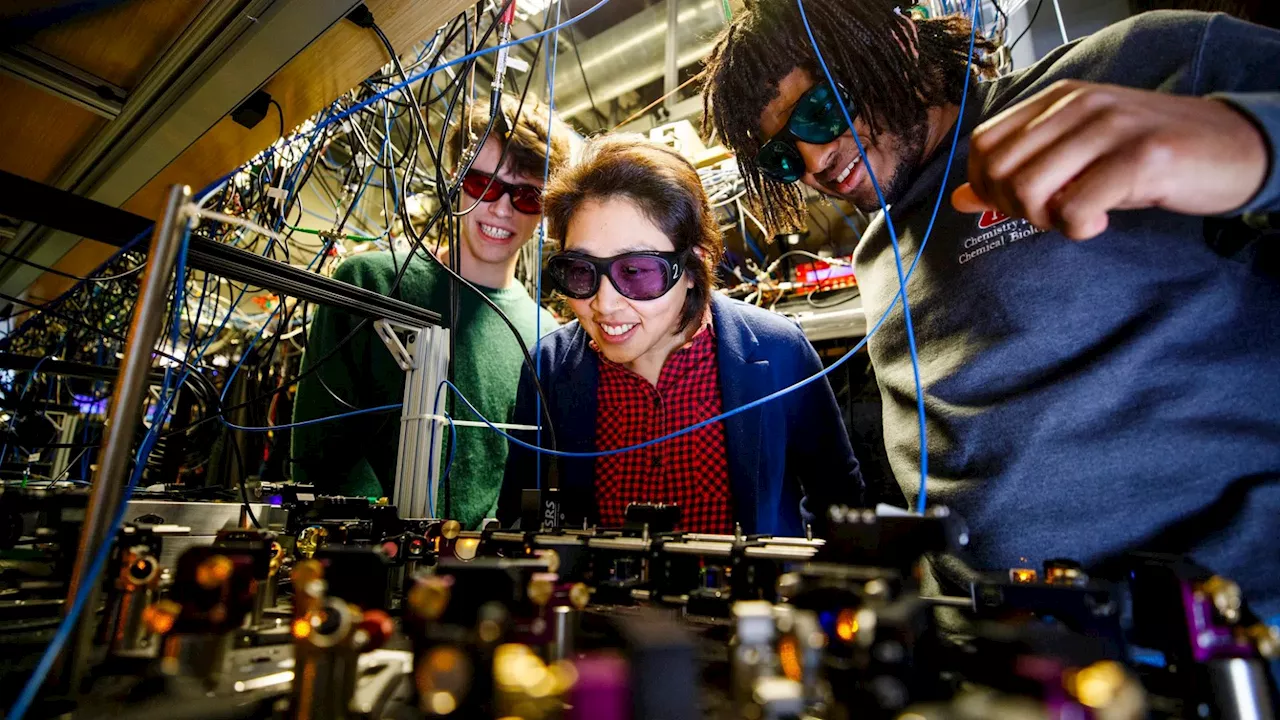 Harvard Scientists Trap Molecules for Quantum Operations, Ushering in a New Era of Quantum ComputingFor the first time, scientists have successfully trapped molecules and used them to perform quantum operations, marking a significant leap forward in the field of quantum computing. This breakthrough opens up new possibilities for building more powerful and versatile quantum computers.
Read more »
 Scientists Discover New Quantum State in 2D Semiconductors, Paving the Way for More Powerful Quantum ComputingResearchers at the Daegu Gyeongbuk Institute of Science and Technology have made a significant breakthrough in quantum computing by discovering a new quantum state within two-dimensional (2D) semiconductor chips. This discovery offers a promising path for controlling quantum information with enhanced reliability, potentially leading to more powerful and efficient quantum computers.
Read more »
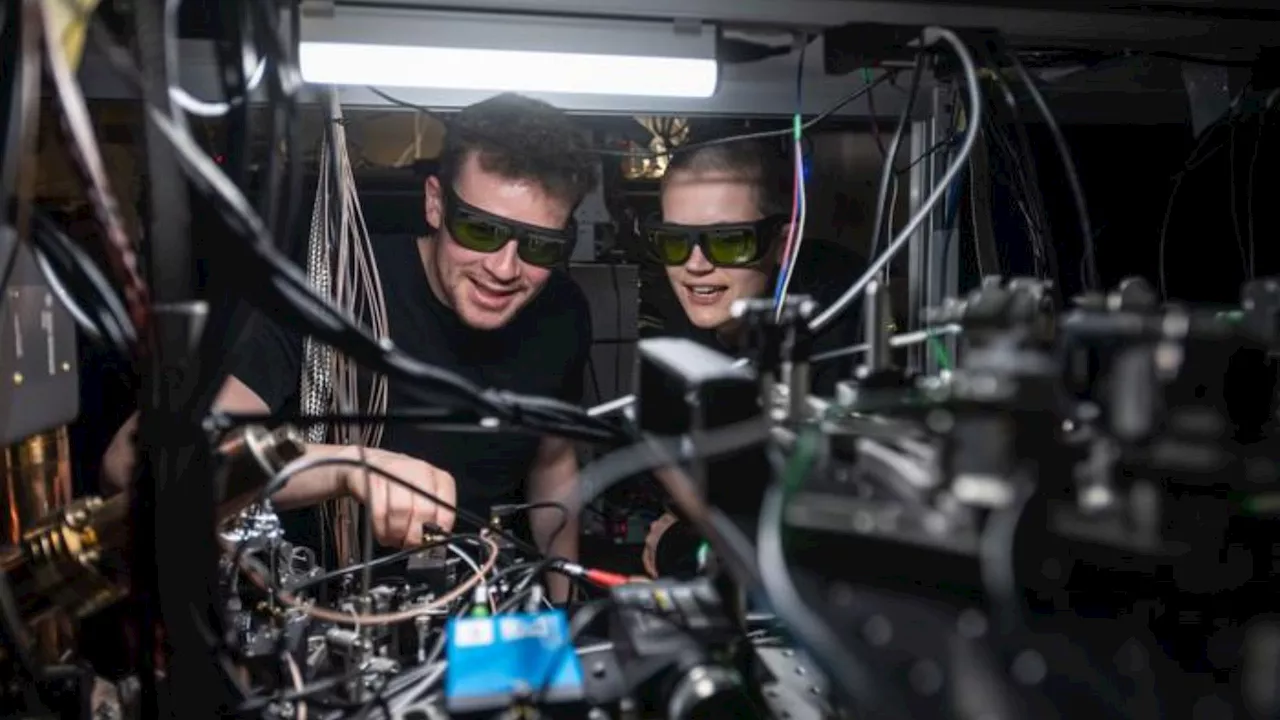 Oxford Researchers Achieve Quantum Teleportation of Logical Gates, Paving the Way for Scalable Quantum ComputingA team of researchers at Oxford University Physics has made a significant breakthrough in quantum computing by successfully demonstrating the first-ever quantum teleportation of logical gates. This achievement paves the way for building larger, more powerful quantum computers and overcomes the scalability challenges that have long hindered their progress.
Read more »