
Quantum computing is revolutionizing our understanding of technology, time, and even consciousness. This article explores the mind-bending concepts of superposition and entanglement, and how they might be key to unlocking the mysteries of the human brain and the nature of reality itself.
Quantum properties like entanglement challenge current understanding of space and time.Quantum computing is challenging everything we thought we knew about technology, time, and even human consciousness.
Some scientists theorize that some of the ways quantum computers process information may resemble how the human brain works. Others take it even further, wondering whether quantum properties of these machines could help explain consciousness—or what humans might think of as the soul. At the heart of this mystery is time. Quantum mechanics bends and stretches our understanding of time, which could hold the key to quantum computing, the nature of thought, and what it means to be alive. To appreciate this, it helps to understand what makes quantum different from regular computers. Everyday computers process information in a straightforward, linear way—using bits that are either 1s or 0s. This is similar to how we experience time, one moment after another. Quantum computers, however, use qubits, which can exist in a state of quantum superposition, meaning they can be two things at the same time. In this case, they can be both 10 at the same time. This allows quantum computers to potentially take multiple paths forward at the same time—perhaps much like human neurons firing in complex patterns—when doing a calculation, rather than just one path forward like a traditional computer does. This makes quantum computers more powerful than traditional computers because they leverage this quantum ability to coordinate computations more efficiently and steer toward optimal solutions faster. This allows them to solve certain problems exponentially faster than traditional computersThen there’s entanglement, another quantum phenomenon. When two qubits become entangled, they somehow remain connected, no matter how far apart they are. If one changes, the other changes instantly, flying in the face of our normal understanding of space and time. In quantum computing, this allows for incredibly fast, complex problem-solving. And it raises huge questions—if time doesn’t behave the way we think, could the same be true for human consciousness? Some researchers believe quantum effects like superposition and entanglement might also be happening inside our brains. Unlike computers, which process data in a step-by-step fashion, human thought isn’t always logical or linear. We jump between ideas, experience déjà vu, or recall vivid memories out of nowhere. A theory called orchestrated objective reduction , developed by renowned physicist Roger Penrose and anesthesiologist Stuart Hameroff, suggests that quantum interactions inside microtubules—tiny structures in brain cells—may be responsible for consciousness. If they’re right, then the brain isn’t just a powerful supercomputer—it’s a quantum computer and one that processes experiences in ways far beyond traditional computers. Not everyone agrees. Many argue that the brain is too warm and chaotic for quantum effects to function. Quantum mechanics as we know it today requires carefully controlled, ultra-cold environments—nothing like the warm, constantly firing neurons going off in a human brain. While microtubules exist in brain cells, there’s no proof they act as quantum processors. Until scientists find solid evidence of quantum activity in the brain, most researchers believe consciousness is better explained by well-known biological and That said, if quantum activity in the brain is verified, and quantum mechanics is related to human consciousness, it raises some remarkable questions. For example, in physics, information is never destroyed—it only changes form. Some scientists suggest that if the mind operates like a quantum system, then consciousness might continue to exist beyond death, just as quantum information persists beyond the machine that computes it—similar to how theologians throughout history describe the soul, which is not bound to the body. If true, this would challenge everything we think we know about life and time. Some physicists already believe time is just an illusion, created by the way our brains process reality. If consciousness is quantum, maybe time isn’t something we pass through in a straight line. Maybe past, present, and future are connected in ways we don’t fully understand. Think about your last experience of déjà vu, which may have felt stronger than reality itself. Maybe quantum physics offers a sort-of-scientific bridge between mind and matter, or even consciousness., consciousness, and time. Maybe time isn’t just a road moving forward. Maybe it’s something we navigate in ways far more complex than we ever imagined. For now, quantum physics still leaves us with more questions than answers.Solenov, Dmitry et al, “The Potential of Quantum Computing and Machine Learning to Advance Clinical Research and Change the Practice of Medicine,” National Library of Medicine, National Institutes of Health, Sep-Oct 2018, 115:463–467,Lisa Broderick holds a B.A. from Stanford and an MBA from Duke. She is a TM Siddha and studied at the Monroe Institute and at the American Institute for Mental Imagery.There’s been a fundamental shift in how we define adulthood—and at what pace it occurs. PT’s authors consider how a once iron-clad construct is now up for grabs—and what it means for young people’s mental health today.
QUANTUM COMPUTING SUPERPOSITION ENTANGLEMENT CONSCIOUSNESS TIME
United States Latest News, United States Headlines
Similar News:You can also read news stories similar to this one that we have collected from other news sources.
 Quantum computing stocks sell-off accelerates as Zuckerberg becomes latest tech CEO to temper sector enthusiasmQuantum computing stocks sold off Monday after Meta Platforms CEO Mark Zuckerberg cautioned that quantum computing uses remain years away.
Read more »
 Quantum Computing Stocks Plunge as Zuckerberg Casts Doubt on Near-Term Use CasesMeta CEO Mark Zuckerberg's recent comments on the podcast of Joe Rogan, stating that quantum computing is still years away from being widely useful, have triggered a sell-off in quantum computing stocks. Zuckerberg's perspective echoes earlier sentiments from Nvidia CEO Jensen Huang who predicted a 15 to 30 year timeframe for mainstream adoption. This news comes after a remarkable 2024 for quantum computing stocks, driven by Alphabet's promising Willow chip announcement. While proponents tout the potential of quantum computers to handle complex computations and process vast amounts of data, Zuckerberg's cautionary remarks have fueled investor uncertainty.
Read more »
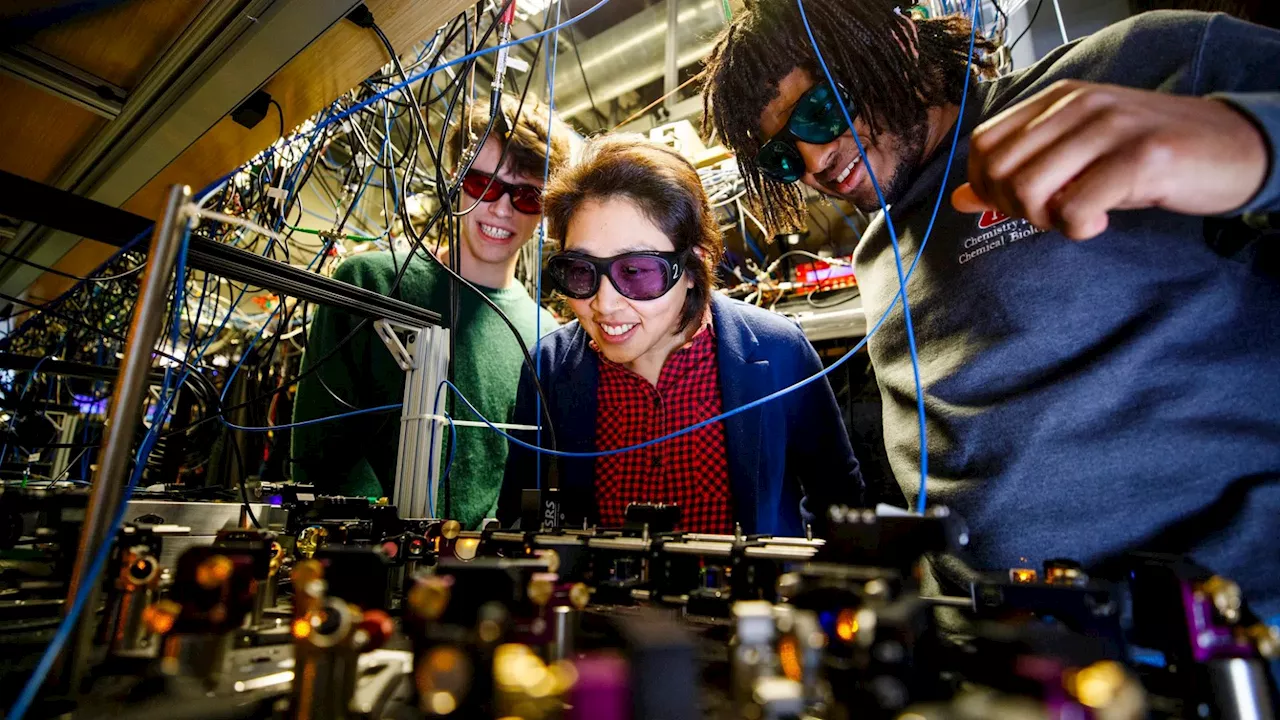 Harvard Scientists Trap Molecules for Quantum Operations, Ushering in a New Era of Quantum ComputingFor the first time, scientists have successfully trapped molecules and used them to perform quantum operations, marking a significant leap forward in the field of quantum computing. This breakthrough opens up new possibilities for building more powerful and versatile quantum computers.
Read more »
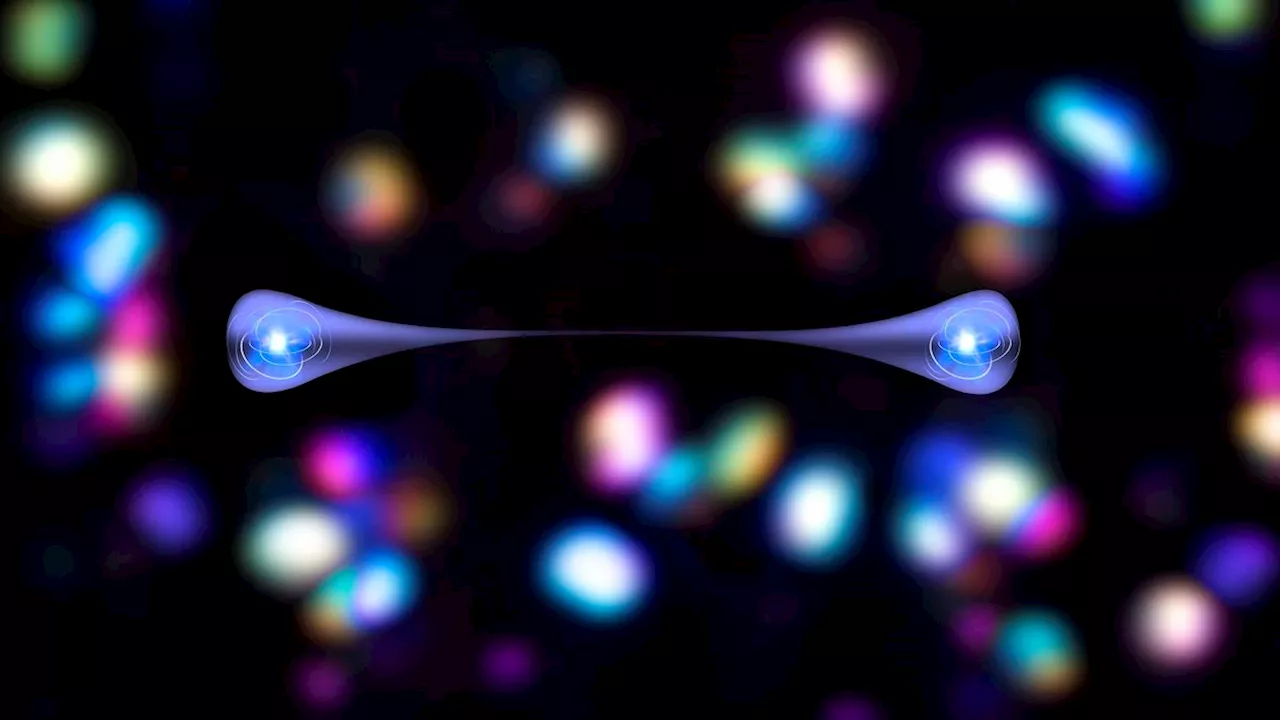 Scientists Discover New Quantum State in 2D Semiconductors, Paving the Way for More Powerful Quantum ComputingResearchers at the Daegu Gyeongbuk Institute of Science and Technology have made a significant breakthrough in quantum computing by discovering a new quantum state within two-dimensional (2D) semiconductor chips. This discovery offers a promising path for controlling quantum information with enhanced reliability, potentially leading to more powerful and efficient quantum computers.
Read more »
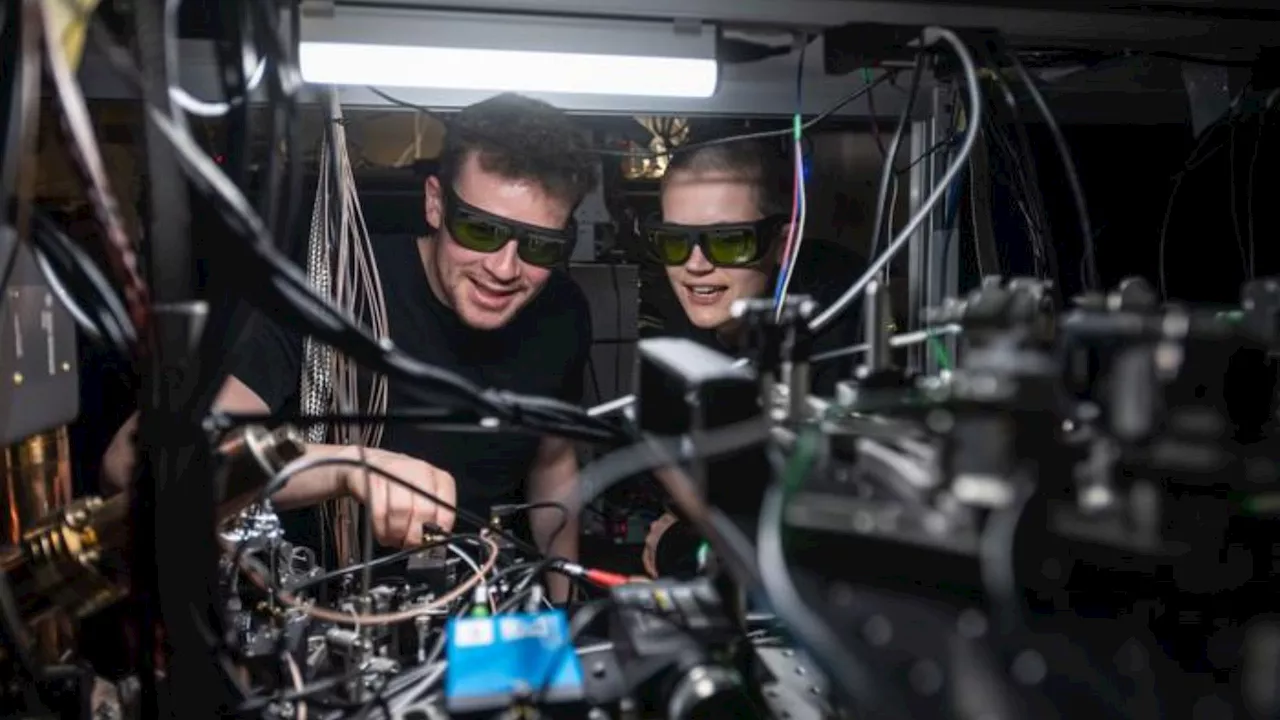 Oxford Researchers Achieve Quantum Teleportation of Logical Gates, Paving the Way for Scalable Quantum ComputingA team of researchers at Oxford University Physics has made a significant breakthrough in quantum computing by successfully demonstrating the first-ever quantum teleportation of logical gates. This achievement paves the way for building larger, more powerful quantum computers and overcomes the scalability challenges that have long hindered their progress.
Read more »
 Quantum Leap: Scientists Achieve Distributed Quantum ComputingScientists at Oxford University Physics have successfully connected two separate quantum processors using a photonic network interface, creating the first distributed quantum computer. This breakthrough paves the way for tackling complex computational challenges and addresses the scalability issue in quantum computing.
Read more »