
A new theory suggests windows of opportunity, not a series of improbable events may have helped humans gain a foothold in the universe.
A new theory suggests windows of opportunity, not a series of improbable events may have helped humans gain a foothold in the universe.A new model upends the decades-old “hard steps” theory that intelligent life was an incredibly improbable event and suggests that maybe it wasn't all that hard or improbable.
The team of researchers said the new interpretation of humanity’s origin increases the probability of intelligent life elsewhere in the universe. What are the odds of humanity emerging, well, anywhere? Conventional wisdom says that our emergence, evolution, and development on Earth were extremely improbable. But a new model says that humans gaining a foothold here wasn’t that difficult — and it’s not outside the realm of possibility that intelligent life could develop elsewhere in the universe, according to“This is a significant shift in how we think about the history of life,” Jennifer Macalady, a Penn State professor and co-author of the paper, said in a. “It suggests that the evolution of complex life may be less about luck and more about the interplay between life and its environment, opening up exciting new avenues of research in our quest to understand our origins and our place in the universe.”The old model explaining our evolutionary origins is called “hard steps.” Theoretical physicist Brandon Carter in 1983, argued that our existence was highly unlikely. He reached that conclusion by comparing the time humans needed to evolve compared to the total lifespan of the Sun. The result of that ratio is an extremely low probability. Now some scientists argue that Carter’s premise is flawed, and therefore its results are invalid. In the new study, a team of scientists argued that Earth's environment was initially inhospitable to many forms of life, so it doesn’t make sense to compare our evolutionary timeline to the life of the Sun. Instead, we should only consider evolutionary steps once a planet’s environment reaches what the scientists call a permissive state. For example, life required a certain amount of oxygen in the atmosphere. Once microbes and bacteria took hold and started producing oxygen through photosynthesis, a window of opportunity opened for more complex life forms. “We're arguing that intelligent life may not require a series of lucky breaks to exist,” Dan Mills, a research fellow at the University of Munich and lead author on the paper, said in a press release. “Humans didn't evolve ‘early’ or ‘late’ in Earth’s history, but ‘on time,’ when the conditions were in place. Perhaps it’s only a matter of time, and maybe other planets are able to achieve these conditions more rapidly than Earth did, while other planets might take even longer.” The hard steps theory predicts that few if any other civilizations exist throughout the universe, because so many complex events must happen in a particular sequence, rendering the outcome of intelligent life as highly improbable.The new study turns that idea on its head. It says that “windows of habitability” opened over Earth's history. Changes in nutrient availability, sea surface temperature, ocean salinity levels, and oxygen levels in the atmosphere all paved the way for increasingly complex life forms to arise. “We’re taking the view that rather than base our predictions on the lifespan of the sun, we should use a geological time scale, because that's how long it takes for the atmosphere and landscape to change,” Jason Wright, a Penn State professor and author of the paper, said in a press release. “These are normal timescales on the Earth. If life evolves with the planet, then it will evolve on a planetary time scale at a planetary pace.”The researchers plan to test their alternative model. They intend to re-evaluate just how difficult each of the hard steps were. They will also examine the essential factors single and multi-cellular microorganisms need to establish themselves under various environments, including low oxygen levels and temperatures. They also recommend searching exoplanets’ atmospheres for biosignatures, including oxygen. The researchers are confident that such analysis will change how we think about the possibility of life beyond Earth. “This new perspective suggests that the emergence of intelligent life might not be such a long shot after all,” Wright said.use peer-reviewed studies and high-quality sources for our articles, and our editors review for scientific accuracy and editorial standards. Review the sources used below for this article:Before joining Discover Magazine, Paul Smaglik spent over 20 years as a science journalist, specializing in U.S. life science policy and global scientific career issues. He began his career in newspapers, but switched to scientific magazines. His work has appeared in publications including Science News, Science, Nature, and Scientific American.
United States Latest News, United States Headlines
Similar News:You can also read news stories similar to this one that we have collected from other news sources.
 What if life on Venus is just life from Earth?Monisha Ravisetti is Space.com's Astronomy Editor. She covers black holes, star explosions, gravitational waves, exoplanet discoveries and other enigmas hidden across the fabric of space and time. Previously, she was a science writer at CNET, and before that, reported for The Academic Times.
Read more »
 Urban Evolution: How City Life is Shaping Coyote AdaptationsA new study explores the genetic and ecological changes in urban coyotes, revealing how these adaptable creatures are evolving to thrive in human-dominated landscapes.
Read more »
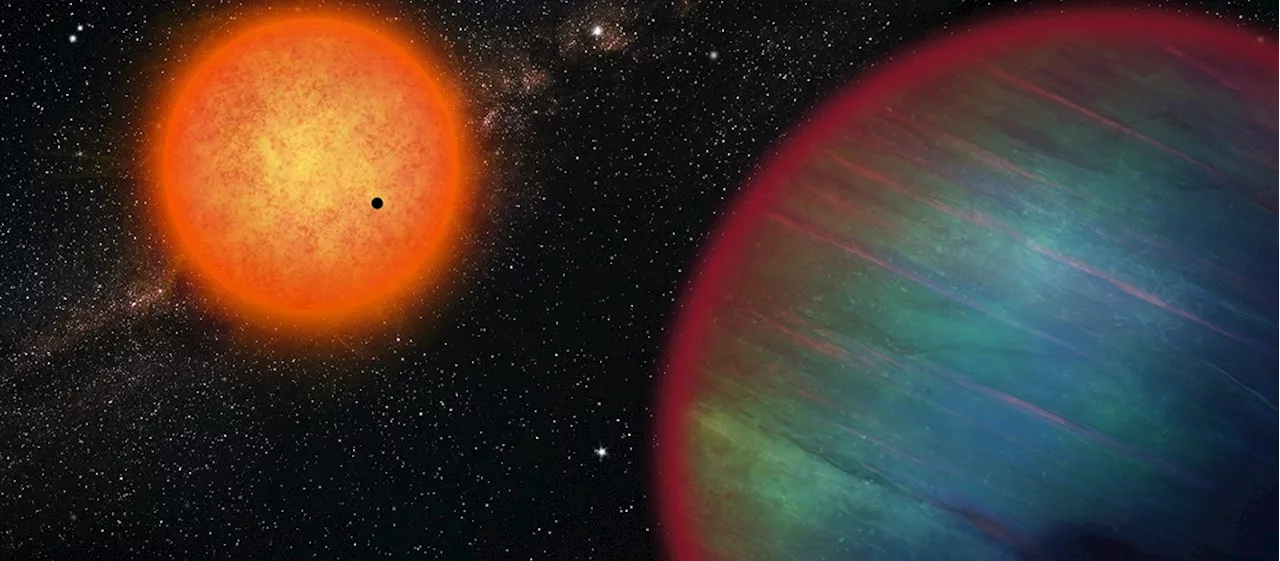 Challenging Planetary Migration Models: Discovery of a Hot Jupiter in a Multi-Planetary SystemAstronomers have discovered a new planetary system that challenges existing models of planetary migration. The system, known as WASP-132, contains a hot Jupiter, a super-Earth, and a giant ice planet. This discovery suggests that hot Jupiters may migrate in a more gradual and less violent manner than previously thought.
Read more »
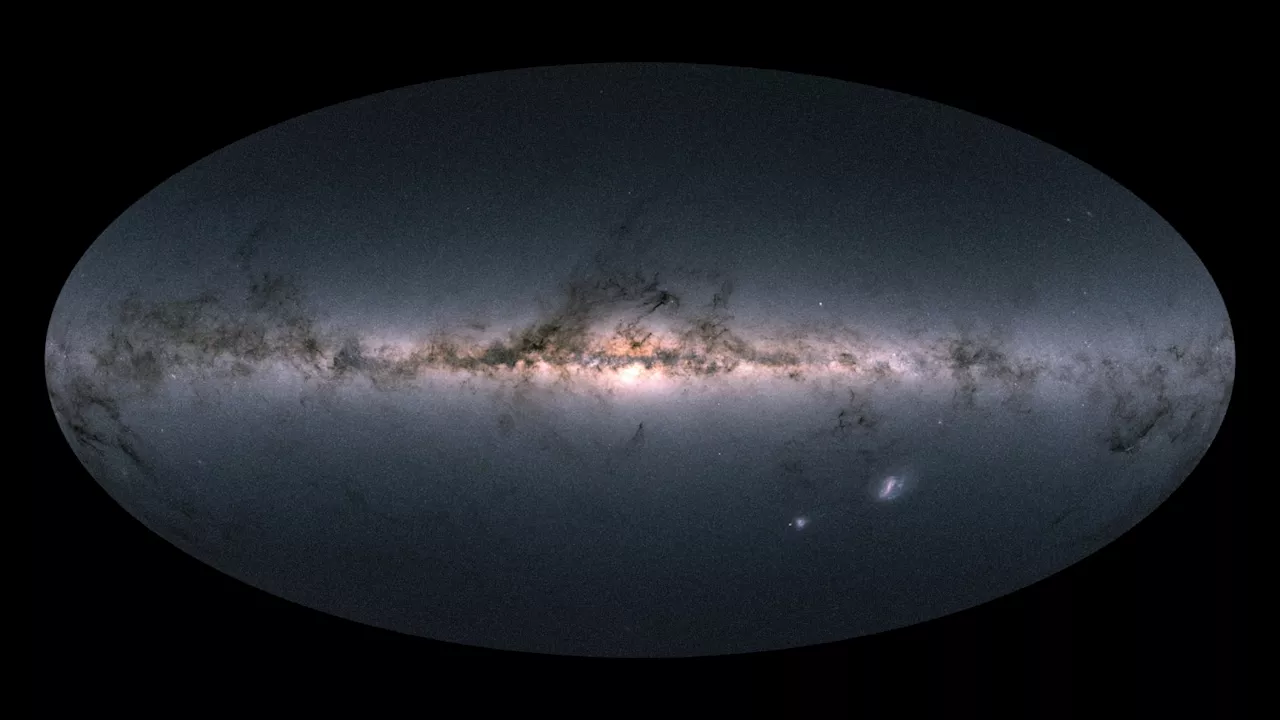 Cosmic Radiation May Explain the Disparity in Planetary Abundance in the Milky WayA new study suggests that the abundance of planets around stars in the Milky Way's thick disk is lower than in the thin disk due to the intense radiation environment present during cosmic noon, a period of intense star formation billions of years ago.
Read more »
 Bird Flu: Vaccines May Drive Virus Evolution'The Chinese poultry lineage may have experienced more vaccine-driven selection compared to other lineages,' the researchers wrote.
Read more »
 Intelligent Aliens May Be Common On Earth-Like Planets, Scientists SayA new study rewrites the story of human evolution, suggesting that intelligent life is not rare but a natural planetary process rather than an improbable event.
Read more »