
'The Chinese poultry lineage may have experienced more vaccine-driven selection compared to other lineages,' the researchers wrote.
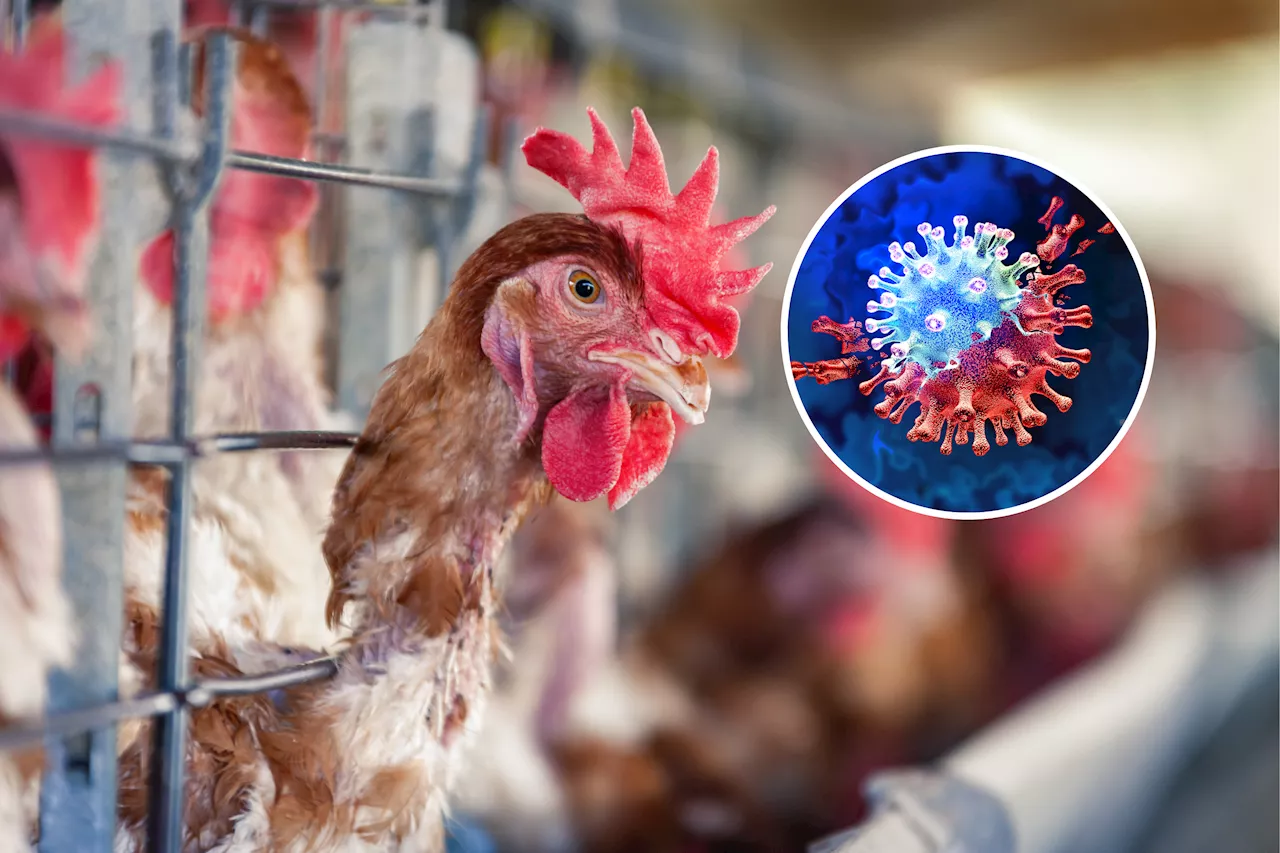
Vaccinating birds against bird flu reduces the spread of the disease, but may have unintended consequences.This is the warning of a new paper in the journal Science Advances, which concluded that vaccinating against the highly pathogenic H5 subtype of avian influenza virus may drive viral evolution.
One such H5 bird flu is the H5N1 virus currently causing an outbreak of bird flu across the U.S.—killing which has killed one person to date— and the H5N6 bird flu currently spreading around birds in China.67 cases of H5N1 bird flu have been recorded in humans since the beginning of 2024, according to the CDC, 38 of which were in California, 10 in Colorado, 11 in Washington, and the rest scattered around Iowa, Louisiana, Michigan, Missouri, Oregon, Texas and Wisconsin. Louisiana reported the first H5 bird flu death in the U.S. on January 6 this year.'This is the first person in the United States who has died as a result of an H5 infection. Outside the United States, more than 950 cases of H5N1 bird flu have been reported to the World Health Organization; about half of those have resulted in death,' the CDC explained.H5 flu is one of the many subtypes of influenza A viruses, which are categorized based on the hemagglutinin and neuraminidase proteins on their surfaces.H5N1 and H5N6 are the most notable highly pathogenic avian influenza strains, causing severe disease in birds and significant mortality.In the paper, the researchers describe how they analyzed changes in the hemagglutinin sequences from worldwide viral samples between 1996 and 2023 across the world, to determine how fast the virus was evolving in different parts of the world.They found that transmission of the virus from wild birds to unvaccinated poultry was more common than transmission to vaccinated poultry, indicating that vaccination does help stem the spread of the disease.However, the researchers also found that countries where poultry are vaccinated against H5 bird flu—specifically China—saw a faster rate of viral evolution compared to those where poultry is not vaccinated.'The virus lineage circulating in Chinese poultry exhibits evidence of more nonsynonymous and adaptive molecular evolution in the HA gene after the date of introduction of mass poultry vaccination. The Chinese poultry lineage may have experienced more vaccine-driven selection compared to other lineages.'The evolution of viral antigens like HA can result in a virus becoming more virulent or able to jump species more easily. There are fears that H5N1 bird flu may mutate to be able to be spread from human to human, which has not been observed thus far.However, the researchers note that these findings do not necessarily mean that vaccination of poultry directly resulted in a faster rate of viral evolution, only that they were correlated.'Although this pattern is consistent with the hypothesis that vaccination may have affected upon HA evolution in these poultry lineages, our finding does not establish a causal relationship and further virological work will be needed to test this hypothesis directly,' the researchers wrote.'In addition, more research is also needed to assess whether these mutations in HA have had an impact on the late-wild bird lineage.'H5N1 has been detected in 10,969 wild birds as of January 16, with 136,327,394 poultry affected, and 928 dairy herds across 16 states seeing outbreaks.Many countries around the world vaccinate their poultry birds against H5 bird flu viruses, especially in regions where the virus is endemic or where there is a high risk of outbreaks, such as in China, Bangladesh, Egypt, Indonesia and Vietnam.'On the basis of national vaccination data from 2010, Egypt had the highest vaccination coverage in poultry ,' the researchers wrote in the paper.This, they explained, was followed by by China . Association of poultry vaccination with interspecies transmission and molecular evolution of H5 subtype avian influenza virus. Science Advances, 11. https://doi.org/10.1126/sciadv.ado9140
United States Latest News, United States Headlines
Similar News:You can also read news stories similar to this one that we have collected from other news sources.
 Bird Flu and Human Flu Co-Infection Could Lead to Dangerous New Virus MutationsAgencies warn that combined infection with bird flu and human flu could lead to mutations of new viruses with dangerous public health consequences. This follows news of bird flu mutations in a Louisiana patient and a Canadian teenager, both experiencing severe symptoms. The CDC advises Americans, especially high-risk individuals like farmworkers, to get the flu vaccine this season to potentially reduce the risk of co-infection and subsequent new virus formation.
Read more »
 Surge in seasonal flu in Southern California may lead to potential bird flu mutationFlu activity is spiking across Southern California, which is leading to a concerning number of pediatric hospitalizations. Doctors said the threat of bird flu is making this season particularly concerning.
Read more »
 Smart bird feeders transform backyard bird watching, create a new generation of bird enthusiastsSmart bird feeders equipped with cameras and internet connections transform backyard bird watching and convert casual observers into dedicated wildlife enthusiasts.
Read more »
 Bird Flu Concerns Amid Rising Flu CasesAs flu season kicks off, concerns are growing about the emergence of bird flu cases. Although the bird flu is not currently spreading from person to person, health experts are urging individuals to get vaccinated against the seasonal flu.
Read more »
Texas Officials Urge Residents to Remove Bird Feeders Amid Bird Flu RiseTexas health officials are advising residents to take down bird feeders and baths due to a surge in bird flu cases across the state, including Austin.
Read more »
 Bird Flu Suspected in Wild Bird Deaths Across New JerseyMultiple wild birds in New Jersey have died, with bird flu suspected as the cause. The New Jersey Fish and Wildlife has reported at least seven snow geese, two Canada geese, and two hawks testing presumptive positive for avian influenza. While the risk to humans remains low, authorities urge hunters and the public to take precautions to prevent the spread of the disease.
Read more »