
A sensitive perception of the environment is crucial for guiding our behavior. However, an overly sensitive response of the brain's neural circuits to stimuli can lead to neurodevelopmental disorders such as epilepsy. Researchers now report how neuronal networks in the mouse brain are fine-tuned.
A sensitive perception of the environment is crucial for guiding our behavior. However, an overly sensitive response of the brain's neural circuits to stimuli can lead to neurodevelopmental disorders such as epilepsy.
Researchers now report how neuronal networks in the mouse brain are fine-tuned. University of Basel researchers report in the journalWe are constantly exposed to a wide range of sensory stimuli, from loud noises to whispers. In order to efficiently process these diverse stimulus intensities, the brain needs to strike a balance in its responsiveness. An excessive sensitivity triggers an over-activation of nerve cells in response to a stimulus, leading to epileptic seizures. Conversely, insufficient sensitivity results in a reduced ability to perceive and discriminate stimuli. But how does the brain manage to be highly sensitive without becoming over-activated?"The key lies in maintaining a balance between neural excitation and inhibition," explains Professor Peter Scheiffele from the Biozentrum, University of Basel."In mouse models, we have now discovered how this balance is maintained to ensure stable brain function." The study particularly focused on the neocortex, a brain area responsible for perception and a range of complex functions such learning. Our brain consists of billions of interconnected nerve cells that interact through so-called synapses and process sensory stimuli such as sounds, touch, and sights. While excitatory neurons pass on the input signal, inhibitory neurons control the timing and intensity of the information flow. This internal control system ensures that the nervous system responds appropriately to stimuli.Neurons are able to detect an elevated neuronal network activity and subsequently reduce the system's sensitivity to stimuli. But how the cells are instructed at the molecular level was poorly understood."We have now revealed that highly activated excitatory neurons release a protein called BMP2," says lead author Dr. Zeynep Okur."BMP2 signals to the inhibitory neurons, initiating a genetic program that leads to the formation of new synapses." These additional synapses increase the impact of inhibitory neurons and dampen network activity. This feedback mechanism is critical for tuning the sensitivity of neuronal networks, preventing over-activation and thus excessive responses to stimuli."Switching-off the BMP2-induced genetic program in inhibitory neurons triggers epileptic seizures in mice, but only when they are older," explains Okur. Thus, this process is involved in long-term adaptations of cortical networks.The BMP2 signaling pathway has been known for its role in early brain developmental, particularly in nerve cell differentiation."We have been able to show that this pathway is re-purposed to stabilize neuronal circuits in the adult brain"emphasizes Scheiffele. This plays an important role for brain plasticity in adulthood -- the basis for learning and memory. "We now understand at the molecular level how neural networks balance excitation and inhibition," summarizes Scheiffele."With our work, we are expanding the repertoire of options to treat epilepsy and other neurodevelopmental disorders." Targeted interventions in the BMP2 signaling pathway could help to fine-tune and re-adjust brain sensitivity. Zeynep Okur, Nadia Schlauri, Vassilis Bitsikas, Myrto Panopoulou, Raul Ortiz, Michaela Schwaiger, Kajari Karmakar, Dietmar Schreiner, Peter Scheiffele.Researchers have uncovered remarkable new insights into the neural pathways of the brain that allow people to act to regulate their body temperature in response to changes in the environment. Their ... A minimally invasive optogenetic technique that does not require brain implants successfully manipulated the activity of neurons in mice and monkeys, researchers report. The researchers first ... Researchers built deep artificial neural networks that can accurately predict the neural responses produced by a biological brain to arbitrary visual stimuli. These networks can be thought of as a ...LIVING & WELL
Brain Tumor Epilepsy Research Birth Defects Brain Injury Neuroscience Brain-Computer Interfaces Intelligence
United States Latest News, United States Headlines
Similar News:You can also read news stories similar to this one that we have collected from other news sources.
 Texas dog that died saving his owner when a car hit them is featured in TxDOT safety campaignResearchers are using AI to help people looking to adopt a dog find the perfect match.
Read more »
 Rice research team abuzz over newly discovered bugsResearchers are using AI to help people looking to adopt a dog find the perfect match.
Read more »
 Researchers map how the brain regulates emotionsA new study is among the first of its kind to separate activity relating to emotion generation from emotion regulation in the human brain. The findings provide new insights that could help inform therapeutic treatments regarding mental health and drug addiction.
Read more »
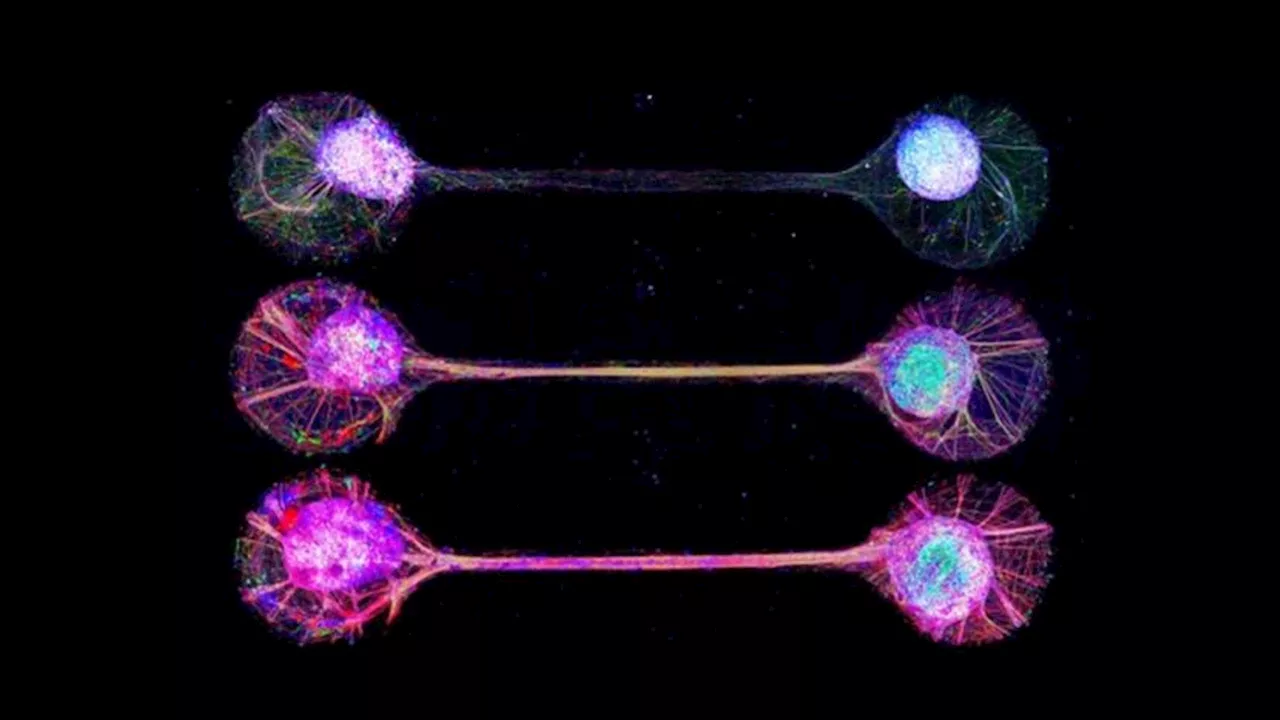 Researchers Develop Technique for Connecting Lab-Grown Brain TissueA Japanese and French research team has developed a technique for connecting lab-grown brain-imitating tissue in a way that resembles circuits in our brains.
Read more »
 JD Vance vows to help Trump ‘however I can’ amid vice president speculationSen. JD Vance (R-OH) said it would be 'a great honor' to help Donald Trump as a possible running mate.
Read more »
 – Hum Yummy Middle Eastern Closed, HOWEVER2604 Connecticut Ave, NW Hum Yummy only opened here in October. I thought it was pretty tasty! Anyway, I'm hearing that the new owners plan on opening a coffee shop here. Before Hum Yummy this space was previously home to Moon Sports Bar the space was also, briefly, home to Taco City.
Read more »