
View the San Francisco for Wednesday, May 29, 2024
Aileen Lee: “It’s more challenging than probably any time that I can think of in the past decade or maybe more for startups to sell.”LaTresha Tanner, outreach coordinator with the Bayview Hunters Point Community Advocates: “The responses I’m getting, people don’t know about it.
” Right around lunchtime on a recent Thursday, two outreach workers roamed a strip mall in San Francisco’s Bayview neighborhood, making the case — to anyone who would speak to them — for home electrification. “Do you know what decarbonization is?” asked LaTresha Tanner with the Bayview Hunters Point Community Advocates nonprofit. The question earned a cocked eyebrow and an inquisitive stare from nail stylist Phuong Vu. Nevertheless, Vu gamely listened on as Tanner ticked through the benefits of electric appliances, including efficiency gains and reduced hazardous air pollutants. Tanner and her colleagues have been striking up similar conversations for the past several months, hoping to spread the word about San Francisco’s recently launched effort to help low-income residents replace gas appliances — such as water heaters, furnaces and stoves — with their electric counterparts. But with a regional mandate to phase out gas appliances looming on the horizon and a host of technical and funding questions still to be worked out in San Francisco’s electrification push, advocates worry that many low-income residents will be caught unprepared by the transition.Mike Rebholtz, the general manager of Alternative HVAC Solutions, discusses home electrification while standing next to an electric heat pump display during the launch of the Climate Equity Hub, which took place at Heron’s Head Park in San Francisco, on April 27th.To begin with, the hub — which has drawn input from several environmental and community groups — is focused primarily on rolling out a rebate program that leverages state funding to help low-income residents purchase and install electric water heaters in their homes for free. Such appliances can cost on the order of $6,000, with several thousand dollars more often needed for installation, according to city officials. After only the first few weeks of publicizing the rebates through community outreach and a well-attended launch event, The City had already signed up close to two dozen households. But there is still a lot of ground to cover: A survey commissioned by the Environment Department conducted late last year found that many San Francisco residents remain unaware of Building emissions account for about 40% of The City’s overall carbon footprint, according to city estimates. It also found awareness lacking in other areas: For example, roughly half of the survey’s respondents said that they had not heard of electric heat pumps, which use electricity to transfer heat, allowing them to both heat and cool homes more efficiently than traditional systems. This knowledge gap poses a critical barrier to widespread adoption of electric appliances, said Michelle Pierce, executive director of the Bayview nonprofit that dispatched Tanner.Eskender Aseged, right, the chef and owner at Radio Africa Kitchen, gives a demonstration of induction cooking during the launch of the Climate Equity Hub, which took place at Heron’s Head Park in April. The City’s efforts will “only be effective if people understand what’s coming, and we haven’t put enough effort into letting people know what’s coming,” she said. Pierce said that while subsidies help, the real challenge will be to “convince people that the old thing they know how to go down and fix when the pilot light goes out is worth replacing.” The survey’s findings also suggest that many residents have little appetite for electrification, with more than half saying they are unlikely to swap out any of their appliances.“We have to see the value,” said Juan Carlos Gonzalez when stopped by an outreach worker and asked if he found the rebates enticing. “We have to put it on the scale,” he said. “We have to see if it’s worth it. If it’s worth it to put a little bit of money, I think I will. If it’s not, I think I will stay with what I have.”gradually ban the sale of new gas furnaces and water heaters Pierce worries that once the bans kick in, low-income residents whose gas appliances break will be in for a rude shock when they realize they will need to figure out how to install a new type of appliance — Many buildings in San Francisco are more than 100 years old, so some retrofits require rewiring, replacement electrical panels, or home repairs to improve building insulation. In addition, the increased electricity demands of induction stoves can necessitate PG&E service upgrades, which can be both time-consuming and, in some cases, increase a project’s cost by tens of thousands of dollars. A proof-of-concept project to fully electrify a four-unit building on Bryant Street in the Mission District has run into this challenge, forcing the planners — including some of the groups participating in the Climate Equity Hub — to explore alternative approaches, such as using induction stovetops that require less energy to run but are more expensive to purchase and maintain. It’s a complex set of challenges that means that no two home-electrification projects are exactly the same. And while government funding is available to offset many — in some cases, all — of the expenses that can crop up, navigating the byzantine world of green-energy grants and rebates requires technical expertise far beyond the capabilities of nearly all average homeowners. Also still to be sorted out is how to provide funding for residents who make too much to qualify for the low-income water-heater-rebate program, which has an income cap of $115,300 for a family of four. Bayview homeowner Tiana Frazier said she is among those who exceed that limit, but she said she would still struggle to afford new electric appliances without additional support. “To live in San Francisco on its own is a lot,” she said during a conversation with outreach workers. “So, any help that I can get — or that anyone can get — I’m sure that they’d be appreciative of that.” As more funding sources become available, the goal is to broaden the Climate Equity Hub’s offerings to include more appliances and to cover more residents. “This initial program offering is just the tip of the iceberg,” said Cyndy Comerford, climate program manager with the Environment Department, pointing out that the state and the federal government set the income limit. “We know that we’re going to have to find other funding sources to make sure that everyone is going to have a just transition to a low-carbon economy,” she said. Zachary Frial, who represents South of Market Community Action Network in the Climate Equity Hub, expressed measured confidence that the tricky funding challenges facing electrification projects can be overcome. “Most people are optimistic that the rebates should be more than enough to cover all the costs and also be able to offer a competitive price to contractors as well,” he said.“Any pressures on housing — and there are a million and one — further remove and displace Black people from this city,” she said.Supervisor Connie Chan during the Board of Supervisors meeting at City Hall in San Francisco on Tuesday, May 7, 2024. Listen to politicians speak or read news coverage about The City’s Asian American electorate and you’ll inevitably encounter two words: It’s also at the heart of an apparent wedge that, to some, has deepened a divide throughout The City’s Asian American political landscape. The Examiner spoke to roughly a dozen Asian American leaders and community advocates across The City’s political spectrum who acknowledged an escalating fracture inside the community — one that mirrors the ideological tug-of-war in San Francisco politics as The City heads into the November election. The City’s elected officials and the electorate generally agree on certain issues that are considered partisan nationally, such as same-sex marriage or reproductive rights. But San Franciscans still differ on many hot-button topics, resulting inModerate-leaning politicians argue that fortifying Asian American public safety boils down to stricter tough-on-crime policies. At the same time, progressives retort that those measures will do little to address the root causes of the violence. And given the heightened attention on Asian voters, who make up a third of The City’s population, the issue has taken center stage in several races and has put the community under a political microscope.Most Asian American progressive leaders we spoke with agreed that public safety should be a top priority and expressed serious concern about violence towards their community. But they ardently pushed back against an increasingly loud moderate coalition that has repeatedly claimed that Asian American San Franciscans’ fears over safety are driving them towards more moderate attitudes and policies, specifically pro-police and law-and-order measures. They alleged that moderates in power are abusing the electorates’ fears for their own political gain. “Public safety is everyone’s issue. Everybody cares about it,” said San Francisco Supervisor Connie Chan, the only Asian American on the Board of Supervisors. “What I think though, is there’s an active force that is using this to divide people. It’s a right-wing tactic to fearmonger and push people into making certain decisions based on those fears.” Chan, considered a progressive, was far from alone in accusing San Francisco moderates of using the anti-AAPI hate movement disingenuously. “ weaponizing fear to create a straw man to attack Connie or Aaron Peskin,” said former Supervisor Eric Mar, a board member of the Chinese Progressive Association. “It’s a tactic straight out of the Trump playbook, where you don’t really address the issue, and you turn progressives into a convenient whipping boy or scapegoat.” “I think that the issue of safety has been brought front and center, and people are really concerned about it. I also think that there have been forces that have used this as an opportunity to push a certain agenda,” said Claire Lau, an organizer with the Chinese Progressive Association. Politicians and experts said ideological differences throughout the Asian American political community have always existed. But Mar said he thinks the divide between the moderate and progressive camps is as big as it’s ever been, highlighted by the swath of moderates, including several Asian Americans, who He blamed the chasm on the rise of groups such as TogetherSF and GrowSF, backed by tech-industry leaders and venture capitalists. “I do think that money has driven the voice of conservative Asian Americans,” Mar said. “And the demographic change of the lessening of working class and progressive organizing, plus the Trumpism within the Asian American communities, has made the divide even more intense. And then there’s an imbalance, where conservatives get more of a voice ... it makes me concerned about the future of San Francisco politics.”Jade Tu’s story symbolizes the growing number of young Asian American moderates who have recently arrived on The City’s political map — and those who progressives accuse of being taken advantage of by moderate political actors. It’s unclear how many of them there are, but their voices have unquestionably swelled recently in the San Francisco political sphere. Tu, who graduated from Menlo College in 2019, began her professional life in the health-care industry. Before the pandemic, she said, she was politically agnostic, simply identifying as a Democrat and not knowing the difference between a progressive and a moderate.Then she watched the video of Vicha Ratanapakdee, an 84-year-old Thai American, being violently pushed to the ground and killed in San Francisco in January 2021. Tu, a Chinese American, said she worried for her community and her family’s well-being. “That traumatized me,” Tu said. “That really woke something up inside of me. I thought, ‘Oh God, I have to do something.’”Jade Tu, Mark Farrell for Mayor campaign manager, at the campaign headquarters at 299 West Portal Avenue in San Francisco on Friday, May 24, 2024.Her arc is representative of many young Asian American activists who were politically activated after the uptick of hate crimes and viral videos showing Asian elders being violently assaulted. Now, they’re on the frontlines of several campaigns, pushing that The City’s Asian community is unified in its demands for more police presence and measures that bulk up police power.“More Asian hate is still happening, so whether it’s fear-mongering or not, that’s how people feel right now,” she said. “I’m 1,000,000% confident. I can’t emphasize that enough. We’re still victims to this day.” William Brega, a Chinese American, said he also barely paid attention to politics before 2021. But fears over his grandparents’ safety drove him to found Dear Community with Tu and join TogetherSF. “To me it feels like they’re uplifting me as a young leader,” Brega explained. “I mean, I know my values. I know what I want to see in The City I live in. I know what change I want to see.” Lily Ho, a community activist who won a seat on the DCCC in March’s election, said she “feels the friction” from the progressive side but insists that the electorate is unified in its alignment with moderate policies. “When I was campaigning, I got to interact with everybody, from shop owners and people of every income level — and the messaging resonated: public safety was their No. 1 priority,” Ho said. “It’s unscientific, but it’s something we see when we just walk around.”But David Ho, a progressive political consultant who’s worked in the community for decades and closely with Rose Pak, defiantly downplayed the role Asian Americans played in recalling Boudin. David Ho — who is not related to Lily Ho — said that the recall of Boudin was a “correction” back to the norm of San Francisco politics rather than an ideological shift or sign of unrest within the community. “Chesa Boudin has no business winning in 2019,” David Ho said. “He only won because Suzy Loftus and Nancy Tung couldn’t get their stuff together. That’s a correction. Voters always want a moderate mayor and moderate DA.”— who became the first non-Asian American to represent The City’s Sunset district in more than 20 years — was a turning point in Asian American politics. Mar’s election was the outlier because the other Asian American candidates who had come before him, Leland Yee, Fiona Ma, Ed Jew, Carmen Chu, and Katy Tang, were all moderates. “ was never supposed to get elected before he won,” Ho said. “No one has thought about this angle because they don’t want to dig deep into the substance of why certain groups are winning and losing. They just want to kind of adhere to the Chinese community as a monolith, but they also don’t talk about just a reason why.”It remains an open question whether San Francisco’s Asian American electorate — which has generally voted more moderately on the west side and more progressively in neighborhoods such as Chinatown and the Bayview — is also being pushed closer to the political center. Nationally and statewide, there has been no meaningful trend towards more Republican Asian American voters, according to Karthick Ramakrishnan, executive director of the research center AAPI Data.that found public safety is among the least prioritized issues in the community, behind inflation, immigration and the environment — though those results could be different if the polling were locally based since policing is often considered a local issue. However, what is clear is that moderate Asian American voters have mobilized to the polls in recent years, especially compared with more left-leaning voters.— a confusingly worded police-staffing measure that divided city politicians — during the March primary than San Franciscans as a whole . Still, voter turnout in those precincts has dipped overall since 2020, though it spiked in 2022, the same year as the Boudin and San Francisco school board recalls. “I do think that there is a broad base of politics in the Chinese American community on issues from tenants’ rights to public safety,” said former San Francisco Supervisor Jane Kim, a progressive. “That being said, in the last two election cycles, there has been greater energy and activity amongst Chinese Americans who are concerned about public safety, and they’re therefore electing candidates that they believe will make our community safer.” “Does that mean that they’re growing in numbers? I’m not sure,” she said. “But there’s certainly a lot of energy. For me, it’s never about which group is growing or declining — it’s which group was activated to come out and vote.”Click and hold your mouse button on the page to select the area you wish to save or print. You can click and drag the clipping box to move it or click and drag in the bottom right corner to resize it. When you're happy with your selection, click the checkmark icon next to the clipping area to continue.This is the name that will be displayed next to your photo for comments, blog posts, and more. Choose wisely!Create a password that only you will remember. If you forget it, you'll be able to recover it using your email address.Forgot Password An email message containing instructions on how to reset your password has been sent to the email address listed on your account.
United States Latest News, United States Headlines
Similar News:You can also read news stories similar to this one that we have collected from other news sources.
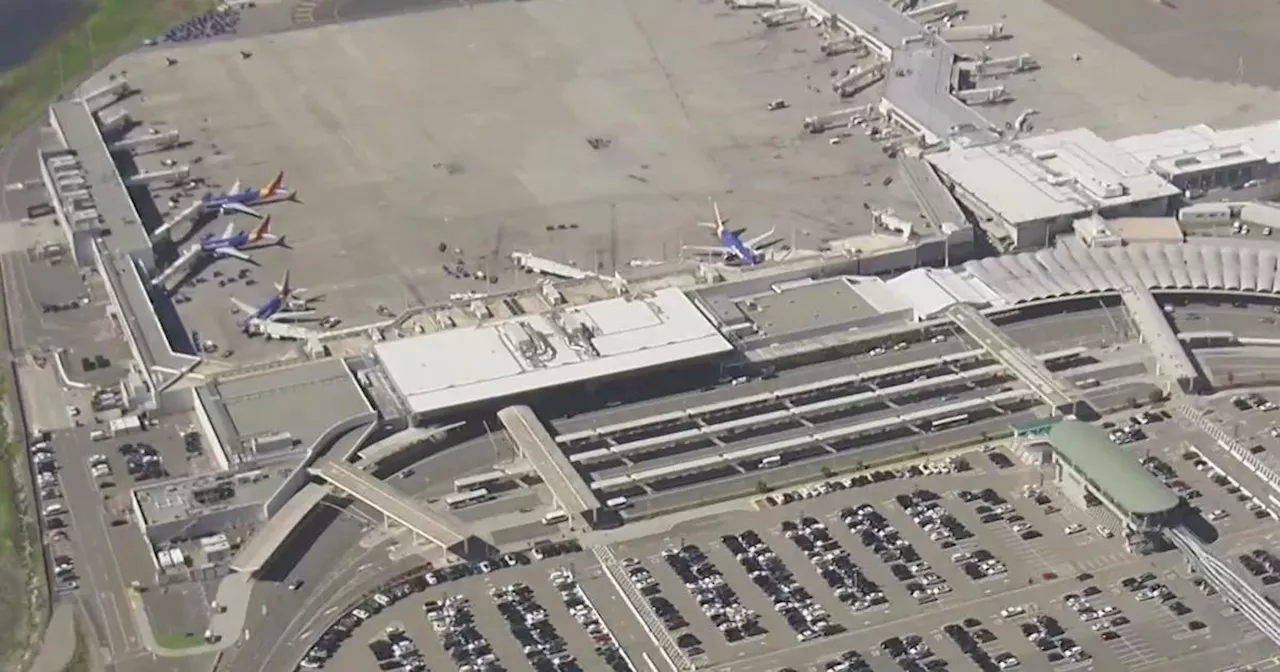 Oakland airport officials reaffirm 'San Francisco Bay' name change, countersues San FranciscoOfficials with Oakland International Airport gave final approval to add 'San Francisco Bay' to its name, rebuffing claims of trademark infringement from San Francisco city officials and from SFO.
Read more »
 Page A1View the San Francisco for Wednesday, May 15, 2024
Read more »
 Page A1View the San Francisco for Sunday, May 19, 2024
Read more »
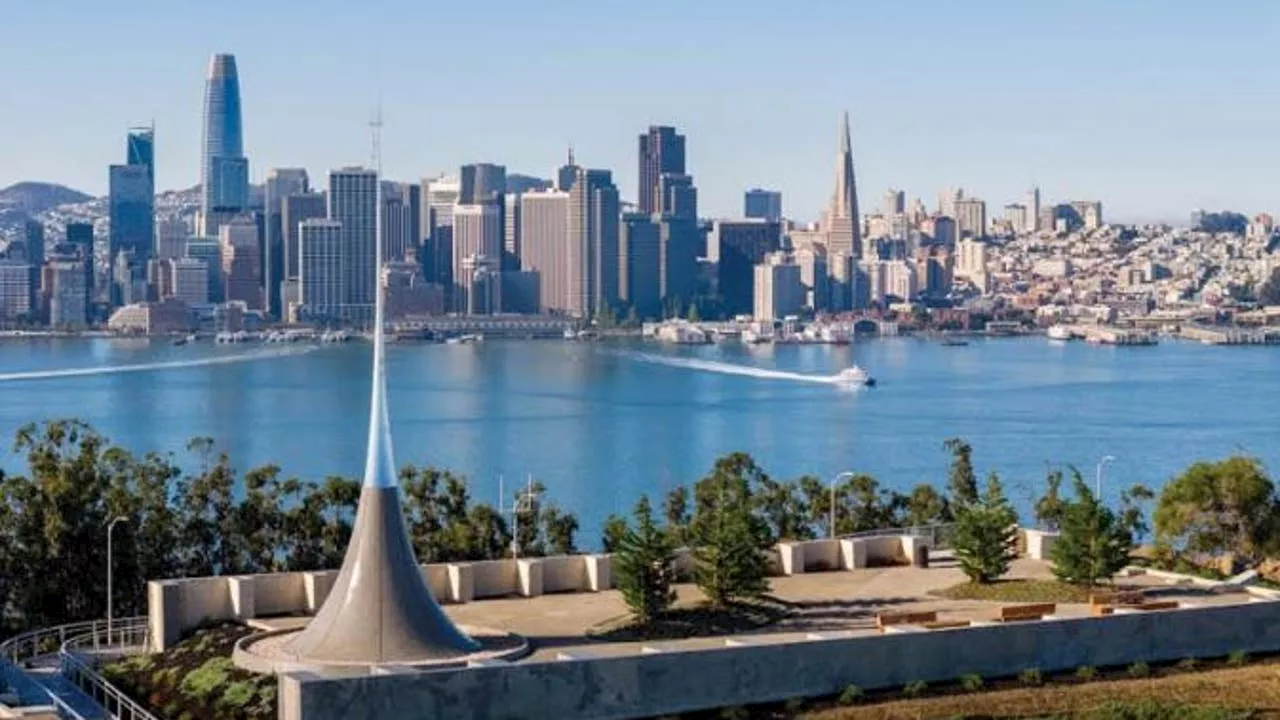 This Bay Area island has an impressive new park with sweeping Bay viewsIt boasts a sweeping 360 degree view of the San Francisco Bay.
Read more »
 Page A1View the San Francisco for Thursday, May 23, 2024
Read more »
 Page A1View the San Francisco for Sunday, May 26, 2024
Read more »