
A team of researchers at the University of Oxford has successfully sent a quantum algorithm wirelessly between two separate quantum processors, marking a significant step towards distributed quantum computing and the development of a quantum internet.
The path to sharing quantum information across distances is beginning to take shape. Recently, a team of scientists at the University of Oxford achieved a significant milestone: sending the first quantum algorithm wirelessly between two separate quantum processors. These two small cores, harnessing their unique quantum nature, pooled their resources and effectively formed a superior computer capable of solving problems that neither could tackle individually.
Led by graduate student Dougal Main, the team succeeded in enabling distant systems to interact and share logic gates using quantum entanglement. This quantum mechanical phenomenon allows a pair of linked particles, even separated by vast distances, to share the same state and consequently transmit the same information. If one particle changes its state, the other instantaneously mirrors that change. The Oxford scientists utilized quantum entanglement to nearly instantaneously send basic information between the computers. When data travels long distances under this principle, it is referred to as 'quantum teleportation.' It's crucial to distinguish this from the conventional notion of teleportation, which involves a hypothetical immediate exchange of matter in space. In this experiment, the light particles remained in their original locations, but entanglement enabled the computers to 'see' each other's information and function in parallel. According to the team's research paper published in Nature, quantum teleportation of an algorithm was achieved using photons and modules separated by two meters, with an information fidelity rate of 86 percent. This distributed quantum computing architecture holds promise as a viable pathway to large-scale technology and the quantum internet. Previous demonstrations of quantum teleportation in computational contexts have focused on transferring states between systems. The Oxford University trial stands out because it employed teleportation to create interactions between distant cores. 'This breakthrough allows us to effectively 'connect' different quantum processors into a single, fully connected quantum computer,' Main explained. If distributed quantum computing technology continues to advance, the era of giant quantum machines might be behind us. The scalability challenge could potentially be overcome with more machines operating together through quantum teleportation. Currently, a basic processor can handle 50 qubits, a unit of quantum information. Some scientists believe that a machine with the capacity to process thousands or millions of qubits will be necessary to tackle complex problems. Even without entanglement, quantum machines are already powerful enough to solve problems that were previously deemed impossible. Willow, Google's quantum chip, recently solved a benchmark task called random circuit sampling in five minutes; a conventional supercomputer would have taken up to 10 quadrillion years to achieve the same result
QUANTUM COMPUTING QUANTUM TELEPORTATION OXFORD UNIVERSITY DISTRIBUTED QUANTUM COMPUTING QUANTUM ENTANGLEMENT
United States Latest News, United States Headlines
Similar News:You can also read news stories similar to this one that we have collected from other news sources.
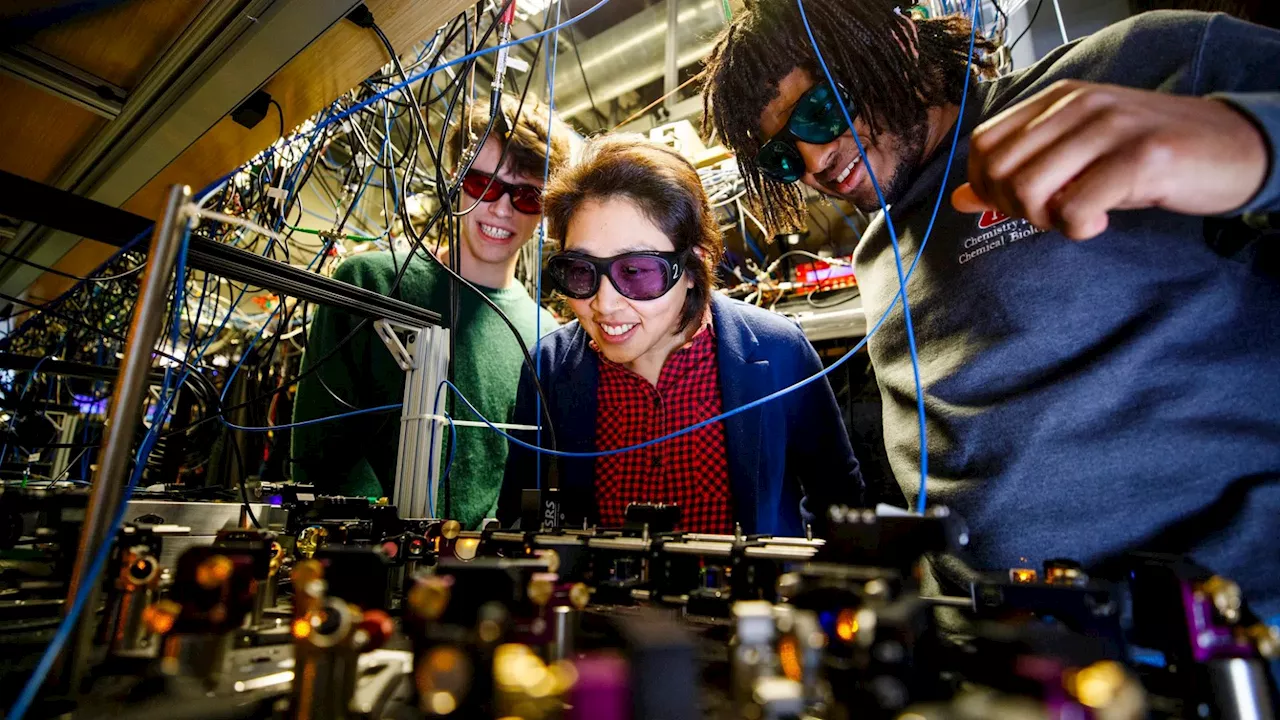 Harvard Scientists Trap Molecules for Quantum Operations, Ushering in a New Era of Quantum ComputingFor the first time, scientists have successfully trapped molecules and used them to perform quantum operations, marking a significant leap forward in the field of quantum computing. This breakthrough opens up new possibilities for building more powerful and versatile quantum computers.
Read more »
 Scientists Discover New Quantum State in 2D Semiconductors, Paving the Way for More Powerful Quantum ComputingResearchers at the Daegu Gyeongbuk Institute of Science and Technology have made a significant breakthrough in quantum computing by discovering a new quantum state within two-dimensional (2D) semiconductor chips. This discovery offers a promising path for controlling quantum information with enhanced reliability, potentially leading to more powerful and efficient quantum computers.
Read more »
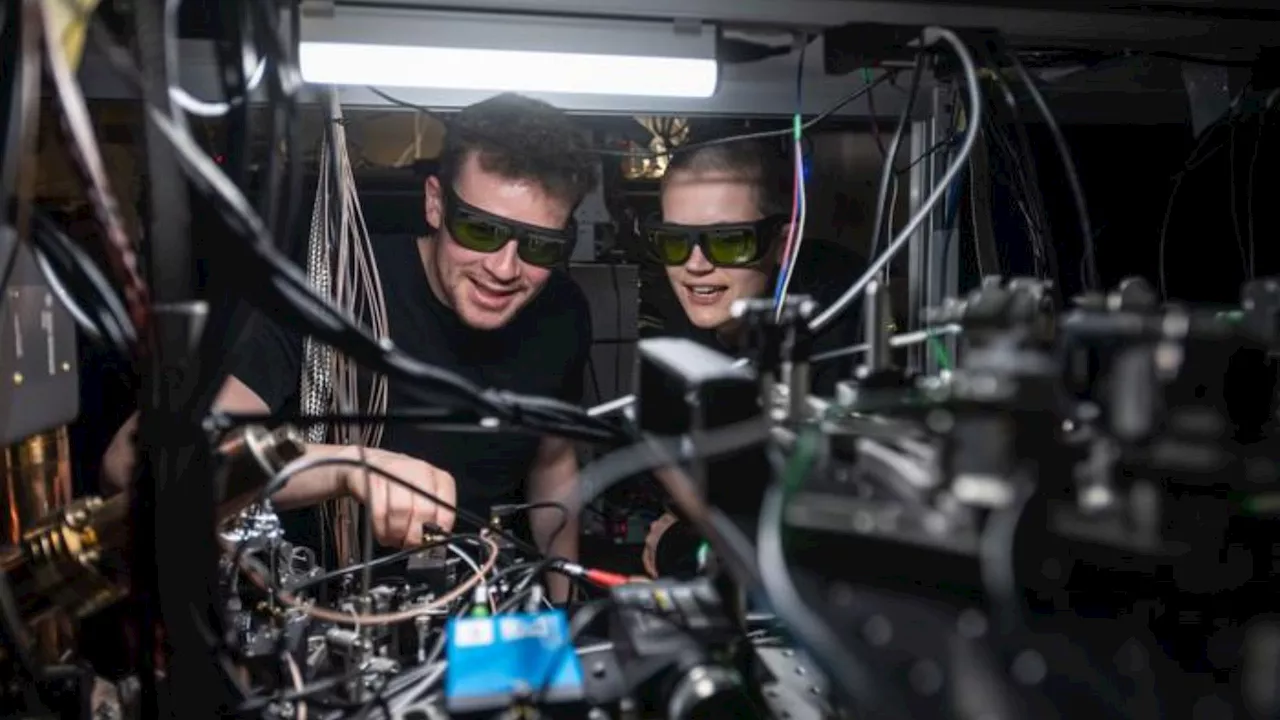 Oxford Researchers Achieve Quantum Teleportation of Logical Gates, Paving the Way for Scalable Quantum ComputingA team of researchers at Oxford University Physics has made a significant breakthrough in quantum computing by successfully demonstrating the first-ever quantum teleportation of logical gates. This achievement paves the way for building larger, more powerful quantum computers and overcomes the scalability challenges that have long hindered their progress.
Read more »
 Quantum Leap: Scientists Achieve Distributed Quantum ComputingScientists at Oxford University Physics have successfully connected two separate quantum processors using a photonic network interface, creating the first distributed quantum computer. This breakthrough paves the way for tackling complex computational challenges and addresses the scalability issue in quantum computing.
Read more »
 Oxford Scientists Say They've Achieved Quantum TeleportationScience and Technology News and Videos
Read more »
 Oxford Scientists Achieve Wireless Quantum Teleportation Between ProcessorsA groundbreaking experiment by University of Oxford researchers has successfully transmitted a quantum algorithm wirelessly between two separate quantum processors, marking a significant step towards the development of a scalable quantum internet.
Read more »