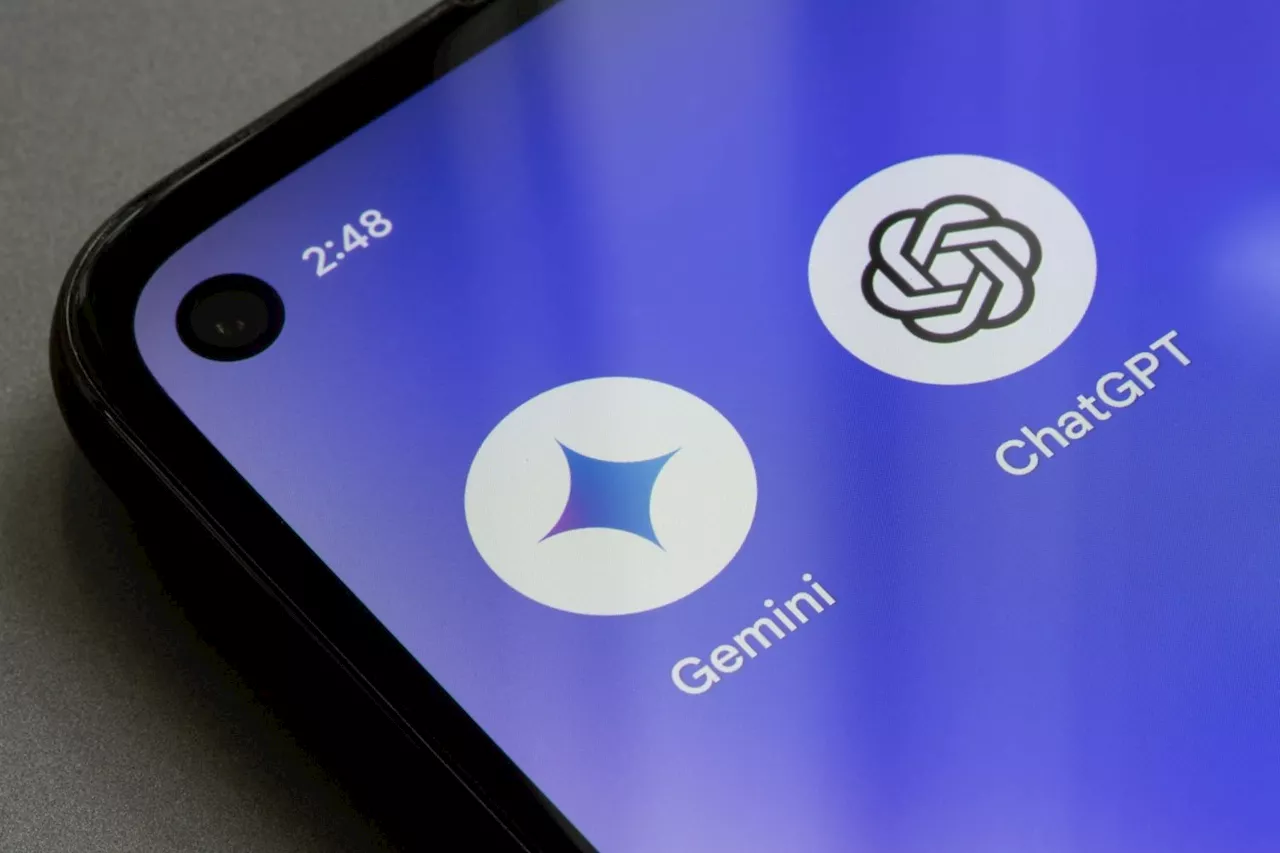
OpenAI has released a new AI tool called Deep Research, designed to generate long-form reports by performing internet searches and reasoning about the next steps. While intended to aid research, the tool has sparked concerns about its potential for misuse in academic settings, as it can easily be used to produce reports without requiring students to conduct independent research. Critics worry that Deep Research may enable students to bypass the learning process and rely on AI-generated content, undermining the value of academic integrity.
Very few former students can claim they never wrote a last-minute research paper the night before it was due. AI tools are already giving students all newseems perfectly designed to help students fake their way through a term paper unless asked to cite sources that don’t include Wikipedia.
OpenAI’s new feature, built on top of its upcoming o3 model and released on Sunday, resembles one Google introduced late last year with Gemini 2.0. Google’s “Deep Research” is supposed to generate long-form reports over the course of 30 minutes or more, depending on the depth of the requested topic. Boiled down, Google’s and OpenAI’s tools are AI agents capable of performing multiple internet searches while reasoning about the next step to generate a report.subscribers in a new tab underneath the prompt box. Simply put, it’s doing the Googling for you. Instead of deciding on your own sourcing, the chatbot will do all that work for you. For example, OpenAI asked ChatGPT to look at iOS and Android adoption rates and the percentage of those who want to learn another language, then find “markets ChatGPT could better expand into.” The chatbot interface then asked for clarification on several points, such as whether engaging with a language app constituted interest. It sounds like the kinds of questions your college professor in a 400-level course would ask when presenting your planned research paper topic. Unlike Google’s tool, OpenAI’s Deep Research works in a side panel. The chatbot will update you about what it’s working on. In one of the examples OpenAI shared in its video demo, the AI searches for surveys on language learning by country and reports, “I’m looking into recent surveys and reports on smartphone penetration and OS adoption to understand digital trends and language interest globally.” Occasionally, the bot will cite what sources it’s looking at, namely Wikipedia. In that market research example, the bot repeatedly looked at Wikipedia, just like every lazy undergrad working on a last-minute paper the night before it’s due. Remember, this is just a bot scraping the internet, so it won’t be accessing any non-digitized books or—ostensibly—any content locked behind a paywall. Once the chatbot generates the report, you can find the full source list in a separate panel. Because it’s essentially an auto-Googling machine, the AI likely won’t have access to the most up-to-date and large-scale surveys from major analysis firms. In the final paper on smartphone adoption rates, the bot cited data from some trusted sources like Pew Research. Still, it also had various sources, including Wikipedia, Statista, and the UAE-based industry magazine Gulf Business. That’s not to say the information was inaccurate, but anybody who generates a report is at the mercy of suspect data and the AI’s interpretation of that data. In one of OpenAI’s examples on “Civilian Supersonic Air Travel – 10-year Market Analysis” , the AI cites Wikipedia, the webpage for Boom Supersonic, thejet plane, and the front page of a few industry publications. In another example, OpenAI said its model could find multiple papers on advanced biology topics. However, another research paper breaking down an episode of Counterpart ripped parts of its info from a fan wiki. The process does take much longer than any typical ChatGPT request. Depending on the depth of a request, it could range from under 10 minutes to up to 30 minutes or more. OpenAI claims it boils down to what would normally take humans “many hours.” The Sam Altman-led company claimed its Deep Research tool scored higher than Gemini Thinking, GPT-4o, and onOpenAI admitted that Deep Research is “very compute intensive.” However, it was working on creating a version that would let Plus and Team subscribers eventually use it, likely using a less powerful AI model. Most college students won’t pay $200 monthly for a cheating tool. Eventually, those who can’t spend as much may also be able to pay for their Wikipedia-citing machine. Update 02/03/25 at 12:25 p.m. ET: This post was updated to correct the model of the Deep Learning feature to OpenAI’s upcoming o3 model.Samsung Galaxy S25 Ultra Review: A Powerful Smartphone That’s a Little Boring The design tweaks are nice, but that's not a reason to upgrade. Neither is a bunch of new AI tricks. Samsung's ultimate phone could do so much more.There Will Be More AI Ads and Fewer Movie Trailers in the Super BowlAfter the Chinese AI company's breakthrough, critics are accusing DeepSeek of censorship and spreading misinformation. That's actually pretty normal for chatbots.The iPhone Is Getting Its First Native Porn App
Education AI Deep Research Openai Academic Integrity Plagiarism Research Tools Chatgpt
United States Latest News, United States Headlines
Similar News:You can also read news stories similar to this one that we have collected from other news sources.
 OpenAI Introduces 'Deep Research' for ChatGPT, Allowing Autonomous Information GatheringOpenAI has unveiled a groundbreaking new feature for ChatGPT called 'deep research', enabling the AI to autonomously plan and execute multi-step processes to find the data it needs. This feature summarizes its research process in a sidebar, including citations and a process overview. Users can input text, images, PDFs, or spreadsheets to provide context for their queries, with responses taking 5 to 30 minutes to generate. OpenAI acknowledges limitations, stating that the AI may 'hallucinate' facts, struggle with source credibility, and have difficulty accurately rating its responses. Deep research is initially available to ChatGPT Plus users and will eventually be accessible to other tiers.
Read more »
 OpenAI launches ChatGPT's latest agent 'deep research'OpenAI says deep research could find, analyse & synthesise hundreds of online sources to create a comprehensive report in 'tens of minutes vs what would take a human many hours.'
Read more »
 OpenAI's Deep Research: An AI Superpower for Complex Web ResearchOpenAI has launched Deep Research, an AI tool capable of conducting multi-step internet research for complex tasks. It analyzes hundreds of online sources to create comprehensive reports, saving users hours of manual effort. Deep Research is designed for professionals in various fields and everyday users seeking in-depth research on specific products.
Read more »
 After DeepSeek’s strike, OpenAI drops Deep Research AI agent for tough studiesOpenAI's new 'Deep Research' feature autonomously plans and executes multi-step tasks, providing detailed summaries and citations.
Read more »
 OpenAI's ChatGPT Gets a Research Upgrade with Deep Research ToolOpenAI introduces Deep Research, a new AI agent within ChatGPT designed to help users conduct in-depth research by analyzing vast amounts of online information and generating comprehensive reports.
Read more »
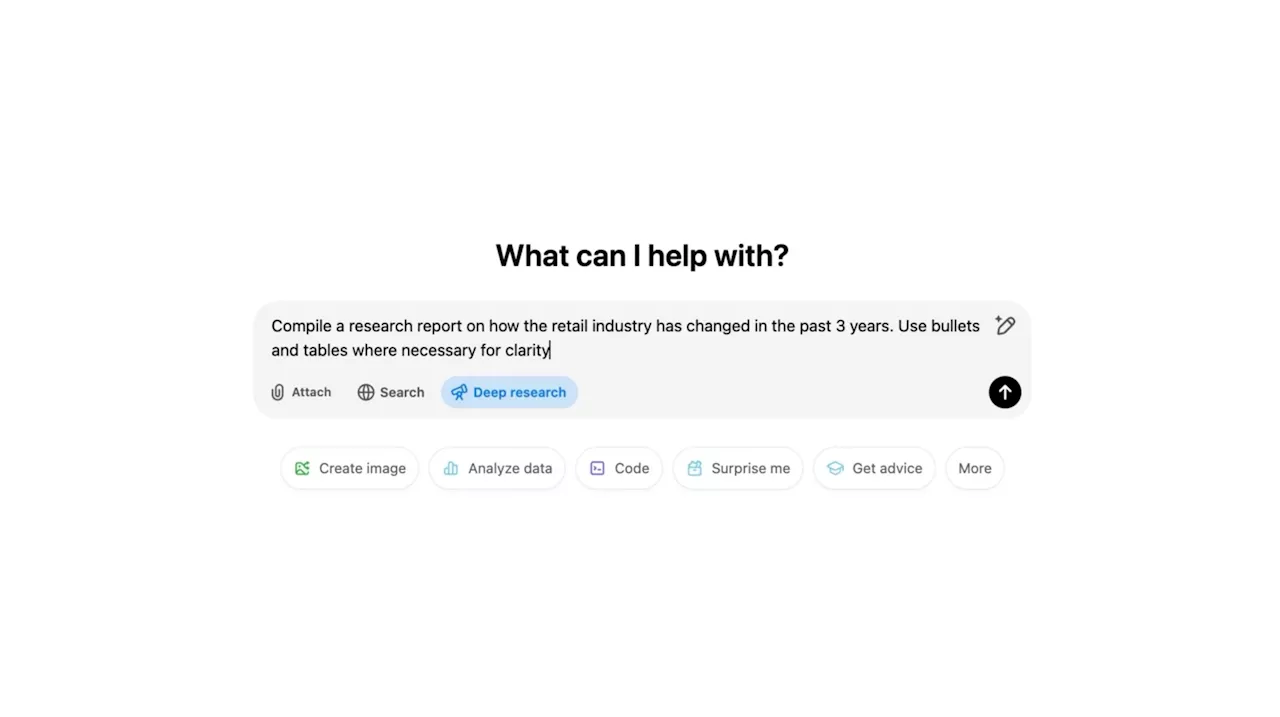 OpenAI Unleashes Deep Research AI Agent: Revolutionizing Online ResearchOpenAI has introduced Deep Research, a groundbreaking AI agent designed to transform online research. This powerful tool delves into the web, analyzes vast amounts of data, and delivers comprehensive reports, surpassing the capabilities of existing ChatGPT models.
Read more »