
Peering deeply into the cosmos, NASA's James Webb Space Telescope is giving scientists their first detailed glimpse of supernovae from a time when our universe was just a small fraction of its current age. A team using Webb data has identified 10 times more supernovae in the early universe than were previously known.
Peering deeply into the cosmos, NASA 's James Webb Space Telescope is giving scientists their first detailed glimpse of supernovae from a time when our universe was just a small fraction of its current age.
A team using Webb data has identified 10 times more supernovae in the early universe than were previously known. A few of the newfound exploding stars are the most distant examples of their type, including those used to measure the universe's expansion rate. A team using Webb data has identified 10 times more supernovae in the early universe than were previously known. A few of the newfound exploding stars are the most distant examples of their type, including those used to measure the universe's expansion rate. "Webb is a supernova discovery machine," said Christa DeCoursey, a third-year graduate student at the Steward Observatory and the University of Arizona in Tucson."The sheer number of detections plus the great distances to these supernovae are the two most exciting outcomes from our survey."To make these discoveries, the team analyzed imaging data obtained as part of the JWST Advanced Deep Extragalactic Survey program. Webb is ideal for finding extremely distant supernovae because their light is stretched into longer wavelengths -- a phenomenon known as cosmological redshift. Prior to Webb's launch, only a handful of supernovae had been found above a redshift of 2, which corresponds to when the universe was only 3.3 billion years old -- just 25% of its current age. The JADES sample contains many supernovae that exploded even further in the past, when the universe was less than 2 billion years old. Previously, researchers used NASA's Hubble Space Telescope to view supernovae from when the universe was in the"young adult" stage. With JADES, scientists are seeing supernovae when the universe was in its"teens" or"pre-teens." In the future, they hope to look back to the"toddler" or"infant" phase of the universe. To discover the supernovae, the team compared multiple images taken up to one year apart and looked for sources that disappeared or appeared in those images. These objects that vary in observed brightness over time are called transients, and supernovae are a type of transient. In all, the JADES Transient Survey Sample team uncovered about 80 supernovae in a patch of sky only about the thickness of a grain of rice held at arm's length. "This is really our first sample of what the high-redshift universe looks like for transient science," said teammate Justin Pierel, a NASA Einstein Fellow at the Space Telescope Science Institute in Baltimore, Maryland."We are trying to identify whether distant supernovae are fundamentally different from or very much like what we see in the nearby universe." Pierel and other STScI researchers provided expert analysis to determine which transients were actually supernovae and which were not, because often they looked very similar. The team identified a number of high-redshift supernovae, including the farthest one ever spectroscopically confirmed, at a redshift of 3.6. Its progenitor star exploded when the universe was only 1.8 billion years old. It is a so-called core-collapse supernova, an explosion of a massive star.Of particular interest to astrophysicists are Type Ia supernovae. These exploding stars are so predictably bright that they are used to measure far-off cosmic distances and help scientists to calculate the universe's expansion rate. The team identified at least one Type Ia supernova at a redshift of 2.9. The light from this explosion began traveling to us 11.5 billion years ago when the universe was just 2.3 billion years old. The previous distance record for a spectroscopically confirmed Type Ia supernova was a redshift of 1.95, when the universe was 3.4 billion years old. Scientists are eager to analyze Type Ia supernovae at high redshifts to see if they all have the same intrinsic brightness, regardless of distance. This is critically important, because if their brightness varies with redshift, they would not be reliable markers for measuring the expansion rate of the universe. Pierel analyzed this Type Ia supernova found at redshift 2.9 to determine if its intrinsic brightness was different than expected. While this is just the first such object, the results indicate no evidence that Type Ia brightness changes with redshift. More data is needed, but for now, Type Ia supernova-based theories about the universe's expansion rate and its ultimate fate remain intact. Pierel also presented his findings at the 244th meeting of the American Astronomical Society.The early universe was a very different place with extreme environments. Scientists expect to see ancient supernovae that come from stars that contain far fewer heavy chemical elements than stars like our Sun. Comparing these supernovae with those in the local universe will help astrophysicists understand star formation and supernova explosion mechanisms at these early times. "We're essentially opening a new window on the transient universe," said STScI Fellow Matthew Siebert, who is leading the spectroscopic analysis of the JADES supernovae."Historically, whenever we've done that, we've found extremely exciting things -- things that we didn't expect." "Because Webb is so sensitive, it's finding supernovae and other transients almost everywhere it's pointed," said JADES team member Eiichi Egami, a research professor at the University of Arizona in Tucson."This is the first significant step toward more extensive surveys of supernovae with Webb." The James Webb Space Telescope is the world's premier space science observatory. Webb is solving mysteries in our solar system, looking beyond to distant worlds around other stars, and probing the mysterious structures and origins of our universe and our place in it. Webb is an international program led by NASA with its partners, ESA and CSA .Scientists have used data from the James Webb Space Telescope as part of the Cosmic Evolution Early Release Science Survey to change the way we think about the universe and its distant ... NASA's James Webb Space Telescope has followed up on observations by the Hubble Space Telescope of the farthest star ever detected in the very distant universe, within the first billion years ... Among the most fundamental questions in astronomy is: How did the first stars and galaxies form? NASA's James Webb Space Telescope is already providing new insights into this question. One of ... Using the James Webb Space Telescope , researchers have identified the most distant globular clusters ever discovered. These dense groups of millions of stars may be relics that contain the ...The Solar System May Have Passed Through Dense Interstellar Clouds 2 Million Years Ago, Altering Earth's ClimateLiquid Metal-Based Electronic Logic Device That Mimics Intelligent Prey-Capture Mechanism of Venus FlytrapFlapping Frequency of Birds, Insects, Bats and Whales Described by Universal Equation
Big Bang NASA Black Holes Astronomy Astrophysics Space Telescopes Space Exploration
United States Latest News, United States Headlines
Similar News:You can also read news stories similar to this one that we have collected from other news sources.
 NASA's Webb Reveals 'Sparkling' Birth of Universe's Earliest Galaxies'You could say that these are the first 'direct' images of galaxy formation that we've ever seen,' researcher Kasper Heintz said.
Read more »
 NASA's James Webb Space Telescope finds most distant known galaxyOver the last two years, scientists have used NASA's James Webb Space Telescope to explore what astronomers refer to as Cosmic Dawn -- the period in the first few hundred million years after the big bang where the first galaxies were born.
Read more »
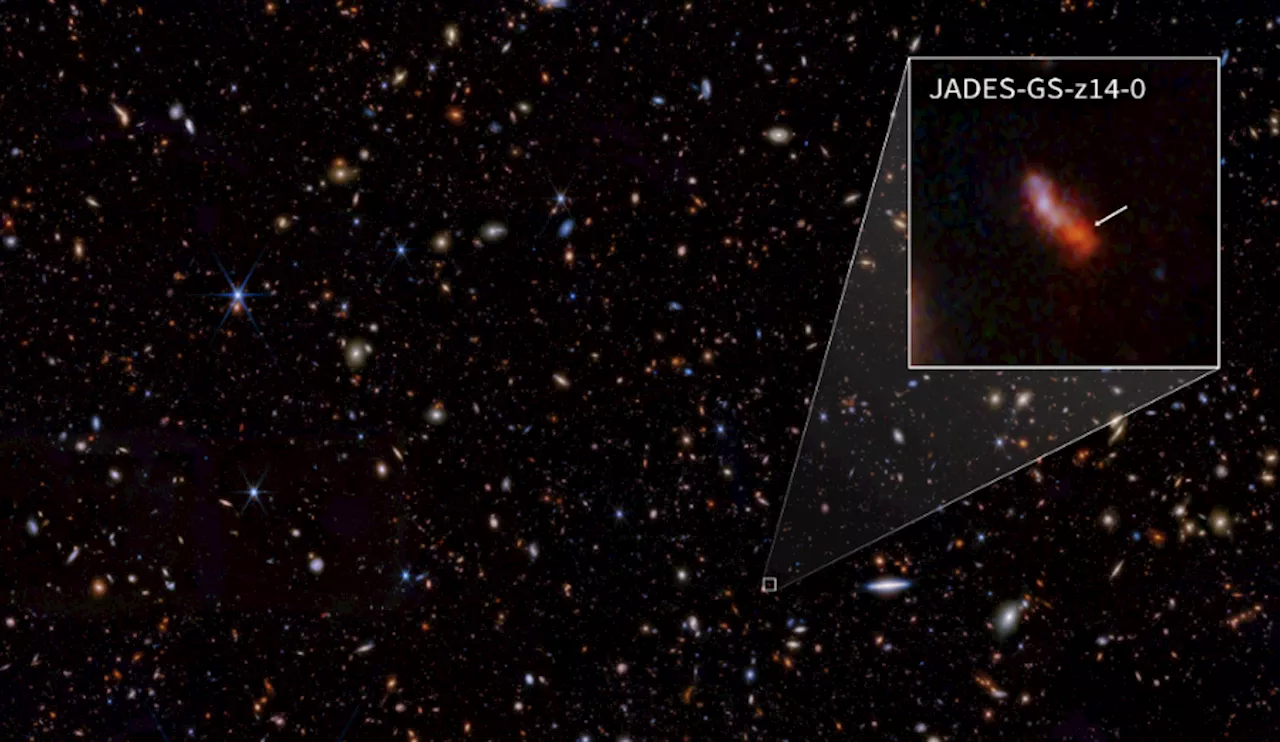 NASA’S James Webb Space Telescope has found the most distant galaxy ever observedLawrence is a contributing reporter at Engadget, specializing in our AI overlords, musical doodads and, of course, garden variety gaming and tech. To that end, Lawrence once lost badly in multiplayer Mario to Nintendo’s own Shigeru Miyamoto, who laughed gleefully as he threw him down a pit.
Read more »
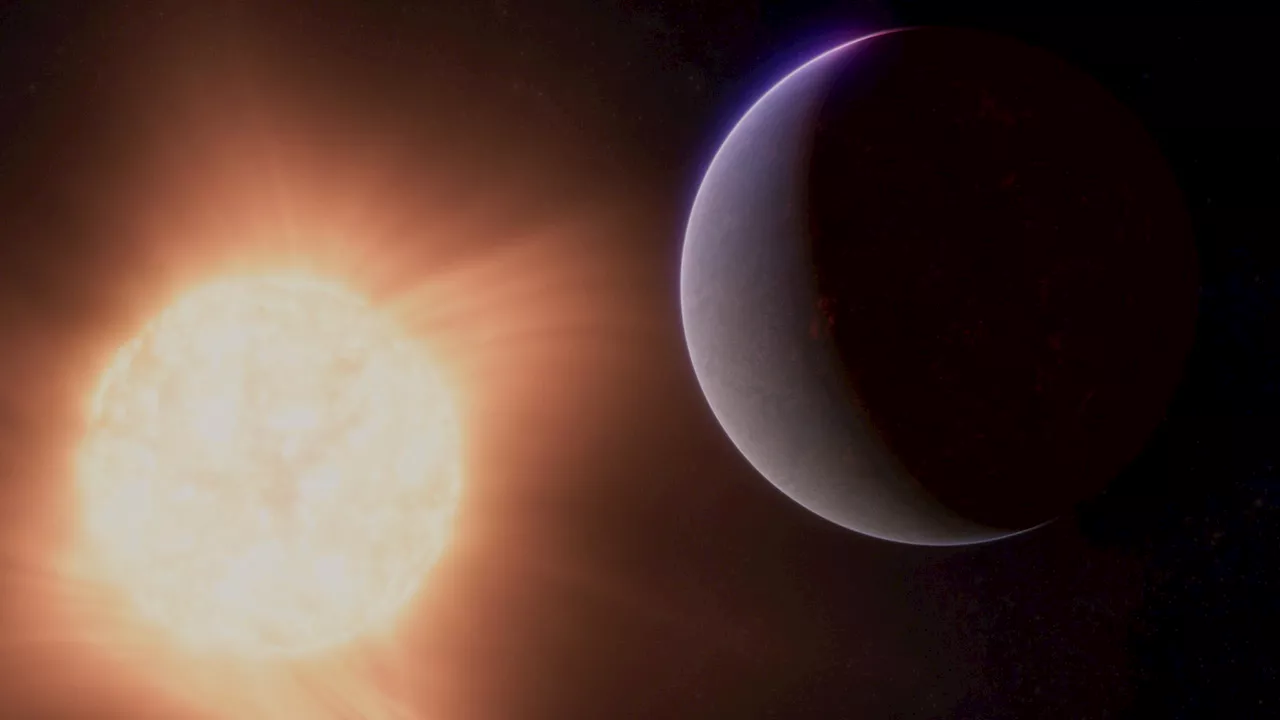 Super-Earth Secrets: James Webb Telescope Reveals Unexpected Exoplanet AtmosphereScience, Space and Technology News 2024
Read more »
 NASA’s James Webb Space Telescope could help solve these 5 exoplanet puzzlesA lot of people are focused on signs of alien life, but the space telescope will have a lot to say about exoplanet geology and formation.
Read more »
Katrell Josiah James Webb Visits Tennessee Football2026 edge rusher Katrell Webb (Suwanee, Ga.) has scheduled a commitment date and is an early target of the Tennessee Volunteers.
Read more »